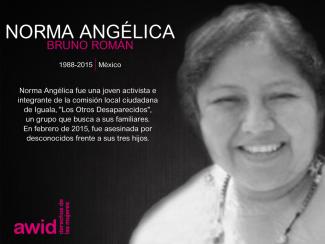
WHRDs are self-identified women and lesbian, bisexual, transgender, queer and intersex (LBTQI) people and others who defend rights and are subject to gender-specific risks and threats due to their human rights work and/or as a direct consequence of their gender identity or sexual orientation.
WHRDs are subject to systematic violence and discrimination due to their identities and unyielding struggles for rights, equality and justice.
The WHRD Program collaborates with international and regional partners as well as the AWID membership to raise awareness about these risks and threats, advocate for feminist and holistic measures of protection and safety, and actively promote a culture of self-care and collective well being in our movements.
Risks and threats targeting WHRDs
WHRDs are exposed to the same types of risks that all other defenders who defend human rights, communities, and the environment face. However, they are also exposed to gender-based violence and gender-specific risks because they challenge existing gender norms within their communities and societies.
By defending rights, WHRDs are at risk of:
Physical assault and death
Intimidation and harassment, including in online spaces
Judicial harassment and criminalization
Burnout
A collaborative, holistic approach to safety
We work collaboratively with international and regional networks and our membership
to raise awareness about human rights abuses and violations against WHRDs and the systemic violence and discrimination they experience
to strengthen protection mechanisms and ensure more effective and timely responses to WHRDs at risk
We work to promote a holistic approach to protection which includes:
emphasizing the importance of self-care and collective well being, and recognizing that what care and wellbeing mean may differ across cultures
documenting the violations targeting WHRDs using a feminist intersectional perspective;
promoting the social recognition and celebration of the work and resilience of WHRDs ; and
building civic spaces that are conducive to dismantling structural inequalities without restrictions or obstacles
Our Actions
We aim to contribute to a safer world for WHRDs, their families and communities. We believe that action for rights and justice should not put WHRDs at risk; it should be appreciated and celebrated.
Promoting collaboration and coordination among human rights and women’s rights organizations at the international level to strengthen responses concerning safety and wellbeing of WHRDs.
Supporting regional networks of WHRDs and their organizations, such as the Mesoamerican Initiative for WHRDs and the WHRD Middle East and North Africa Coalition, in promoting and strengthening collective action for protection - emphasizing the establishment of solidarity and protection networks, the promotion of self-care, and advocacy and mobilization for the safety of WHRDs;
Increasing the visibility and recognition of WHRDs and their struggles, as well as the risks that they encounter by documenting the attacks that they face, and researching, producing, and disseminating information on their struggles, strategies, and challenges:
Mobilizing urgent responses of international solidarity for WHRDs at risk through our international and regional networks, and our active membership.
Related Content
Illumination par la lumière de la pleine lune : une expérience BDSM africaine
Akosua Hanson est une activiste artistique, basée à Accra, au Ghana. Son travail se répartit entre la radio, la télévision, la presse écrite, le théâtre, le cinéma, les expositions de bandes dessinées, les installations artistiques et le roman graphique. L’activisme d’Akosua se concentre sur le panafricanisme et le féminisme et s’intéresse particulièrement au point d’intersection entre l’art, la culture pop et l’activisme. Elle a une maîtrise de philosophie en études africaines axée sur le genre et la pensée philosophique africaine. Akosua Hanson est la créatrice de Moongirls, une série de romans graphiques qui suit les aventures de quatre super-héroïnes luttant pour une Afrique libérée de la corruption, du néocolonialisme, des fondamentalismes religieux, de la culture du viol, de l’homophobie, entre bien d’autres choses. Elle travaille comme animatrice radio à Y 107.9 FM, au Ghana.
Avez-vous déjà vécu des moments de clarté profonde pendant ou après un rapport sexuel?
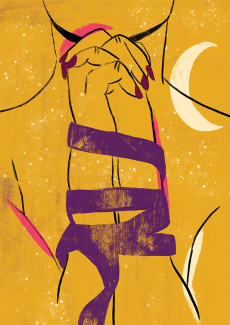
Dans ces panneaux, la Moongirl (fille de la lune) Wadjet est en train de faire l’amour BDSM avec un démon de deux genres. Parmi les quatre Moongirls, Wadjet est la guérisseuse et la philosophe la conduit vers l’Oracle. Elle fait cela pour lancer un processus scientifique et spirituel – une expérience qu’elle appelle « Illumination par la lumière de la pleine lune » – à travers laquelle elle trace un arc temporel vibratoire entre ses souvenirs, ses sensations, ses émotions, ses visions et son imagination. C’est une forme de voyage sensationnel dans le temps pour découvrir ce qu’elle appelle « des révélations de vérité ».
Au cours de l’expérience, Wadjet a des visions troubles, entre autres sur : une apocalypse imminente provoquée par la destruction de l’environnement par les humains au service d’un capitalisme vorace; un souvenir d’enfance sur son hospitalisation après un diagnostic de santé mentale; et une vision de l’histoire d’origine des Moongirls par la figure biblique de Noé présentée comme une ancienne Moongirl noire avertissant des dangers de la pollution de l’environnement.
Plus qu’une entorse amusante pour explorer des sensations, le BDSM peut être un moyen d’aborder la douleur émotionnelle et les traumatismes. Cela a été pour moi un moyen de guérison sexuelle, offrant une forme radicale de libération. Une purge survient lorsque la douleur physique est infligée au corps. Infligée avec consentement, elle fait ressortir la douleur émotionnelle - presque comme un « appel ». Le fouet sur mon corps me permet de libérer des émotions refoulées : l’anxiété, la dépression, mon sentiment d’impuissance face aux stress qui me submergent parfois.
En s’engageant dans le BDSM comme moyen de guérison, les amoureux·ses doivent apprendre à faire preuve d’attention et de responsabilité envers l’autre. Car même si le consentement a été initialement donné, nous devons demeurer aux aguets face aux changements qui pourraient survenir durant le processus, notamment à mesure que les sentiments s’intensifient. J’aborde le BDSM avec la compréhension que pour abandonner la douleur, l’amour et l’empathie doivent être la base du processus, et ainsi, je crée un espace où je m’ouvre à l’amour.
L’implication avec suivi après l’infliction de la douleur vient compléter le processus. Cela peut se faire de manière très simple, en se faisant des caresses, en vérifiant si la personne a besoin d’eau, en regardant un film ensemble, en se prenant dans les bras ou simplement en partageant un joint. Cela peut se faire par n’importe quel langage amoureux que l’on a choisi. Cet espace de soutien, sachant que les plaies ont été ouvertes, est nécessaire pour achever le processus de guérison. C’est la plus importantes des leçons pour mettre en pratique l’empathie, ainsi qu’un apprentissage pour vraiment soutenir son·sa partenaire, notamment en raison de la finesse des lignes entre la douleur et le plaisir. De cette façon, le BDSM est une forme de travail de soins pour moi.
Après le sexe BDSM, je ressens une clarté et un calme qui me placent dans un vaste espace créatif et qui me renforcent sur le plan spirituel. C’est une expérience presque magique de voir la douleur se transformer en quelque chose d’autre instantanément. De même, cette expérience personnelle libératrice du BDSM permet à Wadjet d’accéder à la prescience, à la sagesse et à la clarté, l’aidant dans ses fonctions de Moongirl à lutter contre le patriarcat africain.
Moongirls est née durant mon mandat de directrice de Drama Queens, une jeune organisation militante artistique basée au Ghana. Depuis notre création en 2016, nous avons eu recours à différents modes artistiques dans le cadre de notre activisme féministe, panafricaniste et écologiste. Nous avons utilisé la poésie, les nouvelles, le théâtre, les films et la musique pour traiter de problèmes comme la corruption, le patriarcat, la dégradation de l’environnement et l’homophobie.
Notre production théâtrale inaugurale, « The Seamstress of St. Francis Street » (La couturière de la rue Saint-François) et « Until Someone Wakes Up » (Jusqu’à ce que quelqu’un·e se réveille), abordait le problème de la culture du viol dans nos communautés. De son côté, « Just Like us » (Tout comme nous), a sans doute été l’une des premières productions théâtrales ghanéennes à aborder directement le problème profondément ancré de l’homophobie dans le pays. Notre atelier de cinéma queer pour les cinéastes africains, Queer Universities Ghana (Universités queer Ghana), a formé des cinéastes du Ghana, du Nigéria, d’Afrique du Sud et d’Ouganda. Des films sont nés pendant cet atelier, comme « Baby Girl: An Intersex Story » (Bébé fille : une histoire intersexe) de Selassie Djamey, et ont continué à être projetés durant des festivals de cinéma. Ainsi, le passage aux bandes dessinées fut une évolution naturelle.
Il y a environ sept ans, j’ai commencé un roman, que je n’ai jamais terminé, sur la vie de quatre femmes. En 2018, l’Open Society Initiative for West Africa (OSIWA, Initiative de société ouverte pour l’Afrique de l’Ouest) a initié une opportunité de subvention, laquelle a lancé la production du projet et mon roman inachevé est devenu Moongirls.
Il y a eu deux saisons de Moongirls, comprenant chacune six chapitres. Les auteur·e·s et éditeurs·rices contribuant à la première saison étaient Suhaida Dramani, Tsiddi Can-Tamakloe, George Hanson et Wanlov the Kubolor. Les auteur·e·s de la deuxième saison comprenaient Yaba Armah, Nadia Ahidjo et moi-même. Les illustrations et conceptualisations des personnages ont été réalisées par l’artiste ghanéenne Kissiwa. Et AnimaxFYB Studio, un studio premium d’animation, de conception et d’effets visuels, a réalisé les illustrations.
Au cours de l’expérience, Wadjet a des visions troubles, entre autres sur : une apocalypse imminente provoquée par la destruction de l’environnement par les humains au service d’un capitalisme vorace; un souvenir d’enfance sur son hospitalisation après un diagnostic de santé mentale; et une vision de l’histoire d’origine des Moongirls par la figure biblique de Noé présentée comme une ancienne Moongirl noire avertissant des dangers de la pollution de l’environnement.
L’écriture de Moongirls entre 2018 et 2022 a été pour moi un travail d’amour, voire un travail de libération. Je cherche à faire preuve de beaucoup d’exploration dans la forme et le style : j’ai essayé de convertir d’autres formes d’écriture, telles que des nouvelles et de la poésie, en format bande dessinée. En fusionnant illustration et texte, comme le font les bandes dessinées, Moongirls vise à s’attaquer aux grands problèmes et à honorer les activistes de la vie réelle. Ma décision de mettre au centre des super-héroïnes queer – ce qui est rare à voir dans ce canon – a pris une signification bien plus importante lorsqu’un contexte dangereux a commencé à se développer au Ghana en 2021.
L’année dernière a été le témoin d’une augmentation très claire des violences contre la communauté LGBT+ ghanéenne, déclenchée par la fermeture d’un centre communautaire LGBT+. S’en sont suivies des arrestations arbitraires et l’emprisonnement de personnes soupçonnées d’appartenir au spectre queer, ainsi que de personnes accusées de promouvoir un « agenda LGBT ». Pour couronner le tout, un projet de loi anti-LGBT intitulé « Droits sexuels humains appropriés et valeurs familiales ghanéennes » fut introduit au Parlement ghanéen. C’est sans doute le projet de loi anti-LGBT le plus draconien jamais rédigé dans la région, après des tentatives précédentes dans des pays comme le Nigeria, l’Ouganda et le Kenya.
Je me souviens très bien de la première fois où j’ai lu ce projet de loi.
C’était un vendredi soir, un soir où d’habitude je me repose ou je fais la fête après une longue semaine de travail. Par pure chance, le projet a été divulgué et partagé avec moi sur un groupe WhatsApp. En le lisant, un profond sentiment de peur et d’alerte venait plomber l’ambiance du vendredi soir ordinairement détendu. Ce projet de loi proposait de frapper tout plaidoyer LGBT+ de cinq à dix ans d’emprisonnement, de sanctionner et d’emprisonner les personnes qui s’identifient comme LGBT+, sauf si elles se « rétractaient » et qu’elles acceptaient une thérapie de conversion. Ce projet de loi criminalisait même les personnes asexuées. Il touchait à toutes les libertés fondamentales : la liberté de pensée, d’être, la liberté de détenir sa propre vérité et de choisir de vivre sa vie en fonction. Le projet touchait même aux réseaux sociaux et à l’art. S’il passait, Moongirls aurait été une littérature interdite. Ce que le projet de loi proposait de faire était si néfaste et si large que j’ai chuté dans une dépression à la profondeur de la haine à partir de laquelle il avait été conçu.
En parcourant mon fil Twitter de cette nuit-là, on voit bien la terreur que je ressentais en moi. Le fil était un flux d’émotions en direct alors que les gens réagissaient en temps réel à ce qu’ils lisaient : de la stupéfaction à la terreur en passant par une profonde déception et de la peine en réalisant à quel point le projet de loi voulait aller loin. Certain·e·s ont tweeté être prêt·e à se replier et à quitter le pays. Ensuite, à la manière ghanéenne, le chagrin et la peur se sont transformés en humour. De l’humour est né le zeste d’élever le combat.
Ainsi, le travail continue toujours. J’ai créé Moongirls pour fournir une forme alternative d’éducation, pour fournir des connaissances là où elles ont été supprimées par un patriarcat violent et pour créer de la visibilité là où la communauté LGBT+ a été effacée. Il est également important que le BDSM africain utilise ce support de représentation alors qu’une grande partie de la représentation BDSM est blanche. Le plaisir sexuel, par le biais du BDSM ou autre, ainsi que l’amour non hétérosexuel transcendent les races et les continents, car le plaisir sexuel et sa diversité d’expériences sont aussi vielles que le temps.
Nadine was a role model to many for her work supporting women and the most vulnerable in her community. She was committed to helping the poor and homeless in particular.
Though her death was reported as an accident, the Ramaroson family, led by her father, André Ramaroson led an investigation that pointed to evidence that she had been murdered. She is reported to have died in a fatal accident occurred between Soanierano - Ivongo and Ste Marie - a story that has been refuted by her family.
She received numerous death threats for her bold political positions. Her case remains in court in Antananarivo (the capital of Madagascar).
Stephanie Bracken est une féministe qui se consacre à la construction et au soutien de systèmes solides qui répondent aux besoins du moment et des personnes qui interagissent avec eux, tout en servant les principes de justice. Elle est titulaire d'un master en droits humains de l'Université de Sydney et d'une licence en études de genre, histoire et philosophie de l'Université McGill. Elle possède une expérience de travail avec des organisations féministes et de justice sociale dans les domaines du suivi, de l'évaluation et de l'apprentissage, de la planification stratégique du travail, de la gouvernance, de la gestion de projet et de la création de systèmes et de processus opérationnels. Stephanie est basée à Tiohtià:ke/Montréal, où elle aime chanter avec d’autres, camper, pratiquer les arts textiles et passer du temps avec ses enfants et sa communauté.
Position
Cheffe des Opérations
Add to stories
Off
Une conversation qui émeut
Merci, Ángela et Pilar
Yannia Sofía Garzón Valencia: Je suis une femme noire et une tisserande communautaire. Je vis à Santander de Quilichao dans le Cauca, en Colombie. Je m’intéresse aux processus créatifs autour desquels s’organise une vie collective durable. J’aime échanger des idées et cuisiner, faire des recherches et analyser, planter des graines et apprendre des plantes, lire et jouer. Je coordonne actuellement l’Observatoire des violences fondées sur le genre à l’encontre des communautés afro-descendantes en Colombie (@VigiaAfro).
Nous « partagions » toutes les trois l’après-midi dans un quartier du sud de Bogotá.
Il y avait une aire de jeux verte particulièrement grande, et nous étions assises sur de petits tabourets de bois sous un grand sureau. Nous faisions enfin l’expérience de cette autre forme d’amour – ce plaisir d’être ensemble et de s’écouter les unes les autres. Pour moi, ce genre de discussion compte parmi les expressions d’amour dont la vie me permettait de profiter depuis peu. Je ne savais pas que cette autre forme d’amour – que l’on trouve en dehors d’ateliers de formation, d’espaces d’activisme, de classes ou de lieux de travail – était possible. Mais nous trois, amies, avons passé l’après-midi entre nous, sans prétendre ne pas remarquer nos couleurs de peau respectives. C’était, au contraire, un facteur vécu qui nous permit de discuter de manière très intime des similitudes et des différences de nos expériences d’enfance et de jeunesse.
Ces discussions n’avaient aucun lien avec les prochaines activités du mouvement noir en Colombie, mais elles m’ont néanmoins nourrie et ont acquis de nouvelles significations. Notre intimité découlait de notre rapprochement, notre reconnaissance mutuelle et la perception de nos libérations uniques et individuelles. Et par la prise de conscience qu’il n’y a pas une, mais bien plusieurs voies vers la libération – ces voies que nous incarnions chaque fois que nous disions « non » et nous nous rebellions. Loin de tout malaise, nous nous sommes rencontrées avec une réelle authenticité empreinte de faiblesse et de force, qui nous rapprochait plus qu’elle ne nous séparait.
Notre objectif en ce bel après-midi était simplement d’être – d’avoir la conscience d’être simplement entre nous. Nous avons cheminé dans nos passés afin que nos mémoires conservées soient celles que nous avions décidé de garder en nous, et non celles que la peur avait fait entrer et inscrites en nous. Nous nous sommes remémoré des extraits très précis d’émissions de télé et avons chanté des chansons d’artistes qui nous avaient appris à bien aimer, à bien haïr, à jurer comme les pires brigands et à souffrir comme de vraies dames.
Nous nous sommes raconté nos mauvais coups à l’école, et ce qui demeurait dans notre subconscient d’avoir été exposées aux nombreuses manières qu’ont les médias de répéter la même chose – et après que les enseignantes et les nonnes à l’école nous aient abreuvées d’histoires nous incitant à nous identifier et à nous approprier les aspirations de Cendrillon pour nos propres vies. Cela donnait le ton pour le reste de notre histoire : le drame de la fille pauvre et affaiblie qui ne s’accomplira entièrement que par un acte qui la sauvera de sa condition. Et cet acte ne pourra que prendre la forme du regard d’un homme qui est, au minimum, blanc, méritant ainsi ce qui est entre nos cuisses – sa « principale aspiration » – et « la réalisation parfaite de nos rêves », ce qui nous était alors enseigné comme étant notre principale aspiration à nous aussi.
Nous étions trois, cet après-midi-là. Nous avions chacune été élevée dans une région différente du pays, mais il était absolument fascinant de néanmoins pouvoir citer des extraits de chansons et des situations de séries télévisées, qui – comme nous l’avons compris en apprenant à nous connaître – partageaient des codes ou des symboles répétés, à quelques différences près, dans nos maisons, dans nos premières relations et dans nos quartiers et nos écoles. Élevées par des « drames » (n’est-ce pas ainsi que l’on appelle ce genre si populaire?) dans lesquels plus on souffre plus on est méritante, la question de « comment et dans quelles situations est-il acceptable ou légitime de souffrir » devient un étalon important de la manière dont la personne qui souffre devrait être considérée, ce qu’elle devrait faire et qui elle devrait être. Certaines d’entre nous étions parvenues à nous libérer et à « apprendre » une définition de l’amour qui ne pouvait être apprise qu’à l’âge adulte, brisant toute illusion et acceptant le péché naturel. Et prenant conscience de la production industrielle d’une vierge, à qui nous pouvions refuser de ressembler car elle n’avait pas sa place dans notre entendement, et de la déception qu’apporte cette aliénation.
Après avoir chanté, nous avons examiné nos premières explorations sexuelles. Je n’avais jamais pensé que la plupart des gens en faisaient l’expérience avant l’âge de neuf ans et que, même à l’âge adulte, ces expériences et ces mémoires demeurent un fardeau encombrant. Même aujourd’hui, dans des milliers d’endroits, des millions de filles et de garçons voient leur innocence mise à mal par un manque de confiance et l’ignorance que nous affichons lorsqu’elles et ils tentent d’explorer leur corps. Blâmer la curiosité est un mécanisme de contrôle radicalement efficace. Nous sommes revenues sur les brèves conversations que nous avions eues lorsque nous avons changé l’histoire de nos vies, passant de Noires maudites à une perspective qui nous a permis de renaître. Nous avons évoqué le souvenir du nombre conséquent de tantes et de cousines qui avaient quitté leur maison, leur centre, leurs racines, à la recherche d’un avenir à l’extérieur, ailleurs.
« Elle apprit qu’il fallait qu’elle prenne soin de son ventre en gardant ses tissus au chaud, pour éviter le froid qui entre par cette partie plus souple sur le dessus de la tête, par les pieds, par les oreilles, afin de ne pas avoir mal, et particulièrement lorsque l’on a ses règles. Pour ce faire, il faut prêter attention à ce que l’on mange, à la manière dont on s’habille et à la manière dont on marche, car tout cela est en lien avec la santé des filles. »
L’avenir a un coût : il exige que les relations qui ont marqué notre enfance soient refaçonnées et jetées dans l’oubli. Ce sont nos fondations, mais elles ne sont pas pertinentes si nous voulons continuer à avancer. Pour nous, avancer était synonyme d’apprendre par cœur ce que nous nous faisions à nous-mêmes avec les occasions que nous trouvions ailleurs. Parce que c’est ailleurs, et non en nous, que se trouvent ces occasions, que nous sommes disponibles, que nous devons être à l’extérieur. Cependant, pour beaucoup de nos tantes et de nos cousines, le coût des rares occasions de s’inscrire et d’assister à des cours du soir ou de prendre un congé sabbatique du travail domestique était celui de devenir la première expérience sexuelle de proches qui vivaient dans l’avenir. Un avenir pour lequel d’autres avant elles avaient également payé, et dont elles avaient déjà oublié le prix. Cette exigence de paiement arrivait avec la même ponctualité que celle de la facture d’électricité. Nous n’accepterons pas cet héritage.
Il y avait, en Colombie et en Amérique latine, un manuel de bonnes manières intitulé La urbanidad de Carreño (Le manuel de bonnes manières de Carreño). Sa lecture était obligatoire dans les écoles publiques et privées jusque dans les années 1990. Ce manuel conditionnait la manière dont les corps étaient perçus et ma mère, accueillie et élevée par des nonnes carmélites, le connaissait par cœur. La première fois que je l’ai lu, j’ai dû m’arrêter à plusieurs reprises pour me frotter le ventre qui me faisait mal tant je riais. Il contient des instructions ridicules telles que : prenez une douche les yeux fermés et éteignez la lumière lorsque vous enfilez votre chemise de nuit. Différents chapitres traitent de la manière de se comporter à la maison, dans la rue, et lors d’un dîner ou d’un déjeuner public – soit les normes du bon goût et du savoir-vivre. La base éthique pour les bons citoyens était l’urbanité qui leur permettait de s’éloigner de la ruralité. Ce même manuel précisait que de saluer un proche de l’autre côté de la rue en criant n’était pas acceptable; les bonnes manières nous dictaient de traverser la rue. De la même manière, les hommes doivent retirer leur manteau et le mettre sur des flaques d’eau lorsqu’ils sont accompagnés par une femme, afin qu’elle ne mouille pas ses chaussures. Je pensais à la manière de saluer quelqu’un de l’autre côté d’une rivière, et au fait qu’il fait si chaud où nous vivons que nous ne portons pas de manteau.
L’auteur de ce manuel, Monsieur Carreño, est le contraire du grand-père d’une dame âgée née à Turbo. Elle me raconta un jour que son grand-père était un homme sage, qui lui avait parlé de l’accouchement et de la manière de prendre soin de son corps. Elle apprit qu’il fallait qu’elle prenne soin de son ventre en gardant ses tissus au chaud, pour éviter le froid qui entre par cette partie plus souple sur le dessus de la tête, par les pieds, par les oreilles, afin de ne pas avoir mal, et particulièrement lorsque l’on a ses règles. Pour ce faire, il faut prêter attention à ce que l’on mange, à la manière dont on s’habille et à la manière dont on marche, car tout cela est en lien avec la santé des filles. La femme âgée ajouta que son grand-père dévoué lui avait également enseigné que les crampes étaient plus fréquentes depuis que les sols des maisons n’étaient plus en terre battue ou en bois. Depuis le béton et le carrelage, ces matériaux qui permettaient au froid d’entrer dans la maison par les pieds, les tensions dans les tissus du ventre augmentaient également.
Encore une surprise. Il y avait une telle distance entre Don Carreño et le sage grand-père en termes de conscience de la vie – aussi grande que les injonctions à bien se comporter qui brident nos impulsions et nos sens, même le bon sens commun qui valorise la santé. C’est alors que je compris une des manières selon lesquelles le béton empêche la terre de respirer, et nous en empêche également par le fait même. Je n’avais pas réalisé qu’il y avait, et qu’il y a toujours, une architecture et des matériaux pour prendre soin de nos corps. En Colombie, et dans d’autres pays, les matériaux utilisés pour faire des maisons sont des indicateurs d’une pauvreté multidimensionnelle. Une maison construite avec du béton nous éloigne de la perception de la pauvreté. C’est là un simple exemple décevant de la manière dont le progrès nous incite à délaisser la relation entre notre environnement et notre corps. Le bon goût et l’urbanité nous poussent à l’extérieur : pour avancer, mentent-ils, il faut aller là-bas.
« Je compris une des manières selon lesquelles le béton empêche la terre de respirer, et nous en empêche également par le fait même. Je n’avais pas réalisé qu’il y avait, et qu’il y a toujours, une architecture et des matériaux pour prendre soin de nos corps. »
Nous étions embêtées par la prise de conscience que ni nos mères ni nos pères ne nous avaient parlé des menstruations, sauf quand la tache brune avait déjà sali nos culottes. Ils avaient échoué à nous protéger contre la honte qui était supposée être un sentiment naturel lorsque nos menstruations avaient commencé. Et avec les menstruations venaient les crampes souvent supportées en silence, parce qu’il y avait du travail à faire; certaines de ces crampes étaient dues à des kystes, des hématomes ou des fibromes qui avaient tué les grands-mères qui avaient découvert et oublié les traitements de soins, puis s’était oubliées elles-mêmes. L’haleine de nos mères et de nos pères devenait de plus en plus froide, mais l’Extérieur frigorifiait la familiarité et, au lieu de réchauffer nos ventres, exprimait des jugements avec des conseils qui semblaient être des avertissements à propos de la seule chose qui importe aux hommes. Ceci s’appliquait à tous les hommes – légitimant ainsi le rôle de pillage du phallus, comme si sa seule option était de prendre ce que nous avions entre nos cuisses. Les nombreuses versions de cette vérité étaient remplacées par une naturalisation inamovible et fortement ancrée : dire à toutes les femmes que nous devions nous préserver pour l’un d’entre eux, pour celui qui introduira le premier son pénis en nous, pour celui qui nous donnera quelque chose en échange, et que nous sommes des femmes uniquement car nous aspirons à, et nous le laissons le mettre en nous. Quand j’étais une petite fille, j’ai exploré des petits pénis et des petits clitoris et, entre les séances de jeux entre filles, la question chuchotée était : à qui le tour de jouer l’homme et à qui le tour de jouer la femme? Et la réponse : les débuts de petits orgasmes, peu importe avec qui. Je suppose que la même chose doit se passer entre les corps de garçons.
Les expériences et les explorations de nos tantes, nos cousines et nos proches portaient essentiellement sur le corps et sa nudité en tant que tabou. Elles évitaient de l’exprimer et de le nommer, au point de le couvrir, de donner de nouveaux noms à ses excrétions, ses expulsions, sa procréation et, juste entre nous les femmes, ses fonctions de réception. J’ai entendu un jour une femme âgée dans un atelier de formation dire que lorsqu’elle vivait avec sa grand-mère, son souvenir était que cette vieille femme dormait en gardant un œil ouvert, avec un fusil posé sur son matelas. Le bruit le plus ténu dans la nuit suffisait à ce qu’elle empoigne son arme et vise. C’est là une situation courante en Colombie Pacifique, où certains comportements très néfastes sont normalisés. Des hommes mariés ou célibataires qui aiment bien une jeune femme pénètrent dans sa chambre la nuit – on appelle ça la gateada. Et cela n’est pas sans risque : si les tenant·es de l’autorité dans la famille réalisent ce qu’il se passe, qu’il s’agisse d’un abus ou non, l’homme peut être blessé, voire tué.
Cette habitude de faire sa propre loi n’a cependant jamais mis un terme aux gateadas, même encore aujourd’hui. Lors de ce même atelier – comme je le répétais à mes sœurs – d’autres participantes dirent que ni elle ni leur mère ne laisserait leur fille seule avec leur père à l’heure du bain, à moins que les filles ne portent un sous-vêtement. Je me suis alors souvenue de la voix de mon père me disant, lorsque j’avais sept ans, ta mère ne m’a jamais laissé te donner le bain. Après avoir parlé de cela, une autre femme répondit que, au contraire, son père l’a baignée toute nue dans la cour de sa maison d’enfance jusqu’à ses sept ans, puis son frère aîné le fit jusqu’à ses neuf ans. Elle ne sentit jamais quoi que ce soit de bizarre à la manière dont ils la regardaient; pour eux, c’était là simplement une autre tâche consistant à prendre soin de l’enfant la plus gâtée de la maison. Elle se souvient avoir été vue pour ce qu’elle était : une enfant fille, une enfant sœur, qui n’aimait pas l’eau.
Les enfances, à nouveau, hier comme aujourd’hui. Nous avons été surprises par cette histoire qui nous a réconfortées. Même moi j’avais vu que les choses étaient différentes ailleurs; le père de ma fille lui a donné son bain dans la baignoire jusqu’à ce qu’elle soit âgée d’environ deux ans. Même avant ses deux ans, il lui donnait de légères tapes sur les fesses, vers le haut, pour les faire grossir, disait-il. Nous pourrions ici parler de dimensions supplémentaires de la manière dont nous construisons nos corps, mais c’est là une tout autre histoire. Pour moi, il s’agissait d’une tâche de soins, parmi les nombreuses autres, que nous avions décidé d’un commun accord de répartir entre nous, avant même la naissance du bébé. Et la décision de ne pas considérer chaque homme comme un violeur en embuscade ne signifie pas que ce ne sont pas des violeurs, mais plutôt qu’ils peuvent arrêter de l’être. Il y a également des hommes et des corps masculins qui ont été élevés à ne jamais être des violeurs.
Cela a toujours cours. C’est arrivé à une de nos amies et à ma propre fille. Je me suis dit : comment se fait-il que certaines femmes soient en couple avec des hommes à qui elles ne peuvent pas faire confiance pour prendre soin de leur fille? Je suis sûre que ma mère aimait mon père. Et, bien qu’on ne parle que rarement de la femme qu’elle était avant de devenir ma mère, je sais que ces expériences d’abus ne peuvent être comparées à la brutalité et à la tolérance exagérée envers celles d’aujourd’hui. Mais cela demeure une décision que de nombreuses femmes dans de nombreux lieux prennent, ce qui entraîne d’autres questions. À quelle fréquence, combien de fois, ont eu lieu les cas d’abus dans nos familles élargies pour que les femmes interdisent de manière ouverte, ou de manière imperceptible, à leurs partenaires de donner le bain à leur fille? Est-ce que cela est en lien avec la surexposition médiatique à laquelle nous sommes soumises et soumis dès notre naissance? Qu’est-ce qui délite les liens familiaux et les transforme en simples échanges de satisfaction corporelle? Est-ce que cela tient à la proximité des valeurs urbaines qui portent tant d’attention aux bonnes formes des corps des femmes en tant qu’objets de désir, et poussent les corps masculins à se comporter comme des propriétaires et des conquérants, remplissant la mission de mimétisme des représentations médiatiques pour être rassurés dans leur identité? Est-ce le béton et d’autres codes, comme les bonnes manières de Carreño, qui les font perdurer? Est-ce encouragé par le besoin d’oublier certaines relations comme prix du progrès, cette insistance à « faire pour l’extérieur »? Que se passe-t-il avec ce que nous avons appris à notre époque, celles et ceux qui, en secret ou non, se sont adonné·e·s à des explorations sexuelles en tant qu’enfants? Cela a-t-il été effacé par la culpabilité? S’agissait-il des graines de méfiance et de honte en nous-mêmes? En effet, ne s’agit-il pas là de possibilités d’apprentissage dans lesquelles avoir confiance, comprendre la nudité des corps comme faisant partie du respect de soi-même et des autres? Ces questions émergent dans des espaces de confiance, où la peur de dire ce que l’on pense et ce que l’on ressent est chassée par l’intention de l’accompagnement. J’imagine combien nous sommes, dans tous les coins de cette planète, et je suis certaine que ce ne sont pas de nouvelles questions, que les messages qu’elles contiennent sont répétés, et que l’on se trouve à vivre dans les réponses.
Continuez à explorer Incarnations transnationales
Cette édition du journal, en partenariat avec Kohl : a Journal for Body and Gender Research (Kohl : une revue pour la recherche sur le corps et le genre) explorera les solutions, propositions et réalités féministes afin de transformer notre monde actuel, nos corps et nos sexualités.
نصدر النسخة هذه من المجلة بالشراكة مع «كحل: مجلة لأبحاث الجسد والجندر»، وسنستكشف عبرها الحلول والاقتراحات وأنواع الواقع النسوية لتغيير عالمنا الحالي وكذلك أجسادنا وجنسانياتنا.
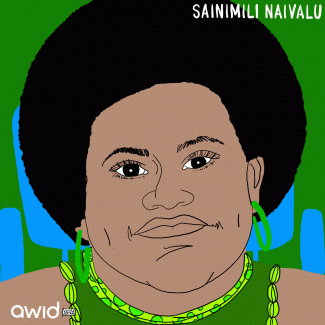
“I’ve witnessed discrimination on the streets, being teased on the streets and verbally abused on the streets. I have also made numerous friends and have met a lot of people. There may be dangers out there but I am a survivor and this is where I will be for now.” - Sainimili Naivalu
Sainimili Naivalu was a feminist and disability rights activist from the village of Dakuibeqa on Beqa Island, Fiji.
She demanded policy makers and stakeholders provide disability friendly policies and services such as the construction of ramps in towns and cities to increase accessibility. Physical barriers were not the only ones she strived to change. From her own experience, she knew that more difficult changes need to take place in social and economic spheres. Many of the challenges disabled people face are rooted in attitudes that carry discrimination and stigma.
A survivor and a fighter, Sainimili contributed to co-creating feminist realities that foster inclusion and shift attitudes towards disabled people. As a member of the Spinal Injury Association of Fiji (SIA) and through Pacific Disability Forum’s Pacific Enable project she attended the International Labour Organisation “Start Your Business” training in Suva, enabling her to transform her ideas into her own business. She was an entrepreneur at the Suva Market Stall 7, offering manicure services, as well as running SIA’s women’s market stall selling handicrafts, sulus and artifacts. Sainimili’s plan was to expand her business and become a major employer of disabled people.
In addition to her activism, she was also a table tennis medalist and youth champion.
A vivacious personality, Sainimili was one of a kind. You would always know that Sainimili is in a room because her laughter and her stories would be the first thing that you would notice. - Michelle Reddy
Are you job hunting? One of the perks of joining the AWID Community, is getting access to our community curated jobs board. You'll get to explore new opportunities, and you will also have the chance to share vacancies and call for proposals with all members.
Kasia has been supporting the work of feminist and social justice movements for the last 15 years. Before joining AWID, Kasia used to lead policy and advocacy for ActionAid and Amnesty International while organizing with feminists and social justice groups in Poland for access to abortion and against violence on the European borders. Kasia is passionate about resourcing feminist organizing in all their boldness, richness and diversity. She shares her time between Warsaw and her DIY community village in the forest. She loves saunas and is crazy about her dog named Wooly.
Position
Manager, Resourcing Feminist Movements
Add to stories
Off
Dear Feminist Movements: A Letter from the Board
Dear feminist movements,
Speaking on behalf of the Board, I write to express our deepest gratitude, appreciation, and respect for Hakima Abbas and Cindy Clark, our extraordinary Co-Executive Directors during the past five years who will be stepping aside to refresh the AWID leadership as we move into a new strategic plan and phase of our organizational life. They have consistently practiced the best principles of feminist organizational leadership and ethics of care as they navigated us through one of the most unpredictable, turbulent times in recent history of the world, the COVID-19 syndemic, and the subsequent downward global political spiral. They held AWID, our Staff, and Board firmly, gently, and lovingly as all of us experienced various impacts. They also held steadfastly to AWID vision and mission as they responded respectfully and strategically to various changes, not least the cancellation of the AWID Forum.
Going forward… we expect to continue with the co-directorship model given the nature, scope, and weight of the responsibilities of the executive role at AWID. Our first experience with co-leadership was a success in a multitude of ways, as you all have seen.
The Board decided to prioritize an internal recruitment process first, fully recognizing the great potential that exists within the current team. We expect to complete the transition by the end of 2022. Hakima and Cindy will stagger their departure, and will facilitate a smooth transition to the new leadership.
Seeing Cindy and Hakima leave AWID is difficult for the Board as well as others who have worked closely with them and love them. Nonetheless, rest assured the AWID Board is leading the transition process in a way that fully recognizes the beautiful and inspiring indelible marks Hakima and Cindy will be leaving as part of our 40-year history, that embraces the next step of on-boarding and supporting new leadership, and that inspires us to do better at this moment in AWID's life.
Major organizational transitions are neither simple nor easy. Sometimes they are forced, beyond anyone’s control, fraught, or even destructive. I, and many of you, have seen examples of those kinds of transitions. At other times, the staff’s needs and aspirations are aligned with those of the organization. Although we did not choose or wish Cindy and Hakima to leave AWID, their decision and AWID moving into the next strategic plan and new decade of existence are aligned. Best of all, we are in the wonderful, super competent, creative, and feminist hands of the Staff and Board.
We thank you, dear Feminist Movements, for your confidence in AWID. We also ask you to support our leadership transition in the coming months. Let’s continue to build, deepen, and strengthen our connections, as we have done for the past 40 years.
Please stay tuned for more concrete developments and updates. You will be hearing from us in the coming weeks.
In feminist solidarity and love, Margo Okazawa-Rey
President, AWID Board
“Ashawo Work na Work”: How Young Ghanaian Feminists Are Making Feminist Futures A Reality
by Fatima B. Derby
In 2017, the AWID #PracticeSolidarity campaign highlighted how young feminists could build feminist futures by showing up for one another, being in cross-regional conversations with one another, marching in solidarity with other activists and collaborating between movements. (...)
Sylvia Rivera fue activista por los derechos civiles, travesti y trabajadora sexual.
Conocida como la Drag Queen de color de Nueva York, Sylvia fue feroz e incansable en su voluntad por cambiar las cosas, y en su defensa de quienes quedaron marginadxs y excluidxs cuando el movimiento por los "derechos de la comunidad gay" se volvió predominante en los Estados Unidos, a principios de los 70.
En 1973, durante un conocido discurso por el día de Christopher Street, Sylvia gritó en medio de la multitud de integrantes de la comunidad LGBT:
"Todos ustedes me dicen, anda y esconde la cola entre las patas.
No voy a seguir aguantando esta mierda.
Me han golpeado.
Me han roto la nariz.
Me han metido en la cárcel.
He perdido mi trabajo.
He perdido mi departamento
por la liberación gay, ¿y todos ustedes me tratan así?
¿Qué carajo les pasa a todos ustedes?
¡Piensen en eso!"
En 1969, a la edad de 17 años, Sylvia participó en los emblemáticos disturbios de Stonewall, al lanzar, presuntamente, el segundo cóctel molotov para protestar por la redada policial en este bar gay de Manhattan. Siguió siendo una figura central en los levantamientos posteriores, organizando mítines y luchando contra la brutalidad policial.
En 1970, Sylvia trabajó junto con Marsha P. Johnson para establecer Street Transvestite Action Revolutionaries [Acción Travesti Callejera Revolucionaria] (S.T.A.R., por sus siglas en inglés), un colectivo político y una organización que establecería proyectos de apoyo mutuo para las personas trans que vivían en la calle, aquellxs que luchaban contra la drogadicción, las que estaban encarceladas y, en particular, para las personas trans de color que vivían en la pobreza.
Desafiante de las etiquetas, Silvia vivió la vida de una manera que retaba a las personas del movimiento de liberación gay a pensar de manera diferente. Ella dijo:
"Me fui de casa a los 10 años, en 1961. Hice la calle en la 42. El inicio de los años 60 no era un buen momento para lxs drag queens, los chicos afeminados o los chicos que usaban maquillaje como nosotrxs. En ese entonces nos golpeaba la policía, y todo el mundo. Yo no salí realmente como drag queen hasta finales de los 60, cuando se arrestaba a lxs drag queens, qué degradación había. Recuerdo que la primera vez que me arrestaron, ni siquiera estaba vestida totalmente en drag. Estaba caminando y los policías me arrebataron de la calle. La gente ahora quiere llamarme lesbiana porque estoy con Julia, y yo digo: "No. Soy sólo yo. No soy lesbiana". Estoy cansada de que me etiqueten. Ni siquiera me gusta la etiqueta transgénero. Estoy cansada de vivir con etiquetas. Sólo quiero ser quien soy. Soy Sylvia Rivera.
A través de su activismo y su coraje, Sylvia ofreció un espejo que reflejaba todo lo que estaba mal en la sociedad, pero también la posibilidad de transformación. Sylvia nació en 1951 y falleció en 2002.
Que représentent les Forums de l’AWID pour celles et ceux qui y ont assisté ? Quelle est cette magie qui opère lorsque des féministes du monde entier se rassemblent pour célébrer, élaborer des stratégies, apprendre et partager leurs joies ?
L’AWID s’est entretenue avec plus de quarante participant·es aux Forums pour connaître le récit de leur transformation personnelle en tant qu’activistes, celle de leur organisation et des mouvements auxquels elles et ils appartiennent. Elles et ils nous ont également dit ce que nous devrions conserver et renforcer pour les prochains Forums, ce qui distingue les Forums de l’AWID, et ce que nous pouvons améliorer.
Ce rapport contient des enseignements et d’inestimables conseils pour toute personne prévoyant d’organiser des rassemblements régionaux et thématiques en personne, et pour nous-mêmes alors que nous planifions le 15e Forum international de l’AWID.
Faites défiler pour en savoir plus!
Snippet - Join CSW69 Conversations Intro_ES
Súmate a través de nuestras conversaciones #CongelarFascismos
Mientras atravesamos las múltiples crisis globales, los movimientos infatigablemente construimos el poder más allá de las estructuras de poder tradicionales. La ola de órdenes ejecutivas que ha emitido la presidencia de los EE.UU. tiene la intención de amedrentarnos, pero no hay ideología fascista capaz de borrar nuestra existencia y resistencia.
Te invitamos a formar parte de la campaña de construcción de solidaridad para poner al descubierto y resistir a las fuerzas fascistas que socavan los movimientos feministas y por la justicia de género en tu contexto.
Provoca conversaciones en espacios valientes: Comparte historias de lucha y resistencia a los fascismos en tu contexto en la plataforma de la Comunidad de AWID. ¿No te has afiliado aún? Únete aquí.
Apoya a los movimientos que se han visto afectados: Amplifica las iniciativas de recaudación de fondos, las oportunidades de dotación de recursos y los esfuerzos de ayuda mutua mediante la etiqueta #CongelarFascismos (estamos en X, Instagram, LinkedIN, y también enBluesky)
Organízate alrededor de distintas alternativas: Hemos construido nuestra comunidad de práctica sobre alternativas económicas feministas y recursos autónomos. Inscríbete para participar aquí. (en inglés)