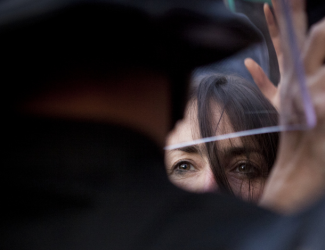
Philippe Leroyer | Flickr (CC BY-NC-ND 2.0)

Special Focus

AWID is an international, feminist, membership organisation committed to achieving gender equality, sustainable development and women’s human rights

Women Human Rights Defenders

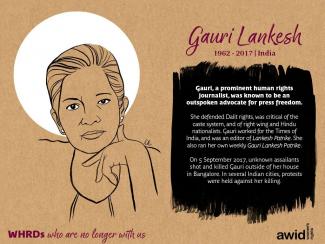
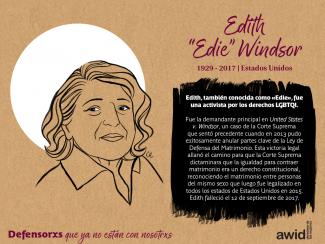
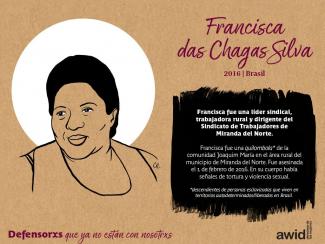
WHRDs are self-identified women and lesbian, bisexual, transgender, queer and intersex (LBTQI) people and others who defend rights and are subject to gender-specific risks and threats due to their human rights work and/or as a direct consequence of their gender identity or sexual orientation.

WHRDs are subject to systematic violence and discrimination due to their identities and unyielding struggles for rights, equality and justice.

The WHRD Program collaborates with international and regional partners as well as the AWID membership to raise awareness about these risks and threats, advocate for feminist and holistic measures of protection and safety, and actively promote a culture of self-care and collective well being in our movements.


Risks and threats targeting WHRDs  

WHRDs are exposed to the same types of risks that all other defenders who defend human rights, communities, and the environment face. However, they are also exposed to gender-based violence and gender-specific risks because they challenge existing gender norms within their communities and societies.

By defending rights, WHRDs are at risk of:

  • Physical assault and death
  • Intimidation and harassment, including in online spaces
  • Judicial harassment and criminalization
  • Burnout

A collaborative, holistic approach to safety

We work collaboratively with international and regional networks and our membership

  • to raise awareness about human rights abuses and violations against WHRDs and the systemic violence and discrimination they experience
  • to strengthen protection mechanisms and ensure more effective and timely responses to WHRDs at risk

We work to promote a holistic approach to protection which includes:

  • emphasizing the importance of self-care and collective well being, and recognizing that what care and wellbeing mean may differ across cultures
  • documenting the violations targeting WHRDs using a feminist intersectional perspective;
  • promoting the social recognition and celebration of the work and resilience of WHRDs ; and
  • building civic spaces that are conducive to dismantling structural inequalities without restrictions or obstacles

Our Actions

We aim to contribute to a safer world for WHRDs, their families and communities. We believe that action for rights and justice should not put WHRDs at risk; it should be appreciated and celebrated.

  • Promoting collaboration and coordination among human rights and women’s rights organizations at the international level to  strengthen  responses concerning safety and wellbeing of WHRDs.

  • Supporting regional networks of WHRDs and their organizations, such as the Mesoamerican Initiative for WHRDs and the WHRD Middle East and North Africa  Coalition, in promoting and strengthening collective action for protection - emphasizing the establishment of solidarity and protection networks, the promotion of self-care, and advocacy and mobilization for the safety of WHRDs;

  • Increasing the visibility and recognition of  WHRDs and their struggles, as well as the risks that they encounter by documenting the attacks that they face, and researching, producing, and disseminating information on their struggles, strategies, and challenges:

  • Mobilizing urgent responses of international solidarity for WHRDs at risk through our international and regional networks, and our active membership.

Related Content

CFA 2023 - Intro FAQ - thai

การประชุมนานาชาติ AWID ครั้งที่ 15

เวทีการประชุมนานาชาติ AWID เป็นทั้งกิจกรรมชุมชนระดับโลกและพื้นที่ของการเปลี่ยนแปลงของปัจเจก บุคคลอย่างสิ้นเชิง เป็นการประชุมที่ไม่เหมือนใคร คือเป็นที่รวบรวมนักสตรีนิยม นักปกป้องสิทธิสตรี ความยุติธรรมทางเพศ LBTQI+ และพันธมิตรในขบวนการเคลื่อนไหวเพื่อมนุษยชาติอันหลากหลาย เพื่อเชื่อมต่อ เยียวยาและเติบโต     เวทีนานาชาตินี้เป็นพื้นที่ที่นักสตรีนิยมจากทั่วทุกมุมโลก รวมถึงจากประเทศในกลุ่มโลกใต้ และชุมชนชายขอบที่ไม่ได้รับการเหลียวแลมาอย่างยาวนาน เป็นศูนย์กลางในการวาง ยุทธศาสตร์ร่วมกัน และเคลื่อนไหวเพื่อความยุติธรรมทางสังคม เพื่อเปลี่ยนอำนาจ สร้างพันธมิตร และ สร้างโลกที่แตกต่างและดีขึ้น

เมื่อผู้คนทั่วโลกมารวมตัวกันทั้งในฐานะปัจเจกบุคคลและองค์กรเคลื่อนไหว เราสามารถสร้างพลังอันยิ่งใหญ่ จึงขอเชิญท่านร่วมกิจกรรมกับเราที่กรุงเทพฯ ประเทศไทยในปี 2567  มาร้องเพลง เต้นรำ วาดฝัน และลุกขึ้นพร้อมกัน

วันที่:        2–5 ธันวาคม 2567
สถานที่:     กรุงเทพฯ ประเทศไทย; และทางออนไลน์
ผู้เข้าร่วม: นักสตรีนิยมจากทั่วโลกเข้าร่วมด้วยตนเอง ณ สถานที่จัดงานประมาณ  2,500 คน และเข้าร่วม
ทางออนไลน์ 3,000 คน

Snippet Festival Day 2,3 (FR)

Day, Jour, Día 2 - Sept. 2, 2021
Pansexuel, Gynasexuel ou Abrosexuel ? : Une plongée dans le queerness, le plaisir et la positivité sexuelle

Regarder le panneau (anglais) 


Terres et territoires libérés:une conversation panafricaine

Luam Kidane, Thousand Currents
Mariama Sonko, Nous Sommes la Solution
Yannia Sofia Garzon Valencia, VigiaAfro
Nomsa Sizani, Abahlali baseMjondolo Movement SA

Regarder le panneau (anglais)


Twitter chat:

#SextoterEnFéministe

HOLAA Africa Adventures from the Bedrooms of African Women

Montrez-moi plus de tweets


Day, jour, día 3 festival - Sept. 3, 2021
Solidarité féministe au-delà des frontières : Palestine, Myanmar et au-delà

Nino Ugrekhelidze, AWID
Sandie Hanna, With and For Girls Fund
Areen Hawari, Mada alCarmel Arab Research Center
Tin Tin Nyo, Burmese Women’s Union
Nandar, Purple Feminists Group

Regarder le panneau (anglais)


Résister à la criminalisation:
Organisation féministe pour la justice sexuelle et reproductive, ainsi que pour l’intégrité corporelle

Nana Abuelsoud, Resurj
Sibusiso, Resurj
Inas, Resurj
Mari-Claire, Resurj
Oriana, Vecinas Feministas
Andrea Paola Hernandez, Injusta Justicia
Jasmine George, Hidden Pockets

Regarder le panneau (anglais)


Instagram Live:

Les accessoires sexuels et le handicap

Makgosi Letimile
vidéos en anglais

Partie 1 Partie 2

Nilcéa Freire

Nilcéa Freire was a Brazilian feminist activist, politician and academic. A persevering advocate for women’s rights and those of underrepresented minorities in the country, her life and work carried a long history of struggles and victories.

"While resisting we have to keep pushing for progress, and what we can achieve at this time, in my view, will be through the stupendous organization of young white women, and especially black women, in all of the state capitals and large cities of Brazil." - Nilcéa Freire

In 1999 she became the first woman to occupy the position of Dean at the State University of Rio de Janeiro. Here, she spearheaded the implementation of the first affirmative action policy for students graduating from public schools, requiring reserved places specifically for low-income black students in a public university. This system was adopted in dozens of other public universities. 

Some years later, Nilcéa headed the Special Secretariat of Policies for Women in the government of former president Luiz Inácio Lula da Silva. In this capacity, she led the first National Women’s Conference. Over 12,000 women from across the country participated and the result of this collective work was embodied in the National Plan for Policies for Women. 

Her commitment to women, Afro-Brazilians and indigenous peoples was also strongly reflected in her work to promote their rights through initiatives of the Brazil Ford Foundation office where she was a regional director. 

The feminist activist Manoela Miklos recounted Nilcéa to be "a woman without equal"

At the age of 66, Nilcéa passed away in Rio de Janeiro on 29 December 2019 of cancer.


"Without words for the news of the death of dear Nilcea Freire. It is too sad to know that she left so early. She was always part of the ranks of those who do not settle for the injustices of the world. She was the Minister of Women, an activist, always active in the feminist cause. Much missed!” - Jandira Feghali, Federal Deputy

Watch Brazilian feminist Nilcea Freire on why we need to show solidarity with Brazil

What does AWID do?

CFA FAQ - Registration - Thai

การลงทะเบียน

Snippet Organising to Win_Fest (EN)

Plenary session:

Organising to Win

Margarita Salas, AWID
Nazik Abylgaziva, Labrys
Amaranta Gómez Regalado, Secretariado Internacional de Pueblos Indígenas frente al VIH/sida, la Sexualidad y los Derechos Humanos
Cindy Weisner, Grassroots Global Justice Alliance
Lucineia Freitas, Movimento Sem Terra

watch plenary


Leah Tumbalang

Leah Tumbalang fue una mujer lumad de Mindanao, en Filipinas. La historia del pueblo indígena lumad abarca generaciones de resistencia contra la minería corporativa a gran escala, de protección de los territorios ancestrales, los recursos y la cultura, y de lucha por la autodeterminación.

Leah era una líder lumad, y dirigente de Kaugalingong Sistema Igpasasindog to Lumadnong Ogpaan (Kasilo), una organización lumad y campesina que lucha contra la instalación de corporaciones mineras en Bukidnon, en la provincia de Mindanao. Fue inclaudicable en su activismo anti minería, al emprender con fervor campañas  contra los efectos devastadores de la extracción de minerales en el medio ambiente y las tierras de los pueblos indígenas. Era también una organizadora política de la lista electoral Bayan Muna, que integra el partido político de izquierda Makabayan.

Durante casi una década Leah (junto con otrxs integrantes de Kasilo) recibió amenazas debido a su oposición al despliegue de grupos paramilitares, que se cree son respaldados por intereses mineros.

«Como líder lumad de su comunidad, ella está en la primera línea de lucha por sus derechos a la tierra ancestral y a la autodeterminación.» - Kalumbay Regional Lumad Organization

Estar en la vanguardia de la resistencia también significa, a menudo, ser un blanco para la violencia y la impunidad, y Leah no solamente recibió numerosas amenazas de muerte, sino que fue asesinada el 23 de agosto de 2019 en la ciudad de Valencia, en Bukidnon.

Según un informe de Global Witness, «en números absolutos, Filipinas fue el país peor afectado» en lo que respecta a activistas ambientalistas asesinadxs en 2018.


Lee el informe de Global Witness, publicado en julio de 2019

Descubre más sobre las mujeres lumad de Filipinas y su lucha intergeneracional por la autodeterminación

Las organizaciones, ¿pueden afiliarse a AWID?

Si, alentamos la afiliación institucional

Actualmente contamos en nuestra membresía con cientos de organizaciones destacadas e innovadoras que trabajan en temas relacionados con los derechos de las mujeres y el desarrollo. Los criterios de afiliación son los mismos que para las personas a título individual, aunque las cuotas y los beneficios son diferentes, con el fin de atender a las necesidades de las instituciones afiliadas.

Conoce más sobre la membresía institucional de AWID

CFA FAQ - Call for activities - AR

دعوة للمشاركة

Snippet Festival Artwork_fest (ES)

Festival Art!

Featuring artwork by Upasana Agarwal, Ika Vantiani, & Naadira Patel.

Haga clic en las imágenes para agrandar

Por Upasana Agarwal

WebsiteInstagram

Anima Adjepong  "Yo me relaciono con lo queer como una práctica, como un servicio para la libertad. Lo queer perturba el orden normativo en el que vivimos a fin de crear otra cosa, se trata del liderazgo más allá del individuo"
Anwulika Okonjo «Lxs feministas son constructorxs de mundos»
Dilar Dirik «Debemos asegurarnos de que el feminismo sea una amenaza para el sistema» «Ya no necesitamos solamente ser solidarixs entre nosotrxs, necesitamos nuevas plataformas de luchas en común»
Makgosi Letimile «Los juguetes sexuales no deberían ser un lujo. Deberían ser accesibles y económicos.»
Manal Tamimi «Ustedes son el fuego que permite a todxs conservar el calor»
Nana Akosua Hanson «El arte nos permite crear una realidad alternativa»
Nomsa Sizani « Ocupar esta tierra es otra forma de repudiar este sistema capitalista» «Si no lo hacemos nosotrxs mismxs, nadie nos liberará»
Sandie Hanna «Ocupar esta tierra es otra forma de repudiar este sistema capitalista.» «Si no lo hacemos nosotrxs mismxs, nadie nos liberará»
Vandana Shiva «El panel de hoy es un hermoso despertar del mundo que es posible»
Yannia S. Garzón «Recuperar la dignidad de ser una mujer negra es lo que me mantiene viva»
Dr. Angelique V. Nixon "Escucha a tu cuerpo. Es más inteligente que tú."
 Patricia Wattimena "Yo quiero un futuro donde las economías estén al servicio de las mujeres y no las mujeres al servicio de las economías”

Por Ika Vantiani

Facebook | TwitterInstagram

 
Collage of Mariama Sonko
Collage of Nomsa Sizani
Artistic collage featuring Yania Sofia

Por Naadira Patel 

Website | Facebook | Instagram

Illustration of several women of color with text that says: Moving from Transactional to Transformative
Illustration of three hand outstretched. Two are spilling seeds into the other. In the center there is planet Earth and a woman walking over plants. The text reads "To defy capitalism we occupy land acting as custodians of diversity"

Sara Hegazy

Sara Hegazy, une audacieuse activiste égyptienne des droits des LGBTQI+, vivait dans une société où les membres de sa communauté, leurs corps et leurs vies sont souvent victimes de préjugés mortels. La résistance de Sara puise ses racines dans le processus de déconstruction d'un système dominant, oppressif et patriarcal, et de ses acteurs antidroits. 

« [En Égypte], toute personne qui n'est pas un homme, musulman, sunnite, hétéro et partisan du système, est rejetée, réprimée, stigmatisée, arrêtée, exilée ou tuée. Ce phénomène concerne le système patriarcal dans son ensemble, étant donné que l'État ne peut pratiquer sa répression contre les citoyens sans une oppression préexistant depuis l'enfance », écrivait Sara Hegazy le 6 mars 2020

La répression de la voix de Sara par le gouvernement égyptien atteignit son paroxysme en 2017, lorsqu’elle fut arrêtée pour avoir brandi un drapeau arc-en-ciel lors du concert de Mashrou' Leila (groupe libanais dont le chanteur principal est ouvertement gai) au Caire. Elle fut ensuite accusée d'avoir rejoint un groupe illégal et « d’incitation à la déviance sexuelle et à la débauche ».  

« C’était un acte de soutien et de solidarité, non seulement envers le chanteur [de Mashrou' Leila] mais pour tou·te·s les opprimé·e·s… Nous étions fier·ère·s de porter le drapeau. Nous ne pouvions imaginer que la société et l’État égyptien réagiraient de cette façon. Ils m’ont vue comme une criminelle, quelqu’un qui cherchait à détruire la structure morale de la société ».  - Sara Hegazy

Sara fut emprisonnée pendant trois mois, durant lesquels elle fut torturée et agressée sexuellement. En janvier 2018, après avoir été libérée sous caution, elle demanda l'asile au Canada où elle vécut en sécurité mais resta prisonnière des souvenirs de la violence et des sévices qu'elle avait subis dans son corps et son âme.

« Je suis sortie de cette expérience au bout de trois mois avec un cas très sévère et grave de SSPT [syndrome de stress post-traumatique]. La prison m'a tuée. Elle m'a détruite », déclara Sara Hegazy à la NPR (Radio d’État)

Sara s'est suicidée le 14 juin 2020, en laissant une note manuscrite en arabe :  

« À mes frères et sœurs - j'ai essayé de trouver la rédemption et j'ai échoué, pardonnez-moi. »
« À mes amis - l'expérience [l’aventure] a été rude et je suis trop faible pour la supporter, pardonnez-moi. » 
« Au monde - tu as été très cruel, mais je te pardonne. »

Son courage et son héritage seront perpétués par toutes les personnes qui l’aimaient et qui croient en ce pour quoi elle s’est battue. 


Hommages :

« À Sara : repose-toi, repose-toi simplement, hors d’atteinte de cette violence implacable, de ce patriarcat étatique meurtrier. Dans la rage, dans le chagrin, dans l'épuisement, nous résisterons. » - Rasha Younes, chercheuse sur les droits LGBT à Human Rights Watch. Lisez le texte complet

Le chanteur de Mashrou’ Leila chante en hommage à Sara Hegazy

Hommages sur Twitter 

Documentaire sur la vie de Sara Hegazy

Site Web dédié à Sara Hegazy et à celleux, particulièrement aux voix LGBTQI, qui n'ont pas la possibilité de faire leur deuil en public

Je voudrais travailler pour les droits des femmes. Par où commencer ?

จะมีการช่วยสนับสนุนงบประมาณค่าอุปกรณ์หรือค่าเตรียมการสำหรับกิจกรรมหรือไม่

คุณสามารถคาดหวังว่าจะมีอุปกรณ์มาตราฐานสำหรับกิจกรรมและการนำเสนอเตรียมไว้ให้ ได้แก่ กระดาษฟลิปชาร์ท ปากกามาร์กเกอร์ โพสต์อิท รวมถึง โปรเจคเตอร์ อุปกรณ์ด้านภาพและเสียง อุปกรณ์เพิ่มเติมนอกเหนือจากนี้ถือเป็นความรับผิดชอบของผู้จัดกิจกรรม ฝ่ายโลจิสติกส์ AWID จะพร้อมที่จะตอบคำถามและให้คำแนะนำต่างๆ

Snippet Art Gift_Fest (ES)

¡Descarga nuestro fondo de zoom y postal imprimible!

diseñado por Ellena Ekarahendy

(Haga clic en la imagen para descargar)

Descarga aquí

2002: Discussions on the Financing for Development agenda begin

The Monterrey Conference on Financing for Development marked the beginning of discussions on the Financing for Development agenda.

  • The Monterrey Consensus was adopted at this first international conference on Financing for Development. It was the first United Nations hosted summit-level meeting to address key financial and related issues on global development.
  • The Conference and its preparatory process saw unprecedented cooperation between the United Nations and the World Bank (WB), the International Monetary Fund (IMF) and the World Trade Organization (WTO) as part of efforts to promote greater coherence and consistency among the international monetary, trade and financial systems and institutions.
  • Monterrey also marked the first time that financing for development debates took place between governments, representatives of civil society and the business sector. These actors moved the discussion beyond a ‘technical’ focus, to look at how to mobilize and channel financial resources to fulfill the internationally agreed development goals of previous UN conferences and summits of the 1990s, including the Millennium Development Goals (MDGs).
  • The Women’s Caucus noted the historical significance of the conference stating that it had the potential to address structural challenges that continue to hamper development but also raised concern over the effects of increased militarisation and fundamentalism on women, despite the fact that the Monterrey Consensus assumed that the global economic and financial system worked for all.
  • Learn more about the six Monterrey themes and the conference follow up mechanisms: Gender Issues and Concerns in Financing for Development by Maria Floro, Nilufer Çagatay, John Willoughby and Korkut Ertürk (INSTRAW, 2004) 

ما هي الإجراءات التي سيتم اتخاذها لحماية الصحة العامة واحتواء مخاطر تفشي فيروس كورونا؟

نحن نراقب هذه المخاطر والمخاطر الأخرى بعناية، وسننشر معلومات شاملة عن الصحة والسلامة عند فتح التسجيل، حتى تتمكن/ين من اتخاذ القرار. بالإضافة إلى ذلك، تم تصميم التنسيق الهجين لتوفير تجربة مشاركة هادفة للمشاركين/ات الذين/ اللواتي يفضلون عدم السفر أو غير القادرين على السفر.