Philippe Leroyer | Flickr (CC BY-NC-ND 2.0)

Special Focus

AWID is an international, feminist, membership organisation committed to achieving gender equality, sustainable development and women’s human rights

Women Human Rights Defenders

WHRDs are self-identified women and lesbian, bisexual, transgender, queer and intersex (LBTQI) people and others who defend rights and are subject to gender-specific risks and threats due to their human rights work and/or as a direct consequence of their gender identity or sexual orientation.

WHRDs are subject to systematic violence and discrimination due to their identities and unyielding struggles for rights, equality and justice.

The WHRD Program collaborates with international and regional partners as well as the AWID membership to raise awareness about these risks and threats, advocate for feminist and holistic measures of protection and safety, and actively promote a culture of self-care and collective well being in our movements.


Risks and threats targeting WHRDs  

WHRDs are exposed to the same types of risks that all other defenders who defend human rights, communities, and the environment face. However, they are also exposed to gender-based violence and gender-specific risks because they challenge existing gender norms within their communities and societies.

By defending rights, WHRDs are at risk of:

  • Physical assault and death
  • Intimidation and harassment, including in online spaces
  • Judicial harassment and criminalization
  • Burnout

A collaborative, holistic approach to safety

We work collaboratively with international and regional networks and our membership

  • to raise awareness about human rights abuses and violations against WHRDs and the systemic violence and discrimination they experience
  • to strengthen protection mechanisms and ensure more effective and timely responses to WHRDs at risk

We work to promote a holistic approach to protection which includes:

  • emphasizing the importance of self-care and collective well being, and recognizing that what care and wellbeing mean may differ across cultures
  • documenting the violations targeting WHRDs using a feminist intersectional perspective;
  • promoting the social recognition and celebration of the work and resilience of WHRDs ; and
  • building civic spaces that are conducive to dismantling structural inequalities without restrictions or obstacles

Our Actions

We aim to contribute to a safer world for WHRDs, their families and communities. We believe that action for rights and justice should not put WHRDs at risk; it should be appreciated and celebrated.

  • Promoting collaboration and coordination among human rights and women’s rights organizations at the international level to  strengthen  responses concerning safety and wellbeing of WHRDs.

  • Supporting regional networks of WHRDs and their organizations, such as the Mesoamerican Initiative for WHRDs and the WHRD Middle East and North Africa  Coalition, in promoting and strengthening collective action for protection - emphasizing the establishment of solidarity and protection networks, the promotion of self-care, and advocacy and mobilization for the safety of WHRDs;

  • Increasing the visibility and recognition of  WHRDs and their struggles, as well as the risks that they encounter by documenting the attacks that they face, and researching, producing, and disseminating information on their struggles, strategies, and challenges:

  • Mobilizing urgent responses of international solidarity for WHRDs at risk through our international and regional networks, and our active membership.

Related Content

Khaoula Ksiksi

Biography

Khaoula Ksiksi est une fervente défenseuse de la justice, de l’équité et de la libération. Dans son rôle de conseillère en matière de genre, d’égalité, de diversité et d’inclusion (GEDI), elle œuvre à faire de l’inclusion une réalité concrète, pas simplement un concept politique, au sein des programmes humanitaires et des interventions en situation de crise. Elle collabore avec diverses équipes pour combattre l’oppression structurelle en déployant des approches audacieuses et transformatrices qui s’appuient sur les expériences vécues.

Son activisme a débuté au cœur du mouvement antiraciste tunisien. Au sein de l’organisation Mnemty, elle a contribué à l’adoption de la première législation anti-discrimination du pays, obligeant la société tunisienne à reconnaître l’existence de l’injustice raciale. Par la suite, elle a co-fondé le collectif Voix des Femmes Tunisiennes Noires, une initiative visant à valoriser le leadership des femmes noires, à développer des réseaux de solidarité et à revendiquer une visibilité dans une société qui tend à les réduire au silence.

Khaoula est également l’une des fondatrices de Falgatna, un mouvement queer-féministe radical qui œuvre pour la défense des droits OSIGEGCS, tout en apportant son soutien aux communautés LGBTQI+ par des actions directes, des stratégies de cyberrésistance et un plaidoyer centré sur les survivant·es.

Auparavant, elle a dirigé des projets régionaux féministes et de justice climatique à la Fondation Rosa Luxemburg en Afrique du Nord et de l’Ouest.

Son travail est guidé par une conviction profonde : personne n’est libre tant que nous ne le sommes pas toustes. Son activisme est à la fois un combat et une lettre d’amour à son peuple, à ses communautés et au monde que nous méritons.

Add to stories
Off

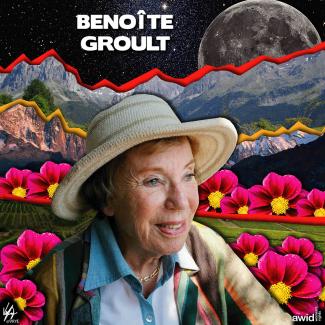
Benoîte Groult

Benoîte was a French journalist, writer, and feminist activist.

She published more than 20 novels as well as many essays on feminism.

Her first book “Ainsi Soit-Elle” (loosely translated as “As She Is”) was published in 1975. The book explored the history of women’s rights as well as misogyny and violence against women.

Her last book, “Ainsi Soit Olympe de Gouges,” explored women’s rights during the French Revolution, centering on the early French feminist Olympe de Gouges. De Gouges was guillotined in 1793 for challenging male authority and publishing a declaration of women’s rights (“Déclaration Des droits de la Femme et de la Citoyenne”) two years earlier. 


Benoïte Groult, France

Snippet Organising to Win_Fest (ES)

Sesión plenaria:

Organizarse para vencer

Margarita Salas, AWID
Nazik Abylgaziva, Labrys
Amaranta Gómez Regalado, Secretariado Internacional de Pueblos Indígenas frente al VIH/sida, la Sexualidad y los Derechos Humanos
Cindy Weisner, Grassroots Global Justice Alliance
Lucineia Freitas, Movimento Sem Terra

ver plenaria (inglés)


Qu’est-ce que l’AWID ?

L’Association pour les droits de la femme dans le développement (AWID) est une organisation associative internationale féministe.

Nous œuvrons à renforcer les répercussions et l’influence des organisations, mouvements et défenseur-euse-s des droits des femmes sur la scène internationale et à amplifier leur voix collective, en vue de la pleine réalisation de la justice de genre et des droits humains des femmes.

En savoir plus sur l’AWID

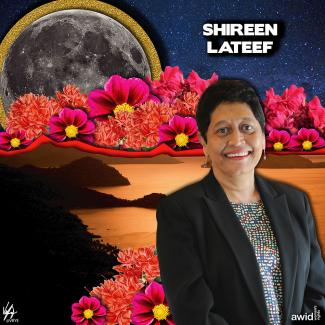
Shireen Lateef

Shireen fue una inspiración para muchas feministas en Fiyi y una aliada poderosa del movimiento de mujeres.

Abogó incansablemente por la igualdad de género tanto a nivel local como regional. Comenzó su carrera como especialista junior en género en el Banco de Desarrollo Asiático e introdujo profundos cambios en las políticas de género de la institución. Su investigación «Gobernar mediante lxs danda: violencia doméstica entre lxs indo-fiyianxs» fue uno de los primeros trabajos de investigación sobre violencia doméstica, matrimonio y mujeres en Fiyi. Este trabajo fundacional ha sido un catalizador para el trabajo feminista en esta área.

El legado de Shireen sigue vivo porque son muchxs lxs que recuerdan su influencia, su compromiso y su apoyo al movimiento de mujeres de Fiyi y del Pacífico. 


Shireen Lateef, Fiji

Snippet Festival Artwork_fest (FR)

Art du Festival

Illustrations artistiques du festival par Upasana Agarwal, Ika Vantiani, & Naadira Patel

Cliquez sur les images pour les agrandir

Par Upasana Agarwal

WebsiteInstagram

Anima Adjepong: J'approches le queer comme une pratique, comme au service de la liberté… Le queer perturbe l'ordre normatif dans lequel nous vivons, afin de créer autre chose, il s'agit du leadership au-delà de l'individu.
Anwulika Okonjo « Les féministes bâtissent des mondes »
Dilar Dirik « Nous devons faire en sorte que le féminisme soit une menace pour le système »  « Il ne s’agit plus simplement d’être solidaires les un·e·s envers les autres, nous avons besoin de nouvelles plateformes de luttes communes »
Makgosi Letimile « Les accessoires sexuels ne devraient pas être un luxe. Ils devraient être accessibles et abordables. »
Manal Tamimi « Tu es le feu qui me tient chaud »
Nana Akosua Hanson « L’art nous permet de créer une réalité alternative »
Nomsa Sizani « Le fait d’occuper cette Terre est une autre façon pour nous de condamner ce système capitaliste. »  « Si nous ne le faisons pas, personne ne nous libérera. »
Sandie Hanna « La solidarité est un mécanisme de survie. »  « Nous devons continuer, car la continuité est vitale dans nos actions pour la libération. »
Vandana Shiva « Le comité d'aujourd'hui nous montre un bel éveil au monde qui est possible. »
Yannia S. Garzón « Retrouver ma dignité en tant que femme noire est ce qui me maintient en vie »
Dr Angélique V. Nixon "Écoute ton corps. Il est plus intelligent que toi."
Patricia Watténa "Je veux un avenir où les économies fonctionnent pour les femmes et non pas les femmes qui travaillent pour l'économie."

Par Ika Vantiani

Facebook | TwitterInstagram

 
Collage of Mariama Sonko
Collage of Nomsa Sizani
Artistic collage featuring Yania Sofia

Par Naadira Patel 

Website | Facebook | Instagram

Illustration of several women of color with text that says: Moving from Transactional to Transformative
Illustration of three hand outstretched. Two are spilling seeds into the other. In the center there is planet Earth and a woman walking over plants. The text reads "To defy capitalism we occupy land acting as custodians of diversity"

What issues does AWID work on?

AWID works towards the realization of gender justice and women’s human rights worldwide. We work to strengthen the voices and impact of women’s rights advocates, organizations and movements. Our main Priority Areas relate to themes that are closely linked to dominant global trends.

These themes reflect growing challenges that negatively impact women’s rights worldwide.

  • Economic Justice
  • Resourcing Women’s Rights
  • Challenging Religious Fundamentalisms
  • Women Human Rights Defenders
  • Young Feminist Activism

Find out more about AWID's Priority Areas

Mariam Uy Acob

Mariam était assistante juridique à l'Alliance des droits humains Kawagib Moro.

Mariam était une fervente critique de la militarisation imposée aux communautés moro et a constamment dénoncé les bombardements aériens et les cantonnements de troupes. Elle a dû fuir et chercher refuge après avoir révélé et dénoncé des injustices commises à l'encontre des communautés musulmanes aux Philippines.

Il semble que Mariam ait été assassinée par de présumés agents de l'armée à cause de son action en tant que défenseure. Les assaillants qui l‘ont tuée l’ont épiée, ont rattrapé le véhicule dans lequel elle se trouvait et ont fait feu sur elle à sept reprises.


Mariam Uy Acob, Philippines

Snippet Art Gift_Fest (FR)

Téléchargez notre fond d’écran zoom & carte postale imprimable!

illustré par Ellena Ekarahendy

Téléchargez ici

كان من المفترض أن أشارك أنا أو مجموعتي في المنتدى الذي تم إلغاؤه بسبب الجائحة، كيف يمكنني المشاركة في هذا المنتدى؟

سنعيد التواصل مع الشركاء/ الشريكات السابقين/ات لضمان احترام الجهود السابقة. إذا تغيرت معلومات الاتصال الخاصة بك منذ آخر عملية للمنتدى، فيرجى تحديثنا حتى نتمكن من الوصول إليك.

¿Publican un informe anual?

Sí. AWID publica informes anuales.

Todos nuestros informes anuales estan disponibles en línea.

Ver todos los informes anuales de AWID

Ana M. Tallada Iglesia

Ana was a strong advocate of women’s rights and worked with a broad cross-section of women, from those in grassroots networks to those in the private sector.

She believed in building bridges across sectors. Ana was a member of the National Network for the Promotion of Women (RNPM), and was active in developing many social programs that address issues such as sexual and reproductive health and rights. 


Ana M. Tallada Iglesia, Peru

Snippet Video C&H (EN)

كيف يمكنني تمويل مشاركتي في منتدى جمعية حقوق المرأة في التنمية؟

إذا كانت مجموعتك أو مؤسستك تتلقى تمويلًا، فقد ترغب في مناقشة الأمر مع الممول/ة الخاص بك الآن إذا كان قادرًا على دعم سفرك ومشاركتك في المنتدى. تخطط العديد من المؤسسات لميزانياتها للعام المقبل في وقت مبكر من عام 2023، لذا من الأفضل عدم تأخير هذه المحادثة للعام المقبل.

J’ai rédigé un article en rapport avec les droits des femmes et le développement. Comment puis-je le partager avec les membres de l’AWID ?

Marceline Loridan-Ivens

Nacida en 1928, Marceline trabajó como actriz, guionista y directora.

Dirigió The Birch-Tree Meadow en 2003, protagonizada por Anouk Aimee, así como varios otros documentales. También fue una sobreviviente del Holocausto. Tenía solo quince años cuando ella y su padre fueron arrestadxs y enviadxs a campos de concentración nazis. Los tres kilómetros entre su padre en Auschwitz y ella en Birkenau eran una distancia infranqueable, sobre la cual escribió en una de sus novelas más influyentes: Pero no regresaste.

Al hablar sobre su trabajo, una vez afirmó: «Todo lo que puedo decir es que todo lo que pueda escribir, todo lo que pueda develar, es mi tarea hacerlo».


Marceline Loridan-Ivens, France