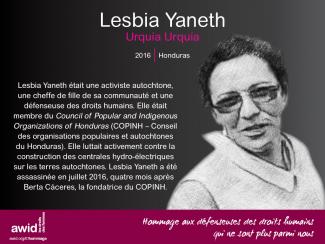
Lesbia Yaneth Urquía Urquía
WHRDs are self-identified women and lesbian, bisexual, transgender, queer and intersex (LBTQI) people and others who defend rights and are subject to gender-specific risks and threats due to their human rights work and/or as a direct consequence of their gender identity or sexual orientation.
WHRDs are subject to systematic violence and discrimination due to their identities and unyielding struggles for rights, equality and justice.
The WHRD Program collaborates with international and regional partners as well as the AWID membership to raise awareness about these risks and threats, advocate for feminist and holistic measures of protection and safety, and actively promote a culture of self-care and collective well being in our movements.
WHRDs are exposed to the same types of risks that all other defenders who defend human rights, communities, and the environment face. However, they are also exposed to gender-based violence and gender-specific risks because they challenge existing gender norms within their communities and societies.
We work collaboratively with international and regional networks and our membership
We aim to contribute to a safer world for WHRDs, their families and communities. We believe that action for rights and justice should not put WHRDs at risk; it should be appreciated and celebrated.
Promoting collaboration and coordination among human rights and women’s rights organizations at the international level to strengthen responses concerning safety and wellbeing of WHRDs.
Supporting regional networks of WHRDs and their organizations, such as the Mesoamerican Initiative for WHRDs and the WHRD Middle East and North Africa Coalition, in promoting and strengthening collective action for protection - emphasizing the establishment of solidarity and protection networks, the promotion of self-care, and advocacy and mobilization for the safety of WHRDs;
Increasing the visibility and recognition of WHRDs and their struggles, as well as the risks that they encounter by documenting the attacks that they face, and researching, producing, and disseminating information on their struggles, strategies, and challenges:
Mobilizing urgent responses of international solidarity for WHRDs at risk through our international and regional networks, and our active membership.
by Chinelo Onwualu
On September 2nd, 2021, the amazing feminist and social justice activists of AWID’s Crear | Résister | Transform festival came together not only to share resistance strategies, co-create, and transform the world, but also to talk dirty on Twitter.
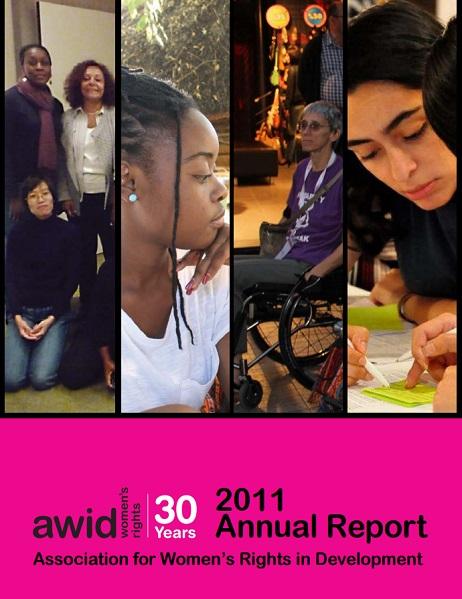
In order to achieve our mission, AWID works through multi-year interconnected programs which encompass a variety of strategies including knowledge production and dissemination, action-research, advocacy, alliance building, and convening strategic dialogues.
Our 2011 Annual Report provides key highlights of our work during the year to contribute to the advancement of women’s rights and gender equality worldwide.
The rights of the child (EU & GRULAC)
Birth registration and the right of all to recognition as a person before the law (Mexico, Turkiye)
Adequate housing as a component of the right to an adequate standard of living and the right to non-discrimination in this context (Germany, Finland)
Negative impact of unilateral coercive measures on the enjoyment of human rights (Non-Aligned Movement)
Effects of foreign debt and other international financial obligations on the enjoyment of human rights (mandate renewal) (Cuba)
Rights of persons with disabilities, digital technologies, and inclusive disability infrastructure (Mexico, New Zealand)
Rights of the child (focus: Children in armed conflict) (Uruguay on behalf of a group of States from Latin America and the Caribbean and European Union)
Right to work (Egypt, Greece)
Right to food (Cuba)
Promotion of the enjoyment of cultural rights of all and respect for cultural diversity (Cuba)
Human rights situation in the Occupied Palestinian Territory, including East Jerusalem and the obligation to ensure accountability and justice (Organisation of Islamic Cooperation)
Right of the Palestinian people to self-determination (Organisation of Islamic Cooperation)
Israeli settlements in the Occupied Palestinian Territory, including East Jerusalem and in the occupied Syrian Golan (Organisation of Islamic Cooperation)
Participants will come together in Bangkok, Thailand. We can’t wait!

Si quieres esta concha, déjame ver ese papel (En serio, ¿dónde está el resultado de tu prueba? En versión digital está bien)

Intensificamos los preparativos para el 13º Foro Internacional de AWID, pusimos mucha energía en los procesos de la Agenda 2030 y del financiamiento para el desarrollo, y hemos continuado nuestro trabajo diario y central en nuestras áreas prioritarias
En respuesta a esto, estamos saliendo de nuestros compartimentos estancos.
En todo el mundo, los movimientos por los derechos de las mujeres y otros movimientos están logrando articular cada vez más la naturaleza sistémica e interseccional de estos problemas y de muchos otros.

Enciende tu fuego feminista leyendo nuestras investigaciones y publicaciones varias sobre financiamiento, defensoras de derechos humanos, construcción de movimientos, fundamentalismos, justicia económica, seguimiento y evaluación feminista y más
ใหม่
ผู้เข้าร่วมประชุมจะได้เข้าร่วมตามสถานที่ต่างๆนอกเพื้นที่ในการจัดงานที่กรุงเทพฯ และตามส่วนต่างๆของ โลกในแต่ละวันของการประชุม สถานที่ประชุมที่ผู้เข้าร่วมจัดการเองทั้งหมดนั้นจะเชื่อมต่อกับสถานที่จัดงาน
จริงในกรุงเทพฯเช่นเดียวกับบุคคลที่เชื่อมต่อทางออนไลน์ ผู้เข้าร่วมในจุดศูนย์กลาง Hub นี้จะสามารถ ดำเนินรายการในหัวข้อกิจกรรมต่างๆ เข้าร่วมอภิปราย แลกเปลี่ยน และเพลิดเพลินไปกับโปรแกรม ที่หลากหลาย
ที่ตั้งจุดศูนย์กลาง Hub จะประกาศในปี 2567
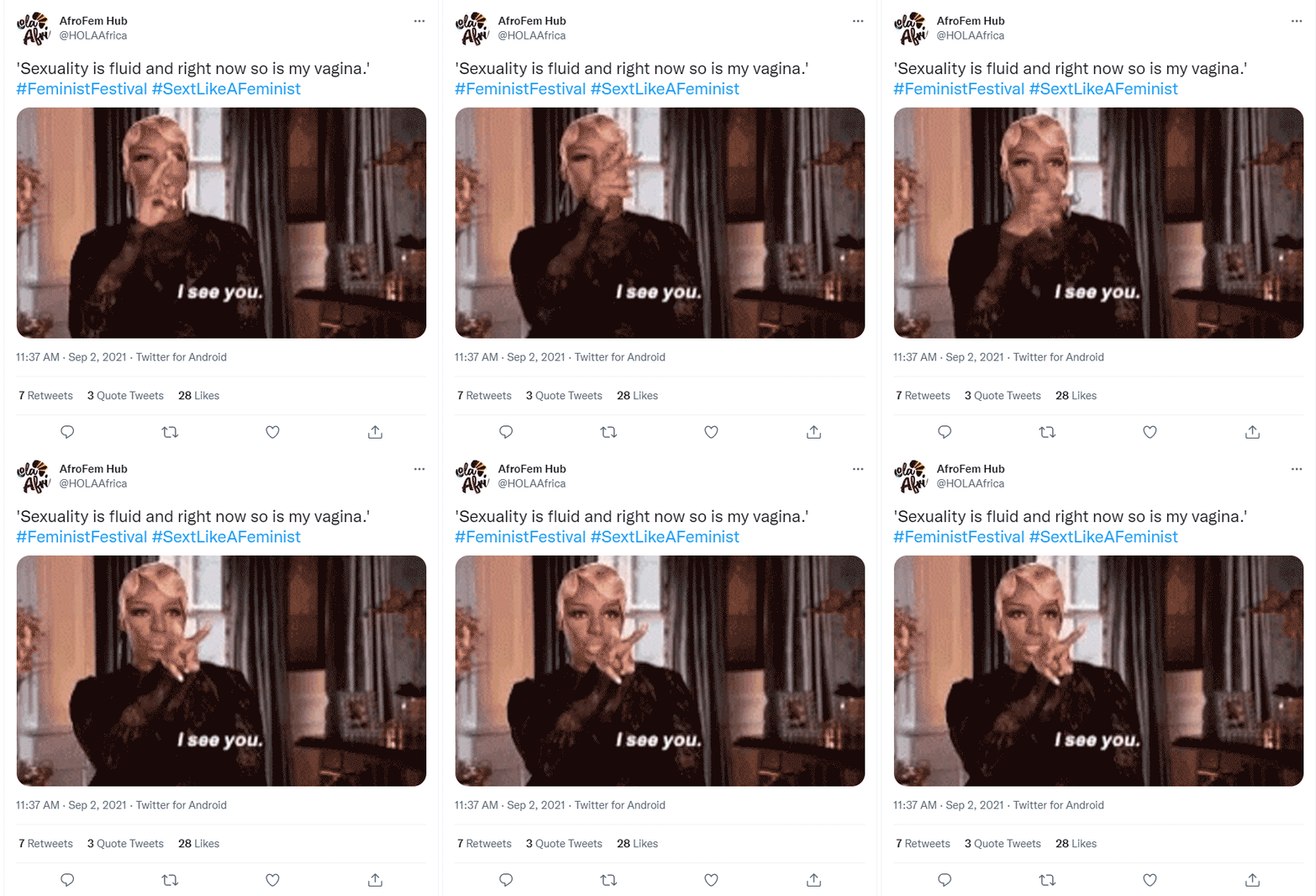
« La sexualité est fluide, et là mon vagin aussi. »
#FeministFestival #SextLikeAFeminist
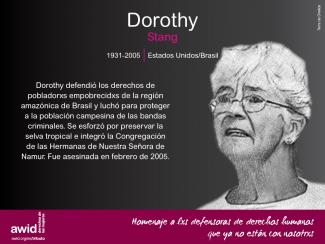
Nuestro Informe Anual 2010 pone en relieve nuestros acontecimientos y el impacto de nuestro trabajo durante el año.
Pueden leer como estamos traduciendo nuestra visión y misión en estrategias y actividades que hemos logrado en colaboración con miembros, socias y aliadas de AWID para avanzar los derechos de las mujeres y la igualdad de género a través del mundo.
Este informe también incluye vínculos a las últimas publicaciones de AWID.
📅 A lo largo de la conferencia | April 27 - 30
🏢 Melbourne Convention and Exhibition Centre, Booth B17
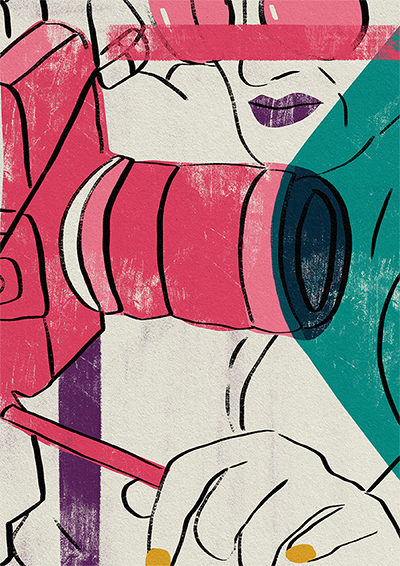
Communicating Desire
Host: We tend to think about communicating desire as something that is limited to the private intimacy of the bedroom and our personal relationships. But can we also think of this kind of communication as a structure, a praxis that informs our work, and how we are, how we do in the world?
Lindiwe
I believe that unfortunately in the past, expressing your sexuality has been limited. You were allowed to express it within the confines of your marriage, which was permitted, there have always been taboo and stigmas attached to expressing it any other way. When it comes to communicating, obviously the fact that certain stigmas are attached to expressing your sexuality or expressing your desire makes it a lot harder to communicate that in the bedroom or intimately with your partner. From my personal experience, I do believe that obviously if I feel more comfortable expressing myself outside of the bedroom on other matters or other topics, it’s easier for me to build that trust, because you understand conflict resolution with that particular person, you understand exactly how to make your communication special towards that particular person. It’s not easy. It’s something that is consistently done throughout whatever your engagement is, whether it’s your relationship or whether it’s casual and just in the moment. But I believe that confidence outside can definitely translate to how you communicate your desire.
Manal
Since childhood, a woman is raised with that, “you’re not allowed to talk about your body, you’re not allowed to talk about your desire,” which puts a heavy responsibility on women, especially girls in their teens when they need to express themselves and talk about these issues. So for me I think this is a big problem. You know, I have been married for more than 25 years, but still, until now, I cannot talk about my desires. I cannot say what I want or what I prefer, because it’s like I’m not allowed to go beyond this line. It’s like haram, despite it being my right. This is the case for all my friends, they just can’t express themselves in the right way.
Louise
Personally, I find that expressing our desires, my desires, however that expression comes in hand, has to do with the other, and the gaze that the other would have on me. So this is also something that we can link to cinema. And the gaze I would have on myself as well: what I think I am as an individual, but also what society expects of me and my sexuality. In the past, I somehow did the analogy between what happens in the bedroom and what happens in the workplace, because there is sometimes this dynamic of power, whether I want it or not. And oftentimes, verbal communication is harder than we think. But when it comes to representation in film, that’s a totally different game. We are very far away from what I guess all of us here would like to see on screen when it comes to just communicating sexual desires inside or outside the bedroom.
Host: We can think about the digital world as embodied: while it might be virtual, it is not less real. And this was made clear in the context of AWID’s feminist realities festival, which took place entirely online. What does it mean then to talk about sexuality, collectively, politically, in online spaces? Do we navigate virtual spaces with our bodies and affects, and in this case, what are the different considerations? What does it do to communication and representation?

Lindiwe
Social media makes you feel community-based. When you express what it is that you want or like, there is someone who’s either going to agree or disagree, but those who do agree make you feel that you belong to a community. So it’s easier to throw it out into the universe, or for others to see, and potentially not get as much judgment. And I say this very loosely because sometimes, depending on what it is that you’re expressing, it either will get you vilified or celebrated. But when it comes to the bedroom, there is an intimacy and almost a vulnerability that is exposing you and different parts of you that is not as easy to give your opinion on. When it comes to expressing your desire, speaking it and saying it and maybe putting a Tweet or a social media post, or even liking and reading other communities that are same-minded is a lot easier than telling your partner, “this is how I want to be pleasured” or “this is how what I want you to do next,” because of the fear of rejection. But not only that, just the vulnerability aspect – allowing yourself to be bare enough to let the other person see into what you are thinking, feeling, and wanting – I think this is where the difference would come in for me personally. I feel it is a lot more community-based on social media, and it’s easier to engage in discourse. Whereas in the bedroom, you don’t want to necessarily kill the moment. But I think that also kind of helps you understand going forward, depending on the relationship with the person, how you would engage thereafter. So I always know that if I try to communicate something and I fail to do so in the moment, I can always try to bring it up outside of that moment and see what the reaction would be so I know how to approach it going forward.
Louise
You know the question in films is, I don’t know if the male gaze is done intentionally or not. Like we don’t really know that. What we know is that the reason why sexuality in general has been so heternormative and focused on penetration and not giving any space for women to actually ask for anything in films, is because most of the people who have been working in this industry and making decisions in terms of, you know, storytelling and editing have been white men. So rape revenge is this very weird film genre that was birthed in the 70s, and half of the story would be that a woman is being raped by one or multiple people, and in the other half, she would get her revenge. So usually she would murder and kill the people who have raped her, and sometimes other people next to them. At the beginning of the birth of this genre and for 30 years at least, those films were written, produced, and directed by men. This is why we also want so much representation. A lot of feminists and pioneers in queer filmmaking also used the act of filming in order to do that and to reclaim their own sexuality. I’m thinking about Barbara Hammer, who’s a feminist and queer pioneer in experimental cinema in the U.S. where she decided to shoot women having sex on 16mm, and by doing so reclaimed a space within the narrative that was exposed in film at that time. And there is also then the question of invisibilization: we know now, because of the internet and sharing knowledge, that women and queer filmmakers have been trying and making films since the beginning of cinema. We only realize it now that we have access to databases and the work of activists and curators and filmmakers.
Host: And this opens up the conversation on the importance of keeping our feminist histories alive. The online worlds have also played a crucial role in documenting protests and resistance. From Sudan to Palestine to Colombia, feminists have taken our screens by storm, challenging the realities of occupation, capitalism, and oppression. So could we speak of communicating desire – the desire for something else – as decolonization?
Manal
Maybe because my village is just 600 residents and the whole village is one family – Tamimi – there are no barriers between men and women. We do everything together. So when we began our non-violent resistance or when we joined the non-violent resistance in Palestine, there was no discussion whether women should participate or not. We took a very important role within the movement here in the village. But when other villages and other places began to join our weekly protests, some men thought that if these women participate or join the protests, they will fight with soldiers so it will be like they’re easy women. There were some men who were not from the village who tried to sexually harass the women. But a strong woman who is able to stand in front of a soldier can also stand against sexual harassment. Sometimes, when other women from other places join our protest, they are shy at first; they don’t want to come closer because there are many men. If you want to join the protest, if you want to be part of the non-violent movement, you have to remove all these restrictions and all these thoughts from your mind. You have to focus on just fighting for your rights. Unfortunately, the Israeli occupation realizes this issue. For example, the first time I was arrested, I wear the hijab so they tried to take it off; they tried to take off my clothes, in front of everybody. There were like 300-400 people and they tried to do it. When they took me to the interrogation, the interrogator said: “we did this because we want to punish other women through you. We know your culture.” So I told him: “I don’t care, I did something that I believe in. Even if you take all my clothes off, everybody knows that Manal is resisting.”
Lindiwe
I think even from a cultural perspective, which is very ironic, if you look at culture in Africa, prior to getting colonized, showing skin wasn’t a problem. Wearing animal skin and/or hides to protect you, that wasn’t an issue and people weren’t as sexualized unless it was within context. But we conditioned ourselves to say, “you should be covered up” and the moment you are not covered up you are exposed, and therefore it will be sexualized. Nudity gets sexualized as opposed to you just being naked; they don’t want a little girl to be seen naked. What kind of society have we conditioned ourselves to be if you’re going to be sexualizing someone who is naked outside of the context of a sexual engagement? But environment definitely plays a big role because your parents and your grannies and your aunts say “no, don’t dress inappropriately,” or “no, that’s too short.” So you hear that at home first, and then the moment you get exposed outside, depending on the environment, whether it’s a Eurocentric or more westernized environment to what you are used to, then you are kind of free to do so. And even then, as much as you are free, there’s still a lot that comes with it in terms of catcalling and people still sexualizing your body. You could be wearing a short skirt, and someone feels they have the right to touch you without your permission. There is so much that is associated with regulating and controlling women’s bodies, and that narrative starts at home. And then you go out into your community and society and the narrative gets perpetuated, and you realize that you get sexualized by society at large too, especially as a person of color.

Host: And finally, in what ways can our resistance be more than what we are allowed? Is there a place for pleasure and joy, for us and our communities?
Louise
Finding pleasure as resistance and resistance in pleasure, first for me there is this idea of the guerrilla filmmaking or the action of filming when you’re not supposed to or when someone told you not to, which is the case for a lot of women and queer filmmakers in the world right now. For example, in Lebanon, which is a cinema scene that I know very well, most of the lesbian stories that I’ve seen were shot by students in very short formats with “no production value” as the west would say – meaning with no money, because of the censorship that happens on an institutional level, but also within the family and within the private sphere. I would think that filming whatever, but also filming pleasure and pleasure within lesbian storytelling is an act of resistance in itself. A lot of times, just taking a camera and getting someone to edit and someone to act is extremely hard and requires a lot of political stance.
Lindiwe
I have a rape support group. I’m trying to assist women to reintegrate themselves from a sexual perspective: wanting to be intimate again, wanting to not let their past traumas influence so much how they move forward. It’s not an easy thing, but it’s individual. So I always start with understanding your body. I feel the more you understand and love and are proud of it, the more you are able to allow someone else into that space. I call it sensuality training, where I get them to start seeing themselves as not sexual objects, but as objects of pleasure and desire that can be interchangeable. So you’re worthy of receiving as well as giving. But that’s not only from a psychological point of view; it is physical. When you get out of the shower, you get out of the bath, and you’re putting lotion on your body, look at every part of your body, feel every part of your body, know when there are changes, know your body so well that should you get a new pimple on your knee, you are so aware of it because just a few hours ago it wasn’t there. So things like that where I kind of get people to love themselves from within, so they feel they are worthy of being loved in a safe space, is how I gear them towards claiming their sexuality and their desire.
Manal
You know we began to see women coming from Nablus, from Jerusalem, from Ramallah, even from occupied 48, who have to drive for 3-4 hours just to come to join the protests. After that we tried to go to other places, talk with women, tell them that they don’t have to be shy, that they should just believe in themselves and that there is nothing wrong in what we are doing. You can protect yourself, so where is the wrong in participating or in joining? Once I asked some women, “why are you joining?” And they said, “if the Tamimi women can do it, we can do it also.” To be honest I was very happy to hear this because we were like a model for other women. If I have to stand for my rights, it should be all my rights, not just one or two. We can’t divide rights.

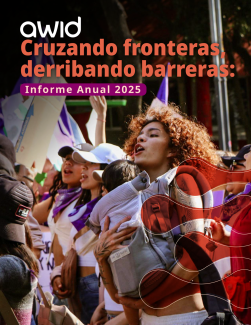
Fue en 2025 cuando muchas de las tormentas que hacía tiempo veíamos venir llegaron todas a la vez. Una avalancha de recortes de financiamiento, militarización y autoritarismo en aumento, violencia creciente en las fronteras y crisis climáticas.
Nos preguntamos qué necesitarán los movimientos feministas no solo para sobrevivir este momento, sino para fortalecer nuestro poder colectivo y construir nuestro futuro. Nuestra respuesta orientó nuestro trabajo en torno a tres pilares: infraestructura, liderazgo y sostenibilidad.
No cabe duda de que este es un momento para el coraje, la experimentación y la imaginación colectiva. En las páginas que siguen encontrarán historias que ilustran estas ideas en acción
Les Movement Hubs sont des espaces organisés localement où des organisations membres de l’AWID se rassemblent pour s’engager dans des processus féministes mondiaux depuis leurs propres territoires. Les Hubs aux Fidji et en Géorgie organisent des ateliers et des espaces de dialogue en lien avec les discussions menées à Women Deliver autour du financement féministe, de la solidarité intersectionnelle, de la justice climatique et du care collectif. Découvrez leur programme et suivez l’AWID sur les réseaux sociaux pour recevoir les dernières actualités en direct !
Cette édition du journal, en partenariat avec Kohl : a Journal for Body and Gender Research (Kohl : une revue pour la recherche sur le corps et le genre) explorera les solutions, propositions et réalités féministes afin de transformer notre monde actuel, nos corps et nos sexualités.