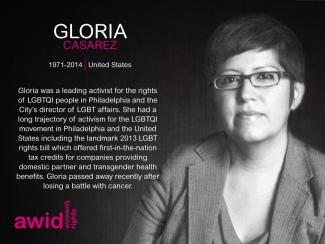
Gloria Casarez
WHRDs are self-identified women and lesbian, bisexual, transgender, queer and intersex (LBTQI) people and others who defend rights and are subject to gender-specific risks and threats due to their human rights work and/or as a direct consequence of their gender identity or sexual orientation.
WHRDs are subject to systematic violence and discrimination due to their identities and unyielding struggles for rights, equality and justice.
The WHRD Program collaborates with international and regional partners as well as the AWID membership to raise awareness about these risks and threats, advocate for feminist and holistic measures of protection and safety, and actively promote a culture of self-care and collective well being in our movements.
WHRDs are exposed to the same types of risks that all other defenders who defend human rights, communities, and the environment face. However, they are also exposed to gender-based violence and gender-specific risks because they challenge existing gender norms within their communities and societies.
We work collaboratively with international and regional networks and our membership
We aim to contribute to a safer world for WHRDs, their families and communities. We believe that action for rights and justice should not put WHRDs at risk; it should be appreciated and celebrated.
Promoting collaboration and coordination among human rights and women’s rights organizations at the international level to strengthen responses concerning safety and wellbeing of WHRDs.
Supporting regional networks of WHRDs and their organizations, such as the Mesoamerican Initiative for WHRDs and the WHRD Middle East and North Africa Coalition, in promoting and strengthening collective action for protection - emphasizing the establishment of solidarity and protection networks, the promotion of self-care, and advocacy and mobilization for the safety of WHRDs;
Increasing the visibility and recognition of WHRDs and their struggles, as well as the risks that they encounter by documenting the attacks that they face, and researching, producing, and disseminating information on their struggles, strategies, and challenges:
Mobilizing urgent responses of international solidarity for WHRDs at risk through our international and regional networks, and our active membership.
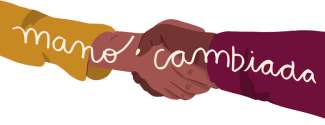
("exchange hand")
Term of the black communities of the Northern Cauca for the minga, the collective work based on solidarity and mutual support.
Le Forum international de l'AWID est à la fois un événement communautaire mondial et un espace de transformation personnelle radicale. Rassemblement unique en son genre, le Forum réunira nos mouvements féministes, de défense des droits des femmes, de justice de genre, LBTQI+ et alliés, dans toute leur diversité et leur humanité, afin de nous connecter, nous apaiser et nous épanouir.
Le thème du Forum – S’élever ensemble – nous invite à nous engager pleinement, à nous connecter les un·e·s aux autres de manière ciblée, bienveillante et courageuse. Nous pourrons ainsi ressentir le battement du cœur des mouvements mondiaux et agir ensemble pour relever les défis de notre époque.
For the first time, the AWID Forum offered three modes of participation:
 |
 |
 |
|
En présentiel au Queen Sirikit National Convention Center à Bangkok, Thaïlande |
En ligne dans un espace virtuel (capacité : 3 000 participant·e·s) |
Via des centres névralgiques (Hubs) connectés dans un espace transfrontalier |
Plus de 4000 personnes ayant participé au 15e Forum international de l'AWID en 2024 ont créé une force radicale pour résister aux oppressions, vers la guérison et la libération collectives. Restez à l'écoute pour plus d'articles du forum et les prochaines mises à jour !
En 2020, le conseil d’administration de l’AWID a pris la décision difficile d’annuler le 14ème Forum international de l’AWID, qui devait avoir lieu du 20 au 23 septembre 2021 dans la ville de Taipei.
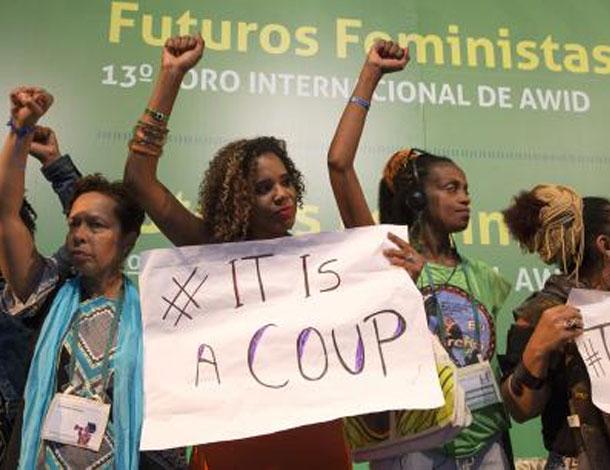
Compte tenu de la complexité du monde d'aujourd'hui, le Forum de l'AWID 2016 ne s'est pas concentré sur un « problème » particulier mais a plutôt exploré comment créer des moyens efficaces de travailler ensemble !
Malgré le contexte difficile dans lequel s’est déroulé le Forum de 2016 (l’épidémie de Zika, la grève au ministère des Affaires étrangères brésilien, la destitution de la présidente Dilma Rousseff et l’instabilité qui a suivi), il a rassemblé plus de 1800 participant-e-s issu-e-s de 120 pays et territoires de toutes les régions du monde.
Téléchargez le rapport d’évaluation
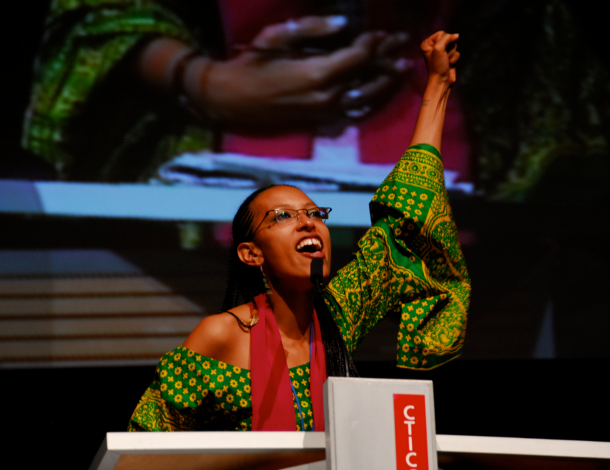
Le 12e Forum de l’AWID s’est tenu à Istanbul en Turquie en 2012, avec pour thème central Transformer le pouvoir économique pour avancer les droits des femmes et la justice. Ce Forum fut le plus important et le plus diversifié de l’histoire, rassemblant quelque 2 239 activistes pour les droits des femmes en provenance de 141 pays différents. Parmi elles-eux, environs 65 % venaient de pays du Sud, près de 15 % étaient des jeunes femmes de 30 ans et moins, alors que 75 % participaient au Forum pour la première fois.
Le Forum s’est focalisé sur la transformation du pouvoir économique pour faire progresser les droits des femmes et la justice en proposant plus de 170 activités incluant des ateliers de formation en économie féministe, en passant par toute une séries d’ateliers de discussion et autres tables rondes solidaires autour de 10 grandes questions cruciales.
Dans l’élan du Forum, nous avons transformé la page qui lui était dédiée en un outil multimédia en ligne qui intègre également les contenus générés par les participant-e-s sur toutes les composantes du Forum.
Visitez l'archive web du Forum 2012
L’enquête WITM mondiale est un des piliers essentiels de la troisième édition de notre recherche orientée sur l’action, intitulée Où est l’argent pour l’organisation des mouvements féministes? (abrégé en Où est l’argent ou WITM, pour l’acronyme en anglais). Les résultats de l’enquête seront développés et approfondis à l’occasion de conversations profondes avec des activistes et des financeurs, et les références seront croisées avec d’autres analyses et études existantes sur la situation du financement des mouvements féministes et de l’égalité des genres à travers le monde.
Le rapport complet de la recherche Où est l’argent pour l’organisation des mouvements féministes sera publié en 2026.
 Pour en apprendre davantage sur la manière dont l’AWID met en lumière l’argent utilisé pour et contre les mouvements féministes, consultez notre dossier WITM et nos précédents rapports à ce sujet ici.
English body
El objetivo fundamental de la encuesta ¿Dónde está el dinero? es arrojar luz sobre la situación financiera de la diversidad de movimientos feministas, por los derechos de las mujeres, la justicia social, las personas LBTQI+ y demás movimientos aliados de todo el mundo y, sobre la base de dicha información, reforzar las razones fundadas para movilizar más y mejores fondos y transferir el poder a los movimientos feministas.
Les Femmes Maintiennent les Soins | Les Soins Soutiennent la Vie | La Vie Soutient l'Économie | Qui s'Occupe des Femmes ? | Pas Une de Moins1 | Ensemble | Déjeuner du Dimanche
1Nenhuna a menos se traduit littéralement par « pas une femme de moins » ou « ni una menos » en espagnol - un célèbre slogan féministe en Amérique latine qui a émergé en Argentine en réponse à l'augmentation de la violence sexiste.

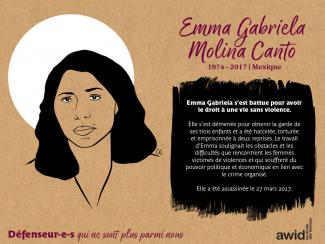
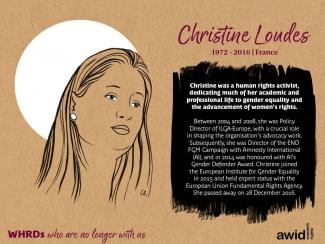
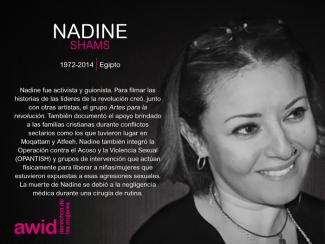
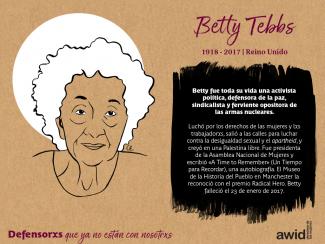
Une étudiante, une scénariste, une leader, une avocate. Les quatre femmes auxquelles nous rendons hommage ci-dessous avait toutes leur propre façon de vivre leur activisme, mais elles avaient en commun la promotion et la défense des droits des personnes lesbiennes, gaies, bisexuelles, trans*, queer et intersexes. Nous vous invitons à vous joindre à nous pour commémorer ces défenseuses, leur travail et l'héritage qu’elles nous ont laissé. Faites circuler ces mèmes auprès de vos collègues et amis ainsi que dans vos réseaux et twittez en utilisant les hashtags #WHRDTribute et #16Jours.
S'il vous plaît cliquez sur chaque image ci-dessous pour voir une version plus grande et pour télécharger comme un fichier


Non, nous souhaitons recevoir une seule participation par groupe.