Philippe Leroyer | Flickr (CC BY-NC-ND 2.0)

Special Focus

AWID is an international, feminist, membership organisation committed to achieving gender equality, sustainable development and women’s human rights

Women Human Rights Defenders

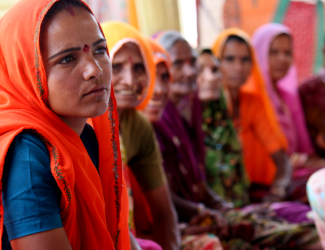
WHRDs are self-identified women and lesbian, bisexual, transgender, queer and intersex (LBTQI) people and others who defend rights and are subject to gender-specific risks and threats due to their human rights work and/or as a direct consequence of their gender identity or sexual orientation.

WHRDs are subject to systematic violence and discrimination due to their identities and unyielding struggles for rights, equality and justice.

The WHRD Program collaborates with international and regional partners as well as the AWID membership to raise awareness about these risks and threats, advocate for feminist and holistic measures of protection and safety, and actively promote a culture of self-care and collective well being in our movements.


Risks and threats targeting WHRDs  

WHRDs are exposed to the same types of risks that all other defenders who defend human rights, communities, and the environment face. However, they are also exposed to gender-based violence and gender-specific risks because they challenge existing gender norms within their communities and societies.

By defending rights, WHRDs are at risk of:

  • Physical assault and death
  • Intimidation and harassment, including in online spaces
  • Judicial harassment and criminalization
  • Burnout

A collaborative, holistic approach to safety

We work collaboratively with international and regional networks and our membership

  • to raise awareness about human rights abuses and violations against WHRDs and the systemic violence and discrimination they experience
  • to strengthen protection mechanisms and ensure more effective and timely responses to WHRDs at risk

We work to promote a holistic approach to protection which includes:

  • emphasizing the importance of self-care and collective well being, and recognizing that what care and wellbeing mean may differ across cultures
  • documenting the violations targeting WHRDs using a feminist intersectional perspective;
  • promoting the social recognition and celebration of the work and resilience of WHRDs ; and
  • building civic spaces that are conducive to dismantling structural inequalities without restrictions or obstacles

Our Actions

We aim to contribute to a safer world for WHRDs, their families and communities. We believe that action for rights and justice should not put WHRDs at risk; it should be appreciated and celebrated.

  • Promoting collaboration and coordination among human rights and women’s rights organizations at the international level to  strengthen  responses concerning safety and wellbeing of WHRDs.

  • Supporting regional networks of WHRDs and their organizations, such as the Mesoamerican Initiative for WHRDs and the WHRD Middle East and North Africa  Coalition, in promoting and strengthening collective action for protection - emphasizing the establishment of solidarity and protection networks, the promotion of self-care, and advocacy and mobilization for the safety of WHRDs;

  • Increasing the visibility and recognition of  WHRDs and their struggles, as well as the risks that they encounter by documenting the attacks that they face, and researching, producing, and disseminating information on their struggles, strategies, and challenges:

  • Mobilizing urgent responses of international solidarity for WHRDs at risk through our international and regional networks, and our active membership.

Related Content

Snippet FEA Union Otras Photo 5 (ES)

Foto de personas sentadas en sillas rojas en una sala de conferencias

Do I have to be an AWID member to participate in the Forum?

No, you don't have to be an AWID member to participate but AWID members receive a discounted registration fee as well as a number of other benefits.

Learn more on how to become an AWID member

14th AWID international Forum is cancelled (forum page)

El 14°Foro Internacional de AWID ha sido cancelado

Dada la situación global, nuestra Junta Directiva tomó la difícil decisión de cancelar el Foro que estaba programado en 2021, enTaipei.

Lee más

Efua Dorkenoo

Conocida afectuosamente como «Mama Efua», su trabajo con el movimiento para terminar con la mutilación genital femenina (MGF) se extendió a lo largo de tres décadas y ayudó a llamar la atención internacional y a generar acciones para erradicar esta práctica dañina.

En 1983, Efua fue una de las fundadoras de FORWARD (The Foundation for Women’s Health, Research and Development, La fundación para la salud de las mujeres, la investigación y el desarrollo), que se convirtió en una organización líder en la batalla por crear conciencia sobre la MGF. Su libro de 1994, Cortar la rosa: mutilación genital femenina, es considerado el primer libro sobre MGF y aparece en la lista de «Los 100 mejores libros africanos del siglo XX» de la Universidad de Columbia.

Originaria de Ghana y enfermera de profesión, Efua se incorporó a la Organización Mundial de la Salud (OMS) en 1995 y con empeño logró la inclusión de la MGF en las agendas de los Estados miembros de la OMS. También trabajó estrechamente con el Gobierno nigeriano en la elaboración de una política nacional integral que sentó las bases para las leyes contra la MGF de Nigeria, que todavía están vigentes. Su trabajo pionero culminó en una campaña liderada por África, «La generación de las niñas», dedicada a terminar con la MGF en el plazo de una generación.

Efua demostró que una persona puede convertirse en una voz unificadora para un movimiento y ahora resultan más relevantes que nunca sus sabias palabras: «la identidad compartida puede ayudar a reunir a activistas que vienen de contextos diferentes y a que tengan un sentido de propósito en común».

 

Efua Dorkenoo, Ghana

ما هو عدد الردود الذي ترغبون بجمعها؟

نهدف للوصول الى 2000 رد، وهذا تقريباً ضعف الردود التي جمعناها من استطلاع "أين المال" الأخير عام 2021.

Snippet FEA Principles of Work S4 (FR)

Quatre mains se tenant aux poignets, formant un carré.

HORIZONTALITÉ

My question isn’t answered here

For additional questions, please use our contact form, and select “14th AWID Forum" from the dropdown menu.

Contact us

“Where is the Money for Women’s Rights?" AWID’s WITM Toolkit (landing page intro) FR

Une nouvelle édition de la recherche Où est l'argent ? est en cours.

En savoir plus

Une méthodologie de recherche autogérée

Women leaders
© UN Women/Ashutosh Negi (CC BY-NC-ND 2.0) [https://creativecommons.org/licenses/by-nc-nd/2.0/]

L’AWID propose la Boîte à outils  « Où est l’argent pour les droits des femmes? » (« Where Is The Money for Women's Rights? », WITM) pour soutenir les individus et les organisations qui souhaitent mener leur propre recherche sur les tendances de financement en adaptant la méthodologie de recherche de l’AWID à une région, une question ou une population spécifique.


La Boîte à outils WITM de l’AWID est le produit de dix ans de recherches. La rméthologie WITM de l’AWID proposent une démonstration politique et pratique des ressources et des étapes qu’exige une solide recherche-action.

L’équipe 'Ressources des mouvements féministes' offre également un soutien technique et politique, avant et pendant le processus de recherche. Parcourez la boîte à outils et contactez fundher@awid.org si vous souhaitez plus de renseignements.

Zita Kavungirwa Kayange

Zita était une défenseure des droits des femmes de la région du Grand Kivu.

Elle a été la première directrice exécutive d’UWAKI, une organisation de femmes bien connue. Par son travail avec le Réseau des Femmes pour la Défense des Droits et la Paix (RFDP) et le Caucus des femmes du Sud-Kivu pour la paix, elle a consacré sa vie à rétablir la paix dans l'est de la RDC. Elle a très fermement dénoncé l'utilisation de la violence sexuelle comme arme de guerre.

En 2006, elle s'est présentée comme candidate aux premières élections démocratiques en RDC. Bien qu’elle n’ait pas gagné, elle a continué à défendre les droits des femmes et la communauté du Sud-Kivu se souvient d’elle avec affection.


Zita Kavungirwa Kayange, Republic Democratic of Congo

Snippet - AWID Community - EN

AWID Community

AWID Community is an online social networking platform for specifically for AWID members. It’s a feminist space for connection, resistance and celebration. A space for critical  feminist conversations, collective power and solidarity. It is also a space for post-event dialogues, navigating difficult political learnings and community care

Snippet FEA Get Involved Story 4 (EN)

GET INVOLVED!

Follow Solidarity Network Union on Facebook and Twitter

Support the work of Solidarity Network Union donating here

Follow OTRAS on Twitter, Instagram and Facebook

Support the work of OTRAS by donating here

Why did AWID choose Taipei as the location for the Forum?

We see Taipei as the location in the Asia Pacific region that will best allow us to build that safe and rebelious space for our global feminist community.

Taipei offers a moderate degree of stability and safety for the diversity of Forum participants we will convene. It also has strong logistical capacities, and is accessible for many travellers (with a facilitated e-visa process for international conferences).

The local feminist movement is welcoming of the Forum and keen to engage with feminists from across the globe.

Read more about our considerations when choosing Taipei

FRMag - United against violence

United against the violence

by Karina Ocampo

In a hidden corner of Chiapas, Mexico, women and sexual dissidents have come to organize our actions. (...)

Read

< artwork by Sonia Carolina Madrigal Loyola

Bessy Ferrera

Bessy Ferrera a défendu sans relâche les droits humains des personnes trans, travailleuses du sexe et séropositives au Honduras. 

 Bessy était aussi membre d’Arcoíris, une organisation qui soutient la communauté LGBTI+. Elle était en outre la personne référente de la plateforme Derechos aquí y Ahora (les droits ici et maintenant) au Honduras et plaidait fermement en faveur d’une pleine citoyenneté pour les personnes trans, ainsi que pour l’adoption d’une loi sur l’identité de genre qui permettrait aux personnes trans de changer légalement d’identité de genre. 

« Depuis le début de l’année [2019], la communauté trans a été victime d’une série d’attaques, parce qu’elle a défendu et demandé des droits. » Rihanna Ferrera (sœur de Bessy)
Bessy était une travailleuse du sexe qui a été tuée par balle par deux hommes, au début du mois de juillet 2019, alors qu’elle travaillait dans les rues Comayagüela. Ses assaillants ont par la suite été arrêtés.  

Bessy fait partie des nombreux·ses activistes des droits LGBTI+ du Honduras, assassiné·e·s en raison de leur identité et de leur travail, parmi qui se trouvent : Cynthia Nicole, Angy Ferreira, Estefania "Nia" Zuniga, Gloria Carolina Hernandez Vasquez, Paola Barraza, Violeta Rivas et Sherly Montoya.

Le cas de Bessy incarne l’injustice, de même qu’un problème plus large de violence systémique à laquelle se confronte la communauté LGBTI+ au Honduras, puisque l’État ne parvient pas à garantir l’offre de droits ni à fournir une protection. Cela est à l’origine d’une culture de l’impunité.   

Malgré les risques auxquels sont confronté.e.s les activistes LGBTI+ au Honduras,  tous et toutes continuent leur travail pour défier et résister à la violence, ainsi que pour combattre la stigmatisation et la discrimination au quotidien.

« Si je meurs, il faut que ce soit pour quelque chose de bien, pas pour une futilité. Je ne veux pas mourir en fuyant, en étant lâche. Si je meurs, je veux que les gens disent que je suis mort·e en me battant pour ce qui m’appartient » - membre d’Arcoíris

What Our Members Say - ES

Lo que dicen nuestrxs miembrxs

Snippet FEA We are living in a world right (ES)

Incluso en tiempos de crisis climática, los gobiernos continúan alentando el crecimiento de las industrias agrícolas a gran escala. Estas actividades envenenan la tierra, amenazan la biodiversidad y destruyen la producción de alimentos y los medios de vida locales. Mientras tanto, aunque las mujeres producen la mayoría de nuestros alimentos en el mundo, casi no poseen tierra.

¿Qué pasaría si percibiéramos la tierra y la Naturaleza no como una propiedad privada para ser explotada, sino como una totalidad con la cual aprender y coexistir en armonía? ¿Y si repararíamos nuestras relaciones con la tierra y adoptaríamos alternativas más sostenibles que nutran tanto al planeta como a sus comunidades?

Nous Sommes la Solution (Somos la Solución, NSS) es uno de los muchos movimientos liderados por mujeres que se esfuerzan por lograr este objetivo.

Esta es su historia.