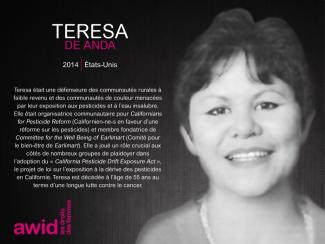
Teresa De Anda
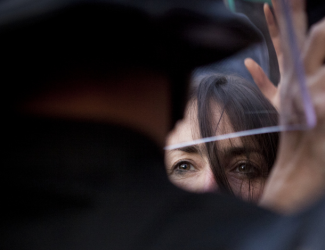
WHRDs are self-identified women and lesbian, bisexual, transgender, queer and intersex (LBTQI) people and others who defend rights and are subject to gender-specific risks and threats due to their human rights work and/or as a direct consequence of their gender identity or sexual orientation.
WHRDs are subject to systematic violence and discrimination due to their identities and unyielding struggles for rights, equality and justice.
The WHRD Program collaborates with international and regional partners as well as the AWID membership to raise awareness about these risks and threats, advocate for feminist and holistic measures of protection and safety, and actively promote a culture of self-care and collective well being in our movements.
WHRDs are exposed to the same types of risks that all other defenders who defend human rights, communities, and the environment face. However, they are also exposed to gender-based violence and gender-specific risks because they challenge existing gender norms within their communities and societies.
We work collaboratively with international and regional networks and our membership
We aim to contribute to a safer world for WHRDs, their families and communities. We believe that action for rights and justice should not put WHRDs at risk; it should be appreciated and celebrated.
Promoting collaboration and coordination among human rights and women’s rights organizations at the international level to strengthen responses concerning safety and wellbeing of WHRDs.
Supporting regional networks of WHRDs and their organizations, such as the Mesoamerican Initiative for WHRDs and the WHRD Middle East and North Africa Coalition, in promoting and strengthening collective action for protection - emphasizing the establishment of solidarity and protection networks, the promotion of self-care, and advocacy and mobilization for the safety of WHRDs;
Increasing the visibility and recognition of WHRDs and their struggles, as well as the risks that they encounter by documenting the attacks that they face, and researching, producing, and disseminating information on their struggles, strategies, and challenges:
Mobilizing urgent responses of international solidarity for WHRDs at risk through our international and regional networks, and our active membership.
Stephanie Bracken is a feminist who is dedicated to building and supporting strong systems that meet the needs of the moment and the people who interact with them, and serve principles of justice. She holds a Master of Human Rights from the University of Sydney and a BA in Gender Studies, History, and Philosophy from McGill University, and has experience working with feminist and social justice organizations on monitoring, evaluation & learning, strategic work planning, governance, project management, and building operational systems and processes. Stephanie is based in Tiohtià:ke/Montreal, where she enjoys singing with others, camping, fiber arts, and spending time with her kids and community.
When people come together on a global scale, as individuals and movements, we generate a sweeping force. Join us in Bangkok, Thailand and online in December 2024.
What does an AWID Forum mean to those who have been there? What is this magic that happens when feminists from around the world gather to celebrate, strategize, learn and share joy?
AWID spoke to over forty Forum participants to hear their stories of the transformations that happened to them as activists, to their organizations and to the movements they are part of. We also learned about what we should keep and build on that makes an AWID Forum different and how we can improve.
This report holds lessons and advice invaluable to anyone planning in-person regional and thematic convenings and for us as we plan for the 15th AWID International Forum.
par Judyannet Muchiri
Je suis partie pour le Kenya en octobre de l'année dernière, pour entamer ce que j'en suis venue à considérer comme mon travail le plus important à ce jour. (...)
illustration : « Guérir ensemble », par Upasana Agarwal >
Mena Mangal fue una destacada periodista de televisión, defensora de los derechos de las mujeres y asesora cultural de la Wolesi Jirga, la cámara baja del parlamento nacional de Afganistán.
Durante más de una década, trabajó para Ariana TV, el canal Lamar de lengua Pashto de Tolo TV, y para la emisora privada de televisión nacional afgana Shamshad TV. Como presentadora, Mena se enfocó en los derechos de las mujeres y en los programas de entrevistas culturales.
"La defensora de los derechos de la mujeres Wazhma Frogh dijo que Mangal "tenía una voz fuerte" y se pronunció activamente como defensora de su pueblo".
Fuera de la pantalla, también dirigió páginas populares de redes sociales que defendían los derechos de las niñas y mujeres afganas a la educación y el trabajo. En lo que concierne a su vida privada, Mena escribió extensamente acerca de cómo había sido forzada a contraer un matrimonio arreglado en 2017, y sobre el proceso que tuvo que atravesar para poder obtener finalmente el divorcio.
En un post de Facebook, Mena escribió que estaba recibiendo amenazas de muerte de fuentes desconocidas, pero que aun así continuaría llevando a cabo su trabajo.
El 11 de mayo de 2019, Mena fue atacada por hombres armados desconocidos y asesinada a tiros a plena luz del día en un espacio público del sudeste de Kabul.
"Estamos preocupadxs por la situación actual ya que está teniendo un impacto directo en las mujeres que trabajan fuera de sus casas... Las mujeres periodistas están cambiando de profesión debido a los crecientes riesgos que enfrentan". - Robina Hamdard, defensora de los derechos de las mujeres en Kabul.
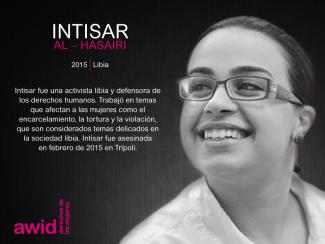
Margarita es una feminista y activista por los derechos de las personas LGBTIQA de América Latina. Sus pasiones son la transformación social y el bienestar colectivo. Posee títulos en Psicología, Comunicaciones y Administración Pública, y varias certificaciones en Política Pública, Liderazgo, Gestión y Toma de Decisiones. Como profesional, ha tenido una dilatada experiencia con organizaciones de base, ONG nacionales y regionales, universidades y el sector público, en los que se ha abocado a la facilitación, la capacitación, la incidencia política, las comunicaciones y la evaluación de políticas.
Obtén más información sobre los próximos eventos de la CSW69 que AWID está coorganizando
Our first Feminist Film Club program is now available to view: “Tenderness is the Sharpest Resistance” is a film series on Asian/Pacific Feminist Realities curated by Jess X Snow
« Je veux dire à tou·te·s les Tunisien·ne·s : Nous devons nous rassembler pour dire “non” à la censure et aux procès d’opinion. » - Lina Ben Mhenni (entretien de 2013)
« Un cyberactiviste doit aller sur le terrain, sentir ce que vivent les autres. On dit que la Révolution tunisienne est celle du Net, mais si elle n’était que ça, elle n’aurait jamais abouti ! » » Lina Ben Mhenni (article dans Ouest-France)
Elle a co-organisé en 2010 une manifestation en réaction à la suppression des médias et la censure sur Internet imposées par le gouvernement. Lina était très connue pour son blog « A Tunisian Girl » et son travail pendant la révolution tunisienne en 2011 était reconnu. Elle s’est servie de son blog pour transmettre des informations sur la révolte, partager des images documentant les manifestations, et a été parmi les rares voix qui s’élevèrent pour dénoncer les assassinats et la répression des manifestant·e·s à Sidi Bouzid. Lina était une des rares blogueuses à utiliser son vrai nom sur Internet, et non un pseudonyme pour protéger son identité.
« Notre liberté d’expression est vraiment en danger. Je crains que nous ne soyons en train de perdre les fruits magnifiques de notre révolution : la disparition de la peur et la liberté d’expression. Nous devons continuer de nous battre pour protéger et préserver ce droit. » - Lina Ben Mhenni (entretien de 2013)
Lina n’avait que 36 ans lorsqu’elle est décédée, le 27 janvier 2020, de complications d’une maladie auto-immune.
« La liberté, une meilleure éducation et la santé - c’est tout ce que nous voulions. Lorsque nous échouions, elle nous incitait à continuer. » Hala, l’institutrice de Lina.
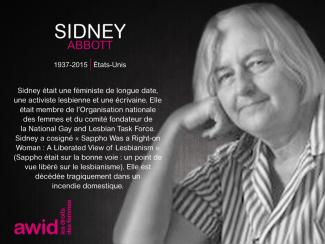
Sara AbuGhazal est une féministe palestinienne vivant à Beyrouth. Elle est Co-fondatrice de Sawt al-Niswa, un collectif qui produit des connaissances à Beyrouth. Elle est co-directrice de The Knowledge Workshop, une organisation féministe basée à Beyrouth qui travaille sur l'histoire orale et l'archivage féministes. Sara est actuellement coordonnatrice régionale de la Regional Coalition for Women Human Rights Defenders in the Middle East and North Africa.
Sara s'efforce de contribuer à la création d'espaces de transformation et de solidarité féministes. Son travail est principalement axé sur la création de mouvements durables dans la région Moyen-Orient et de l'Afrique du Nord Elle est investie dans la production de connaissances, la transformation féministe et la Palestine. Elle publie régulièrement dans sawtalniswa.org et ses œuvres de fiction apparaissent également dans le magazine électronique Romman
✉️ Requiere inscripción previa. Regístrate aquí
📅 Miércoles 12 de marzo de 2025
🕒 De 05:00 a 07:00 p.m., EST
🏢 Chef's Kitchen Loft with Terrace, 216 East 45th St 13th Floor New York
Organizan: Women Enabled International y AWID
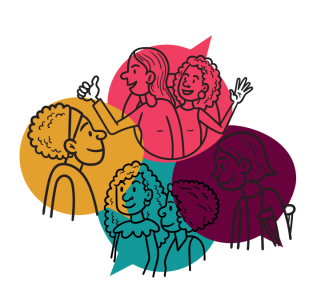
Feminist movements have changed and adapted tremendously since we last convened in this way - so to remember why AWID Forums matter, we asked activists from around the world to reflect on and share their stories, impressions and memories. This is what we learned.
Esta película cuenta la historia de un hombre misterioso cuya vida ha sido moldeada por la huida, la expulsión, el exilio y el fracasado retorno a Palestina. El film está compuesto por la búsqueda de respuestas que lleva a cabo su hija.
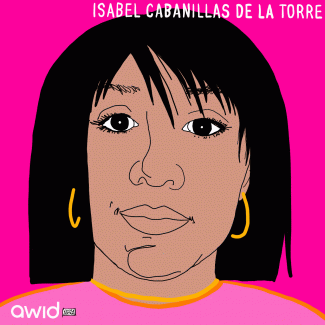
Isabel Cabanillas de la Torre was a much loved young feminist artist and activist from Ciudad Juárez, Mexico, known for her beautiful and evocative hand-painted clothing with eyes being an emblematic feature in her work. Her murals transformed the run down and vacant buildings in Ciudad Juarez’s downtown, bringing life and political commentary to their walls.
Through her art and political activism Isabel sought to draw attention to the gender based violence pervasive in her hometown. She volunteered with the women’s network Mesa de Mujeres on the Citizen Observatory on Gender to monitor the performance of judges, prosecutors and public defenders on cases of femicides and other gender based violations. She was also a member of Hijas de su Maquilera Madre, a feminist collective whose name makes reference to the daughters of mothers who are maquila workers. Some of these mothers were among the first victims of femicide in the city.
Isabel’s latest project, still in progress, was an art installation to protest a Canadian company that was looking to mine copper in the Samalayuca Desert.
On 18 January, 2020 Isabel was shot while riding her bike back home in Downtown Juárez, in what appeared to be a targeted killing, her body found beside her bike.
Isabel’s murder, sparked a new wave of outrage against femicides in the region, hundreds marched to the US-Mexico border bridge, blocking it for hours and chanting “Ni una mas” (Not one more) as feminist collectives continue to protest the murders of women throughout Mexico. In 2019 alone, 3142 women and girls were killed in Mexico, many of whom were targeted specifically because of their gender.
She loved riding her bike.
"The bike for her was a symbol of freedom. A symbol of being free in the streets." - Marisol (a friend of Isabel’s)
Juhi is a tech enthusiast with a Bachelor's degree in Computer Engineering from Gujarat Technological University and a postgraduate background in Wireless Telecommunications and Project Management from Humber College. With a passion for problem-solving and a love for staying ahead in the ever-evolving tech landscape, Juhi has found herself navigating through various industries as an IT Technician. to the nurturing environment of the School Board, Juhi has had the opportunity to apply her technical skills in diverse settings, always embracing new challenges with enthusiasm. Beyond the code and circuits, Juhi loves life's adventures. Exploring new places and cultures is like a breath of fresh air to her. Whether it's discovering hidden gems in the city, trying out exotic cuisines, or embarking on thrilling adventure sports, Juhi is always up for new experiences.