
Gabriela Leite

WHRDs are self-identified women and lesbian, bisexual, transgender, queer and intersex (LBTQI) people and others who defend rights and are subject to gender-specific risks and threats due to their human rights work and/or as a direct consequence of their gender identity or sexual orientation.
WHRDs are subject to systematic violence and discrimination due to their identities and unyielding struggles for rights, equality and justice.
The WHRD Program collaborates with international and regional partners as well as the AWID membership to raise awareness about these risks and threats, advocate for feminist and holistic measures of protection and safety, and actively promote a culture of self-care and collective well being in our movements.
WHRDs are exposed to the same types of risks that all other defenders who defend human rights, communities, and the environment face. However, they are also exposed to gender-based violence and gender-specific risks because they challenge existing gender norms within their communities and societies.
We work collaboratively with international and regional networks and our membership
We aim to contribute to a safer world for WHRDs, their families and communities. We believe that action for rights and justice should not put WHRDs at risk; it should be appreciated and celebrated.
Promoting collaboration and coordination among human rights and women’s rights organizations at the international level to strengthen responses concerning safety and wellbeing of WHRDs.
Supporting regional networks of WHRDs and their organizations, such as the Mesoamerican Initiative for WHRDs and the WHRD Middle East and North Africa Coalition, in promoting and strengthening collective action for protection - emphasizing the establishment of solidarity and protection networks, the promotion of self-care, and advocacy and mobilization for the safety of WHRDs;
Increasing the visibility and recognition of WHRDs and their struggles, as well as the risks that they encounter by documenting the attacks that they face, and researching, producing, and disseminating information on their struggles, strategies, and challenges:
Mobilizing urgent responses of international solidarity for WHRDs at risk through our international and regional networks, and our active membership.
In this selection of films you will find the voices of filmmakers who are not content with simply recording the feminist realities that palpitate in every corner of this vast and diverse territory. These are works that from their very conceptualization are questioning for what, by whom, and how films and videos are made. They understand film to be an instrument of struggle, something more than images to be enjoyed on a screen. These are individual or collective filmmakers who see film and video making as an instrument to promote discussion, open a debate, and thus serve as a resource for popular and feminist pedagogies.
Tout au long de ses 38 années de carrière, Debbie Stothard a collaboré avec diverses communautés pour impliquer des États, des organisations intergouvernementales et autres parties prenantes en Asie, en Afrique, en Europe et dans les Amériques sur des questions de droits humains et de justice. Son travail porte essentiellement sur les thématiques des affaires et des droits humains, de la prévention des atrocités et du leadership des femmes. Elle a, de ce fait, animé ou secondé près de 300 formations au cours des 15 dernières années. La plupart de ces formations était des ateliers à destination de groupes de base et organisés sur le terrain, centrés sur le plaidoyer en faveur des droits humains, les connaissances économiques fondamentales, les affaires et les droits humains, la justice transitionnelle et la prévention des atrocités. Son travail dans le domaine de la justice transitionnelle et de la prévention des atrocités s’est principalement déroulé au Myanmar, mais elle a également été conseillère en matière d’interventions dans d’autres situations nationales dans le monde.
Entre 1981 et 1996, Debbie a été reporter spécialisée dans les affaires criminelles, organisatrice d’évènements étudiants, analyste politique, universitaire, conseillère gouvernementale et traiteure en Malaisie et en Australie, tout en étant bénévole pour des causes en lien avec les droits humains. Elle a fondé ALTSEAN-Burma en 1996, qui fut à l’initiative d’un large éventail de programmes sur les droits humains à la fois innovants et autonomisants. ALTSEAN mène notamment un programme permanent et intensif de leadership à destination de diverses jeunes femmes à Burma qui, au cours des 22 dernières années, a aidé à renforcer et élargir le leadership des femmes dans les zones touchées par un conflit. Debbie Stothard a siégé au Conseil de la fédération internationale des droits humains (FIDH) pendant neuf années en sa qualité de secrétaire générale adjointe (2010–2013) puis de secrétaire générale (2013–2019). Elle a mis cette période à profit en promouvant la mission et le profil de la FIDH lors de près de 100 réunions et conférences par année.
Да, доступ к опросу можно получить с помощью смартфона.
Florence était une militante des droits des personnes handicapées qui travaillait avec plusieurs organisations de femmes handicapées en Ouganda.
Elle a également occupé le poste de présidente de l’Association des femmes handicapées du district de Lira, ainsi que du caucus des conseillères du district de Lira. Formée en tant que conseillère pour personnes handicapées et parents d'enfants handicapés, elle a soutenu de nombreux projets appelant à une plus grande représentation des personnes handicapées.
Elle est morte dans un accident de moto.

Check Out our Super Short Guide To Organising Global Feminist Festivals And Online Events!
Simone posee 20 años de experiencia de trabajo en apoyo a la gestión y la administración en organizaciones sin fines de lucro, en particular, formación médica de posgrado y capacitación en Tecnologías de la Información y las Comunicaciones. Tiene formación en Apoyo a la Gestión y en Estudios Parajudiciales. Reside en Sudáfrica, disfruta de viajar y es aficionada a la Genealogía.
Sim, encorajamo-lo a partilhar mais sobre questões importantes para si ao responder à(s) pergunta(s) aberta(s) no final do inquérito.
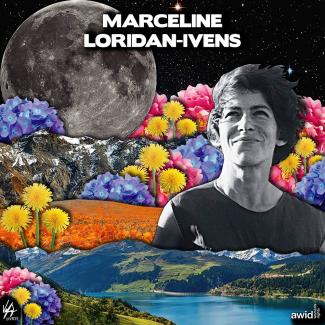
Born in 1928, Marceline worked as an actress, a screenwriter, and a director.
She directed The Birch-Tree Meadow in 2003, starring Anouk Aimee, as well as several other documentaries. She was also a holocaust survivor. She was just fifteen when she and her father were both arrested and sent to Nazi concentration camps. The three kilometres between her father in Auschwitz and herself in Birkenau were an insurmountable distance, which she writes about in one of her seminal novels “But You Did Not Come Back.”
In talking about her work, she once said: "All I can say is that everything I can write, everything I can unveil — it's my task to do it.”
Ven a conocer las economías feministas que AMAMOS.
Cuando hablamos de economía, hablamos de cómo organizamos nuestras sociedades, nuestros hogares y lugares de trabajo. ¿Cómo vivimos juntxs? ¿Cómo producimos alimentos, organizamos los cuidados y aseguramos nuestra salud? La economía también se trata de cómo accedemos y gestionamos recursos, cómo nos relacionamos con otras personas, con nosotrxs mismxs y con la Naturaleza.
Lxs feministas han estado construyendo alternativas económicas a los sistemas capitalistas explotadores durante siglos. Estas alternativas existen en el aquí y el ahora, y son los pilares de los mundos más justos y más sostenibles que necesitamos y merecemos.
Nos emociona compartir contigo una muestra de alternativas económicas feministas, con colectivos inspiradores de todo el mundo.
Khaoula Ksiksi est une fervente défenseuse de la justice, de l’équité et de la libération. Dans son rôle de conseillère en matière de genre, d’égalité, de diversité et d’inclusion (GEDI), elle œuvre à faire de l’inclusion une réalité concrète, pas simplement un concept politique, au sein des programmes humanitaires et des interventions en situation de crise. Elle collabore avec diverses équipes pour combattre l’oppression structurelle en déployant des approches audacieuses et transformatrices qui s’appuient sur les expériences vécues.
Son activisme a débuté au cœur du mouvement antiraciste tunisien. Au sein de l’organisation Mnemty, elle a contribué à l’adoption de la première législation anti-discrimination du pays, obligeant la société tunisienne à reconnaître l’existence de l’injustice raciale. Par la suite, elle a co-fondé le collectif Voix des Femmes Tunisiennes Noires, une initiative visant à valoriser le leadership des femmes noires, à développer des réseaux de solidarité et à revendiquer une visibilité dans une société qui tend à les réduire au silence.
Khaoula est également l’une des fondatrices de Falgatna, un mouvement queer-féministe radical qui œuvre pour la défense des droits OSIGEGCS, tout en apportant son soutien aux communautés LGBTQI+ par des actions directes, des stratégies de cyberrésistance et un plaidoyer centré sur les survivant·es.
Auparavant, elle a dirigé des projets régionaux féministes et de justice climatique à la Fondation Rosa Luxemburg en Afrique du Nord et de l’Ouest.
Son travail est guidé par une conviction profonde : personne n’est libre tant que nous ne le sommes pas toustes. Son activisme est à la fois un combat et une lettre d’amour à son peuple, à ses communautés et au monde que nous méritons.
سيتم جمع المعطيات لأهداف إحصائية لتسليط الضوء على وضع التمويل للحركات النسوية العالمية وسيتم عرضها فقط بشكل إجمالي. لن تنشر AWID المعلومات عن اي منظمة محددة ولن تعرض أي من المعلومات التي ستمكّن من التعرّف على منظمة عن طريق موقعها أو صفاتها دون موافقة المنظمة.
She herself was among the 32,000 people displaced by the Tucuruí, a mega-hydroelectric power plant, built in Brazil during the 1964-1985 military dictatorship.
In 2005 Dilma was invited to join the Movement of Dam-Affected Peoples in Brazil (MAB), and in 2006 she formed the women’s collective, eventually becoming regional coordinator of the movement.
In speaking about her activism, her colleagues commented:
“She stood out very fast because she was always very fearless in the struggle.”
Dilma lived in the rural settlement of Salvador Allende,50 kilometers from Tucuruí, and dedicated her life to better protect communities and the land affected by the construction of mega projects. She was especially concerned with the gendered impacts of such projects and advocated for women’s rights.
At a national MAB meeting in 2011, Dilma spoke to women affected by the dams, saying:
“We are the real Marias, warriors, fighters who are there, facing the challenge of daily struggle”.
In the following years, Dilma organized grassroots MAD groups and worked with the community to form farming cooperatives that created a better distribution of food for the community. They improved the commercialization of fishing, and developed a cistern project for safe drinking water. She was also an advocate for farmers whose lands were being coveted by ‘grileiros’ (land grabbers).
On 22nd March 2019, at the age of 48, Dilma, her husband and their friend were all brutally murdered. The three killings came as part of a wave of violence in the Amazon against the Movimento dos Trabalhadores Sem Terra (translates as ‘landless workers’ movement’), environmental and indigenous activists.

Source: Censo De População de Rua, Prefeitura de São Paulo
 |
Bâtiments abandonnés/vacants |
 |
||
Personnes vivant dans la rue |
||||
|
31,000 |
40.000 |
Nous œuvrons à renforcer les répercussions et l’influence des organisations, mouvements et défenseur-euse-s des droits des femmes sur la scène internationale et à amplifier leur voix collective, en vue de la pleine réalisation de la justice de genre et des droits humains des femmes.
Мы стремимся в общей сложности получить 2000 ответов, что почти вдвое больше, чем в последнем опросе, проведенном в 2011 году.
"Pero, ¿ fue el maestro alguna vez
seducido por el poder?
¿Alguna vez se rompió
un sistema con aceptación ?
¿Cuándo el JEFE te entregará el poder con amor?
¿En Jo'Burg, en Cancún o en la ONU? - Molara Ogundipe
A través de los diferentes continentes y países, la profesora Ogundipe enseñó literatura comparada, escritura, género y filología inglesa, y utilizó la literatura como vehículo para la transformación social y el replanteamiento de las relaciones de género.
Molara Ogundipe, como pensadora, escritora, editora, crítica social, poeta y activista feminista, logró combinar el trabajo teórico con la creatividad y la acción práctica. Se la considera una de las principales voces críticas de los feminismos africanos, los estudios de género y la teoría literaria.
Molara acuñó el concepto de "estiwanismo" a partir de las siglas STIWA (Social Transformations in Africa Including Women) [Transformaciones Sociales en África Incluyendo a las Mujeres], con el fin de reconocer la necesidad de “alejar la definición del feminismo y los feminismos en relación con Euro-América u otro lugar, y declamar lealtades o deslealtades". Con su obra fundamental, "Recreándonos Nosotras Mismas", de 1994, Molara Ogundipe (publicada bajo el nombre de Molara Ogundipe-Leslie) dejó tras de sí un inmenso cuerpo de conocimientos que descolonizó el discurso feminista y "re-centró a las mujeres africanas en sus completas y complejas narrativas... guiadas por una exploración de la liberación económica, política y social de las mujeres africanas y la restauración de la agencia femenina en las diferentes culturas de África".
Comentando los retos a los que se enfrentó como joven académica, dijo:
"Cuando empecé a hablar y escribir sobre el feminismo a finales de los años sesenta y en los setenta, se me veía como una chica buena y admirable que se había extraviado, una mujer cuya cabeza se había arruinado con un exceso de aprendizaje".
Molara Ogundipe se destacó por su liderazgo a la hora de combinar el activismo con el mundo académico; en 1977 fue una de las fundadoras de la Asociación de Mujeres en la Investigación y el Desarrollo, AAWORD (por sus siglas en inglés),. En 1982 fundó Mujeres en Nigeria, WIN (por sus siglas en inglés), con el fin de abogar por un acceso pleno a los "derechos económicos, sociales y políticos" para las mujeres nigerianas. Posteriormente, estableció y dirigió la Fundación Internacional para la Educación y el Monitoreo y pasó muchos años en el consejo editorial del periódico The Guardian.
Luego de haber crecido con el pueblo yoruba, sus tradiciones, cultura e idioma, dijo una vez:
"Creo que la celebración de la vida, de las personas que mueren después de una vida llena de logros, es uno de los aspectos más hermosos de la cultura yoruba".
El nombre de alabanza yoruba 'Oiki' de Molara era Ayike. Molara nació el 27 de diciembre de 1940 y falleció el 18 de junio de 2019 a la edad de 78 años, en Ijebu-Igbo, Estado de Ogun, Nigeria.