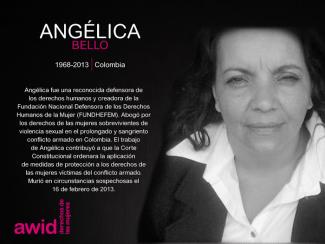
Angelica Bello
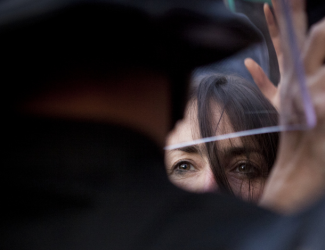
WHRDs are self-identified women and lesbian, bisexual, transgender, queer and intersex (LBTQI) people and others who defend rights and are subject to gender-specific risks and threats due to their human rights work and/or as a direct consequence of their gender identity or sexual orientation.
WHRDs are subject to systematic violence and discrimination due to their identities and unyielding struggles for rights, equality and justice.
The WHRD Program collaborates with international and regional partners as well as the AWID membership to raise awareness about these risks and threats, advocate for feminist and holistic measures of protection and safety, and actively promote a culture of self-care and collective well being in our movements.
WHRDs are exposed to the same types of risks that all other defenders who defend human rights, communities, and the environment face. However, they are also exposed to gender-based violence and gender-specific risks because they challenge existing gender norms within their communities and societies.
We work collaboratively with international and regional networks and our membership
We aim to contribute to a safer world for WHRDs, their families and communities. We believe that action for rights and justice should not put WHRDs at risk; it should be appreciated and celebrated.
Promoting collaboration and coordination among human rights and women’s rights organizations at the international level to strengthen responses concerning safety and wellbeing of WHRDs.
Supporting regional networks of WHRDs and their organizations, such as the Mesoamerican Initiative for WHRDs and the WHRD Middle East and North Africa Coalition, in promoting and strengthening collective action for protection - emphasizing the establishment of solidarity and protection networks, the promotion of self-care, and advocacy and mobilization for the safety of WHRDs;
Increasing the visibility and recognition of WHRDs and their struggles, as well as the risks that they encounter by documenting the attacks that they face, and researching, producing, and disseminating information on their struggles, strategies, and challenges:
Mobilizing urgent responses of international solidarity for WHRDs at risk through our international and regional networks, and our active membership.
Nous nous attachons à faire preuve de transparence, à utiliser nos ressources de manière responsable, à être équitables dans nos collaborations et à faire preuve de responsabilité et d'intégrité envers nos membres, nos partenaires, nos bailleurs de fonds et les mouvements avec lesquels nous travaillons. Nous nous engageons à réfléchir sur nos expériences, à partager ouvertement nos connaissances et à nous efforcer de modifier nos pratiques en conséquence.
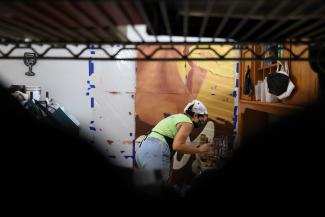
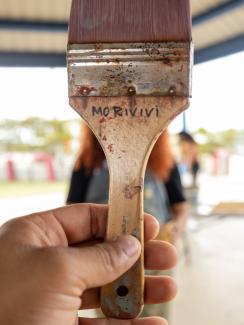
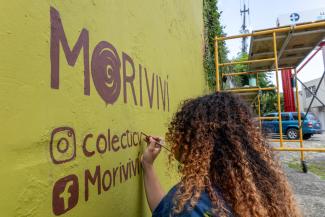
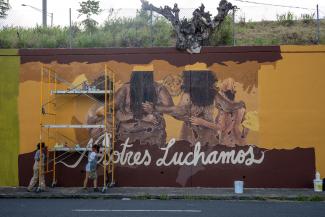
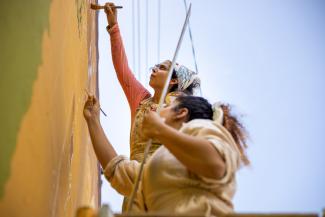
El Colectivo Moriviví es una colectiva de solo mujeres. Nuestra producción artística consiste en muralismo, muralismo comunitario y acciones/performances de protesta. Nuestro trabajo tiene como objetivo democratizar el arte y llevar a la esfera pública las narrativas de las comunidades de Puerto Rico, para generar espacios en donde sean validadas. Creemos que, a través del artivismo, podemos promover conciencia sobre temas sociales y fortalecer nuestra memoria colectiva.
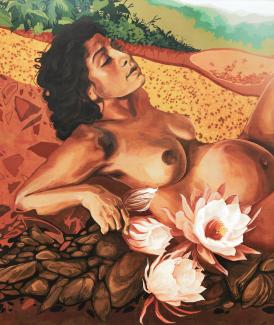
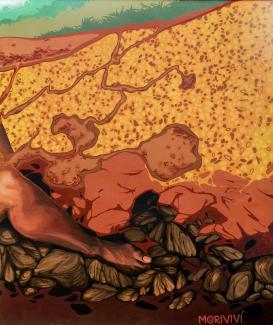
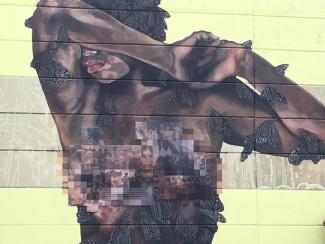
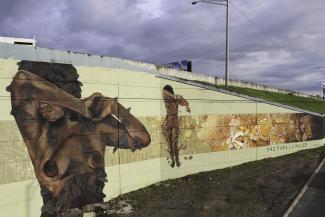
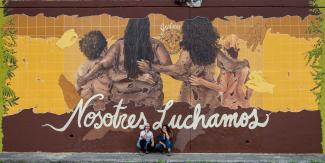
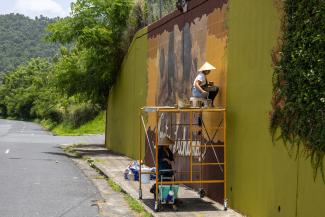
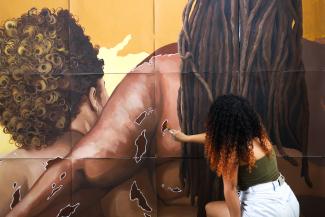
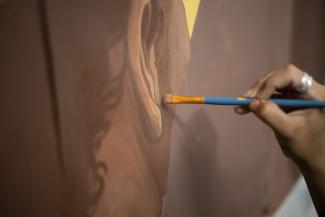
En el marco de su participación en el Grupo de Trabajo Artístico de AWID, el Colectivo Moriviví convocó a un grupo diverso de afiliadxs, asociadxs y personal de AWID y facilitó un proceso colaborativo de imaginación, configuración y decisión sobre el contenido para la creación de un mural comunitario, a través de un proceso de creación conjunta en múltiples etapas. El proyecto comenzó con una conceptualización remota con feministas de diferentes zonas del planeta reunidxs por AWID, y luego evolucionó hacia su recontextualización y realización en Puerto Rico. Nos honra haber contado con la contribución de las artistas locales Las Nietas de Nonó (@lasnietasdenono), la participación de mujeres locales en la Sesión de Pintura Comunitaria, el apoyo logístico de la Municipalidad de Caguas, y el apoyo adicional al colectivo, brindado por FRIDA Young Feminist Fund.
El mural explora la trascendencia de las fronteras, al presentar cuerpos como un mapa en un abrazo que realza la intersección de las distintas manifestaciones, prácticas y realidades feministas.
Agradecemos también a Kelvin Rodríguez, quien documentó y captó las diferentes etapas de este proyecto en Puerto Rico:


Ориентировочное время для завершения опроса составляет 30 минут.

The AWID Forum is just one stop in the Feminist Realities journey. Let’s travel this path together and explore our power in action!
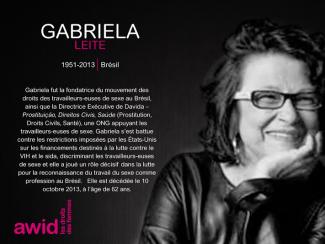
Les antidroits ont adopté une double stratégie : outre leurs attaques ouvertes sur le système multilatéral, ils et elles sapent les droits humains depuis l’intérieur. Leur implication vise à prendre le contrôle des processus, instaurer des normes régressives et fragiliser la redevabilité.
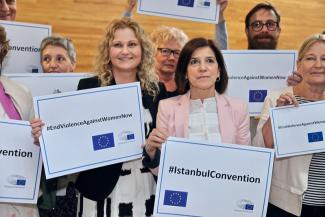
Leur implication dans les sphères des droits humains a un but essentiel : saper le système et sa capacité à respecter, protéger et assurer les droits humains de tout un chacun, et à tenir les États membres pour responsables de leurs enfreintes. Certaines tactiques antidroits en dehors de l’ONU visent à la délégitimer, exercer des pressions politiques pour limiter son financement ou se retirer d’accords internationaux sur les droits humains. Les acteur·rice·s antidroits gagnent cependant en influence au sein même de l’ONU. Leurs tactiques de l’intérieur incluent la formation de délégué·e·s, la dénaturation de cadres relatifs aux droits humains, la dilution de la substance d’accords sur les droits humains, l’infiltration de comités d’ONG, la demande du statut ECOSOC sous un nom neutre, l’infiltration des espaces des jeunes et la pression pour que des acteur·rice·s antidroits occupent des postes clés.
Absolutamente, estas perguntas são opcionais, e valorizamos o seu direito de permanecer anónimo. Queira preencher o inquérito independentemente da sua decisão de partilhar o nome do seu grupo, organização e/ou movimento e as respetivas informações de contacto connosco.

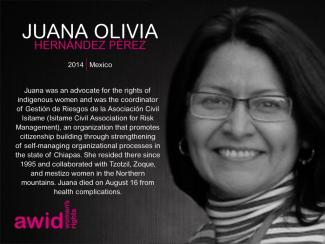
سنقوم بتحليل الردود على الاستطلاع للوصول للاستنتاجات الأساسية والنتائج خلال المنتدى العالمي ل AWID في بانكوك، وعن طريق الانترنت في ديسمبر (كانون الأول) 2024. الرجاء التسجيل هنا لحضور المنتدى.
par Karina Ocampo
C’est dans un recoin caché du Chiapas, au Mexique, que nous sommes arrivées, femmes et dissidentes sexuelles, pour organiser nos actions. (...)
< illustration : « La muerte sale por el Oriente » [la mort se lève à l’Est], par Sonia Madrigal