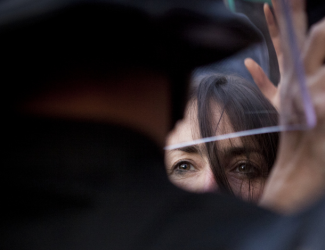
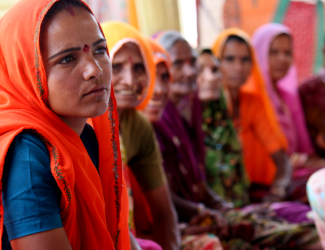
Philippe Leroyer | Flickr (CC BY-NC-ND 2.0)

Special Focus

AWID is an international, feminist, membership organisation committed to achieving gender equality, sustainable development and women’s human rights

Women Human Rights Defenders

WHRDs are self-identified women and lesbian, bisexual, transgender, queer and intersex (LBTQI) people and others who defend rights and are subject to gender-specific risks and threats due to their human rights work and/or as a direct consequence of their gender identity or sexual orientation.

WHRDs are subject to systematic violence and discrimination due to their identities and unyielding struggles for rights, equality and justice.

The WHRD Program collaborates with international and regional partners as well as the AWID membership to raise awareness about these risks and threats, advocate for feminist and holistic measures of protection and safety, and actively promote a culture of self-care and collective well being in our movements.


Risks and threats targeting WHRDs  

WHRDs are exposed to the same types of risks that all other defenders who defend human rights, communities, and the environment face. However, they are also exposed to gender-based violence and gender-specific risks because they challenge existing gender norms within their communities and societies.

By defending rights, WHRDs are at risk of:

  • Physical assault and death
  • Intimidation and harassment, including in online spaces
  • Judicial harassment and criminalization
  • Burnout

A collaborative, holistic approach to safety

We work collaboratively with international and regional networks and our membership

  • to raise awareness about human rights abuses and violations against WHRDs and the systemic violence and discrimination they experience
  • to strengthen protection mechanisms and ensure more effective and timely responses to WHRDs at risk

We work to promote a holistic approach to protection which includes:

  • emphasizing the importance of self-care and collective well being, and recognizing that what care and wellbeing mean may differ across cultures
  • documenting the violations targeting WHRDs using a feminist intersectional perspective;
  • promoting the social recognition and celebration of the work and resilience of WHRDs ; and
  • building civic spaces that are conducive to dismantling structural inequalities without restrictions or obstacles

Our Actions

We aim to contribute to a safer world for WHRDs, their families and communities. We believe that action for rights and justice should not put WHRDs at risk; it should be appreciated and celebrated.

  • Promoting collaboration and coordination among human rights and women’s rights organizations at the international level to  strengthen  responses concerning safety and wellbeing of WHRDs.

  • Supporting regional networks of WHRDs and their organizations, such as the Mesoamerican Initiative for WHRDs and the WHRD Middle East and North Africa  Coalition, in promoting and strengthening collective action for protection - emphasizing the establishment of solidarity and protection networks, the promotion of self-care, and advocacy and mobilization for the safety of WHRDs;

  • Increasing the visibility and recognition of  WHRDs and their struggles, as well as the risks that they encounter by documenting the attacks that they face, and researching, producing, and disseminating information on their struggles, strategies, and challenges:

  • Mobilizing urgent responses of international solidarity for WHRDs at risk through our international and regional networks, and our active membership.

Related Content

Snippet Feminist Art_Fest (EN)

Feminist Art

Yamile Guerra

Yamile Guerra était une avocate bien connue, leader communautaire et activiste politique dans la région de Santander en Colombie.

Activement impliquée dans la résolution de litiges entre les communautés locales et les promoteurs immobiliers, elle s’est battue contre l’appropriation des terres illégale. Yamile a occupé plusieurs fonctions politiques, dont celle de secrétaire générale du gouvernement de Santander à Bogota, et s’était également présentée comme candidate à la mairie de Bucaramanga. Au cours des dernières années de sa vie, Yamile s’était de plus en plus impliquée dans les causes environnementales, et particulièrement celle de la défense de la biodiversité des zones humides de Santurbán, une région qui approvisionnait près de deux millions de personnes en eau potable, contre les promoteurs du développement économique.

D’après sa famille et ses ami·e·s, Yamile recevait quotidiennement des menaces de mort et avait demandé la protection des autorités.

« Elle était tout à fait consciente de la question [du litige foncier] et avait à plusieurs reprises mentionné qu’elle se sentait en danger. » - Alixon Navarro Muñoz, journaliste et amie de la famille Guerra

Le 20 juillet 2019, Yamile a été tuée par balles par deux hommes à Floridablanca, Santander. Elle venait de clore une discussion avec eux en lien avec le litige foncier. Un suspect a ensuite été arrêté pour son meurtre, lequel a admis avoir été payé pour organiser son assassinat. Selon des rapports, Yamile est la troisième membre de sa famille a avoir été assassinée, en lien avec des litiges fonciers. Son père, Hernando Guerra, avait lui aussi été assassiné plusieurs années auparavant.

L’assassinat de Yamile s’inscrit dans une vague de violences et de meurtres systématiques de centaines d’activistes sociaux et défenseur·e·s des droits humains en Colombie. L’Institut d’études sur le développement et la paix (INDEPAZ) rapporte qu’au moment du décès de Yamile, plus de 700 leaders communautaires et activistes pour les droits humains ont été tué·e·s depuis la signature en août 2016 d’un traité de paix par la Colombie. La plupart furent assassiné·e·s pour s’être opposé·e·s à des trafics de drogue et des opérations minières; y compris les peuples autochtones, les Afro-Colombiens et les défenseures des droits humains étant les plus exposé·e·s.

Moins d’une semaine après le décès de Yamile, des milliers de Colombien·ne·s ont manifesté dans les petites et grandes villes, brandissant des photos en noir et blanc d’activistes tué·e·s, et sur lesquelles était écrit : « Il ne peut y avoir de paix sans leaders » et « Fini les bains de sang ».

 Yamile Guerra n’avait que 42 ans au moment de son assassinat.

Umyra Ahmad

Biography

Umyra Ahmad es una feminista de Malasia con antecedentes en incidencia política internacional y regional y educación en derechos humanos. En AWID, trabaja en la incidencia de los derechos asociados con el género y la sexualidad en las Naciones Unidas. Antes de incorporarse, se desempeñaba como oficial de programa en International Women’s Rights Action Watch Asia y el Pacífico (IWRAW, Observatorio Internacional de los Derechos de las Mujeres), donde colaboró con organizaciones regionales, nacionales y de base en el uso de mecanismos de los órganos de tratados de las Naciones Unidas como herramientas para la rendición de cuentas de los Estados y el acceso a la justicia. En Malasia, trabaja con colectivos queer y de personas refugiadas y brinda apoyo en las tareas de coordinación de diferentes iniciativas de ayuda mutua.

Position
Responsable, Promoción de los Derechos Universales y la Justicia
Add to stories
Off

لغتي ليست واحدة من لغات الاستطلاع الرسمية ولدي صعوبة بتعبئته. ماذا يمكن أن أفعل؟

تلتزم جمعية حقوق المرأة في التنمية بالعدالة اللغوية ونأسف على عدم توفر الاستطلاع بلغات أخرى في الوقت الحالي. إن كنتم/ن بحاجة لدعم من مترجم/ة أو أردتم/ن تعبئة الاستطلاع بأي لغة أخرى، الرجاء الكتابة لنا عبر البريد الالكتروني: witm@awid.org

Snippet “Gender Ideology” Narratives (ES)

 Narrativas sobre la «Ideología de género»

Durante décadas, lxs investigadorxs y activistas feministas han articulado conceptos importantes en relación al género para entender y cuestionar la opresión y la discriminación. Ahora, esos conceptos se han convertido en el blanco de los actores anti-derechos, quienes afirman que los roles de género patriarcales y opresivos son de «sentido común» y, estratégicamente, presentan a todas las otras ideas, normas culturales y formas de vida social como una peligrosa ideología conspirativa.

Lee nuestro resumen Narrativas sobre la «Ideología de género»: Una amenaza para los derechos humanos

Descarga aquí

Sylvia Robinson

"Life is...about living in joy - waking up with purpose, feeling our creative energy, answering your calling." - Sylvia Robinson

Sylvia Robinson, a tireless community organizer and leader, was the founder and Executive Director of The Emergence Community Arts Collective (ECAC) in Washington DC.

This hub and performance space combine education, civic engagement, arts, social and spiritual services, and sustainable environmental practices. Sylvia envisioned it as a home where “there was a balance and synergy with the activities that people needed in order to sustain life.” 

She was also one of the founding members of the Georgia Avenue Community Development Taskforce, a neighborhood group that works on social justice and organizing in Northwest DC  to make sure the community has a voice in redevelopment and gentrification in the area. 

“We're asking for affordable housing. We're asking that the small businesses that have been here for a long time don't get wiped out by new retail. We're asking for green space and space for people to get together to socialize. We're asking for streetscape improvements—better roads and lighting in the corridor.” - Sylvia Robinson about the Taskforce

Prior to becoming an organizer and after receiving a degree in computer science, Sylvia worked in air traffic control systems for over a decade. She then moved into drug and alcohol counselling, becoming increasingly engaged in community work.

“It was my call to be involved in community.”  - Sylvia Robinson

Born in Washington D.C. on 14 August 1961, Sylvia passed away on 18 September 2017 after a battle with cancer.

“Sylvia's spirit and legacy will continue to inspire this community for many years to come.” - ECAC

Joanne Kobuthi-Kuria

Biography

Joanne est une féministe africaine passionnée par le démantèlement des inégalités de genre sur le continent africain. Elle a travaillé avec un certain nombre d'organisations mondiales, de médias et de think tanks, dont entre autres Amnesty International, Wrthy, le Local Development Research Institute, la BBC et la East African Community (EAC). Elle siège au sein de plusieurs conseils d'administration, dont celui de Freely in Hope, une ONG basée au Kenya et en Zambie, qui souhaite outiller les survivant·e·s et les défenseur·e·s dans leur lutte contre les violences sexuelles, et celui de Msingi Trust, un mouvement d'activistes qui se réunissent à la croisée de la foi et des droits humains. Elle est titulaire d'un master en gestion d’affaires, d'un master en politiques publiques et d'une licence en droit. Elle est accro aux livres, avec un penchant pour la fiction.

Position
Cheffe d’Adhésion et d’Engagement des Membres
Add to stories
Off

Сколько времени занимает заполнение опроса?

Ориентировочное время для завершения опроса составляет 30 минут.

Snippet FEA Title Menu (FR)

Les Économies Féministes

QUE NOUS ADORONS

ÉCONOMIES DES SOINS AGROÉCOLOGIE ET SOUVERAINETÉ ALIMENTAIRECOOPÉRATIVISME FÉMINISTESYNDICALISME FÉMINISTE

Maritza Quiroz Leiva

Maritza Quiroz Leiva fue una activista social afrocolombiana, líder comunitaria y defensora de los derechos humanos de las mujeres. Como una de las 7,7 millones de colombianxs desplazadxs internamente por 50 años de conflicto armado, Maritza dedicó su trabajo de incidencia a apoyar los derechos de otras personas, en particular dentro de la comunidad afrocolombiana, que sufrían similares desplazamientos y violaciones de derechos.

Maritza era líder adjunta del Comité de Víctimas de Santa Marta, y una voz importante para quienes buscaban justicia en su comunidad, exigiendo reparaciones por las torturas, los secuestros, los desplazamientos y la violencia sexual que experimentaban las víctimas durante el conflicto armado. También trabajó activamente en el movimiento nacional por la redistribución de la tierra y la justicia agraria.

El 5 de enero de 2019 Maritza fue asesinada por dos individuos armados que irrumpieron en su casa. Tenía 60 años.

Maritza se sumó así a lxs otrxs cinco activistas y líderes sociales colombianxs que fueron asesinadxs durante la primera semana de 2019. En Colombia, ese año fueron asesinadxs un total de 107 defensorxs de derechos humanos.
 

Veena Singh

Biography

Veena Singh is a Fiji Islander, feminist, and woman of colour. Born and raised in a small rural town in Fiji, she draws strength from her rich mixed heritage (her mother is an Indigenous Fijian woman and her father is Fijian of Indian descent). Veena’s identity and lived experiences deeply inform her commitment to justice, equity, and inclusion.  With over two decades of experience in human rights, gender equality, community development, and social inclusion, Veena is a passionate advocate for shifting power to create transformative change and for building an “economy of kindness”. Her work spans diverse areas including community development; women, peace and security; social policy; human rights; and policy advocacy.

Veena is deeply committed to advancing inclusion, peace and justice, sexual and reproductive health and rights (SRHR), climate justice, transitional justice, and human rights. She brings a wealth of experience working across grassroots networks, international organizations, and government institutions, always centering community and locally led approaches and feminist principles.

Outside of her ‘office life’, Veena is an environmental advocate, mental health champion, and writer. She is a mum to 11 cats, a saree wearer, and a lover of snail-mails and postcards. A thoughtful observer of feminist movements in Fiji and the Pacific, Veena is on a personal journey to “decolonise the mind and the self through radical self-reflection.” Above all, she is driven by a desire and dream to produce relatable, resonant writing that connects with the Pacific diaspora and amplifies voices from the margins.

Position
Co-President
Add to stories
Off

Não me sinto à vontade para partilhar o nome do meu grupo e as nossas informações de contacto com a AWID. Devo preencher o inquérito ainda assim?

Absolutamente, estas perguntas são opcionais, e valorizamos o seu direito de permanecer anónimo. Queira preencher o inquérito independentemente da sua decisão de partilhar o nome do seu grupo, organização e/ou movimento e as respetivas informações de contacto connosco.

Snippet FEA Carmen Silva (EN)

Ocupação 9 de Julho

When you come to the center of São Paulo, you will see the building of the Ocupação 9 de Julho - a landmark in the struggle for social housing and an important cultural site. This is the work of The Homeless Workers Movement (Movimento dos Sem-Teto do Centro, MSTC) a movement of over 2000 people that operates in the city center and converts abandoned spaces into housing for low-income workers, children, women, adults, the elderly, migrants and refugees. In this particular building, they provide food and shelter to 122 families. 

Roxana Reyes Rivas

Roxana Reyes Rivas, était une philosophe, féministe, lesbienne, poétesse, politicienne et activiste pour les droits des personnes LGBT et des femmes du Costa Rica. Auteure à la plume acérée et à l’humour incisif, elle était irrésistiblement drôle. Née en 1960 et élevée à San Ramón dans la province d’Alajuela, qui était encore une localité rurale à l’époque, elle a toute sa vie refusé d’adhérer aux attentes envers « les femmes ».   

Avec le groupe de lesbiennes costariciennes El Reguero, Roxana a organisé pendant plus de dix ans des festivals lesbiens, de joyeux espaces de formation où se rassembler à une époque où le gouvernement du Costa Rica et la société persécutaient et pénalisaient l’existence des lesbiennes. Ces festivals lesbiens étaient, pour des centaines de femmes, le seul endroit où elles pouvaient être elles-mêmes et se regrouper avec leurs semblables.

Roxana aimait répéter que la formation de partis politiques comptait parmi ses passe-temps. « Il est important que les gens comprennent qu’il y a d’autres manières de faire de la politique, et que de nombreuses questions doivent être résolues collectivement. » Elle fut également l’une des fondatrices des partis Nueva Liga Feminista et VAMOS, centrés sur les droits humains.

« La philosophie est faite pour bousculer, pour aider les gens à se poser des questions. Une philosophe qui n’irrite personne ne fait pas son travail. » Pendant 30 ans, Roxana a enseigné la philosophie dans plusieurs universités publiques du Costa Rica. Des générations d’étudiant·e·ss ont suivi ses directives et réfléchi aux dilemmes éthiques que posent la science et les technologies.  

L’outil de prédilection de Roxana était l’humour. Elle a créé le prix de l’ignorance La Citrouille étincelante, qu’elle décernait à des personnalités publiques sur ses réseaux sociaux, tournant en dérision leurs expressions et déclarations anti-droits.  

Roxana a été emportée par un cancer agressif fin 2019, avant qu’elle ne puisse publier son recueil de poèmes, qu’elle aurait voulu être le cadeau de départ de l’esprit créatif d’une féministe qui a toujours élevé sa voix contre l’injustice.

Christine Hayhurst

Biography

Con más de 30 años de experiencia en finanzas, Christine ha dedicado su carrera a fomentar misiones sin fines de lucro en todo el mundo. Sus contribuciones incluyen desempeñarse como tesorera en la junta de una ONG . Se sumó a AWID en 2007 como Fiscalizadora y, en 2023, asumió el rol de Directora de Finanzas. En su tiempo libre, disfruta de viajar, la jardinería y el senderismo.

Position
Directora de Finanzas
Add to stories
Off