
Concepcion Brizuela
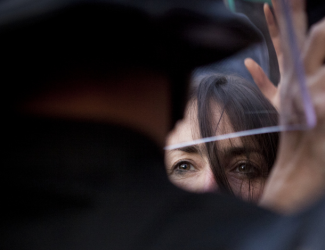
WHRDs are self-identified women and lesbian, bisexual, transgender, queer and intersex (LBTQI) people and others who defend rights and are subject to gender-specific risks and threats due to their human rights work and/or as a direct consequence of their gender identity or sexual orientation.
WHRDs are subject to systematic violence and discrimination due to their identities and unyielding struggles for rights, equality and justice.
The WHRD Program collaborates with international and regional partners as well as the AWID membership to raise awareness about these risks and threats, advocate for feminist and holistic measures of protection and safety, and actively promote a culture of self-care and collective well being in our movements.
WHRDs are exposed to the same types of risks that all other defenders who defend human rights, communities, and the environment face. However, they are also exposed to gender-based violence and gender-specific risks because they challenge existing gender norms within their communities and societies.
We work collaboratively with international and regional networks and our membership
We aim to contribute to a safer world for WHRDs, their families and communities. We believe that action for rights and justice should not put WHRDs at risk; it should be appreciated and celebrated.
Promoting collaboration and coordination among human rights and women’s rights organizations at the international level to strengthen responses concerning safety and wellbeing of WHRDs.
Supporting regional networks of WHRDs and their organizations, such as the Mesoamerican Initiative for WHRDs and the WHRD Middle East and North Africa Coalition, in promoting and strengthening collective action for protection - emphasizing the establishment of solidarity and protection networks, the promotion of self-care, and advocacy and mobilization for the safety of WHRDs;
Increasing the visibility and recognition of WHRDs and their struggles, as well as the risks that they encounter by documenting the attacks that they face, and researching, producing, and disseminating information on their struggles, strategies, and challenges:
Mobilizing urgent responses of international solidarity for WHRDs at risk through our international and regional networks, and our active membership.
Meet Aura Roig, the visionary feminist activist, anthropologist, director and founder of the Metzineres cooperative.
She spent the last two decades researching, designing and implementing drug policies from the perspective of harm reduction, human rights and intersectional feminism.
Having experienced and learned from communities who use drugs around the world, she returned to Barcelona and created Xarxa de Dones que Usen Drogues (the Network of Women Who Use Drugs, XADUD). XADUD was a space of mutual support and solidarity with the struggle to secure rights for marginalized groups, which later became the Metzineres cooperative.
Aura is currently working on expanding the Metzineres model to provide support to bigger constituencies, while also extensively documenting their prolific journey and learnings.
No, you don't have to be an AWID member to participate but AWID members receive a discounted registration fee as well as a number of other benefits.
Yes please. The world has changed since 2021 and we invite you to submit an activity that reflects your current realities and priorities.
Mientras estés en São Paulo, Brasil, puedes visitar la Ocupação 9 de Julho y pedir una comida colaborativa. También puedes comprar sus productos en su tienda online desde el extranjero.
Visita la tienda en línea de la Asociación de Mujeres Afrodescendientes del Norte del Cauca (ASOM) donde puedes encontrar hermosos productos hechos a mano.
Hay varias formas de apoyar a Metzineres: puedes hacer una donación económica, donar materiales y servicios, o proponer una formación, un taller o una actividad (para más información, ¡ver aquí!)
For additional questions, please use our contact form, and select “14th AWID Forum" from the dropdown menu.

يعتبر المنتدى الدولي الخامس عشر لجمعية حقوق المرأة في التنمية حدثًا مجتمعيًا عالميًا ومساحة للتحول الشخصي الجذري. يجمع المنتدى، وهو اجتماع فريد من نوعه، الحركات النسوية وحقوق المرأة والعدالة الجندرية ومجتمع الميم عين والحركات الحليفة، بكل تنوعنا وإنسانيتنا، للتواصل والشفاء والازدهار. المنتدى هو المكان الذي تحتل فيه نسويات ونسويو الجنوب العالمي والمجتمعات المهمشة تاريخياً مركز الصدارة، حيث يضعون الاستراتيجيات مع بعضهم/ن البعض، مع الحركات الحليفة الأخرى، ومع المموّلين وصانعي السياسات بهدف تحويل السلطة، إقامة تحالفات استراتيجية، والدخول في عالم أفضل ومختلف.
عندما يجتمع الناس على نطاق عالمي، كأفراد وحركات، فإننا نولد قوة جارفة. انضموا إلينا في بانكوك، تايلاند في عام 2024. تعالوا وارقصوا وغنوا واحلموا وانهضوا معنا.
متى: 2-5 ديسمبر 2024
أين: بانكوك، تايلاند؛ وعلى الانترنت
من: ما يقرب الـ 2500 ناشط/ة نسوية من جميع أنحاء العالم يشاركون شخصيًا، و3000 يشاركون افتراضيًا
We see Taipei as the location in the Asia Pacific region that will best allow us to build that safe and rebelious space for our global feminist community.
Taipei offers a moderate degree of stability and safety for the diversity of Forum participants we will convene. It also has strong logistical capacities, and is accessible for many travellers (with a facilitated e-visa process for international conferences).
The local feminist movement is welcoming of the Forum and keen to engage with feminists from across the globe.
NOUS SOMMES LA SOLUTION
Le Forum international de l'AWID est un événement mondial qui offre aux participant·e·s une occasion unique de se rencontrer, tisser des alliances, de faire la fête et d’apprendre des autres dans une ambiance stimulante, riche en émotions et en toute sécurité.
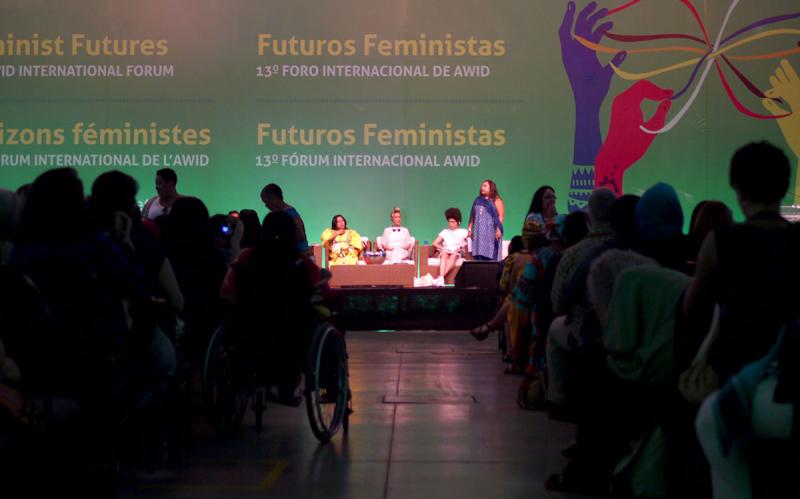
De plus en plus, nous nous efforçons de penser le processus du Forum au-delà des limites de l’événement lui-même. Nous ouvrons des discussions avec des partenaires et renforçons des alliances tout au long de l’année. Nous essayons d’être au plus proches des mouvements locaux pour comprendre leurs difficultés et co-créer des solutions.
Le Forum de l’AWID un espace propice aux discussions en profondeur, qui repousse nos limites internes et externes et favorise le développement personnel et professionnel, en plus de renforcer nos mouvements pour la justice sociale, de genre et les droits des femmes.
Nous envisageons ce moment de rencontre comme une réponse à l’urgence de favoriser un engagement plus marqué et une action mieux concertée entre les organisations féministes, les défenseur·e·s des droits des femmes et les autres activistes de justice sociale. Pour nous, le Forum est plus qu’un événement. Il nourrit nos réflexions respectives et nous aide à cerner des initiatives concrètes dans lesquelles les mouvements féministes et peuvent s’engager avec d’autres acteurs·trices.
Au départ un événement national d’environ 800 personnes, le Forum rassemble aujourd'hui plus de 2 000 féministes, des dirigeant·e·s communautaires, des activistes de justice sociale et des bailleurs de fonds du monde entier.
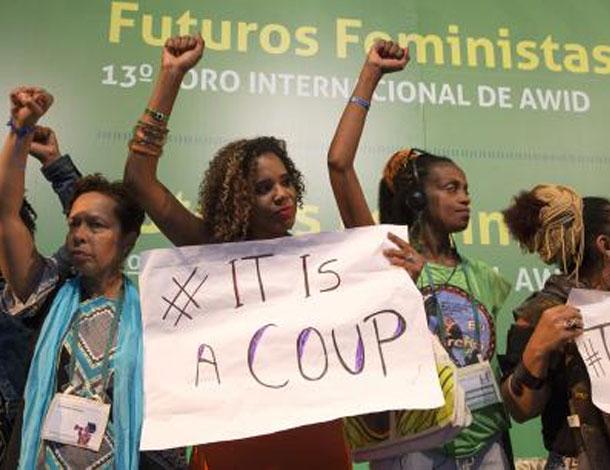
Compte tenu de la complexité du monde d'aujourd'hui, le Forum de l'AWID 2016 ne s'est pas concentré sur un « problème » particulier mais a plutôt exploré comment créer des moyens efficaces de travailler ensemble !
Malgré le contexte difficile dans lequel s’est déroulé le Forum de 2016 (l’épidémie de Zika, la grève au ministère des Affaires étrangères brésilien, la destitution de la présidente Dilma Rousseff et l’instabilité qui a suivi), il a rassemblé plus de 1800 participant-e-s issu-e-s de 120 pays et territoires de toutes les régions du monde.
Téléchargez le rapport d’évaluation
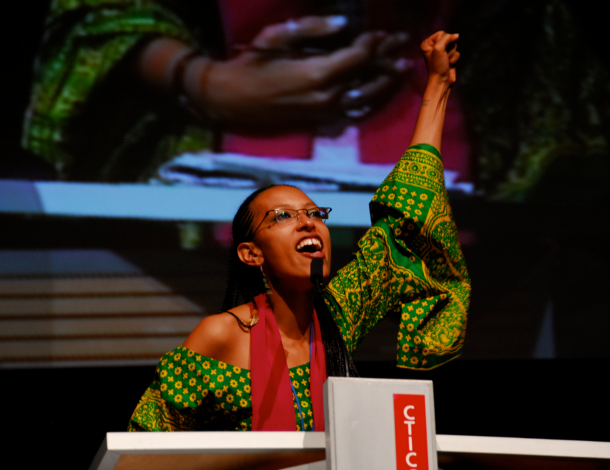
Le 12e Forum de l’AWID s’est tenu à Istanbul en Turquie en 2012, avec pour thème central Transformer le pouvoir économique pour avancer les droits des femmes et la justice. Ce Forum fut le plus important et le plus diversifié de l’histoire, rassemblant quelque 2 239 activistes pour les droits des femmes en provenance de 141 pays différents. Parmi elles-eux, environs 65 % venaient de pays du Sud, près de 15 % étaient des jeunes femmes de 30 ans et moins, alors que 75 % participaient au Forum pour la première fois.
Le Forum s’est focalisé sur la transformation du pouvoir économique pour faire progresser les droits des femmes et la justice en proposant plus de 170 activités incluant des ateliers de formation en économie féministe, en passant par toute une séries d’ateliers de discussion et autres tables rondes solidaires autour de 10 grandes questions cruciales.
Dans l’élan du Forum, nous avons transformé la page qui lui était dédiée en un outil multimédia en ligne qui intègre également les contenus générés par les participant-e-s sur toutes les composantes du Forum.
Visitez l'archive web du Forum 2012
Nous avons le plaisir de vous présenter Mariama Sonko, agricultrice rurale, éco-féministe et défenseuse des droits humains, vivant actuellement à Niaguis, une ville du sud-ouest du Sénégal.
Ayant grandi dans une famille et une communauté rurale d’agriculteur·rices, elle a été témoin du rôle essentiel des femmes dans la production alimentaire et la conservation des semences depuis son plus jeune âge, tout en étant immergée dans le travail de la terre.
Mariama défend les savoirs agricoles locaux et les pratiques paysannes depuis les années 90. En tant que mère de 5 enfants, la nourriture qu'elle cultive elle-même est la principale source de subsistance de sa famille.
Elle est actuellement présidente de Nous Sommes la Solution et s'engage à promouvoir les pratiques agroécologiques et l'agriculture familiale, à encourager la souveraineté alimentaire, la biodiversité et la préservation des semences paysannes, et à exiger un accès équitable aux ressources et à la terre à travers l'Afrique de l'Ouest.
Source: AWID’s Feminist Realities Festival Crear | Résister | Transform - Day 2/ 2ème jour/ 2º día
English body