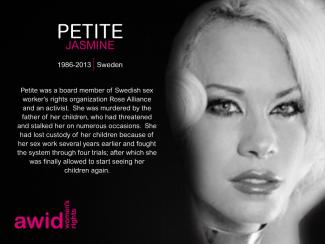
Chandrika Sharma
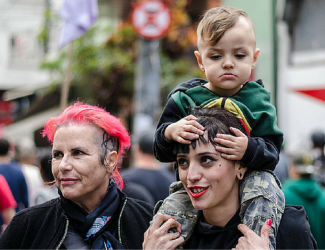
Over the past few years, a troubling new trend at the international human rights level is being observed, where discourses on ‘protecting the family’ are being employed to defend violations committed against family members, to bolster and justify impunity, and to restrict equal rights within and to family life.
The campaign to "Protect the Family" is driven by ultra-conservative efforts to impose "traditional" and patriarchal interpretations of the family, and to move rights out of the hands of family members and into the institution of ‘the family’.
Since 2014, a group of states have been operating as a bloc in human rights spaces under the name “Group of Friends of the Family”, and resolutions on “Protection of the Family” have been successfully passed every year since 2014.
This agenda has spread beyond the Human Rights Council. We have seen regressive language on “the family” being introduced at the Commission on the Status of Women, and attempts made to introduce it in negotiations on the Sustainable Development Goals.
AWID works with partners and allies to jointly resist “Protection of the Family” and other regressive agendas, and to uphold the universality of human rights.
In response to the increased influence of regressive actors in human rights spaces, AWID joined allies to form the Observatory on the Universality of Rights (OURs). OURs is a collaborative project that monitors, analyzes, and shares information on anti-rights initiatives like “Protection of the Family”.
Rights at Risk, the first OURs report, charts a map of the actors making up the global anti-rights lobby, identifies their key discourses and strategies, and the effect they are having on our human rights.
The report outlines “Protection of the Family” as an agenda that has fostered collaboration across a broad range of regressive actors at the UN. It describes it as: “a strategic framework that houses “multiple patriarchal and anti-rights positions, where the framework, in turn, aims to justify and institutionalize these positions.”
Esta sección te guiará para garantizar que los resultados de la investigación sean representativos y confiables.
En esta sección:
- Recoge la información
1. Antes de difundir la encuesta
2. La presentación
3. Mientras la encuesta está abierta- Prepara la información para ser analizada
1. Limpia la información
2. Codifica las respuestas abiertas
3. Elimina la información innecesaria
4. Protege la información- Genera el informe de resultados
- Analiza la información
1. Programas estadísticos
2. Puntos sugeridos para el análisis
Si también piensas recoger información de las solicitudes que se envían a las financiadoras, este es un buen momento para ponerte en contacto con ellas.
Considera qué clase de solicitudes quieres analizar. El marco de investigación te ayudará a tomar esta decisión.
Tal vez no necesites ver todas las solicitudes enviadas a una financiadora en particular y te resulte más útil y eficiente consultar solo las que cumplen con los requisitos para ser financiadas (más allá de que finalmente las hayan apoyado o no).
También puedes pedirles a las financiadoras que compartan su información contigo.
Ver un modelo de carta para enviar a las financiadoras
Terminó el plazo para responder la encuesta y cuentas con mucha información. Lo que necesitas ahora es garantizar que sea lo más precisa posible.
Según el tamaño de la muestra y la cantidad de encuestas respondidas, este paso puede tomarte bastante tiempo. Para acelerar el proceso, lo mejor será contar con una buena cantidad de personas con capacidad de prestar atención a los detalles que se puedan encargar de esta tarea, garantizando así una mayor precisión en esta etapa.
Junto con las encuestas, probablemente también hayas recogido información de solicitudes enviadas a las financiadoras. Utiliza este mismo paso para organizar también esa información. No te desalientes si no puedes comparar estos dos conjuntos de datos entre sí. Las financiadoras recogen información que es diferente de la que tú habrás conseguido con las encuestas. En el informe y los productos finales sobre la investigación, podrás analizar y presentar por separado ambos conjuntos de información (la encuesta y la que te proporcionaron las financiadoras).
Existen dos clases de respuestas abiertas que requieren ser codificadas.
Preguntas con respuestas abiertas
Para estas preguntas, necesitarás codificar las respuestas para poder encontrar tendencias.
Algunos problemas que podrás enfrentar en este paso son los siguientes:
Si más de una persona analiza y codifica, tendrás que garantizar la consistencia de la codificación. Por eso recomendamos que incluyas solo una cantidad limitada de preguntas abiertas y que las estas pidan respuestas lo más concretas posibles.
Por ejemplo, si la pregunta abierta es «¿Qué desafíos específicos enfrentaste este año para movilizar recursos?» y algunas respuestas comunes son «falta de personal» o «la recesión económica», tendrás que codificar cada una de ellas para que puedas analizar cuántas veces fueron mencionadas.
Preguntas cerradas
Si ofreciste la posibilidad de agregar comentarios a las respuestas en preguntas cerradas, también necesitarás codificar esas respuestas.
Tal vez en varias preguntas de la encuesta hayas ofrecido la opción de «Otra», que muchas veces viene acompañada de un espacio en blanco para explicar la respuesta.
Tendrás que codificar esas respuestas y para esto dispones de dos opciones:
Analiza la frecuencia de los resultados
Para cada pregunta cuantitativa, puedes optar por eliminar el 5% o el 1% superior o inferior para impedir que los resultados se vean distorsionados por los valores atípicos*. También puedes controlar el efecto distorsionador de los valores atípicos* utilizando la mediana en lugar del promedio. Calcula la mediana ordenando las respuestas y luego eligiendo los valores que queden en el medio. Pero ten en cuenta que los valores atípicos tienen su utilidad. Pueden darte una idea del rango y la diversidad de participantes en la encuesta y tal vez te interese hacer estudios de caso en torno a algunos de esos valores atípicos.
* Los valores atípicos son puntos de referencia mucho mayores o mucho menores que la mayoría. Por ejemplo, imagina que vives en un barrio de clase media donde también vive una familia multimillonaria, y quieres averiguar cuál es el rango de ingresos para las familias de clase media en el barrio. Para eso, tendrás que eliminar el ingreso de la familia multimillonaria del conjunto de datos, porque se trata de un valor atípico. Si no lo haces, el promedio de ingresos de las familias de clase media que viven en el barrio aparecerá como mucho más elevado de lo que es en realidad.
Si encuentras respuestas de grupos que no corresponden a la población que quieres estudiar, elimina sus encuestas. En general puedes identificar a estos grupos por sus nombres o por sus respuestas a las preguntas cualitativas.
Para garantizar la confidencialidad de la información aportada por lxs participantes, en este paso puedes reemplazar los nombres de las organizaciones por un nuevo conjunto de números que identifiquen a cada organización y crear un archivo separado en el que figure la correspondencia entre cada código y la organización a la que identifica.
Junto con el equipo, decide cómo guardar y proteger el documento con los códigos y la información en general.
Una opción podría ser guardar toda la información en una computadora protegida por una clave o en un servidor al que solo pueda acceder el equipo de investigación.
En el informe con los principales resultados, detallarás los porcentajes de respuestas recibidas para cada pregunta de la encuesta. Esto te permite ver la suma total de respuestas.
Consejos:
Ahora que la información está limpia y ordenada, lo que sigue es entender su significado. Esta es la parte más entretenida, en la que comienzas a analizar tendencias.
¿Hay algún tipo de financiadora que se destaca (los gobiernos por encima de las empresas, por ejemplo)? ¿Hay regiones que están recibiendo más financiamiento? La información que recogiste te revelará algunos datos interesantes.
Las muestras más pequeñas (menos de 150 respuestas) las puede analizar la propia organización utilizando una planilla de Excel.
Las muestras más grandes (más de 150 respuestas) las puede analizar la propia organización utilizando Excel si solo van a calcular el total de respuestas, los promedios o cualquier otro análisis simple.
Si piensas hacer análisis más avanzados, como los de variables múltiples, te recomendamos utilizar programas estadísticos como SPSS, Stata o R.
NOTA: SPSS y Stata son caros, pero R es gratis.
Estos tres tipos de programas exigen conocimientos por parte del personal y no es fácil aprender rápido cómo usarlos.
Intenta conseguir pasantes o personal temporario de universidades locales. Muchxs estudiantes deben aprender análisis estadístico como parte de su carrera y tal vez tengan acceso gratuito a programas como SPSS o Stata a través de su universidad. Tal vez también conozcan el R, que se puede descargar y utilizar gratis.

• 1 persona (o más) de investigación
• Traductores de ofrecer encuesta en varios idiomas
• 1 persona (o más) para ayudar en la difusión de la encuesta a la población objetivo
• 1 persona (o más) para la análisis de los datos
EN CIFRAS
Les résultats de votre recherche façonneront également vos plaidoyers. Par exemple, vos résultats auront cerné les secteurs qui accordent le plus de financements et les secteurs qui vous semblent nécessiter une certaine sensibilisation auprès des donateurs.
Dans cette section
- Élaborez votre stratégie de plaidoyer
- Prenez contact avec votre réseau
- Adaptez votre stratégie au secteur
1. Organisations de droits des femmes
2. Agences bilatérales et multilatérales
3. Fondation privées
4. Fonds pour les femmes
5. Secteur privé et nouveaux donateurs
Dans la section Établir le cadre de référence de votre recherche de cette boîte à outils, nous vous recommandons de fixer les objectifs que vous voulez atteindre à travers votre recherche. Ces objectifs vous permettront d’élaborer une stratégie de plaidoyer lorsque votre recherche sera terminée.
Une stratégie de plaidoyer représente un plan de distribution des résultats de votre recherche de manière à ce que vous atteigniez vos objectifs. Cette démarche s’inscrit dans le but plus vaste de promouvoir auprès des secteurs clés des changements positifs dans le domaine des ressources destinées aux efforts d’organisation liés aux droits des femmes.
À l’aide des objectifs définis dans le cadre de référence de votre recherche :
De cette liste, la plus complète possible, choisissez les éléments qui sont les plus efficaces pour atteindre vos objectifs (voir plus loin les exemples de publics spécifiques et les méthodes de plaidoyer).
Lorsque votre stratégie est achevée, vous pouvez commencer la diffusion.
Pour diffuser vos résultats, contactez d’abord les personnes ou les organisations à qui vous avez distribué votre sondage, ainsi que toutes les personnes interviewées.
N’oubliez pas d’identifier clairement une personne-contact et demandez une confirmation lorsque le rapport aura été affiché.
Cela vous permettra non seulement de savoir qui a diffusé votre rapport, mais vous aurez aussi l’occasion de renforcer vos relations au sein de votre réseau.
À titre d’exemple, nous proposons ci-dessous une liste de secteurs que mobilise l’AWID dans ses efforts de plaidoyer.
La liste des organisations et des individus qui vous ont conseillé-e-s sera également utile. Ces personnes peuvent non seulement vous aider à diffuser votre rapport dans divers espaces, mais aussi vous faire connaitre de nouvelles organisations ou sphères de plaidoyer.
Exemple d’objectifs : informer les organisations de droits des femmes des nouvelles tendances de financement ; à l’aide des résultats de la recherche, proposer des séances de réflexion sur les efforts collaboratifs en matière de mobilisation des ressources ; influencer la manière dont elles approchent la mobilisation des ressources.
Exemples de méthodes de plaidoyer :
Offrez des séminaires, des cafés d’apprentissage ou d’autres activités dans toute votre région, dans la langue qui convient, sur les résultats de votre recherche.
Si vous ne pouvez atteindre tout le monde physiquement, pensez à organiser un webinaire et à concevoir des présentations en ligne.
Présentez vos résultats lors de rencontres d’envergure, comme les sessions de la Commission de la condition de la femme des Nations Unies (CSW).
Au-delà des bulletins et sites Web de votre organisation, rédigez des articles sur diverses plateformes que fréquente votre public cible.
Exemples : World Pulse, OpenDemocracy (principalement en anglais), feministing (en anglais).
Exemple d’objectif : sensibiliser le public à la manière dont les financements actuels ne respectent pas les engagements convenus et à la manière dont ce secteur doit améliorer ses mécanismes de financement soutenant les efforts d’organisation liés aux droits des femmes.
Déterminez les agences bilatérales et multilatérales qui ont le plus d’influence sur les financements, y compris les ambassades locales.
Exemples de méthodes de plaidoyer :
Exemple d’objectif : Améliorer la qualité et la quantité de soutien aux organisations de droits des femmes.
Exemples de méthodes de plaidoyer :
Exemple d’objectif : Les encourager à poursuivre leur travail à plus grande échelle.
Exemples de méthodes de plaidoyer :
Exemple d’objectif : Améliorer leur compréhension du domaine et les encourager à renforcer la cohérence entre leurs intérêts philanthropiques et leurs pratiques commerciales.
Exemples de méthodes de plaidoyer :
Assurez-vous d’adapter vos présentations, propositions et vos demandes à chaque groupe ciblé.
8. Finalisez et mettez en forme
Nous vous recommandons fortement de rempli vous-même la Fiche de travail « Êtes-vous prêts-tes ? » afin d’évaluer votre propre niveau de préparation.

• 1-2 ans, selon votre plan de plaidoyer
• 1 personne (ou plus) responsable de la communication
• Liste des espaces de publication
• Liste de blogs et de magazines en ligne où vous pourrez publier des articles à propos de vos résultats de recherche
• Liste de vos conseillers-ères
• Vos produits de recherche WITM
• Exemple : Plan des activités de plaidoyer
8. Finalisez et mettez en forme
Télécharger la Boîte à outils en PDF
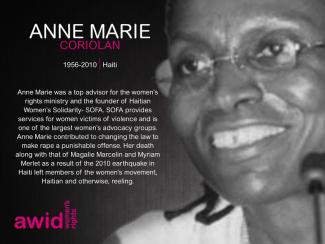
À l’AWID, nous concevons ces réalités féministes comme les exemples vivants des mondes que nous savons possibles. Nous concevons ces diverses réalités féministes comme des revendications et des incarnations d’espoir et de pouvoir. Elles sont ancrées dans les multiples manières de vivre, de penser et de faire autrement, que ce soit au niveau des expressions quotidiennes de nos modes de vie ou nos manières d'être en relations les un.e.s avec les autres ou au niveau de systèmes alternatifs de gouvernance et de justice.
Les Réalités féministes combattent les systèmes de pouvoir dominants tels que le patriarcat, le capitalisme et la suprématie blanche.
Télécharger le magazine complet (PDF)
Today, many community knowledge systems are at risk.
Fast-paced economic, political, and cultural changes are bulldozing environments, practices and livelihoods. Various forms of knowledge are being erased from practice, commodified and colonized in the massive swallow of globalisation and in the promise of short-term gains or band aid solutions.
Buen Vivir, a concept adapted from Andean Indigenous peoples’ knowledges, is described as the collective achievement of a life in fulfillment, based on harmonic and balanced relations among human beings and all living beings, in reciprocity and complementarity. It means acknowledging that human beings are a part of nature, we depend on nature and are inter-dependent among ourselves.
Inherent in Buen Vivir is a vision that integrates production and reproduction as inseparable processes of the economy, of wealth production and living conditions.
In this sense, a broad understanding of Buen vivir from a feminist lens values relationships and resources mobilized in production and reproduction cycles—favouring equilibrium of not just the market kind—to guarantee continuity and changes as long as they are compatible with economic justice and life sustainability.
From a feminist perspective there have also been criticisms of the binary conceptions of gender and complementary of men and women. Binary conceptions leave little space for a deeper discussion on heteropatriarchy and non-conforming gender relationships.
Nevertheless, one of the main contributions of centralizing the principle of Buen Vivir to political, economic and social frameworks, is that equality is no longer the paradigm of individual rights, but the transformation of society as a whole.

La crisis económica global actual ofrece claras evidencias de que las políticas económicas de las últimas tres décadas no han funcionado.
La devastación causada por la crisis en los hogares más vulnerables del Norte y del Sur Globales nos recuerda que la formulación de políticas económicas y la realización de los derechos humanos (económicos, sociales, políticos, civiles y culturales) han estado separados durante demasiado tiempo. Las políticas económicas y los derechos humanos no tienen por qué ser fuerzas opuestas sino que pueden existir de manera simbiótica.
Las políticas macroeconómicas afectan el funcionamiento de la economía en su totalidad, e influyen sobre la disponibilidad y la distribución de los recursos. En este contexto, las políticas fiscales y monetarias son fundamentales.
Estas políticas afectan los principales precios como las tasas de interés y de cambio que a su vez influyen de manera directa sobre otros elementos como el nivel de empleo, el acceso a créditos que se puedan pagar y el mercado de la vivienda.
Aplicar un marco de referencia de derechos humanos a las políticas macroeconómicas les permite a los Estados cumplir mejor con su obligación de respetar, proteger y promover los derechos económicos y sociales. Los derechos humanos son estándares universales que gozan de consenso internacional. Estas normas legales se expresan en tratados de Naciones Unidas como la Declaración Universal de Derechos Humanos (DUDH), el Pacto Internacional sobre Derechos Civiles y Políticos (PIDCP) y el Pacto Internacional sobre Derechos Económicos, Sociales y Culturales (PIDESC).
El artículo 1 de la DUDH dice que «Todos los seres humanos nacemos libres e iguales en dignidad y derechos».
Aunque la DUDH fue escrita hace más de seis décadas, su relevancia perdura. Muchas de las ideas que expresa se refieren a preocupaciones y temáticas centrales a las que continuamos enfrentándonos en todo el mundo: el rechazo a los tratos crueles, inhumanos o degradantes (artículo 5), protección contra toda discriminación (artículo 7), la propiedad (artículo 17), igual salario por trabajo igual. (artículo 23.2) y el acceso a la educación (artículo 26.1) son asuntos pertinentes tanto en países ubicados al norte como al sur del Ecuador.
En un sentido más específico, la legislación internacional obliga a los Estados a respetar, proteger y promover los derechos humanos, que incluyen a los derechos económicos y sociales, de las personas bajo su jurisdicción. Esto cobra una relevancia particular en este momento de crisis financiera. En Estados Unidos, la regulación estatal se desvirtúa en función de intereses particulares. El fracaso en cuanto a extender el rol de supervisión de los gobiernos en el contexto de cambios sociales y económicos es también un fracaso frente a la obligación de proteger los derechos humanos.
Para realizar los derechos económicos y sociales, los Estados deben cumplir con los principios fundamentales de derechos humanos. Algunos de esos principios pueden tener consecuencias importantes para la gobernabilidad de las instituciones y mercados financieros, pero esas posibilidades todavía no se han explorado del todo.
Los derechos económicos y sociales tienen una base institucional y legal concreta. Las declaraciones globales, tratados internacionales, pactos y en varios casos también las constituciones nacionales han incorporado aspectos del marco de referencia de los derechos económicos y sociales, por lo que ofrecen una infraestructura institucional en el derecho doméstico e internacional.
Algunas personas consideran que tal vez no resulte útil pensar en una justicia global por las complejidades institucionales que implica. Sin embargo, esto pasa por alto el hecho de que las instituciones globales ya ejercen impactos tanto positivos como negativos sobre la justicia social.
Resulta útil identificar las consecuencias que tienen algunos elementos de los marcos alternativos para la gobernabilidad económica y específicamente los que cuentan con el apoyo de instituciones existentes. Los derechos económicos y sociales constituyen uno de esos marcos de referencia específicos. Se trata de un marco de referencia en continua evolución que requiere de conversaciones y deliberaciones permanentes para abordar sus áreas aún no desarrolladas y sus potenciales deficiencias.

La lucha por un mundo lleno de lugares de trabajo libres de todas formas de discriminación, estigma y exclusión es digna. Un mundo en el que el trabajo sexual sea descriminalizado y reconocido como trabajo es parte integrante de esto.
Un mundo donde todxs lxs trabajadorxs tengan condiciones de trabajo seguras, salarios dignos y puedan disfrutar de los mismos derechos como el acceso a la salud, pensiones, permisos por enfermedad, vacaciones, seguridad laboral y más, sin importar su género, raza, etnia, edad o capacidad.
Los derechos laborales son cuestiones feministas, y los sindicatos feministas desempeñan un papel clave en la promoción de los derechos legales, laborales y económicos de todxs lxs trabajadorxs, especialmente lxs trabajadorxs migrantes, lxs trabajadorxs domésticxs, lxs trabajadorxs informales y lxs trabajadorxs sexuales. Estas son personas que recientemente se han visto afectadas de manera desproporcionada por la pandemia, su crisis de cuidados, los confinamientos, toques de queda y el aumento de la vigilancia y represión policial.
Aquí les presentamos las historias de activistas feministas y sindicalistas que luchan por mejores condiciones de trabajo y mejores mundos para todxs.
Lxs actores anti-derechos han logrado ejercer un impacto sustancial sobre nuestro marco de derechos humanos y sobre la interpretación progresiva de estas normas, especialmente las relacionadas con el género y la sexualidad.
Cuando se trata del impacto de lxs actores conservadorxs sobre los espacios políticos internacionales, el panorama general de la situación actual es de inmovilidad y retrocesos.
Hemos visto cómo se diluyen los acuerdos y compromisos existentes; se estancan las negociaciones; o se debilitan en forma sostenida las agencias de Naciones Unidas, los organismos de revisión de los tratados y los Procedimientos Especiales, al mismo tiempo que se logra introducir un lenguaje regresivo en documentos internacionales de derechos humanos.
La CSW, que se celebra anualmente en marzo, ha sido durante mucho tiempo uno de los lugares más en disputa dentro del sistema de las Naciones Unidas. En marzo de 2015, los actores conservadores marcaron el tono ya antes de que comenzaran los eventos o las negociaciones: el documento final de la Comisión fue una Declaración muy débil, consensuada antes de que las activistas por los derechos de las mujeres siquiera hubieran arribado a la sede de la CSW.
En la CSW de 2016, el nuevo Caucus de la Juventud fue infiltrado por un gran número de actores que se hicieron oír contra el aborto, la salud y los derechos sexuales y reproductivos, y que a gritos hicieron callar a las organizaciones juveniles progresistas. Una vez más, las intensas negociaciones dieron como resultado un texto deslucido, que incluía lenguaje regresivo sobre «la familia».
Precisamente ahora que los derechos humanos de las mujeres han cobrado una importancia urgente, la CSW se ha convertido en un espacio despolitizado y debilitado. Utilizarla para lograr avances en los derechos resulta cada vez más difícil, ya que la energía de lxs progresistas se agota tratando de defender los logros obtenidos frente a la reacción conservadora.
Como organismo intergubernamental responsable de la promoción y protección de los derechos humanos en todo el mundo, el CDH es un punto de entrada fundamental para lxs actores conservadores. En los últimos años, este mecanismo ha sido el escenario de una serie de acciones anti-derechos que han resultado perjudiciales.
En concordancia con otrxs actores anti-derechos, una estrategia de los Estados y bloques de Estados conservadores es negociar agresivamente para eliminar lenguaje positivo e introducir enmiendas hostiles a las resoluciones, sobre todo a las que tratan de derechos relacionados con género y sexualidad.
Por ejemplo, durante la sesión de junio de 2016 del CDH, los Estados miembros de la Organización para la Cooperación Islámica y sus aliados atacaron una resolución sobre la discriminación contra las mujeres. Las negociaciones fueron muy tensas y tuvieron como resultado que se eliminaran múltiples referencias a temas como el derecho de las mujeres y las niñas a ejercer control sobre su sexualidad, su salud sexual y reproductiva y sus derechos reproductivos; la necesidad de derogar las leyes que perpetúan la opresión patriarcal hacia las mujeres y las niñas en las familias y aquellas que penalizan el adulterio o perdonan la violación dentro del matrimonio.
El CDH también ha sido el espacio en el que se desplegaron iniciativas conservadoras perniciosas para cooptar las normas de derechos humanos e introducir un lenguaje conservador de «derechos humanos», como ocurrió con las resoluciones sobre «valores tradicionales» lideradas por Rusia y, más recientemente, con toda la agenda sobre «Protección de la Familia».
En 2015 varias organizaciones religiosas y de derecha religiosas decidieron abrir un nuevo frente y comenzaron a hacer incidencia en el Comité de Derechos Humanos, el órgano responsable de la supervisión del cumplimiento del Pacto Internacional de Derechos Civiles y Políticos (PIDCP), un instrumento fundamental de derechos humanos.
Cuando el Comité anunció que estaba redactando una nueva interpretación autorizada sobre el derecho a la vida, grupos anti-derechos se movilizaron con la esperanza de incorporar su discurso anti-aborto en el tratado.
Más de 30 actores no estatales conservadores enviaron aportes escritos, defendiendo que su discurso engañoso sobre el «derecho a la vida» — según el cual la vida comienza con la concepción y el aborto constituye una violación a ese derecho — se incorporara en la interpretación del artículo 6 del Comité.
Esta incidencia de los grupos conservadores frente al Comité de Derechos Humanos constituye un giro estratégico ya que históricamente estos actores han intentado socavar e invalidar la labor esencial de los órganos de monitoreo de los tratados, entre ellos el propio Comité de Derechos Humanos.

Lxs actores anti-derechos participaron en el cabildeo por los nuevos Objetivos de Desarrollo Sostenible (ODS) en 2015, centrándose de nuevo en los derechos relacionados con el género y la sexualidad. Tuvieron un éxito limitado en sus intentos por incorporar lenguaje regresivo en la Agenda 2030.
Aun después de haber logrado rechazar lenguaje progresista en el texto final, lxs actores conservadorxs redefinieron su estrategia. En un intento por evadir la responsabilidad estatal y socavar la universalidad de los derechos, varios estados han formulado diversas reservas a los ODS.
En nombre del Grupo Africano, Senegal afirmó que los estados de esta región solo «implementarían los objetivos en consonancia con los valores culturales y religiosos de sus países».
La Santa Sede también hizo algunas reservas, «confiada en que la promesa de ‘Nadie va a quedarse atrás’» se leería «incluyendo el derecho a la vida de la persona, desde la concepción hasta la muerte natural».
Arabia Saudita dio un paso más, declarando que no seguiría ninguna norma internacional relativa a los ODS que hiciera referencia a la orientación sexual o la identidad de género, que considera «contrarias a la ley islámica».
Lxs actores anti-derechos están ocupando cada vez más espacio en la Asamblea General de la ONU (AG). En su sesión 71 (2016), la AG fue escenario de una ferviente manifestación antiderechos en contra del nuevo mandato creado por la resolución del Consejo de Derechos Humanos sobre la orientación sexual y la identidad de género (OSIG) en junio de 2016: el Experto Independiente sobre esta temática. Hubo cuatro intentos de socavar este mandato en el marco de la AG.
Primero , el Grupo Africano lideró un intento de aprobar una resolución hostil al mandato en el Tercer Comité, que en esencia se proponía aplazar indefinidamente su implementación. Si bien este intento no fue exitoso, constituyó una táctica novedosa y preocupante. Al bloquear retroactivamente desde la AG la implementación de un mandato creado por el Consejo de Derechos Humanos lxs actores anti-derechos buscan socavar directamente la autoridad del CDH frente a la Asamblea General. Después se dirigieron al Quinto Comité (responsable de asuntos administrativos y presupuestarios) para atacar el mandato.
En una acción sin precedentes, varios Estados intentaron (de nuevo, sin éxito) bloquear el financiamiento para todxs lxs expertos en derechos humanos de las Naciones Unidas, incluido el nuevo experto sobre OSIG.
Si bien ninguno de estos esfuerzos logró bloquear la creación e implementación del nuevo mandato, el apoyo significativo que recibieron, lo novedoso de la estrategia empleada y las sólidas alianzas construidas con criterios regionales a través de negociaciones marcan dificultades que habrá que enfrentar en el futuro.