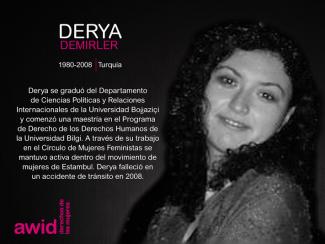
Derya Demirler
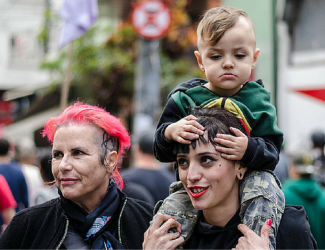
Over the past few years, a troubling new trend at the international human rights level is being observed, where discourses on ‘protecting the family’ are being employed to defend violations committed against family members, to bolster and justify impunity, and to restrict equal rights within and to family life.
The campaign to "Protect the Family" is driven by ultra-conservative efforts to impose "traditional" and patriarchal interpretations of the family, and to move rights out of the hands of family members and into the institution of ‘the family’.
Since 2014, a group of states have been operating as a bloc in human rights spaces under the name “Group of Friends of the Family”, and resolutions on “Protection of the Family” have been successfully passed every year since 2014.
This agenda has spread beyond the Human Rights Council. We have seen regressive language on “the family” being introduced at the Commission on the Status of Women, and attempts made to introduce it in negotiations on the Sustainable Development Goals.
AWID works with partners and allies to jointly resist “Protection of the Family” and other regressive agendas, and to uphold the universality of human rights.
In response to the increased influence of regressive actors in human rights spaces, AWID joined allies to form the Observatory on the Universality of Rights (OURs). OURs is a collaborative project that monitors, analyzes, and shares information on anti-rights initiatives like “Protection of the Family”.
Rights at Risk, the first OURs report, charts a map of the actors making up the global anti-rights lobby, identifies their key discourses and strategies, and the effect they are having on our human rights.
The report outlines “Protection of the Family” as an agenda that has fostered collaboration across a broad range of regressive actors at the UN. It describes it as: “a strategic framework that houses “multiple patriarchal and anti-rights positions, where the framework, in turn, aims to justify and institutionalize these positions.”
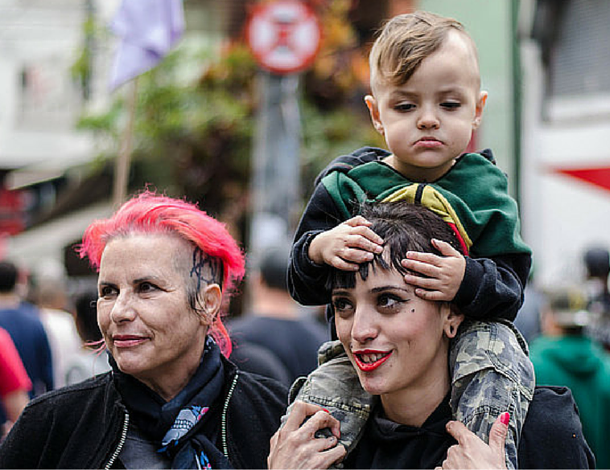

مريم مكيوي مخرجة أفلام ومصورة من الإسكندرية تعيش وتعمل في برلين.
يرجى حساب تكاليف السفر إلى بانكوك، والإقامة والبدل اليومي، والتأشيرة، وأي احتياجات خاصة بإمكانية الوصول، والنفقات الطارئة، بالإضافة إلى رسوم التسجيل التي سيتم الإعلان عنها قريبًا. تتراوح أسعار الفنادق في منطقة سوكومفيت في بانكوك ما بين 50 دولارًا أمريكيًا إلى 200 دولار أمريكي في الليلة الواحدة في حالة حجز غرفة مزدوجة.
يحصل أعضاء جمعية حقوق المرأة في التنمية على خصم عند التسجيل، لذلك إذا لم تكن عضوًا/ة بعد، فإننا ندعوك إلى التفكير في أن تصبح عضوًا/ة والانضمام إلى مجتمعنا النسوي العالمي.
Eni Lestari est travailleuse domestique indonésienne à Hong Kong et militante des droits des migrant·e·s. Après avoir échappé à son employeur abusif, elle est passée de victime à mobilisatrice de travailleurs·ses domestiques en particulier, et de travailleurs·ses migrant·e·s plus globalement. En 2000, elle a fondé l'Association of Indonesian Migrant Workers (Association des travailleurs·ses migrant·e·s indonésien·ne·s, ATKI-Hong Kong) qui s'est ensuite étendue à Macao, à Taïwan et en Indonésie. Elle a été coordonnatrice et porte-parole de l'Asia Migrants Coordinating Body (Instance de coordination des migrant·e·s en Asie, AMCB) - une alliance d'organisations de terrain de migrant·e·s à Hong Kong venant d'Indonésie, des Philippines, de Thaïlande, du Népal et du Sri Lanka. Elle est également l'actuelle présidente de l’International Migrants Alliance (Alliance internationale des migrant·e·s), la toute première alliance mondiale de migrant·e·s, d'immigré·e·s, de réfugié·e·s et d'autres personnes déplacées.
Elle a occupé des postes importants dans diverses organisations, en tant que membre actuelle du conseil régional de l’Asia Pacific Forum on Women, Law and Development (Forum Asie-Pacifique sur les femmes, le droit et le développement, APWLD), ancienne membre du conseil d'administration de Global Alliance Against Traffic in Women (Alliance mondiale contre la traite des femmes, GAATW), porte-parole du Network of Indonesian Migrant Workers (Réseau des travailleurs·ses migrant·e·s indonésien·ne·s, JBMI), conseillère d’ATKI-Hong Kong et Macao ainsi que de l’Association of Returned Migrants and Families in Indonesia (Association des migrant·e·s et des familles retourné·e·s en Indonésie, KABAR BUMI). Elle a été une personne-ressource impliquée dans des forums organisés par des universitaires, des groupes interreligieux, des sociétés civiles, des syndicats et bien d'autres, à l’échelle nationale, régionale et internationale.
Elle a aussi participé activement aux assemblées/conférences des Nations Unies sur le développement et les droits des migrant·e·s et été choisie comme intervenante pour l'ouverture de l'Assemblée générale des Nations Unies sur les mouvements massifs de migrant·e·s et de réfugié·e·s en 2016 à New York, aux États-Unis. Des nominations et des prix lui ont par ailleurs été décernés, dont celui d’Inspirational Women de BBC 100 Women, ainsi que le prix Public Hero de RCTI, l’Indonesian Club Award et le Non-Profit Leader of Women of Influence de la Chambre américaine de Hong Kong, et celui de Changemaker de Cathay Pacific.

Lo voy a admitir: cuando Angélica y Fabi me invitaron a ser curadora de una colección de textos eróticos de mujeres negras, no sabía qué era la curaduría. Entendía bien lo erótico, pero la curaduría…
لقد كان منتدى جمعية حقوق المرأة في التنمية دائمًا مساحة لا تخجل من النقاشات الصعبة والمطلوبة بشدة. نحن نرحب بهذه المشاركات عندما يتمكن المنظمون/ات بعناية من توفير الاحترام والأمان في المساحة للمشاركين/ات.
Jemimah Naburri-Kaheru es una consumada estratega internacional en recursos humanos con gran influencia en la región del Cuerno de África. Anteriormente, se desempeñó como gerente regional de Oficina y Recursos Humanos en Strategic Initiative for Women in the Horn of Africa (SIHA, Iniciativa Estratégica para las Mujeres del Cuerno de África). Su influencia se extiende a la dirección de los recursos humanos de más de 70 empleades regionales, debido a que los ingresos anuales de la organización registraron un veloz crecimiento del 40%. A lo largo de su carrera, Jemimah ha organizado iniciativas de reclutamiento sumamente fructíferas, introducido sistemas de desempeño basados en el mérito, y supervisado las relaciones entre el personal y las políticas de recursos humanos. Desempeñó una función crucial brindando apoyo a las estrategias de fuerzas de trabajo globales. Con antecedentes académicos en Estudios sobre el Desarrollo de la Universidad de Makerere (Uganda) y una maestría en Gestión de Recursos Humanos en curso, el compromiso de Jemimah con el desarrollo profesional es más que evidente. Su contribución al alto rendimiento de la fuerza laboral y liderazgo internacional en materia de recursos humanos la convierte en un activo invaluable en cualquier empresa global.
Los hospitales son instituciones, espacios vivientes del capitalismo, y lo que se manifiesta cuando alguien está supuestamente haciendo reposo allí es un microcosmos del sistema en que vivimos.
نحن ندرك تمامًا العقبات العملية والضغوط العاطفية المرتبطة بالسفر الدولي، وخاصة من الجنوب العالمي. تعمل جمعية حقوق المرأة في التنمية مع TCEB (مكتب تايلاند للمؤتمرات والمعارض) لدعم المشاركين/ات في المنتدى في الحصول على التأشيرات. سيتم توفير المزيد من المعلومات حول هذه المساعدة للحصول على التأشيرة عند التسجيل، بما في ذلك معلومات الاتصال الخاصة بمكان وكيفية التقديم.
Originaire de la cordillère des Andes, Brenda Salas est un·e stratège féministe queer. Iel œuvre à changer les discours et mobiliser les ressources pour soutenir les mouvements de justice raciale et climatique dans le monde entier. Brenda a produit de nombreux projets de communication pour exalter le pouvoir des migrant·e·s et dénoncer les interventions militaires américaines en Amérique latine avec Deep Dish TV et le Portland Central America Solidarity Committee (Comité de Solidarité avec l’Amérique centrale de Portland). Fier·ère d’être membre de l’Audre Lorde Project, iel est titulaire d’un diplôme du mouvement United World Colleges (UWC).
غوى صايغ كاتبة كويرية آناركية، وناشرة مستقلة ومؤرشفة. هي المحرّرة المؤسِّسة لمجلّة “كحل” ومؤسِّسة شريكة لـ”منشورات المعرفة التقاطعية”. حصلت على ماجستير في الدراسات الجندرية من جامعة باريس 8 فينسين - سانت دينيس. إنها شغوفة بنظرية الكوير، والمنشورات الدورية العابرة للحدود القومية، والتاريخ المتخيل أو المجهول. أودري لورد وسارة أحمد هما ملهمتاها.
Rachel est une experte en finance, avec plus de vingt ans d’expérience. Elle a supervisé des opérations financières et des projets pour des entités privées et publiques, des organisations à but non lucratif et des organisations non gouvernementales internationales. Comptable agréée et titulaire d’un master global en administration des affaires, elle est également membre de l’Institut sud-africain des comptables agréés. Pendant son temps libre, Rachel conçoit des œuvres d’art typographiques, elle aime voyager et passer du temps avec ses proches autour d’une bouteille de vin.
Contenido relacionado
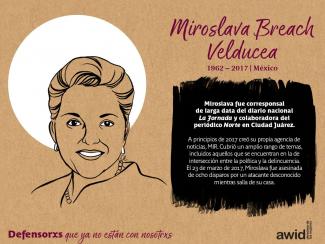
Norte Digital de Ciudad Juárez: Cerramos en protesta
La Jornada: Brazo del ‘cártel’ de Sinaloa ordenó asesinar a Miroslava Breach: FGE
BBC: Miroslava Breach, la periodista “incómoda” asesinada en México cuando llevaba a su hijo a la escuela