
Flor Alba Nunez Vargas
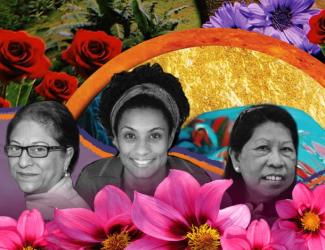
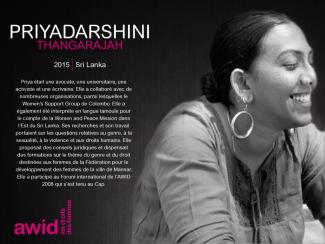
AWID’s Tribute is an art exhibition honouring feminists, women’s rights and social justice activists from around the world who are no longer with us.
This year’s tribute tells stories and shares narratives about those who co-created feminist realities, have offered visions of alternatives to systems and actors that oppress us, and have proposed new ways of organising, mobilising, fighting, working, living, and learning.
49 new portraits of feminists and Women Human Rights Defenders (WHRDs) are added to the gallery. While many of those we honour have passed away due to old age or illness, too many have been killed as a result of their work and who they are.
This increasing violence (by states, corporations, organized crime, unknown gunmen...) is not only aimed at individual activists but at our joint work and feminist realities.
The portraits of the 2020 edition are designed by award winning illustrator and animator, Louisa Bertman.
AWID would like to thank the families and organizations who shared their personal stories and contributed to this memorial. We join them in continuing the remarkable work of these activists and WHRDs and forging efforts to ensure justice is achieved in cases that remain in impunity.
“They tried to bury us. They didn’t know we were seeds.” - Mexican Proverb
It took shape with a physical exhibit of portraits and biographies of feminists and activists who passed away at AWID’s 12th International Forum, in Turkey. It now lives as an online gallery, updated every year.
To date, 467 feminists and WHRDs are featured.
with Naike Ledan and Fédorah Pierre-Louis.
Les agradecemos su interés por visitar el sitio web de AWID. Para obtener más información sobre nuestro trabajo, visiten https://www.awid.org/es
Our collective power, wisdom, and commitment have no boundaries, but our bank accounts do.
Data snapshots are based on the responses of 1,174 feminist, women’s rights, LGBTQI+, and allied organizations (hereafter referred to as “feminist and women's rights organizations”) from 128 countries to the Where is the Money for Feminist Organizing? survey. These snapshots reflect experiences from 2021–2023, analyzed in the context of defunding trends unfolding in 2024–2025.
Here’s what you need to know about the current state of resourcing for feminist organizing.
Ella misma fue una de las 32.000 personas desplazadas por el Tucuruí, una mega central hidroeléctrica, construida en Brasil durante la dictadura militar de 1964-1985.
En 2005 Dilma fue invitada a unirse al Movimiento de los Pueblos Afectados por las Represas en Brasil (MAB), y en 2006 formó el colectivo de mujeres, y eventualmente se convirtió en coordinadora regional del movimiento.
Al hablar de su activismo, sus colegas comentaban:
"Se destacó muy rápido porque siempre fue muy intrépida en la lucha".
Dilma vivió en el asentamiento rural de Salvador Allende, a 50 kilómetros de Tucuruí, y dedicó toda su vida a proteger a las comunidades y las tierras afectadas por la construcción de mega proyectos. Dilma se preocupaba especialmente por el impacto de género que esos proyectos podrían causar, y defendía los derechos de las mujeres.
En una reunión nacional del MAB en 2011, Dilma, dirigiéndose a las mujeres afectadas por las represas, dijo:
"Somos las verdaderas Marías, guerreras, luchadoras que están allí, enfrentando el desafío de la lucha diaria".
En los años siguientes, Dilma organizó grupos de base del MAB y trabajó con la comunidad para formar cooperativas agrícolas que condujeron a una mejor redistribución de los alimentos entre la comunidad. Conjuntamente, mejoraron la comercialización de la pesca y desarrollaron un proyecto de cisternas para el agua potable. También fue defensora de la comunidad de agricultores cuyas tierras eran codiciadas por los "grileiros" (acaparadores de tierras).
El 22 de marzo de 2019, a la edad de 48 años, Dilma, su marido y su amigo fueron brutalmente asesinados. Los tres asesinatos fueron parte de una ola de violencia en la Amazonia contra el Movimento dos Trabalhadores Sem Terra (traducido como 'Movimiento de los Trabajadores Sin Tierra') y lxs activistas medioambientales e indígenas.
The Forum theme––Rising Together––is an invitation to engage with our whole selves, to connect with each other in focused, caring and brave ways, so that we can feel the heartbeat of global movements and rise together to meet the challenges of these times.
Feminist, women’s rights, gender justice, LBTQI+ and allied movements around the world are at a critical juncture, facing a powerful backlash on previously-won rights and freedoms. Recent years have brought the rapid rise of authoritarianisms, the violent repression of civil society and criminalization of women and gender-diverse human rights defenders, escalating war and conflict in many parts of our world, the continued perpetuation of economic injustices, and the intersecting health, ecological and climate crises.
Our movements are reeling and, at the same time, seeking to build and maintain the strength and fortitude required for the work ahead. We can't do this work alone, in our silos. Connection and healing are essential to transforming persistent power imbalances and fault lines within our own movements. We must work and strategize in interconnected ways, so that we can thrive together. The AWID Forum fosters that vital ingredient of interconnectedness in the staying power, growth and transformative influence of feminist organizing globally.
On September 2nd, 2021, the amazing feminist and social justice activists of AWID’s Crear | Résister | Transform festival came together not only to share resistance strategies, co-create, and transform the world, but also to talk dirty on Twitter.
The exercise was led by Nana Darkoa Sekyiamah, co-founder of the blog Adventures From The Bedrooms of African Women and author of The Sex Lives of African Women, who paired up with the Pan-Africanist digital queer womanist platform AfroFemHub, to ask the question: How can we safely and consensually explore our pleasure, desires, and fantasies via text?
I believe this is a critically important question because it looks at the larger issue of how one navigates the online world with a feminist understanding. Under capitalism, discourse around bodies and sex can be dehumanizing and distorting, and navigating sexual pleasure in virtual spaces can feel performative. So seeking out avenues where we can explore how we share our desire in ways that are affirming and enthusiastic can push back against dominant models of presentation and consumption to reclaim these spaces as sites for authentic engagement, proving that all sexting should be just that: feminist.
Plus, allowing feminist discourse to embody its playful side in online discourse helps reframe a popular narrative that feminist engagement is joyless and dour. But as we know, having fun is part of our politics, and an inherent part of what it means to be feminist.
Using the hashtag #SextLikeAFeminist, scholars and activists from all over the world chimed in with their thirstiest feminist tweets, and here are my top ten.
As these tweets show, it turns out that sexting like a feminist is sexy, funny – and horny. Yet, it never loses sight of its commitment to equity and justice.
L'enquête "Où est l'argent?" #WITM est maintenant en ligne ! Plongez dans l'enquête et partagez votre expérience du financement de votre organisation avec des féministes du monde entier.
En savoir plus et participer à l’enquête!
Les mouvements féministes, en faveur des droits des femmes et leurs allié-e-s du monde entier s’opposent au pouvoir et imaginent de nouvelles politiques de libération. Des ressources économiques et politiques aux actes quotidiens de résistance et de survie, les contributions qui viennent nourrir ce travail revêtent de nombreuses formes.
L’initiative de l’AWID, Ressources des mouvements féministes (Resourcing Feminist Movements, RFM), met en lumière l’écosystème de financement actuel, qui va des modèles d’attribution des ressources auto-générée aux voies de financement officielles.
A travers nos recherches et analyses, nous examinons de quelles façons les pratiques de financement pourraient mieux servir nos mouvements. Nous faisons une étude critique des contradictions propres au “financement” de la transformation sociale, compte tenu notamment de la répression politique croissante, des programmes anti-droits et du pouvoir grandissant des entreprises. Mais surtout, nous élaborons des stratégies collectives en appui à des mouvements fleurissants, solides et résilients.
Créer et élargir les alternatives : Nous développons les pratiques de financement qui accordent une place prépondérante aux priorités des activistes et impliquons un large éventail de donateurs et d’activistes dans la création de nouveaux modèles dynamiques d’attribution de ressources en faveur des mouvements féministes, en particulier dans un contexte qui voit l’espace de participation de la société civile diminuer considérablement.
Enrichir nos connaissances : Nous explorons, échangeons et consolidons nos connaissances sur la façon dont les mouvements attirent, organisent et utilisent les ressources qui leur sont nécessaires pour entreprendre des changements significatifs.
Plaider : Nous travaillons en partenariat, comme avec le Count Me In! Consortium, afin d’influencer les programmes de financement et permettre aux mouvements féministes d’être en dialogue direct pour déplacer le pouvoir et l’argent.
Where frontline organizers lead and corporations are held accountable.
📅 Tuesday, November 11, 2025
📍 Online and at the Universidade Federal do Pará, Belém
« Mais quand le maître
s’est-il laissé éloigner du pouvoir?
Quand un système a-t-il jamais été brisé
par l’acceptation?
Quand le CHEF te remettra-t-il le pouvoir avec amour?
À Jobourg, à Cancun, à l’ONU? », Molara Ogundipe.
À travers les continents et les pays, la professeure Ogundipe a enseigné la littérature comparée, l’écriture, le genre et les études anglaises, se servant de la littérature comme outil de transformation sociale, de même que pour revisiter les relations de genre.
Penseuse, écrivaine, rédactrice, critique sociale, poète et activiste féministe, Molara Ogundipe est parvenue à allier le travail théorique et l’action créative et la créativité. Elle est considérée comme l’une des principales voix critiques du(des) féminisme(s) africain(s), des études de genre et de la théorie littéraire.
Molara est connue pour avoir créé le concept de « stiwanisme », à partir de l’acronyme STIWA, pour Social Transformations in Africa Including Women (transformations sociales en Afrique incluant les femmes), reconnaissant la nécessité de « s’éloigner de la définition du ou des féminismes en lien avec l’Euro-Amérique ou avec toute autre région, et de la déclamation de loyautés ou déloyautés ».
Avec son ouvrage fondateur « Re-creating Ourselves » de 1994 (publié sous le nom de Molara Ogundipe-Leslie), Molara Ogundipe a laissé derrière elle un immense éventail de connaissances qui ont décolonisé le discours féministe et « recentré les femmes africaines sur leurs récits entiers et complexes... menées par une exploration de la libération économique, politique et sociale des femmes africaines et la restauration de la capacité d’agir féminine dans plusieurs cultures en Afrique ».
À propos des difficultés rencontrées en tant que jeune universitaire :
« Lorsque j’ai commencé à parler et à écrire sur le féminisme à la fin des années soixante et soixante-dix, on me considérait comme une bonne et admirable fille qui s’était égarée, une femme dont l’esprit avait été gâté par trop d’apprentissages ».
Molara Ogundipe s’est démarquée grâce à son leadership alliant activisme et université. En 1977, elle comptait parmi les fondatrices de l’AAWORD (Association of African Women for Research and Development). En 1982, elle fonde WIN (Women in Nigeria) pour défendre des « droits économiques, sociaux et politiques » entiers pour les Nigérianes. Elle crée et dirige ensuite la Foundation for International Education and Monitoring, et passe plusieurs années à oeuvrer au comité de rédaction de The Guardian.
Ayant grandi avec les Yoruba, leurs traditions, leur culture et leur langue, elle a un jour déclaré :
« Je pense que célébrer la vie, célébrer les personnes qui décèdent après une vie bien remplie est l’un des plus beaux aspects de la culture yoruba ».
Le nom de fête « oiki » de Molara en yoruba était Ayike. Née le 27 décembre 1940, Molara est décédée à l’âge de 78 ans, le 18 juin 2019 à Ijebu Igbo, dans l’État d’Ogun au Nigeria.


Notre rapport annuel 2012 fournit les points saillants de notre travail durant l'année pour contribuer de manière hardie, créative et efficace à la promotion des droits des femmes et l'égalité de genre dans le monde entier.
Amusez-vous en regardant des vidéos, des photos et des histoires sur nos contributions !
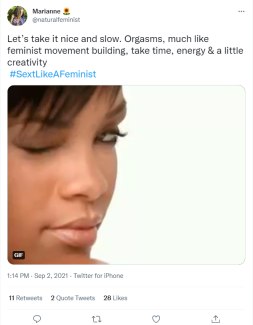
Vamos despacio y con amabilidad. Los orgasmos, como la construcción de los movimientos feministas, llevan tiempo, energía y un poquito de creatividad.
Mientras les líderes se reúnen en Brasil, es fundamental que los movimientos feministas, sobre todo los de la mayoría global, contemos con espacios autónomos para encontrarnos, elaborar estrategias y trastocar.
En estos nodos interpelamos el elitismo de las conversaciones sobre el clima, nos centramos en las vivencias y apuntamos a construir el poder colectivo más allá de las fronteras. Se ofrece un contrapeso crítico a las negociaciones internacionales jerárquicas y a menudo excluyentes. En los nodos buscamos promover las soluciones nacidas de la comunidad, amplificar las demandas feministas y garantizar que los principios feministas de los cuidados y la solidaridad sean los que den forma a la agenda por el clima. No se trata únicamente de tener presencia en la COP30, se trata también de reconfigurar las conversaciones sobre la justicia climática en términos feministas.
Mereani Naisua Senibici, also called ‘Sua’, was a longstanding member of the Fiji Young Women’s Christian Association (YWCA) movement.
She worked with diverse groups of women in multi-racial, rural and urban settings and was committed to supporting and promoting women’s and young women’s rights.
In the Lautoka YWCA, she worked with women of Indian descent, and was a leading figure in the sports development and participation of women and of trans athletes in Lautoka.
“Sua is greatly loved by Fiji YWCA members for her dedication and long-time support towards all that the organisation endeavoured to do.” - Tupou Vere
Mereani was part of the House of Sarah (HoS), an initiative of the Association of Anglican Women (AAW), launched in 2009 and aimed at raising awareness of the issues around gender-based violence, as well as providing support to women who face violence. She started as a dedicated volunteer and offered support to women throughout the Pacific.
“A people’s person and an all-rounder in women's empowerment and movement work at community level. Rest in Peace, Sua.” - Tupou Vere

“ภารกิจในชีวิตของฉันไม่ใช่แค่การอยู่รอดเท่านั้น แต่ยังต้องเจริญเติบโตอีกด้วย และทำให้เต็มที่ด้วยแรงปรารถนา ด้วยความเห็นอกเห็นใจ ด้วยอารมณ์ขัน และมีสไตล์” - มายา แองเจลู (Maya Angelou)
เวทีการประชุมนานาชาติ AWID เป็นทั้งกิจกรรมชุมชนระดับโลกและพื้นที่ของการเปลี่ยนแปลงของปัจเจก บุคคลอย่างสิ้นเชิง เป็นการประชุมที่ไม่เหมือนใคร คือเป็นที่รวบรวมนักสตรีนิยม นักปกป้องสิทธิสตรี ความยุติธรรมทางเพศ LBTQI+ และพันธมิตรในขบวนการเคลื่อนไหวเพื่อมนุษยชาติอันหลากหลาย เพื่อเชื่อมต่อ เยียวยาและเติบโต เวทีนานาชาตินี้เป็นพื้นที่ที่นักสตรีนิยมจากทั่วทุกมุมโลก รวมถึงจากประเทศในกลุ่มโลกใต้ และชุมชนชายขอบที่ไม่ได้รับการเหลียวแลมาอย่างยาวนาน เป็นศูนย์กลางในการวาง ยุทธศาสตร์ร่วมกัน และเคลื่อนไหวเพื่อความยุติธรรมทางสังคม เพื่อเปลี่ยนอำนาจ สร้างพันธมิตร และ สร้างโลกที่แตกต่างและดีขึ้น
เมื่อผู้คนทั่วโลกมารวมตัวกันทั้งในฐานะปัจเจกบุคคลและองค์กรเคลื่อนไหว เราสามารถสร้างพลังอันยิ่งใหญ่ จึงขอเชิญท่านร่วมกิจกรรมกับเราที่กรุงเทพฯ ประเทศไทยในปี 2567 มาร้องเพลง เต้นรำ วาดฝัน และลุกขึ้นพร้อมกัน
วันที่: 2–5 ธันวาคม 2567
สถานที่: กรุงเทพฯ ประเทศไทย; และทางออนไลน์
ผู้เข้าร่วม: นักสตรีนิยมจากทั่วโลกเข้าร่วมด้วยตนเอง ณ สถานที่จัดงานประมาณ 2,500 คน และเข้าร่วม
ทางออนไลน์ 3,000 คน
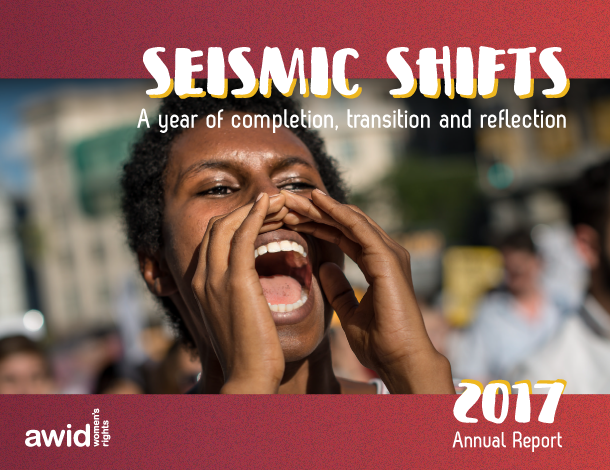
We have contributed to some major victories, like expanding the women’s rights funding landscape with ground-breaking, far-reaching research and advocacy. At the same time, we have experienced some devastating setbacks, including the assassination of Women Human Rights Defenders (WHRDs) like Berta Cacares of Honduras, Gauri Lankesh of India and Marielle Franco of Brazil, as well as the rise of anti-rights mobilizing in human rights spaces.
Five years ago, we committed to our movement-building role by producing knowledge on anti-rights movement trends, as well as on issues that feminists often engage with less, like illicit financial flows. We advocated side by side with our movement partners, strengthening young feminist and inter-generational activism, and expanding the holistic protection of WHRDs. As we close out the strategic plan, we are proud of our accomplishments and our growth as an organization. We end 2017 with renewed commitment, insights and learning for the continued struggle ahead!
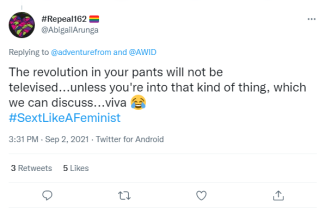
La révolution dans ton froc ne passera pas à la télé… sauf si ce genre de truc t’excite, ce dont on peut parler… en personne [emoji visage avec des larmes de joie].