
Milagros Barahona Portocarrero
AWID’s Tribute is an art exhibition honouring feminists, women’s rights and social justice activists from around the world who are no longer with us.
This year’s tribute tells stories and shares narratives about those who co-created feminist realities, have offered visions of alternatives to systems and actors that oppress us, and have proposed new ways of organising, mobilising, fighting, working, living, and learning.
49 new portraits of feminists and Women Human Rights Defenders (WHRDs) are added to the gallery. While many of those we honour have passed away due to old age or illness, too many have been killed as a result of their work and who they are.
This increasing violence (by states, corporations, organized crime, unknown gunmen...) is not only aimed at individual activists but at our joint work and feminist realities.
The portraits of the 2020 edition are designed by award winning illustrator and animator, Louisa Bertman.
AWID would like to thank the families and organizations who shared their personal stories and contributed to this memorial. We join them in continuing the remarkable work of these activists and WHRDs and forging efforts to ensure justice is achieved in cases that remain in impunity.
“They tried to bury us. They didn’t know we were seeds.” - Mexican Proverb
It took shape with a physical exhibit of portraits and biographies of feminists and activists who passed away at AWID’s 12th International Forum, in Turkey. It now lives as an online gallery, updated every year.
To date, 467 feminists and WHRDs are featured.
AWID honors feminists and Women Human Rights Defenders (WHRDs) who have died and whose contributions to the advancement of human rights are very much missed.
AWID’s WHRD Tribute is a photo exhibition featuring feminist, women’s rights and social justice activists from around the world who are no longer with us.
The Tribute was first launched in 2012, at AWID’s 12th International Forum, in Turkey. It took shape with a physical exhibit of portraits and biographies of feminists and activists who passed away. The initiative was described by Forum participants as being a unique, moving and energizing way to commemorate our collective history.
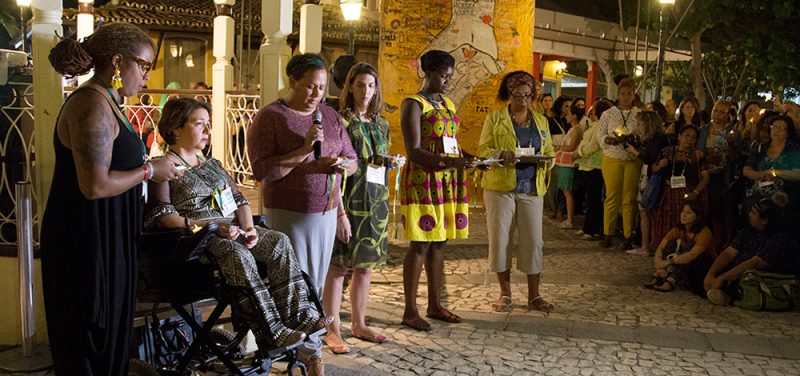
At the 13th International Forum in Brazil, we honored activists and WHRDs with a mural unveiling ceremony in four languages, a dance performance and a Brazilian ritual.
In between the events, the Tribute lives as an online gallery that is updated every year as part of the 16 Days Campaign Against Gender Based Violence (25 November – 10 December).
Since 2012, through our annual Tribute to Women Human Rights Defenders (WHRDs) no longer with us, over 400 feminists and WHRDs from 11 regions and 80 countries have been featured.
AWID would like to thank the families and organizations who shared their personal stories and contributed to this memorial. We join them in continuing the remarkable work of these women and forging efforts to ensure justice is achieved in cases that remain in impunity.
Visit the WHRD Tribute online exhibit
In addition to paying homage to these incredible activists, the Tribute particularly sheds light on the plight of WHRDs who have been assassinated or disappeared.
One third of those featured in the Tribute were activists who have been murdered or disappeared in suspicious circumstances. They were specifically targeted for who they were and the work they did to challenge:
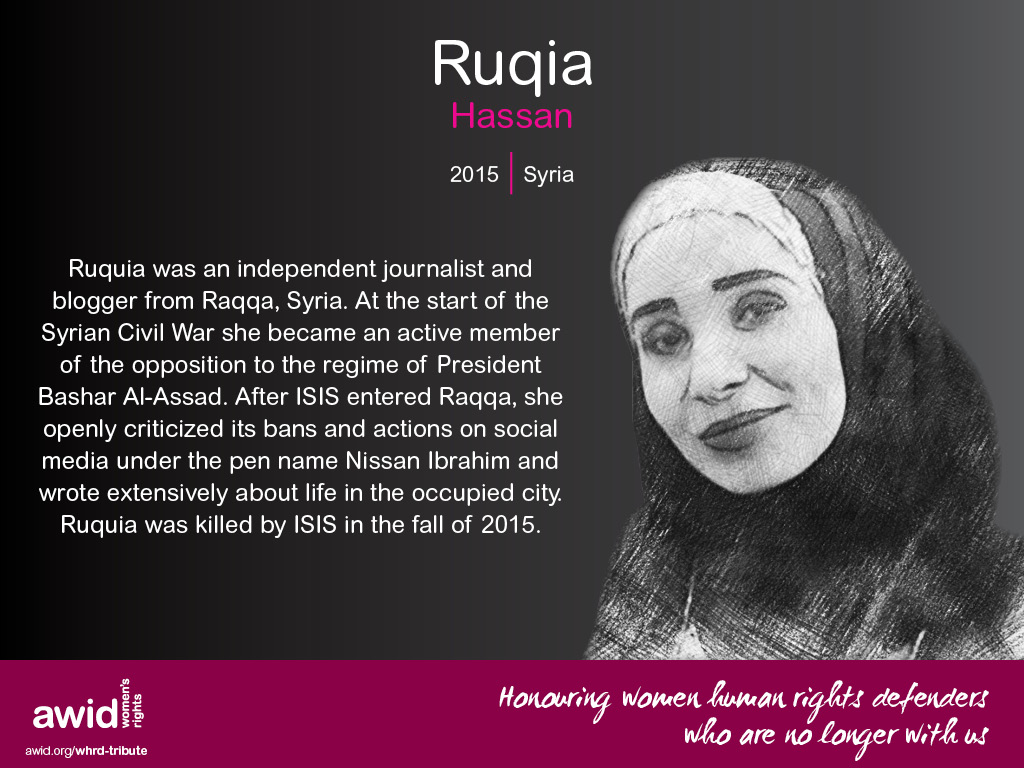
Women like Agnes Torres, from Mexico, was killed because of her gender identity and sexual orientation; or Cheryl Ananayo, an environmental activist from the Philippines was assassinated as she struggled against a mining company; or Ruqia Hassan, a Syrian independent journalist and blogger killed for her criticism of ISIS. And so many others.
With the WHRD Tribute, we bring them all into our collective memory and carry their legacy of struggle as our torch in the feminists’ and women’s rights movements. We recognize that security, safety and self-care must be a priority in all our political agendas. And we call on to governments and international bodies to collectively address violence against feminists and WHRDs.
AGROECOLOGÍA Y SOBERANÍA ALIMENTARIA COMO RESISTENCIA |
Hoy en día, la producción industrial de alimentos a gran escala utiliza plantaciones de monocultivo, organismos genéticamente modificados y otros pesticidas que destruyen la tierra y el conocimiento de las comunidades locales. |
La agroecología es una resistencia a la agricultura hiper-industrializada utilizada por las multinacionales. La agroecología prioriza la agricultura a pequeña escala, los cultivos múltiples y la producción de alimentos diversificados, al tiempo que se centra en el conocimiento y las prácticas tradicionales locales. La agroecología va de la mano con los reclamos de soberanía alimentaria, o el "derecho de los pueblos a alimentos sanos y culturalmente apropiados producidos por métodos ecológicamente racionales y sostenibles, y su derecho a definir sus propios sistemas alimentarios y agrícolas" (Vía Campesina, Declaración de Nyéléni).
El papel de las mujeres, las comunidades indígenas y rurales y las personas racializadas en los países del Sur Global es fundamental para mantener los sistemas alimentarios. Lxs agroecologistxs feministas trabajan para desmantelar los roles de género opresivos y los sistemas patriarcales arraigados en la producción de alimentos. Como lo muestran las heroínas de Nous Sommes la Solution, generan una agroecología liberadora al fortalecer la resiliencia de las comunidades, empoderar a las mujeres campesinas y agricultoras mientras preservan las tradiciones locales, los territorios y los conocimientos de las comunidades productoras de alimentos.
Agrupaciones, organizaciones y movimientos que trabajan específica o primordialmente por los derechos de las mujeres, las niñas, la justicia de género, las personas LBTQI+ y demás personas aliadas en todas las regiones y en todos los ámbitos, ya sean estas de nueva creación o de larga data.
Events in Indonesia, in late 2019 - in particular, signs of intensifying militarization and backlash against LGBTQ rights - led us to question AWID’s ability to maintain a reasonably safe and welcoming environment for the diversity of participants we aspire to bring together at the Forum.
After careful consideration the AWID Board of Directors decided to change the venue for the 14th International AWID Forum, in November 2019 from Bali to Taipei.
Taipei offers a strong degree of logistical capacities, and is accessible for many travellers (with a facilitated e-visa process for international conferences).
For more details:
Este año honramos a 19 defensoras de la región de América Latina y el Caribe. De ellas, 16 fueron asesinadas, incluyendo a 6 periodistas y 4 defensoras LGBTQI. Únete a nosotras en la conmemoración de sus vidas y trabajo, compartiendo los memes aquí incluidos con tus colegas, amistades y redes; y tuiteando las etiquetas #WHRDTribute y #16Días.
Por favor, haz click en cada imagen de abajo para ver una versión más grande y para descargar como un archivo.



Oui, tout à fait! Nous reconnaissons et comprenons les différentes raisons pour lesquelles les féministes de tous contextes ne recourent pas au financement extérieur, pouvant aller de ne pas être éligibles à demander des subventions et/ou recevoir de l’argent de l’étranger, à compter sur des ressources générées de manière autonome (ressource en anglais) en tant que stratégie politique à part entière. Nous vous invitons à participer, peu importe votre expérience du financement extérieur.
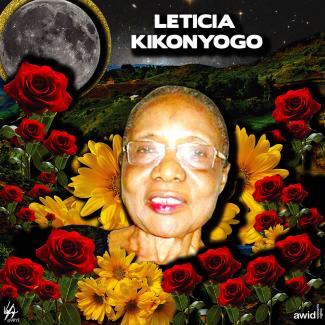
Antes de retirarse, ocupó muchas posiciones de alto perfil, como por ejemplo miembrx de la Corte de Apelaciones de Uganda y Presidenta Adjunta de la Corte Suprema de Uganda. Fue la primera mujer ugandesa en ocupar el cargo de Primera Magistrada entre 1973 y 1986, y la primera mujer en ser nombrada jueza de la Corte Suprema en 1986.
Fue una de las primeras mujeres investidas como “Caballero Papal” de la historia de la Iglesia Católica en África. Murió de un paro cardíaco.
7 Women Human Rights Defenders from across the South and Southeast Asian region are honored in this year’s Online Tribute. These defenders have made key contributions to advancing human and women’s rights, indigenous people’s rights, and the right to education. These WHRDs were lawyers, women’s rights activists, scholars, and politicians. Please join AWID in commemorating t their work and legacy by sharing the memes below with your colleagues, networks and friends and by using the hashtags #WHRDTribute and #16Days.
Please click on each image below to see a larger version and download as a file


Cooperativa Textil Nadia Echazú

AWID is committed to language justice and we regret that, at this point, having the WITM survey available in more languages is not feasible. However, if you need support with translations or want to fill the survey in any other language, please reach out to us at witm@awid.org.
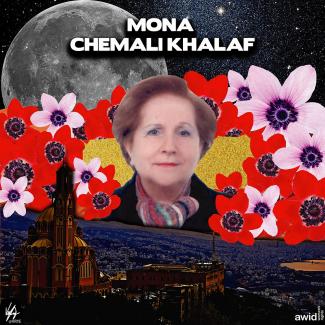
Mona était économiste et consultante indépendante sur les questions de genre et de développement.
Elle a été professeure d'économie et directrice de l'Institut d'études féminines du monde arabe à l'Université libanaise américaine. Elle est décédée subitement le 6 janvier 2018.
Des amis et d'anciens collègues disent de Mona: « Pour lui rendre hommage, la meilleure chose à faire est de continuer à faire ce qu'elle a commencé: l'égalité de genre, à tout prix.
Before starting the WITM research methodology, it is important you prepare the background and know what to expect.
With AWID’s WITM research methodology, we recommend that you first review the entire toolkit.
While this toolkit is designed to democratize WITM research, there are capacity constraints related to resources and research experience that may affect your organization’s ability use this methodology.
Use the “Ready to Go?” Worksheet to assess your readiness to begin your own WITM research. The more questions you can answer on this worksheet, the more prepared you are to undertake your research.
Before beginning any research, we recommend that you assess your organization’s connections and trust within your community.
In many contexts, organizations may be hesitant to openly share financial data with others for reasons ranging from concerns about how the information will be used, to fear of funding competition and anxiety over increasing government restrictions on civil society organizations.
As you build relationships and conduct soft outreach in the lead-up to launching your research, ensuring that your objectives are clear will be useful in creating trust. Transparency will allow participants to understand why you are collecting the data and how it will benefit the entire community.
We highly recommend that you ensure data is collected confidentially and shared anonymously. By doing so, participants will be more comfortable sharing sensitive information with you.
We also recommend referring to our “Ready to Go?” Worksheet to assess your own progress.
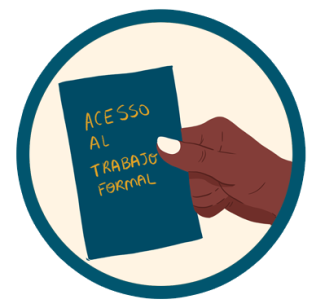
Solo el 18% de las personas trans y travestis en Argentina acceden a un trabajo formal