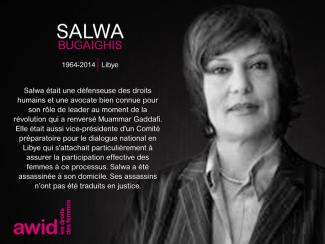
Salwa Bugaighis
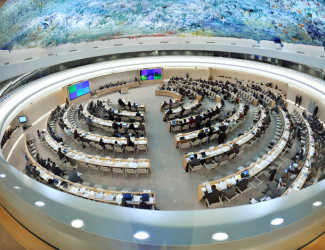
The Human Rights Council (HRC) is the key intergovernmental body within the United Nations system responsible for the promotion and protection of all human rights around the globe. It holds three regular sessions a year: in March, June and September. The Office of the UN High Commissioner for Human Rights (OHCHR) is the secretariat for the HRC.
Debating and passing resolutions on global human rights issues and human rights situations in particular countries
Examining complaints from victims of human rights violations or activist organizations on behalf of victims of human rights violations
Appointing independent experts (known as “Special Procedures”) to review human rights violations in specific countries and examine and further global human rights issues
Engaging in discussions with experts and governments on human rights issues
Assessing the human rights records of all UN Member States every four and a half years through the Universal Periodic Review
AWID works with feminist, progressive and human rights partners to share key knowledge, convene civil society dialogues and events, and influence negotiations and outcomes of the session.
المضيفة: نحن نميل إلى الاعتقاد أنّ التعبير عن الرغبة يقتصر على العلاقة الحميمة داخل غرفة النوم وعلى علاقاتنا الشخصيّة. ولكن هل يمكننا أيضًا اعتبار هذا النوع من التعبير كبُنية، أو ممارسة أيديولوجيّة توجّه عملنا، وما نحن عليه، وكيف سنكون في هذا العالم؟
AWID currently has hundreds of prominent, innovative organizations working on issues related to women’s rights and development as members. Criteria for membership are the same as for individuals, although membership fees and membership benefits are different, and are geared to address the needs of our member organizations.
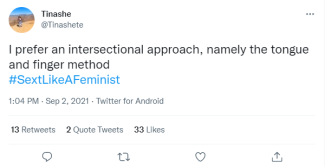
أفضّل المقاربة التقاطعيّة لما تشتمل عليه من مداعبة ممنهجة باللسان والأصابع
Moriviví est un collectif de jeunes femmes artistes qui travaille sur l'art public depuis Avril 2013. Basé·e·s à Porto Rico, nous sommes reconnu·e·s pour la création de fresques et d'arts dirigés par la communauté.
It is exactly the same process and same deadline. Please use the same form to submit your activity, whether it is in-person, online, or both (hybrid).
In partnership with young feminist activists and youth-led organizations, AWID co-organized Beijing Unfettered in parallel to and independently from Beijing+25.

En síntesis, ¡sí! En este momento AWID está trabajando con un Comité de Accesibilidad, para garantizar que el Foro sea lo más accesible posible. También estamos realizando una auditoría de accesibilidad en la sede del Foro, los hoteles circundantes y el transporte. Antes de que se abra el proceso de inscripción incluiremos en esta sección información detallada sobre la accesibilidad del Foro de AWID. Mientras tanto, si tienes alguna pregunta por favor contáctanos.
2009 UN Conference on the World Financial and Economic Crisis and its Impacts on Development
เราขอเชิญชวนให้คุณติดต่อเราเพื่อสามารถสร้างการมีส่วนร่วมอย่างมีความหมายต่อฟอรัม