Special Focus

AWID is an international, feminist, membership organisation committed to achieving gender equality, sustainable development and women’s human rights

Confronting Extractivism & Corporate Power

Women human rights defenders (WHRDs) worldwide defend their lands, livelihoods and communities from extractive industries and corporate power. They stand against powerful economic and political interests driving land theft, displacement of communities, loss of livelihoods, and environmental degradation.


Why resist extractive industries?

Extractivism is an economic and political model of development that commodifies nature and prioritizes profit over human rights and the environment. Rooted in colonial history, it reinforces social and economic inequalities locally and globally. Often, Black, rural and Indigenous women are the most affected by extractivism, and are largely excluded from decision-making. Defying these patriarchal and neo-colonial forces, women rise in defense of rights, lands, people and nature.

Critical risks and gender-specific violence

WHRDs confronting extractive industries experience a range of risks, threats and violations, including criminalization, stigmatization, violence and intimidation.  Their stories reveal a strong aspect of gendered and sexualized violence. Perpetrators include state and local authorities, corporations, police, military, paramilitary and private security forces, and at times their own communities.

Acting together

AWID and the Women Human Rights Defenders International Coalition (WHRD-IC) are pleased to announce “Women Human Rights Defenders Confronting Extractivism and Corporate Power”; a cross-regional research project documenting the lived experiences of WHRDs from Asia, Africa and Latin America.

We encourage activists, members of social movements, organized civil society, donors and policy makers to read and use these products for advocacy, education and inspiration.

Share your experience and questions!

Tell us how you are using the resources on WHRDs Confronting extractivism and corporate power.

◾️ How can these resources support your activism and advocacy?

◾️ What additional information or knowledge do you need to make the best use of these resources?

Share your feedback


Thank you!

AWID acknowledges with gratitude the invaluable input of every Woman Human Rights Defender who participated in this project. This project was made possible thanks to your willingness to generously and openly share your experiences and learnings. Your courage, creativity and resilience is an inspiration for us all. Thank you!

Related Content

Astitva Trust defends the rights of sexual minorities groups

Astitva Trust defends the rights of sexual minorities groups

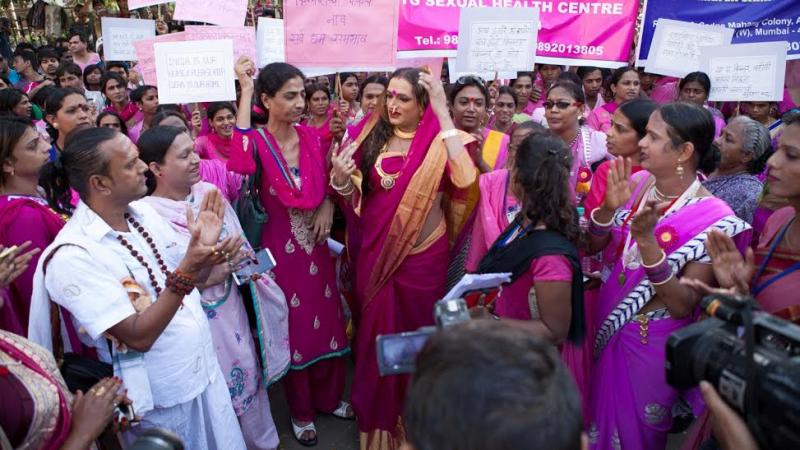
In April 2014, the Astitva Trust along with its President Laxmi Narayan Tripathi, a prominent transgender rights activist, petitioned in support of an Indian Supreme Court judgement that would recognize a third gender. It was a landmark ruling, the Court granting all constitutional rights to transgender persons. "It is the right of every human being to choose their gender,” the Court stated.


Yet even though legally transgenders are equal citizens, they still face extreme discrimination in mainstream society. The Astitva Trust, a community-based organisation of sexual minorities (mainly hijras[1]), aims to eradicate stigma and discrimination of LGBTQ* and especially the transgender community. The organisation works with sexual minority groups, campaigning for their rights, promoting their health and general well-being, helping to improve their living standards and quality of life.

Some of the objectives of the Trust include raising awareness and increasing knowledge of HIV and AIDS and other sexually transmitted infections among sexual minorities; promoting safer sex; and increasing access to community friendly sexual health services. Astitva has so far registered 4652 transgender persons and has networked with 56 transgender organisations in India, providing support in numerous areas.

The organisation is a co-founder and part of the governing board of the Integrated Network for Sexual Minorities, a founder and working group member of Maharashtra Transgender Welfare Board, and a member of both the Asia - Pacific Transgender Network and the Asia Pacific Network of Sex Workers.

In April 2015, Astitva (along with Member of Parliament Trichy Shiva) pushed for a historical unanimous passing of the Rights of Transgender Persons Bill in Rajya Sabha,[2] calling for equal rights of transgender people. Next step is to have it passed in Lok Sabha[3] so the Bill can become law.


Listen to Laxmi Narayan Tripathi TEDx Talk


[1] Hijra is a term used particularly in India to refer to a transgender individual
[2] Upper House of Parliament of India
[3] Lower House of Parliament of India
Region
Asia
South Asia
Source
AWID