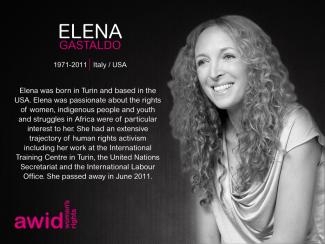
Elena Gastaldo
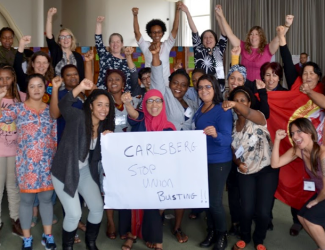
Women human rights defenders (WHRDs) worldwide defend their lands, livelihoods and communities from extractive industries and corporate power. They stand against powerful economic and political interests driving land theft, displacement of communities, loss of livelihoods, and environmental degradation.
Extractivism is an economic and political model of development that commodifies nature and prioritizes profit over human rights and the environment. Rooted in colonial history, it reinforces social and economic inequalities locally and globally. Often, Black, rural and Indigenous women are the most affected by extractivism, and are largely excluded from decision-making. Defying these patriarchal and neo-colonial forces, women rise in defense of rights, lands, people and nature.
WHRDs confronting extractive industries experience a range of risks, threats and violations, including criminalization, stigmatization, violence and intimidation. Their stories reveal a strong aspect of gendered and sexualized violence. Perpetrators include state and local authorities, corporations, police, military, paramilitary and private security forces, and at times their own communities.
AWID and the Women Human Rights Defenders International Coalition (WHRD-IC) are pleased to announce “Women Human Rights Defenders Confronting Extractivism and Corporate Power”; a cross-regional research project documenting the lived experiences of WHRDs from Asia, Africa and Latin America.
"Women Human Rights Defenders confronting extractive industries: an overview of critical risks and Human Rights obligations" is a policy report with a gender perspective. It analyses forms of violations and types of perpetrators, quotes relevant human rights obligations and includes policy recommendations to states, corporations, civil society and donors.
"Weaving resistance through action: Strategies of Women Human Rights Defenders confronting extractive industries" is a practical guide outlining creative and deliberate forms of action, successful tactics and inspiring stories of resistance.
The video “Defending people and planet: Women confronting extractive industries” puts courageous WHRDs from Africa, Asia, and Latin America in the spotlight. They share their struggles for land and life, and speak to the risks and challenges they face in their activism.
Challenging corporate power: Struggles for women’s rights, economic and gender justice is a research paper outlining the impacts of corporate power and offering insights into strategies of resistance.
AWID acknowledges with gratitude the invaluable input of every Woman Human Rights Defender who participated in this project. This project was made possible thanks to your willingness to generously and openly share your experiences and learnings. Your courage, creativity and resilience is an inspiration for us all. Thank you!
Nuestro nuevo documento de investigación El diablo se esconde en los detalles aborda la falta de conocimientos sobre los fundamentalismos religiosos en el sector del desarrollo, y se propone comprender mejor de qué manera estos fundamentalismos inhiben el desarrollo y, en particular, los derechos de las mujeres. Propone recomendaciones para que quienes trabajan en temas de desarrollo desafíen la labor de los fundamentalismos y eviten fortalecerlos inadvertidamente. [CTA download link: Leer el documento completo]
| Graphic1 | 1. Control of women’s bodies, sexuality, and choice are “warning signs” of rising fundamentalisms. |
| 2. Neoliberal economic policies have a particularly negative impact on women, and fuel the growth of religious fundamentalisms. | Graphic2 |
| Graphic3 | 3. Choosing religious organizations as default for partnerships builds their legitimacy and access to resources, and supports their ideology, including gender ideology. |
| 4.Everyone has multiple identities and should be defined by more than just their religion. Foregrounding religious identities tends to reinforce the power of religious fundamentalists. | Graphic4 |
| Graphic5 | 5. Religion, culture, and tradition are constantly changing, being reinterpreted and challenged. What is dominant is always a question of power. |
| 6. Racism, exclusion, and marginalization all add to the appeal of fundamentalists’ offer of a sense of belonging and a “cause”. | Graphic6 |
| Graphic7 | 7. There is strong evidence that the single most important factor in promoting women’s rights and gender equality is an autonomous women’s movement. |
El Diablo se esconde en los detalles proporciona detalles de las graves violaciones a los derechos humanos y, en particular, de las violaciones a los derechos de las mujeres, causados por los fundamentalismos auspiciados por los Estados, así como por actores fundamentalistas no estatales como milicias, organizaciones comunitarias confesionales e individuos. La profundización fundamentalista de normas sociales atávicas y patriarcales está provocando el aumento de la violencia contra las mujeres, las niñas y las defensoras de derechos humanos (WHRDs). El informe propuesta estas ideas clave para abordar el problema:
Quienes trabajan en el desarrollo están de capacidad de asumir una posición más firme. Su capacidad colectiva para reconocer y enfrentar conjuntamente a los fundamentalismos religiosos resulta crucial para promover la justicia social, económica y de género y los derechos humanos de todas las personas en el marco del desarrollo sostenible. Resulta fundamental promover que el poder y los privilegios se entiendan desde la óptica del feminismo interseccional y aplicar esta comprensión a los interrogantes sobre religión y cultura. Las organizaciones de mujeres ya poseen conocimientos y estrategias para oponerse a los fundamentalismos. Quienes trabajan en el desarrollo deberían apoyarse en estos e invertir en coaliciones enfocadas en múltiples temáticas. Lo anterior, les ayudará a alcanzar nuevos horizontes.

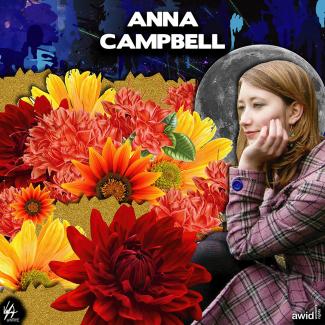
Anna grew up in Lewes, Sussex (UK) and, after deciding not to pursue her English degree at Sheffield University, she moved to Bristol and became a plumber.
She spent much of her time defending the marginalised and under-privileged, attending anti-fascist rallies, and offering support to the women of Dale Farm when they were threatened with eviction. A vegan and animal lover, she attended hunt sabotages and her name is honoured on PETA's 'Tree of Life' Memorial. Anna went to Rojava in May 2017 with a strong commitment to women's empowerment, full representation of all ethnicities and protection of the environment.
Anna died on March 15, 2018 when she was hit by a Turkish airstrike in the town of Afrin, northern Syria. Anna was fighting with the Women's Protection Forces (YPJ), when she was killed.
Al unirte a AWID, te sumas a un proceso organizativo feminista mundial, un poder colectivo surgido del trabajo entre movimientos y basado en la solidaridad.
ما لم تكن هناك مشكلات في إمكانية الوصول و/أو إذا كنت تملأ/ئي الاستبيان بلغات أخرى، فإننا نشجعك بشدة على استخدام KOBO لجمع وتحليل البيانات الموحدة للاستطلاع.
Learn more about Feminist Realities
Any questions? Please do not hesitate to contact us
Nous avons le plaisir de vous présenter Sopo Japaridze, féministe féroce, dirigeante syndicale et présidente du syndicat de service indépendant Réseau de Solidarité.
Elle a quitté le pays très jeune pour les États-Unis, où elle est devenue politiquement active en tant qu'organisatrice syndicale. Elle a toujours gardé la Géorgie à l'esprit pendant tout ce temps, jusqu'au jour où, 20 ans plus tard, elle a décidé de revenir.
La confédération syndicale géorgienne existante à cette époque était loin d'être idéale. C’est pourquoi, armée de ses compétences, de ses connaissances et de son expérience en matière de syndicalisation, Sopo est retournée en Géorgie et a formé son propre syndicat.
Elle est aussi une chercheuse passionnée et une écrivaine. Elle étudie les relations de travail et les relations sociales, écrit pour diverses publications et est co-éditrice de Left East, une plate-forme analytique d'Europe de l'Est. Elle a également cofondé l'initiative et le podcast d'histoire politique, Réimaginer la Géorgie Soviétique, où elle explore les complexités et les nuances des expériences du pays sous l'Union soviétique, pour mieux comprendre son passé et construire un avenir meilleur.
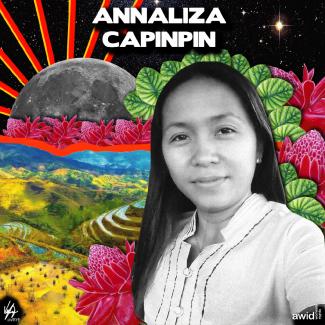
Conocida como «Ate Liza», Annaliza era la presidenta del Consejo de la Reforma Agraria para lxs Pionerxs de Mindanao, un grupo coodinador general en Tacurong City, Filipinas.
Querida madre de cuatro hijxs, maestra y líder comunitaria, Annaliza es recordada por su comunidad como «la que lidera cuando nadie quiere liderar, la que habla cuando nadie quiere hablar, la que se puso de pie con coraje para ayudar a lxs beneficiarxs de la reforma agraria a ser dueñxs de sus tierras».
Atacantes desconocidos la ultimaron a balazos en frente de la Universidad Estatal Sultán Kudarat (SKSU), mientras se dirigía a la Escuela Secundaria Nacional Salabaca, en Esperanza.
Su familia ha dicho: «Naghihintay pa rin kami ng hustisya para sa kanya» (todavía estamos esperando justicia para ella).
Voyez grand ! Notre rayonnement international nous permet de combiner notre travail analytique avec des outils politiques et pratiques de plaidoyer et de transformation afin de faire avancer la cause des mouvements féministes à tous les niveaux.
Да, в конце опроса мы попросим вас поделиться более подробной информацией по важным для вас аспектам, ответив на открытые вопросы.
La cadre des Réalités Féministes du Forum repose sur six points d’ancrages thématiques. Chaque point d’ancrage met les réalités, les expériences et les visions féministes au coeur du continuum entre résistance et proposition, lutte et alternative. Nous cherchons à explorer ensemble ce qui constitue nos réalités féministes et ce qui leur permet de se répandre dans les différentes sphères de nos vies.
Ces réalités se manifestent sous forme de modes de vie pleinement articulés, de rêves et d'idées en devenir, ou encore d'expériences et de moments précieux.
Plus que des thèmes isolés, les points d’ancrage sont des conteneurs interconnectés à l’effet des activités du Forum. Nous prévoyons de nombreuses activités à l’intersection de ces thèmes, des différentes luttes, communautés et mouvements. Encore provisoires, les descriptions continuent d’évoluer au fur et à mesure que le parcours des Réalités Féministes se poursuit.
Ce point d’ancrage met l’accent sur la façon dont nous répondons à nos besoins fondamentaux et assurons les ressources qui nous sont nécessaires pour prospérer, en tant qu’individus, communautés et mouvements, d’une manière qui prenne soin des personnes et de la nature en priorité. Nous entendons par “ ressources ” l’alimentation, l’eau et l’air pur, ainsi que l’argent, le travail, l’information, la connaissance, le temps et autres.
S’appuyant sur la résistance féministe face au système économique d’exploitation et d’extractivisme, ce point d’ancrage met en lumière les propositions, expériences et pratiques féministes puissantes et inspirantes concernant l’organisation de notre vie économique et sociale. L’alimentation et la souveraineté alimentaire ainsi que les visions féministes du travail et des systèmes commerciaux justes et durables ne constituent que quelques-unes des questions qui feront l’objet de notre exploration. Nous ferons courageusement face aux contradictions qui émergent de la nécessité de survivre dans des systèmes économiques répressifs.
Ce point d’ancrage intègre le financement et le ressourcement pour les organisations et les mouvements dans une vaste analyse féministe de la justice économique et de la création de richesses. Il examine comment déplacer les ressources là où elles sont nécessaires, de la justice fiscale et du revenu de base à différents modèles de philanthropie et au ressourcement créatif et autonome des mouvements.
Nous cherchons à créer de nouvelles visions et à amplifier les réalités et les expériences existantes en termes de gouvernance féministe, de justice et de responsabilisation. Face à la crise mondiale et à la montée du fascisme et du fondamentalisme, ce point d’ancrage se concentre sur les modèles, les pratiques et les idées féministes, radicales et émancipatrices d’organisation de la société et de la vie politique, à l’échelle locale et mondiale.
Ce point d’ancrage explorera les aspects de la gouvernance, depuis les expériences féministes du municipalisme jusqu'à nos visions du multilatéralisme, en passant par la construction d'institutions situées à l’extérieur des États-nations. Nous échangerons nos expériences concernant les processus judiciaires et de responsabilisation au sein de nos communautés, nos organisations et nos mouvements, notamment les modèles de justice réparatrice, communautaire et transformatrice qui rejettent la violence étatique et le complexe carcéro-industriel.
En nous concentrant sur les expériences de voyages, de migrations et de refuges ainsi que sur l’organisation féministe, nous voulons un monde sans régimes frontaliers mortels; un monde où la circulation y est libre et les voyages passionnants.
Le rôle de la technologie dans nos vies ne cesse de croître et la frontière entre les réalités en ligne et hors ligne continue de s’estomper. Les féministes se servent largement des technologies et des espaces en ligne pour construire la communauté, apprendre les un-e-s des autres et mobiliser l’action. Grâce aux espaces en ligne, nous pouvons repousser les limites de notre monde physique. En revanche,, les communications digitales appartiennent majoritairement à des sociétés n’assumant qu’une part de responsabilité mineure vis-à-vis des utilisateurs-trices : l’exploration de données, la surveillance et les atteintes à la sécurité sont devenues la norme, de même que la violence et le harcèlement en ligne.
Ce point d’ancrage explore les opportunités et les enjeux féministes qui existent au sein des réalités digitales. Nous nous pencherons sur les alternatives qui se présentent face aux plateformes privées qui dominent l’horizon digital, ainsi que sur les stratégies de bien-être pour la navigation d’espaces en ligne et les utilisations de la technologie comme moyen de surmonter les problèmes d’accessibilité. Nous examinerons ce que la technologie peut apporter en termes de plaisir, de confiance et de relations.
Les réalités féministes règnent également en nous-mêmes: il s’agit de l’expérience incarnée. Le contrôle dont font l’objet notre travail, notre reproduction et notre sexualité est toujours au coeur des structures patriarcales, cis-hétéro-normatives et capitalistes. Face à cette répression, des personnes de genre, de sexualité et d’habiletés différentes organisent des rencontres, créent des espaces et conçoivent des sous-cultures destinées à la joie, à la sollicitude, au plaisir et à une profonde appréciation mutuelle et de soi-même.
Ce point d’ancrage explorera les idées, les récits, les inventions et les expressions culturelles du consentement, du pouvoir et du désir des femmes, des personnes transgenres, non-binaires, transexuelles et intersexuées dans différentes sociétés et cultures.
Nous échangerons des stratégies visant à obtenir les droits en termes de santé reproductive et la justice, et exposerons des pratiques sociales facilitatrices et respectueuses de l’autonomie, l’intégrité et la liberté corporelles. Ce point d’ancrage relie différentes luttes et différents mouvements afin de partager nos perceptions et nos expériences de ce que sont le bien-être et le plaisir.
Imaginez une planète féministe. Quel est le son de l’eau, l’odeur de l’air, le contact de la terre? Quelles sont les relations entre la planète et les êtres vivants, y compris les êtres humains? Les réalités féministes sont celles d’une justice environnementale et climatique. Les luttes féministes, autochtones, décoloniales et écologiques puisent souvent leurs racines dans des visions transformatives ainsi que dans la relation entre la nature et les êtres.
Ce point d’ancrage se concentre sur le bien-être de notre planète et s’interroge sur les façons dont les êtres humains ont interagi avec elle et l’ont transformée. Nous voulons explorer les aspects des savoirs traditionnels et de la biodiversité dans le cadre de la préservation d’une planète féministe, et acquérir des connaissances sur les pratiques féministes dans le domaine de la décroissance, la pratique des communs, les modèles d’économies parallèles, l’agro-écologie et les initiatives en termes de souveraineté alimentaire et énergétique.
Bien que nous considérions tous ces points d’ancrage comme étant reliés, celui-ci est véritablement transversal; nous vous invitons donc à ajouter une dimension organisationnelle à tous les points d’ancrage auxquels les activités que vous proposez sont liées.
Comment se déroule l’organisation féministe dans le monde aujourd’hui? Cette question porte notre attention sur les acteurs, la dynamique du pouvoir, les ressources, le leadership, les économies dans lesquelles nous sommes intégré-e-s, notre compréhension de la justice et de la responsabilisation, l'ère numérique et les expériences que nous faisons de l'autonomie, du bien-être et des soins collectifs. Nous espérons, à travers tous ces points d’ancrage, créer un espace de réflexion sincère autour de la répartition du pouvoir et des ressources et de la négociation au sein de nos propres mouvements.
Le Forum se veut bien plus qu’un événement de quatre jours. C’est un arrêt de plus dans un parcours de renforcement de mouvement autour des réalités féministes, lequel a déjà commencé et continuera bien au-delà des dates du Forum.
The Sex Workers' Trade Union Organisation (Organización de Trabajo Sexual, OTRAS) is the first union of sex workers in the history of Spain. It was born out of the need to ensure social, legal and political rights for sex workers in a country where far-right movements are on the rise.
After years of struggles against the Spanish legal system and anti-sex workers groups who petitioned to shut it down, OTRAS finally obtained its legal status as a union in 2021.
Its goal? To decriminalize sex work and to ensure decent working conditions and environments for all sex workers.
The union represents over 600 professional sex workers, many of whom are migrant, trans, queer and gender-diverse.
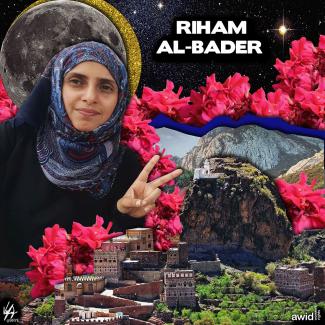
Riham était avocate et activiste engagée à suivre de près la question des violations des droits au Yémen.
Elle a travaillé avec d'autres activistes pour fournir de la nourriture et de l'eau aux civils piégés par les milices houthies dans la banlieue de la ville de Taiz.
Riham a été tuée en février 2018. La cause de son décès, soit par la main d’un tireur d'élite ou par un tir de mortier, n’a pas été confirmée. Personne n'a été tenu responsable de son meurtre.
We celebrate everyone's right to choose their identities, relationships, goals, work, dreams and pleasures, and what they do with their mind, body and spirit. We believe in working towards access to resources, information and safe and enabling environments that allow this to happen.
Os dados serão processados para fins estatísticos para esclarecer o estado de financiamento dos movimentos feministas globalmente e serão divulgados apenas em forma agregada. A AWID não divulgará informações sobre uma organização específica ou informações que permitam identificar uma organização através da respetiva localização ou características sem o respetivo consentimento comprovado.