Special Focus

AWID is an international, feminist, membership organisation committed to achieving gender equality, sustainable development and women’s human rights

Confronting Extractivism & Corporate Power

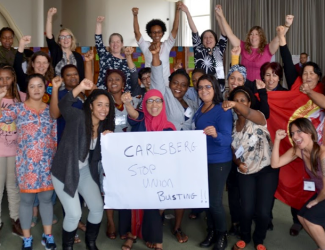
Women human rights defenders (WHRDs) worldwide defend their lands, livelihoods and communities from extractive industries and corporate power. They stand against powerful economic and political interests driving land theft, displacement of communities, loss of livelihoods, and environmental degradation.


Why resist extractive industries?

Extractivism is an economic and political model of development that commodifies nature and prioritizes profit over human rights and the environment. Rooted in colonial history, it reinforces social and economic inequalities locally and globally. Often, Black, rural and Indigenous women are the most affected by extractivism, and are largely excluded from decision-making. Defying these patriarchal and neo-colonial forces, women rise in defense of rights, lands, people and nature.

Critical risks and gender-specific violence

WHRDs confronting extractive industries experience a range of risks, threats and violations, including criminalization, stigmatization, violence and intimidation.  Their stories reveal a strong aspect of gendered and sexualized violence. Perpetrators include state and local authorities, corporations, police, military, paramilitary and private security forces, and at times their own communities.

Acting together

AWID and the Women Human Rights Defenders International Coalition (WHRD-IC) are pleased to announce “Women Human Rights Defenders Confronting Extractivism and Corporate Power”; a cross-regional research project documenting the lived experiences of WHRDs from Asia, Africa and Latin America.

We encourage activists, members of social movements, organized civil society, donors and policy makers to read and use these products for advocacy, education and inspiration.

Share your experience and questions!

Tell us how you are using the resources on WHRDs Confronting extractivism and corporate power.

◾️ How can these resources support your activism and advocacy?

◾️ What additional information or knowledge do you need to make the best use of these resources?

Share your feedback


Thank you!

AWID acknowledges with gratitude the invaluable input of every Woman Human Rights Defender who participated in this project. This project was made possible thanks to your willingness to generously and openly share your experiences and learnings. Your courage, creativity and resilience is an inspiration for us all. Thank you!

Related Content

Umyra Ahmad

Biography

Umyra Ahmad est une féministe malaisienne expérimentée en plaidoyer international et régional et en éducation aux droits humains. Au sein de l'AWID, elle travaille à la promotion des droits liés au genre et à la sexualité à l'ONU. Avant de nous rejoindre, elle était chargée de programme à IWRAW Asie-Pacifique, où elle a aidé des organisations de terrain régionales, nationales et locales à utiliser les mécanismes des organes conventionnels de l'ONU comme outils de redevabilité des États et d'accès à la justice. En Malaisie, elle travaille avec des collectifs queer et de réfugié·e·s, et soutient la coordination de diverses initiatives d'entraide.

Position
Responsable de Plaidoyer pour l’initiative de Promotion des Droits Universels et de la Justice
Add to stories
Off

Snippet - WITM Start the survey 1 - RU


Globe

Опрос доступен на английском, арабском, испанском, португальском, русском и французском языках!


Sara Hegazy

Sara Hegazy, a bold Egyptian LGBTQI+ rights activist, lived in a society where the members of her community, their bodies and lives often face lethal prejudice. The roots of Sara’s resistance were in the deconstruction of a dominant, oppressive and patriarchal system, and its anti-rights actors.

"[In Egypt], every person who is not male, Muslim, Sunni, straight, and a supporter of the system, is rejected, repressed, stigmatized, arrested, exiled, or killed. This matter is related to the patriarchal system as a whole, since the state cannot practice its repression against citizens without a pre-existing oppression since childhood." - Sara Hegazy wrote on March 6, 2020

The suppression of Sara’s voice by the Egyptian government reached its violent peak in 2017, when she was arrested for raising a rainbow flag at the Mashrou’ Leila (Lebanese band whose lead vocalist is openly gay) concert in Cairo. What followed were charges of joining an illegal group along with “promoting sexual deviancy and debauchery”. 

"It was an act of support and solidarity — not only with the [Mashrou' Leila] vocalist but for everyone who is oppressed...We were proud to hold the flag. We wouldn't have imagined the reaction of society and the Egyptian state. For them, I was a criminal — someone who was seeking to destroy the moral structure of society." - Sara Hegazy

Sara was jailed for three months, where she was tortured and sexually assaulted. In January 2018, after being released on bail, she sought asylum in Canada where she was safe but imprisoned by the memories of the abuse and violence her body and soul had gone through.

"I left this experience after three months with a very intense, serious case of PTSD [post-traumatic stress disorder]. Prison killed me. It destroyed me." - Sara Hegazy told NPR

Sara took her own life on 14 June 2020, leaving a handwritten note in Arabic: 

“To my siblings – I tried to find redemption and failed, forgive me.”
“To my friends – the experience [journey] was harsh and I am too weak to resist it, forgive me. 
“To the world – you were cruel to a great extent, but I forgive.”

Her legacy and courage will be carried forward by those who love her and believe in what she fought for.


Tributes:

“To Sarah: Rest, just rest, spared from this relentless violence, this state-powered lethal patriarchy. In rage, in grief, in exhaustion, we resist.”  - Rasha Younes, an LGBT rights researcher at Human Rights Watch. Read the complete text

Mashrou’ Leila’s lead vocalist sings tribute to Sara Hegazy

Tributes on Twitter 

Documentary about Sara Hegazy’s life

Website dedicated to Sara Hegazy and to those, especially LGBTQI voices, not able to grieve in public
 

Snippet FEA Exclusion and Stigma (EN)

An illustration of a megaphone in navy blue. Lines representing sound waves are coming out the speaker end, in burgundy.

THE EXCLUSION, STIGMA AND INSTITUTIONAL ABUSE
that trans and travesti people continue to face on a daily basis

Sanyu Awori

Biography

Sanyu is a Pan-African feminist based in Nairobi, Kenya. She has spent the last decade supporting labour, feminist and human rights movements advocating for corporate accountability, economic justice and gender justice. She has worked with the Business & Human Rights Resource Centre, IWRAW Asia Pacific and the Commonwealth Human Rights Initiative. She has a Master’s of Laws in Human Rights Law and a Bachelor’s of Laws from the University of Nottingham. Her writing has been published in the Business and Human Rights Journal, Human Rights Law Review, Open Global Rights, Open Democracy and more. In her free time, she loves walking in the forest and chasing butterflies.

Position
Manager, Building Feminist Economies
Add to stories
Off

Snippet - WITM about research - RU

Об исследовании «Где же деньги для феминистских объединений?»

Глобальный опрос «Где деньги для феминистских объединений?» является ключевым элементом третьего этапа нашего исследования, ориентированного на конкретные действия: «Где деньги для феминистских объединений» (короткое название – «Где деньги?»). Результаты опроса будут доработаны и обстоятельно изучены в ходе бесед с активистами и донорами, а также сопоставлены с другими имеющимися аналитическими материалами и исследованиями о состоянии ресурсов феминистских движений и инициатив по достижению гендерного равенства во всем мире.

Полный отчет организации «Где деньги для феминистских объединений?» будет опубликован в 2026 году.

Чтобы узнать больше о том, как AWID освещает вопросы финансирования феминистских движений, ознакомьтесь с историей инициативы «Где деньги?» и нашими предыдущими отчетами здесь.

Snippet FEA Audio Story 3 (ES)

Escucha la historia aquí:

Veena Singh

Biography

Veena Singh es una isleña de Fiyi, feminista y mujer de color Nacida y criada en un pequeño pueblo rural de Fiyi, su fuerza proviene de su rica herencia mixta (su madre es una mujer fiyiana indígena y su padre es fiyiano de ascendencia India).  La identidad y las experiencias vividas de Veena han influido profundamente en su compromiso con la justicia, la equidad y la inclusión.   Con más de dos décadas de experiencia en derechos humanos, igualdad de género, desarrollo comunitario e inclusión social, Veena es una activista apasionada por la reconfiguración del poder para crear un cambio transformativo y construir una «economía de la amabilidad» Su trabajo se expande por diversas áreas que incluyen: desarrollo comunitario, mujeres, paz y seguridad, políticas sociales, derechos humanos y defensa de políticas. 

Veena está profundamente comprometida en hacer avanzar la inclusión, la paz y la justicia, los derechos sexuales y por la justicia reproductiva (SRHR, por sus siglas en inglés), la justicia climática y los derechos humanos.  Aporta un gran acervo de experiencia trabajando con redes de base, organizaciones internacionales e instituciones gubernamentales, siempre con foco en los abordajes locales y liderados por la comunidad y los principios feministas. 

Fuera de su ‘vida de oficina’, Veena es activista por el medio ambiente, defensora de la salud mental y escritora.  Es la mamá de 11 gatos, se viste con sari y es amante del correo postal y las postales.  Como observadora atenta de los movimientos feministas en Fiyi y el Pacífico, Veena está en un recorrido personal para «decolonizar la mente y el yo a través de la autoreflexión radical» Sobre todo, la impulsa el deseo y el sueño de producir una escritura convocante y resonante que conecte con la diáspora del Pacífico y difunda las voces de los márgenes.

Position
Copresidenta
Add to stories
Off

Почему мне стоит принять участие в опросе?

Есть много причин, по которым ваше участие в опросе очень важно. Это возможность поделиться своим опытом привлечения финансирования для деятельности вашей организации; заявить о себе как об эксперте в вопросах движения денежных средств и их получателей; внести свой вклад в коллективную и последовательную адвокацию среди доноров, чтобы привлечь более объемное и эффективное финансирование. За последние два десятилетия исследования AWID в этой области зарекомендовали себя как ключевой ресурс для активисток(-тов) и доноров. Мы приглашаем вас присоединиться к нам в реализации третьей части инициативы «Где деньги?», чтобы осветить реальное состояние ресурсного обеспечения, оспорить ошибочные решения и указать на то, как необходимо изменить финансирование, чтобы движения процветали и реагировали на сложные вызовы нашего времени.

Snippet FEA how important essential workers are (FR)

La pandémie de COVID-19 a montré au monde l'importance des travailleur·euses essentiel·les. Nous parlons des personnes qui font le ménage, les travailleur·euses domestiques, les infirmier·ères, les d'ambulancier·ères, les personnes travaillant dans les transports, les supermarchés et autres. Leur travail consiste à prendre soin et à garantir le bien-être des autres et à faire fonctionner nos économies.

Mais pendant qu'iels prennent soin de nous..

Christine Hayhurst

Biography

Avec plus de 30 ans d'expérience en finance, Christine a consacré sa carrière à développer les missions non lucratives à l'échelle mondiale. Ses contributions vont jusqu’au poste de trésorière du conseil d'administration d'une ONG. Christine a rejoint l'AWID en 2007 comme contrôleuse, puis en tant que directrice des finances depuis 2023. Pendant son temps libre, elle aime voyager, jardiner et faire de la randonnée.

Position
Directrice des Finances
Add to stories
Off

Nós redistribuímos recursos para os nossos parceires beneficiários e identificamo-nos como um fundo feminista e/ou de mulheres. Devemos participar no inquérito?

Não, apreciamos muito o vosso trabalho, mas atualmente não solicitamos respostas de fundos feministas e de mulheres. Encorajamos-vos a partilhar o inquérito com os vossos parceires beneficiários e as vossas redes feministas.

Snippet FEA collaborator and allies Photo 4 (EN)

This photo represents Sopo speaking at a public event indoors. She is holding the microphone while reading her notes and sitting on a chair between three other people who are either speakers or moderators.

Ekaete Judith Umoh

Biography

Ekaete Judith Umoh es una defensora internacional de los derechos de las personas con discapacidad y experta en desarrollo inclusivo, con un agudo análisis de las cuestiones relativas al género, la discapacidad y el desarrollo inclusivo. Su sueño es aumentar la visibilidad de las mujeres y niñas con discapacidad dentro del movimiento feminista internacional y en todos las iniciativas para el desarrollo en el mundo.

Ekaete disfruta con el activismo y la política, y llegó a convertirse en la primera mujer elegida presidenta de la Asociación Nacional Conjunta de Personas con Discapacidad -JONAPWD(www.jonapwd.org ), en Nigeria, donde lideró a organizaciones por los derechos de las personas con discapacidad en las luchas por convertir en ley el Proyecto de Ley de Prohibición de la Discriminación contra las Personas con Discapacidad en Nigeria, tras más de 17 años de trabajo constante de incidencia. Posteriormente, se incorporó a CBM Global como Directora de País pionera y dirigió su equipo durante unos tres años, contribuyendo a acabar con el círculo de pobreza y discapacidad en Nigeria. Aparte del activismo en defensa de las personas con discapacidad, Ekaete ha trabajado como consultora para varias agencias de desarrollo, proporcionando asistencia técnica sobre la inclusión de la discapacidad en el diseño de programas y proyectos.

Add to stories
Off

هل استطيع الوصول للاستطلاع وتعبئته من هاتفي؟

نعم، يمكن تعبئة الاستطلاع من خلال الهاتف الذكي.