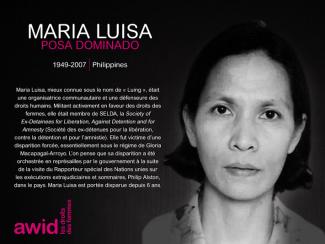
Maria Luisa Posa Dominado
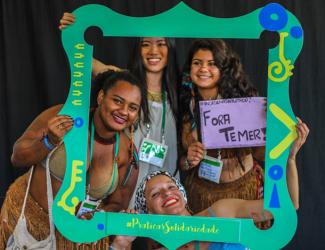
Young feminist activists play a critical role in women’s rights organizations and movements worldwide by bringing up new issues that feminists face today. Their strength, creativity and adaptability are vital to the sustainability of feminist organizing.
At the same time, they face specific impediments to their activism such as limited access to funding and support, lack of capacity-building opportunities, and a significant increase of attacks on young women human rights defenders. This creates a lack of visibility that makes more difficult their inclusion and effective participation within women’s rights movements.
AWID’s young feminist activism program was created to make sure the voices of young women are heard and reflected in feminist discourse. We want to ensure that young feminists have better access to funding, capacity-building opportunities and international processes. In addition to supporting young feminists directly, we are also working with women’s rights activists of all ages on practical models and strategies for effective multigenerational organizing.
We want young feminist activists to play a role in decision-making affecting their rights by:
Fostering community and sharing information through the Young Feminist Wire. Recognizing the importance of online media for the work of young feminists, our team launched the Young Feminist Wire in May 2010 to share information, build capacity through online webinars and e-discussions, and encourage community building.
Researching and building knowledge on young feminist activism, to increase the visibility and impact of young feminist activism within and across women’s rights movements and other key actors such as donors.
Promoting more effective multigenerational organizing, exploring better ways to work together.
Supporting young feminists to engage in global development processes such as those within the United Nations
Collaboration across all of AWID’s priority areas, including the Forum, to ensure young feminists’ key contributions, perspectives, needs and activism are reflected in debates, policies and programs affecting them.
Actualizaremos los resultados de este proceso en el sitio web a su debido tiempo.
L’enquête WITM mondiale est un des piliers essentiels de la troisième édition de notre recherche orientée sur l’action, intitulée Où est l’argent pour l’organisation des mouvements féministes? (abrégé en Où est l’argent ou WITM, pour l’acronyme en anglais). Les résultats de l’enquête seront développés et approfondis à l’occasion de conversations profondes avec des activistes et des financeurs, et les références seront croisées avec d’autres analyses et études existantes sur la situation du financement des mouvements féministes et de l’égalité des genres à travers le monde.
Le rapport complet de la recherche Où est l’argent pour l’organisation des mouvements féministes sera publié en 2026.
 Pour en apprendre davantage sur la manière dont l’AWID met en lumière l’argent utilisé pour et contre les mouvements féministes, consultez notre dossier WITM et nos précédents rapports à ce sujet ici.
Si tienes pasaporte de alguno de los siguientes países (el tiempo de estadía permitido varía según el país), NO necesitas visa para asistir al Foro de Taipéi:
Alemania, Andorra, Australia, Austria, Bélgica, Belice, Bulgaria, Brunei, Canadá, Chile, Ciudad del Vaticano, Croacia, Chipre, Dinamarca, Eslovaquia, Eslovenia, Estados Unidos de América, Estonia, España, Esuatini, Filipinas, Finlandia, Francia, Grecia, Guatemala, Haití, Honduras, Hungría, Irlanda, Islandia, Israel, Italia, Japón*, Letonia, Liechtenstein, Lituania, Luxemburgo, Malasia, Malta, Islas Marshall, Mónaco, Nauru, Nueva Zelanda, Nicaragua, Noruega, Países Bajos, Palaos, Paraguay, Polonia, Portugal, Reino Unido, República Checa, República de Corea, República Dominicana, Rumania, Rusia, San Cristóbal y Nieves, San Marino, Santa Lucía, San Vicente y las Granadinas, Singapur, Suecia, Suiza y Tuvalu.
Las personas con cualquier otro pasaporte NECESITARÁN VISA para ir a Taipéi.
Por favor ten en cuenta:
Es probable que, una vez que te hayas inscripto para asistir al Foro, te llegue un código relacionado con el evento que te permitirá tramitar tu visa en forma electrónica, cualquiera sea tu ciudadanía.
Brindaremos más información sobre este tema cuando se abra el proceso de inscripción.

El objetivo fundamental de la encuesta ¿Dónde está el dinero? es arrojar luz sobre la situación financiera de la diversidad de movimientos feministas, por los derechos de las mujeres, la justicia social, las personas LBTQI+ y demás movimientos aliados de todo el mundo y, sobre la base de dicha información, reforzar las razones fundadas para movilizar más y mejores fondos y transferir el poder a los movimientos feministas.
An online community for and by young feminists working on women’s human rights, gender equality and social justice around the world.
The platform is the go-to place for information and resources on safeguarding the universality of rights in international and regional human rights spaces.
Provides funding for young feminist-led initiatives. It aims to strengthen the capacity of young feminist organizations to leverage resources for their work and to increase donors’ and allies’ commitments to resourcing young feminist activism.
A go-to site to learn about the urgent responses undertaken to protect women human rights defenders and to find tools and resources to support the work and wellness of WHRDs.
A regional initiative created to prevent, respond, document and make public all cases of violence against women human rights defenders in the Mesoamerican region.
The WHRD IC is a resource and advocacy network for the protection and support of women human rights defenders worldwide.
A Coalition of feminist, women´s rights, women´s development, grassroots and social justice organisations working to challenge and reframe teh global development agenda.
The role of the Women’s Major Group is to assure effective public participation of women’s non-governmental groups in the UN policy processes on Sustainable Development, Post2015 and Environmental matters.
An alliance of women’s organizations and networks to advocate for the advancement of gender equality, women’s empowerment and human rights in the Financing for Development (FfD) related UN processes.
Non, nous souhaitons recevoir une seule participation par groupe.
English article created from Spanish site
Escucha esta historia aquí:

Contenu lié
Front Line Defenders: Assassinat de Ruth Alicia Lopez Guisao