Organizing creatively, facing an increasing threat
Young feminist activists play a critical role in women’s rights organizations and movements worldwide by bringing up new issues that feminists face today. Their strength, creativity and adaptability are vital to the sustainability of feminist organizing.
At the same time, they face specific impediments to their activism such as limited access to funding and support, lack of capacity-building opportunities, and a significant increase of attacks on young women human rights defenders. This creates a lack of visibility that makes more difficult their inclusion and effective participation within women’s rights movements.
A multigenerational approach
AWID’s young feminist activism program was created to make sure the voices of young women are heard and reflected in feminist discourse. We want to ensure that young feminists have better access to funding, capacity-building opportunities and international processes. In addition to supporting young feminists directly, we are also working with women’s rights activists of all ages on practical models and strategies for effective multigenerational organizing.
Our Actions
We want young feminist activists to play a role in decision-making affecting their rights by:
Fostering community and sharing information through the Young Feminist Wire. Recognizing the importance of online media for the work of young feminists, our team launched the Young Feminist Wire in May 2010 to share information, build capacity through online webinars and e-discussions, and encourage community building.
Researching and building knowledge on young feminist activism, to increase the visibility and impact of young feminist activism within and across women’s rights movements and other key actors such as donors.
Promoting more effective multigenerational organizing, exploring better ways to work together.
Supporting young feminists to engage in global development processes such as those within the United Nations
Collaboration across all of AWID’s priority areas, including the Forum, to ensure young feminists’ key contributions, perspectives, needs and activism are reflected in debates, policies and programs affecting them.
Related Content
O inquérito tem quantas perguntas?
Um total de 47 perguntas, das quais 27 são obrigatórias* e 20 são opcionais. A maioria das perguntas no inquérito é de escolha múltipla. Encorajamo-lo a responder a todas as perguntas.
#MeToo en Chine
Le mouvement #MeToo en Chine s'est enflammé en janvier 2018, impulsé par l'élan du mouvement #MeToo dans le monde entier. Le mouvement était une réponse aux problèmes culturels et systémiques liés au genre et au pouvoir en Chine. Les fondations du mouvement ont été construites pendant des décennies, avec de nombreuses années de débat et de plaidoyer pour l'égalité des genres qui ont finalement jailli en une formidable force à travers la société. #MeToo a été mené principalement par des jeunes, parmi lesquels d'innombrables femmes anonymes et leurs allié·e·s, à la recherche d’opportunités qui leur permettraient de réaliser le "rêve chinois" ultime : transformer la Chine en un pays où règne l'égalité des genres.
L'environnement du mouvement #MeToo est extrêmement hostile en Chine: l'état de droit, l'équité et la transparence de l'action gouvernementale, ainsi que la liberté d'expression ne peuvent être considérés comme acquis par le mouvement en Chine, mais ce sont ces mêmes objectifs pour lesquels i.e.lles se battent. Depuis le début, il s'agit d'une lutte intense, chaque victime ou activiste qui dénonce courre d’énormes risques. Qu'il s'agisse d'être réduit·e au silence, humilié·e, ou de subir des représailles, ou encore de voir sa sécurité mise en péril, chaque succès du mouvement #MeToo a été remporté par celleux qui ont eu le courage d'assumer les coûts de la prise de parole et de défier la censure.
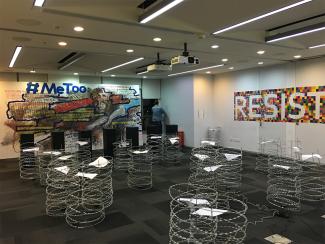
L'exposition #MeToo en Chine a été organisée pour la première fois en 2019 et a effectué une tournée dans 5 villes. L'objectif de l'exposition est de mettre davantage en avant les expériences personnelles des victimes et des activistes et, en prenant part à ces histoires, d'inspirer notre public à se joindre à la lutte. L'exposition est elle-même devenue une partie de la lutte #MeToo; elle a fait face à d’innombrables défis lors de sa tournée à travers la Chine et a même risqué la fermeture à plus d'une occasion.
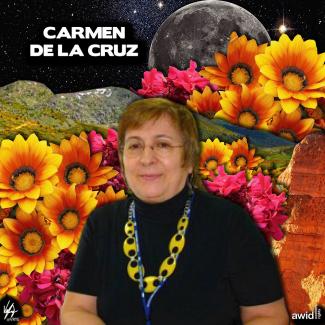
Carmen had a long career advocating for women’s rights both in NGOs and within the United Nations (UN) system.
She taught courses in several Spanish and Latin American universities, and published numerous articles and reports on women, gender and peace in developing countries.
Her writing and critical reflections have impacted a whole generation of young women. In her last years, she was responsible for the Gender Practice Area in the Regional Center of the United Nations Development Program (UNDP) for Latin America, from where she supported very valuable initiatives in favour of gender equality and women's human rights.
هل عليّ الإجابة على جميع الأسئلة مرة واحدة أو يمكنني العودة الى الاستطلاع؟
يمكنكم/ن حفظ اجوبتكم/ن والعودة للاستطلاع متى أردتم/ن ذلك. KOBO بحفظ مسودات إجاباتك في الزاوية العلوية اليسرى من صفحة الاستطلاع وإعادة تحميل سجلك عند العودة إلى الاستطلاع.
Tenderness is the Sharpest Resistance
A Film Series on Asian/Pacific Feminist Realities
Curated by Jess X. Snow With assistance from Kamee Abrahamian and Zoraida Ingles
Across Asia and the Pacific, and all of it’s vast diaspora, fierce women and trans folks have been fighting for a future where they can all be free. As rising sea levels threaten the Pacific islands, and the coasts of continental Asia, the fight to protect other Earth and the Ocean intensifies all over the globe. Our planet stores a geologic memory of everything that it has experienced. The rise of colonization, industrialization, and environmental destruction is connected to the rise of the binary patriarchal nation state. The power within the Earth, to reincarnate, heal, and bloom in the face of violence, must then be connected to the woman, to motherhood, to indigeneity and all forces that are expansive, sacred and queer. It is no coincidence that Feminist Realities unite the fight to protect the rights of women, trans and LGBTQ+ people with the fight to protect the Earth. From mother-daughter protectors of Mauna Kea in the Kingdom of Hawaii, to the complex mother-child relationships of Vietnamese refugees, to queer sexual awakenings in conservative India, the reclaimation of home in Inner Mongolia, to the struggle toward LGBTQ liberation in the Phillipines -- this collection of films is a cosmology of the ways current-day Asian Pacific women and queer and trans folks champion the journey to our collective liberation across oceans and borders.
All of these films have a strong sense of place: indigenous activists protect their sacred lands, youth peel back colonial narratives of their homeland to uncover hidden truths, complex motherhood and relations of care are explored, and characters turn to their own bodies and sexuality as sanctuary when the family and city that surrounds them threaten their safety.
AFTEREARTH
By Jess X. Snow
“A haunting film with stunning shots invoking feminist environmental resistance and how deeply rooted this is in connection to cultural history and land…”
- Jessica Horn, PanAfrican feminst strategist, writer and co-creator of the temple of her skin
In the experimental documentary, Afterearth, four women fight to preserve the volcano, ocean, land and air for future generations. Through music, poetry, and heartfelt testimonial that honors locations touched by the Pacific Ocean–Hawaiʻi, the Philippines, China, and North America, Afterearth is a poetic meditation on four women’s intergenerational and feminist relationship to the lands and plants they come from.
STANDING ABOVE THE CLOUDS
By Jalena Keane Lee
In Standing Above the Clouds, Native Hawaiian mother-daughter activists stand together to protect their sacred mountain, Mauna Kea from being used as a site to build one of the world’s largest telescopes. As protectors of Mauna Kea, this film highlights the interconnected relationship between Aloha ʻĀina (love of the land) and love for one’s elders and the future generations to come.
NƯỚC (WATER/HOMELAND)
By Quyên Nguyen-Le
In the experimental narrative short, Nước (Water/Homeland) a Vietnamese-American genderqueer teen challenges dominant narratives of the Vietnam War in Los Angeles, California. Through striking dream sequences and breaks from reality, this film follows their journey to piece together and understand their mother's experience as a Vietnam War refugee.
KAMA’ĀINA
By Kimi Lee
In Kama’āina, a queer sixteen-year-old girl must navigate life on the streets in Oahu, until she eventually finds refuge by way of guidance from an auntie at Pu’uhonua o Wai’anae–Hawaiʻi’s largest organized homeless encampment.
DEVI
By Karishma Dev Dube
In Devi (goddess in Hindi) a young closeted lesbian, Tara risks both family and tradition to embrace her attraction to her family’s maid. Set in New Delhi, Devi is a coming of age story, as it is a commentary on the social and class lines that divide women in contemporary India today.
HEADING SOUTH
By Yuan Yuan
In Heading South, Chasuna, an 8 year old girl, raised by her mother in the Inner Mongolian Plateau, visits her abusive father in the big city. While at her father’s house, she is introduced to a new addition to the family, and must come to terms with the fact that her true home is inseparable from her mother and land.
Outrun
By Johnny Symons & S. Leo Chiang
In the feature film, Outrun, we follow the journey of the first transgender woman in the Philippine Congress. Facing oppression in a predominantly Catholic nation, her triumphant journey becomes an outcry for the rights of LGBTQ+ people globally.
Spanning documentary, narrative, and experimental forms, these films illustrate that community care, self-love, and deep transformative listening between our loved ones is a portal to the Feminist Realities we are bringing into existence today. From all across the Asia Pacific and it’s diaspora, these stories teach us that in the face of violence, tenderness is the sharpest force of resistance.
Jess X. Snow is a film director, artist, pushcart-nominated poet, children’s book author and community arts educator who creates queer asian immigrant stories that transcend borders, binaries and time.
Follow us on Social Media to receive news about upcoming events and screenings:
Forma parte de una organización feminista de membresía internacional y de una comunidad. Nuestrxs afiliadxs residen en todas las regiones del mundo. Aprenden entre sí y se brindan apoyo mutuo en una red global fundada en la solidaridad.
Conocida afectuosamente como «Mama Efua», su trabajo con el movimiento para terminar con la mutilación genital femenina (MGF) se extendió a lo largo de tres décadas y ayudó a llamar la atención internacional y a generar acciones para erradicar esta práctica dañina.
En 1983, Efua fue una de las fundadoras de FORWARD (The Foundation for Women’s Health, Research and Development, La fundación para la salud de las mujeres, la investigación y el desarrollo), que se convirtió en una organización líder en la batalla por crear conciencia sobre la MGF. Su libro de 1994, Cortar la rosa: mutilación genital femenina, es considerado el primer libro sobre MGF y aparece en la lista de «Los 100 mejores libros africanos del siglo XX» de la Universidad de Columbia.
Originaria de Ghana y enfermera de profesión, Efua se incorporó a la Organización Mundial de la Salud (OMS) en 1995 y con empeño logró la inclusión de la MGF en las agendas de los Estados miembros de la OMS. También trabajó estrechamente con el Gobierno nigeriano en la elaboración de una política nacional integral que sentó las bases para las leyes contra la MGF de Nigeria, que todavía están vigentes. Su trabajo pionero culminó en una campaña liderada por África, «La generación de las niñas», dedicada a terminar con la MGF en el plazo de una generación.
Efua demostró que una persona puede convertirse en una voz unificadora para un movimiento y ahora resultan más relevantes que nunca sus sabias palabras: «la identidad compartida puede ayudar a reunir a activistas que vienen de contextos diferentes y a que tengan un sentido de propósito en común».
"Nous savons que tout est contre nous et il y a très peu de chances de changer cela. Mais nous croyons en l'intervention et je pense que nous avons une opportunité et nous devrions l'utiliser. C'est pourquoi nous faisons tout ce que nous faisons. Nous sommes prêt·e·s à pousser pour des choses inouïes."
Реалии обеспечения ресурсами и состояние финансирования феминистских движений быстро меняются – является ли этот опрос единичным?
Нет, не является. Он основан на 20-летней истории AWID по мобилизации более объемного и качественного финансирования для социальных изменений под руководством феминисток(-ов) и является третьим этапом исследования «Где деньги для феминистских организаций?». Наша цель – проводить опрос «Где деньги?» каждые 3 года.
Actores anti-derechos
Capítulo 4
Una red compleja de actores anti-derechos, en constante evolución, está ejerciendo cada vez más influencia en los espacios internacionales y en las políticas nacionales. Respaldados a menudo por financiaciones poco transparentes, estos actores construyen alianzas tácticas sobre distintos temas y cruzando diferentes regiones y credos para aumentar su impacto.
Estamos viendo actores fascistas y fundamentalistas que, si bien tienen un discurso nacionalista, son completamente transnacionales en lo que respecta a sus basamentos ideológicos, sus alianzas políticas y sus redes de financiamiento. En algunos casos, estos grupos están respaldados por flujos financieros poco transparentes vinculados con grandes empresas o con partidos políticos de extrema derecha. Sin embargo, también crean alianzas estratégicas, que incluyen, en algunos casos, segmentos de los movimientos feministas y por los derechos de las mujeres, y se distancian de los elementos más evidentemente extremistas para parecer más legítimos. Los actores anti-derechos también se expanden y replican su estilo de organización antiderechos (ya sea a través de campañas y grupos de presión, o de litigios estratégicos) en todo el planeta.
Índice de contenidos
CitizenGo
Alliance Defending Freedom (ADF)
Financiación de actores antiderechos
Los vínculos entre feministas trans-excluyentes y fundamentalistas cristianxs
Ejercicio: Esquematicemos el panorama
Historia de movimiento de resistencia: Catolicadas, una poderosa herramienta de comunicación para promover la igualdad de género y los derechos sexuales y reproductivos
Participez au Forum international de l'AWID - un rassemblement féministe mondial majeur - et bénéficiez de réductions spéciales et de points d'entrée pour le dialogue virtuel réservés aux membres de l'AWID. Co-créé par des mouvements féministes, le Forum est un espace unique de discussion profonde et d'imagination où nous remettons en question et renforçons notre organisation, et joignons nos luttes et nos réalités féministes.
Zita était une défenseure des droits des femmes de la région du Grand Kivu.
Elle a été la première directrice exécutive d’UWAKI, une organisation de femmes bien connue. Par son travail avec le Réseau des Femmes pour la Défense des Droits et la Paix (RFDP) et le Caucus des femmes du Sud-Kivu pour la paix, elle a consacré sa vie à rétablir la paix dans l'est de la RDC. Elle a très fermement dénoncé l'utilisation de la violence sexuelle comme arme de guerre.
En 2006, elle s'est présentée comme candidate aux premières élections démocratiques en RDC. Bien qu’elle n’ait pas gagné, elle a continué à défendre les droits des femmes et la communauté du Sud-Kivu se souvient d’elle avec affection.
Snippet FEA Otras Union meetings and demonstrations (EN)
Otras Union meetings and demonstrations
Posso compartilhar o inquérito com outras pessoas?
Claro que sim! Encorajamo-lo a compartilhar a ligação do nosso inquérito com as suas redes. Quanto mais perspetivas diversas recolhermos, melhor será a nossa compreensão do cenário financeiro para a organização feminista.
S'inscrire à la liste de diffusion
Our values - esponsibility, Accountability, and Integrity
Responsibility, Accountability, and Integrity
We strive for transparency, responsible use of our resources, fairness in our collaborations and accountability and integrity with our members, partners, funders and the movements with(in) which we work. We are committed to reflecting on our experiences, sharing our learnings openly, and striving to change our practices accordingly.
« Andaiye » signifie « une fille revient à la maison » en swahili. Née Sandra Williams le 11 septembre 1942 à Georgetown, Guyane, Andaiye adopte ce nouveau nom en 1970 alors que le mouvement des Black Panthers balaie son pays et toute la région des Caraïbes.
Perçue comme une figure transformatrice sur les fronts de la lutte pour la libération et pour la liberté, Andaiye a été l’une des premières membres de l’Alliance du peuple travailleur (WPA), un parti socialiste en Guyane de lutte contre le régime autoritaire et participait activement à sa direction. Tout au long de sa vie, Andaiye a placé la justice pour la classe ouvrière et les droits des femmes vivant en milieu rural au centre de son action militante, et s’est battue pour l’élimination des obstacles ethniques entre les femmes indo-guyaniennes et celles afro-guyaniennes.
Andaiye fut l’une des membres fondatrices des Red Thread Women, une organisation de défense pour la juste rémunération du travail en soins réalisé par les femmes, en plus d’avoir travaillé à l’Université des Indes occidentales et avec l’organisation CARICOM. N’hésitant jamais à défier les gouvernements, elle a pointé du doigt les déséquilibres en matière de genre dans les conseils de l’État, les lois discriminatoires à l’égard des travailleur·euse·s du sexe, réclamé le droit à l’avortement en Jamaïque et s’est érigée contre les accords commerciaux, tels que le Marché unique des Caraïbes (CSME) qui permettait la libre circulation des travailleuses domestiques migrantes mais n’octroyait pas ce même droit à leurs enfants.
Elle a publié plusieurs essais universitaires, rédigé des articles d’opinion et révisé les derniers ouvrages de Walter Rodney, l’activiste politique guyanien et coleader du WPA assassiné en 1980. Survivante du cancer, Andaiye a été l’une des fondatrices de la Ligue guyanienne contre le cancer et du Groupe d’action des survivant·e·s du cancer. Elle a également siégé au conseil exécutif de l’Association caribéenne pour la recherche et l’action féministes (CAFRA), dirigé le Help and Shelter et été membre du conseil de la Commission nationale guyanienne pour les femmes. Elle a par ailleurs reçu de nombreux prix, dont le prestigieux Golden Arrow of Achievement (quatrième prix le plus important du Guyana).
Andaiye est décédée le 31 mai 2019, à l’âge de 77 ans. Les nombreux hommages que lui ont rendus des activistes, ami·e·s et celles et ceux que sa vie aura inspiré·e·s ont parlé avec éloquence de son incroyable héritage et de la grandeur de son humanité.
En voici quelques-uns :
“« Andaiye m’a profondément marquée... elle représenttait tellement de choses pour moi : une éducatrice, une combattante, elle m’a appris l’autocritique, à réfléchir plus clairement, elle m’a enseigné la survie, ce qu’est le courage sans limite, la compassion, à dépasser les apparences et traiter les gens comme des gens, sans se laisser impressionner par le statut, la classe, la race... rien de tout ça. » Peggy Antrobus, activiste féministe, auteure, universitaire, La Barbade
« Le genre d’idéalisme confiant que démontrait Andaiye, cette disposition à affronter le monde et une croyance tenace qu’on pouvait vraiment le changer... Cette politique de l’espoir... Comment honorer sa vie, son héritage et sa mémoire autrement qu’en poursuivant le travail éthiquement et en continuant à s’autocritiquer? Et de faire en sorte de placer le travail de soins des femmes au centre. » - Tonya Haynes, La Barbade
« Je peux l’entendre se moquer de notre engouement collectif. Donc, je ris tout en pleurant. Chapeau bas, chère Andaiye, et merci pour tout. Que le voyage de ton esprit soit aimant et lumineux. Passe le bonjour à Walter et aux ancêtres. » - Carol Narcisse, La Jamaïque