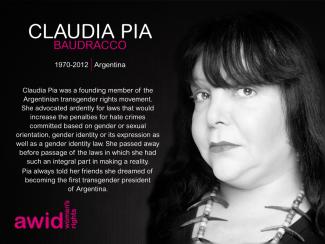
Claudia Pia Baudracco

Young feminist activists play a critical role in women’s rights organizations and movements worldwide by bringing up new issues that feminists face today. Their strength, creativity and adaptability are vital to the sustainability of feminist organizing.
At the same time, they face specific impediments to their activism such as limited access to funding and support, lack of capacity-building opportunities, and a significant increase of attacks on young women human rights defenders. This creates a lack of visibility that makes more difficult their inclusion and effective participation within women’s rights movements.
AWID’s young feminist activism program was created to make sure the voices of young women are heard and reflected in feminist discourse. We want to ensure that young feminists have better access to funding, capacity-building opportunities and international processes. In addition to supporting young feminists directly, we are also working with women’s rights activists of all ages on practical models and strategies for effective multigenerational organizing.
We want young feminist activists to play a role in decision-making affecting their rights by:
Fostering community and sharing information through the Young Feminist Wire. Recognizing the importance of online media for the work of young feminists, our team launched the Young Feminist Wire in May 2010 to share information, build capacity through online webinars and e-discussions, and encourage community building.
Researching and building knowledge on young feminist activism, to increase the visibility and impact of young feminist activism within and across women’s rights movements and other key actors such as donors.
Promoting more effective multigenerational organizing, exploring better ways to work together.
Supporting young feminists to engage in global development processes such as those within the United Nations
Collaboration across all of AWID’s priority areas, including the Forum, to ensure young feminists’ key contributions, perspectives, needs and activism are reflected in debates, policies and programs affecting them.
También era organizadora de comunidades urbanas empobrecidas de la Provincia de Cebú, y trabajaba con Desaparecidos, una organización de familiares de personas desaparecidas.
Elisa y dos de sus colegas fueron asesinadxs el 28 de noviembre de 2017 por dos hombres no identificados en Barangay San Ramón, en la ciudad de Bayawan de la Provincia de Negros Oriental, durante una misión que investigaba presuntas violaciones de derechos territoriales en la zona.
La sobreviven cuatro hijxs.

Now that you have analyzed all your data – from your survey, interviews, desk research and potentially other sources – you can create your final product.
In this section:
- Create your final product
1. Write clearly
2. Make it pretty- Gather review and inputs
1. Polish your results
2. Facilitate the feedback
Your final product will be the document that will summarize, analyze and criticize your data. That will be the piece that you will share with your community to present and explain your research to your audience.
At AWID, we often write a comprehensive written report that analyzes each set of data and synthesizes all of our findings, then later create smaller products, such as infographics and summaries (explained in the subsequent section “Finalize and format”).
Importance of the editor
An editor will proofread, ensure concise writing, conduct fact-checking, point out inconsistencies that need to be resolved, arrange the flow of the document and possibly suggest titles.
Your editor should preferably be someone who understands and knows your WITM work but who was not directly involved in the research. This will bring in a fresh perspective.
Use the data collected to create graphs and tables. These type of visuals are a compelling way to highlight the main findings of your research and validate your analysis.
Source relevant images that can illustrate your report.
Highlight key-numbers and/or powerful testimonials.
Remember: The more accessible your product is, the more people will want to read (and share!) it.
At this point, you have collected all your data, analyzed it and transformed it into your final product, likely in a long report.
Before moving on to the next steps – you should share your final research product with your advisor organizations, activists, and donors.
This is a great moment to check the following points:
Once you have inputted all feedback from your advisors, be sure to run it by your editor once more.
This will now be the final, completed version of your report. If you intend to publish the final report in other languages, now is the time to send it for translation.
This is a significant contribution from your advisors. Consider offering them some form of recognition.

• 2 - 5 months
• 1 or more research person(s)
• 1 Editor (or web-editor if you create an online product)
• Translator(s), if done in more than one language
• List of advisor organizations, activists, and donors.
• Concept note (from “Frame your research” section)
• Survey topline results
• Prepared interview questions
• Interview results
• Desk research data
• All other data used in report
Solo un año después de su fundación, las integrantes de Nadia Echazú comenzaron a trabajar en la alta costura y organizaron un desfile de moda en el histórico Hotel Bauen.
Mostraron cinco modelos y algunas trabajadoras de la cooperativa textil desfilaron con sus propios diseños.
Esto fue revolucionario no sólo porque estaban diseñando alternativas a la moda convencional, sino también porque estaban creando ropa accesible e inclusiva para cuerpos trans y travesti.
¡No hay economías feministas sin ropa que nos haga sentir increíbles y cómodxs!
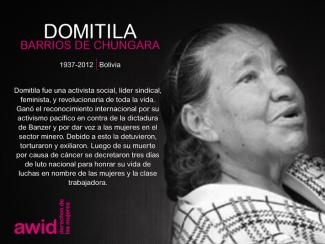

Опрос доступен на английском, арабском, испанском, португальском, русском и французском языках!
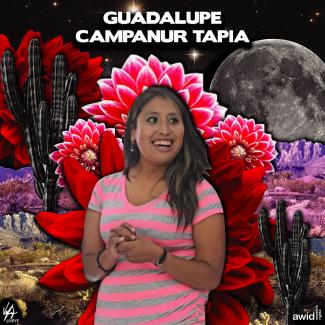
Guadalupe était une activiste environnementale impliquée dans la lutte contre le crime à Cherán, au Mexique.
En 2011, Guadalupe a aidé à renverser le gouvernement local. Elle participait à des patrouilles de sécurité locale, notamment dans les forêts municipales et faisait partie des dirigeant-e-s autochtones de Cherán qui ont appelé les gens à défendre leurs forêts contre l’abattage implacable et illégal. Son travail pour les aînés, les enfants, les travailleurs-euses a fait d'elle une icône dans sa communauté.
Elle a été assassinée à Chilchota, au Mexique, à environ 30 kilomètres au nord de Cherán, sa ville natale.
En el contexto actual, hemos identificado cinco grandes amenazas para la lucha por economías feministas y justas.
«La financialización alude a la importancia creciente de los mercados financieros, los motivos financieros, las instituciones financieras y las elites financieras en el manejo de la economía y las instituciones que la rigen tanto a nivel nacional como internacional» - Gerald Epstein
Epstein Gerald A. 2006: Financialization and the World Economy. Edward Elgar Publishing.
Las instituciones financieras ejercen una fuerte influencia sobre la gobernabilidad económica y la dirección que toman las políticas para el desarrollo. La influencia cada vez más acentuada que tienen el sector corporativo y las instituciones financieras internacionales en la definición de políticas públicas locales y globales ha resultado en Estados cada vez más presos de los intereses del capital. El sistema financiero actual, con sus políticas controversiales de crédito y deuda, juega un rol fundamental para la reproducción y la expansión de los procesos de acumulación de capital.
Esto plantea preguntas importantes acerca de cómo regular y repensar el sistema financiero global, no solo para evitar las graves consecuencias negativas de las crisis causadas por las deudas sino también para permitir medios de vida sostenibles y la realización de los derechos económicos y sociales sin retrocesos.
(Para más detalles, ver el artículo de Balakrishnan y Heintz “Debt, Power, and Crisis: Social Stratification and the Inequitable Governance of Financial Markets”, en inglés [Deuda, poder y crisis: Estratificación social y la gobernabilidad inequitativa de los mercados financieros]
En estos últimos 20 años, los acuerdos comerciales (tanto bilaterales como multilaterales) han expandido su rol mostrando un interés cada vez mayor en el otorgamiento de derechos de propiedad intelectual a las corporaciones.
Estos derechos han beneficiado claramente a las corporaciones transnacionales afectando gravemente la posibilidad de que las naciones y pueblos más empobrecidos puedan realizar sus derechos humanos, en particular
Además, la liberalización de las importaciones agrícolas que resulta en una afluencia de bienes baratos pone en peligro a las mujeres campesinas que trabajan en forma autónoma en países empobrecidos y a la seguridad alimentaria de todxs. Las cláusulas de protección a las inversiones que forman parte de los acuerdos comerciales limitan el espacio político para que los gobiernos nacionales promulguen e implementen regulaciones en asuntos tan críticos como la protección ambiental, los derechos laborales y la duración de las patentes.
Los movimientos feministas han estado, y continúan estando, en la primera línea de resistencia a estos acuerdos, denunciando las trampas que encierran.
(Ver por ejemplo, las reacciones de movimientos sociales y redes feministas de todo el mundo frente a las negociaciones del Tratado Trastlántico de Comercio e Inversiones y del Acuerdo de Asociación Transpacífico)
La mercantilización de los recursos de la Tierra y sus consecuencias — la degradación ambiental y el cambio climático producidos por décadas de industrialización agresiva, despojo y extractivismo de los recursos mundiales — han dañado la biodiversidad y la resiliencia ecológica. Estos daños ya están amenazando la mera existencia de la sociedad humana.
La comunidad internacional no ha logrado enfrentar los patrones de producción y consumo que conforman la raíz misma de este problema. Lo que hicieron los gobiernos — con el apoyo de las grandes empresas a quienes les interesa obtener ganancias — fue optar por el enfoque de la «economía verde» que promueve las «tecnologías energéticamente eficientes» (como la energía nuclear, los biocombustibles, los organismos genéticamente modificados y la geoingeniería) y los esquemas de comercio de emisiones de dióxido de carbono como soluciones mágicas.
Si bien los procesos de apropiación de tierras y recursos no son algo nuevo -de hecho, han sido luchas centrales en la historia colonial- lo que sí es nuevo son los medios de avanzada por los cuales la tierra y los recursos naturales se están volviendo mercancías en nuevos mercados.
Las instituciones financieras internacionales desempeñan un rol central en promover la mercantilización de la tierra en los países en desarrollo. Estas instituciones financian reformas agrarias que les permiten a actores poderosos utilizar la tierra para ganancias especulativas a cambio de magras promesas de empleos y crecimiento. La apropiación de tierras tiene impactos negativos de gran alcance sobre el acceso de los pueblos a bienes y servicios esenciales, además de causar desplazamiento de poblaciones y degradación ambiental.
Quienes se están resistiendo a la apropiación de tierras, incluyendo a las defensoras de derechos humanos, se enfrentan todos los días a distintas formas de violencia que van desde las agresiones físicas a los abusos sexuales.
Esta base patriarcal tiene una hegemonía particular en los modelos neoliberales actuales.
Resulta evidente que la economía política y el desarrollo se vinculan de varias formas con la sexualidad y el género: pensemos en cómo define el capitalismo lo que se puede entender como 'trabajo' y cómo el valor de los seres humanos se define a partir de su productividad en el trabajo rentado.
En la mayoría de los casos, el lugar que ocupan las mujeres en la economía mundial continúa siendo el de trabajadoras explotadas por su género ya que su trabajo está devaluado en los empleos precarios, la subsistencia doméstica, la reproducción y la producción no remunerada en el hogar. Naturalizada como trabajo no remunerado de las mujeres, la labor que permtie la reproducción de la fuerza de trabajo le provee un enorme subsidio al capitalismo a la vez que funciona como fuente de opresión y sometimiento de género.
Esta situación se ve agravada por el hecho de que cuando los mecanismos de protección social comienzan a debilitarse, se incrementa la carga laboral de las mujeres.
El fenómeno de la migración global que encarnan miles de refugiadxs económicxs que escapan de la pobreza que lxs oprime no es ajeno a las relaciones de poder entre los géneros que impone el capitalismo. Las remesas se convierten en una de las principales fuentes del financiación para el desarrollo de familias y comunidades, pero tienen un costo enorme para las mujeres migrantes que se esfuerzan por alcanzar un salario que les permita vivir en su nuevo país.
También estamos viendo cómo los sistemas patriarcales capitalistas están utilizando la violencia y la opresión para mantener su estatus quo. El alza del gasto mundial para sostener el militarismo y la violencia, perpretados ambos por actores estatales y no estatales, se vuelca cada vez más a controlar el disenso, los cuerpos y voces de las mujeres, así como a zanjar disputas económicas, políticas y sociales.
En todo el mundo, la violencia, el encarcelamiento y la discriminación afectan de manera desproporcionada a:
Para confrontar la violencia estructural y sus vínculos con el sistema global capitalista, se necesita un análisis interseccional que relacione entre sí el género, la raza, la etnia, la edad, la capacidad, la nacionalidad, la orientación sexual y la identidad de género entre otras categorías.
La profunda crisis de gobernabilidad mundial que vivimos también se expresa en los débiles acuerdos intergubernamentales a los que se logra llegar y que a menudo carecen de los mecanismos más básicos para la rendición de cuentas. El sistema multilateral que antes le fue útil a la gobernabilidad mundial no está logrando responder a las múltiples crisis actuales. El sistema mismo continúa siendo muy poco democrático, con las corporaciones adquiriendo cada vez más presencia y más poder ya que ocupan los espacios donde antes estaban los Estados.
Estas amenazas nos desafían a lxs feministas a repensar nuestro marco de referencias y nuestras estrategias. Y también a renovar y reactivar nuestro compromiso con la construcción de movimientos junto con otrxs por una economía justa.
Nos desafían a pensar agendas más amplias por las transformaciones socioeconómicas desde una perspectiva feminista, atendiendo a las realidades que viven la mayoría de lxs empobrecidxs. Ahora es el momento de lograr cambios por una economía justa y de hacerle frente a los desafíos sistémicos persistentes.
La lutte pour un monde rempli de lieux de travail exempts de toute forme de discrimination, de stigmatisation et d'exclusion est une lutte noble. Un monde où le travail sexuel est décriminalisé et reconnu comme travail en fait partie intégrante.
Un monde où tous·tes les travailleur·euses ont des conditions de travail sûres, des salaires décents et peuvent jouir des mêmes droits tels que l'accès à la santé, le droit à la retraite, aux congés maladie, aux vacances, à la sécurité de l'emploi et plus encore, quels que soient leur genre, leur race, leur origine ethnique, leur âge ou leurs capacités. Les droits du travail sont des questions féministes, et les syndicats féministes jouent un rôle clé dans la promotion des droits juridiques, du travail et économiques de tous·tes les travailleur·euses, en particulier les travailleur·euses migrant·e·s, les travailleur·euses domestiques, les travailleur·euses informel·les et les travailleur·euses du sexe. Ce sont ces personnes qui ont récemment été touchées de manière disproportionnée par la pandémie, sa crise des soins, les confinements, les couvre-feux ainsi que la surveillance et la répression policière accrue. Nous vous présentons ici les histoires de militantes féministes et syndicalistes qui se battent pour de meilleures conditions de travail et un monde meilleur pour tous·tes.
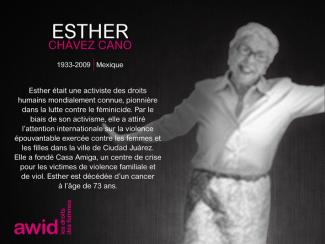
Глобальный опрос «Где деньги для феминистских объединений?» является ключевым элементом третьего этапа нашего исследования, ориентированного на конкретные действия: «Где деньги для феминистских объединений» (короткое название – «Где деньги?»). Результаты опроса будут доработаны и обстоятельно изучены в ходе бесед с активистами и донорами, а также сопоставлены с другими имеющимися аналитическими материалами и исследованиями о состоянии ресурсов феминистских движений и инициатив по достижению гендерного равенства во всем мире.
Полный отчет организации «Где деньги для феминистских объединений?» будет опубликован в 2026 году.
 Чтобы узнать больше о том, как AWID освещает вопросы финансирования феминистских движений, ознакомьтесь с историей инициативы «Где деньги?» и нашими предыдущими отчетами здесь.
Ursula was an American novelist who worked mainly in the genres of fantasy and science fiction.
She found fame with The Left Hand Of Darkness, which imagines a future society where people are ambisexual – they have no fixed sex. It explores the effects of gender and sex in society, and was one of the first major feminist science fiction books. Ursula was inspiring in her subversive and original writing, and also for the themes of feminism and freedom she held so dearly.
In a 1983 address at Mills College in California, she told graduates: “Why should a free woman with a college education either fight Macho-man or serve him? Why should she live her life on his terms? I hope you live without the need to dominate, and without the need to be dominated.”

Comme le remarque l’activiste et chercheuse Soma Kishore Parthasarathy, il existe des conceptualisations diverses de la notion de biens communs.
De manière conventionnelle, ils sont définis comme des ressources naturelles se trouvant en dehors du domaine privé et dont l'usage est affecté à ceux et celles qui en dépendent. Aujourd’hui, ce concept a été élargi pour comprendre, outre les ressources naturelles, les ressources liées aux savoirs, au patrimoine, à la culture, aux espaces virtuels, et même au climat. Le concept de biens communs est antérieur au régime de la propriété privée et il représentait le fondement de l'organisation de la société. Les définitions données actuellement par les entités gouvernementales limitent ce cadre aux ressources foncières et matérielles.
Le concept de biens communs repose sur la pratique culturelle du partage d'espaces de vie et des ressources envisagés comme des cadeaux de la nature, destinés au bien commun et à la viabilité de ces biens communs.
Les biens communs de l’humanité sont de plus en plus menacés par les nations et les forces du marché qui les colonisent, les exploitent et les occupent.
Dans certains contextes favorables, les «biens communs» ont le potentiel d’habiliter les femmes, en particulier les femmes opprimées économiquement, à jouir d’autonomie par rapport à la manière de négocier leurs multiples besoins et aspirations.
Le patriarcat est renforcé lorsque les femmes et d'autres genres opprimés se voient refuser l'accès aux biens communs et au contrôle de ces derniers.
Par conséquent, une économie féministe cherche à rétablir les droits légitimes des communautés vis-à-vis de ces ressources communes. Cette autonomie leur permet de subvenir à leurs besoins, tout en faisant progresser des systèmes de gouvernance plus égalitaires par rapport à l'utilisation de ces ressources. Une économie féministe reconnaît le rôle des femmes et offre l’égalité des chances par rapport à la prise de décision : les femmes ont un accès égalitaire à ces ressources.