
Orouba Barakat
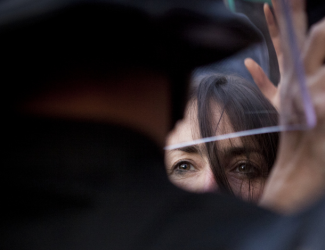
WHRDs are self-identified women and lesbian, bisexual, transgender, queer and intersex (LBTQI) people and others who defend rights and are subject to gender-specific risks and threats due to their human rights work and/or as a direct consequence of their gender identity or sexual orientation.
WHRDs are subject to systematic violence and discrimination due to their identities and unyielding struggles for rights, equality and justice.
The WHRD Program collaborates with international and regional partners as well as the AWID membership to raise awareness about these risks and threats, advocate for feminist and holistic measures of protection and safety, and actively promote a culture of self-care and collective well being in our movements.
WHRDs are exposed to the same types of risks that all other defenders who defend human rights, communities, and the environment face. However, they are also exposed to gender-based violence and gender-specific risks because they challenge existing gender norms within their communities and societies.
We work collaboratively with international and regional networks and our membership
We aim to contribute to a safer world for WHRDs, their families and communities. We believe that action for rights and justice should not put WHRDs at risk; it should be appreciated and celebrated.
Promoting collaboration and coordination among human rights and women’s rights organizations at the international level to strengthen responses concerning safety and wellbeing of WHRDs.
Supporting regional networks of WHRDs and their organizations, such as the Mesoamerican Initiative for WHRDs and the WHRD Middle East and North Africa Coalition, in promoting and strengthening collective action for protection - emphasizing the establishment of solidarity and protection networks, the promotion of self-care, and advocacy and mobilization for the safety of WHRDs;
Increasing the visibility and recognition of WHRDs and their struggles, as well as the risks that they encounter by documenting the attacks that they face, and researching, producing, and disseminating information on their struggles, strategies, and challenges:
Mobilizing urgent responses of international solidarity for WHRDs at risk through our international and regional networks, and our active membership.

Further drafting sessions on the Addis Ababa outcome document
Learn more from the CSO Hitchhiker’s Guide
Existen numerosas razones acerca de por qué tu respuesta a la encuesta ¿Dónde está el dinero? es importante. Entre otras cosas, tienes la oportunidad de compartir tu experiencia con la movilización de financiamiento para apoyar a tu organización, afirmar tu poder como especialista en cómo se mueve el dinero y a quién le llega, y contribuir a la promoción colectiva y continua ante los donantes para movilizar más y mejor financiamiento. Durante los últimos dos decenios, la investigación de AWID ¿Dónde está el dinero? ha demostrado ser un recurso clave para activistas y donantes. Con muchísimo entusiasmo, te invitamos a sumarte a AWID en su tercera edición para poner de relieve el estado real de la dotación de recursos, impugnar las falsas soluciones y señalar cómo el financiamiento necesita cambiar para que los movimientos prosperen y hagan frente a los complejos desafíos de nuestro tiempo.
A geopolitical Analysis of Financing for Development, de Regions Refocus 2015 y Third World Network (TWN) con DAWN
Zero Draft Language Map, de Regions Refocus
Addis Ababa financing conference: Will the means undermine the goals? de RightingFinance
Non, nous reconnaissons l’importance cruciale de votre travail, mais nous ne collectons pas les participations de fonds féministes et de femmes à l’heure actuelle. Nous vous encourageons néanmoins à transmettre cette enquête à vos partenaires bénéficiaires et vos réseaux féministes.
Las Mujeres Sostienen el Cuidado | El Cuidado Sostiene la Vida | La vida Sostiene la Economía | ¿Quién Cuida a las Mujeres? | Ni Una Menos1 | Juntas, Juntos, Juntes | Almuerzo de Domingo
1Ni una menos es un eslogan feminista famoso en América Latina que surgió en Argentina como respuesta a la creciente violencia de género.
Dans le cadre de notre engagement en faveur de l’accessibilité dans tous les aspects du Forum de l’AWID, nous acceptons les formats audio/vidéo pour tous les individus/organisations/groupes qui ne peuvent soumettre de candidature écrite. Si vous décidez d’envoyer votre proposition sous format audio/vidéo, nous vous prions de bien vouloir répondre aux questions dans le même ordre, telles que détaillées dans le Formulaire de proposition d’activité.
Pour soumettre un fichier audio/vidéo, merci de nous contacter via notre formulaire de contact en choisissant « Proposition d'activité » comme sujet de votre message.
For now, the survey on KOBO is available in Arabic, English, French, Portuguese, Russian and Spanish. You will have the chance to select your language of choice at the beginning of the survey.
Les frais d’inscription au Forum de l’AWID pour tou-te-s les participant-e-s couvrent :
Dado que la encuesta ¿Dónde está el dinero? se centra en las realidades de la dotación de recursos para las organizaciones feministas, la mayoría de las preguntas indagan acerca del financiamiento de tu agrupación entre 2021 y 2023. Para responder la encuesta, necesitarás tener a mano cierta información como, por ejemplo, presupuestos anuales y las fuentes clave de financiamiento.
Nous vivons dans un monde où la destruction de la Nature alimente notre économie mondiale actuelle. |
Même en période de crise climatique, les gouvernements continuent d'encourager les industries agricoles à grande échelle à se développer. Ces activités empoisonnent la terre, menacent la biodiversité et détruisent la production alimentaire et les moyens de subsistance locaux. Pendant ce temps, alors que les femmes produisent la majorité de la nourriture dans le monde, elles ne possèdent presque aucune terre. |
|
Et si nous percevions la terre et la Nature non pas comme une propriété privée à exploiter, mais comme une totalité avec laquelle vivre, apprendre et coexister harmonieusement ? Et si nous réparions nos relations avec la terre et adoptions des alternatives plus durables qui nourrissent à la fois la planète et ses communautés? Nous Sommes la Solution (NSS) est l'un des nombreux mouvements dirigés par des femmes qui s'efforcent d'atteindre cet objectif. Voici leur histoire. |
|