Philippe Leroyer | Flickr (CC BY-NC-ND 2.0)

Special Focus

AWID is an international, feminist, membership organisation committed to achieving gender equality, sustainable development and women’s human rights

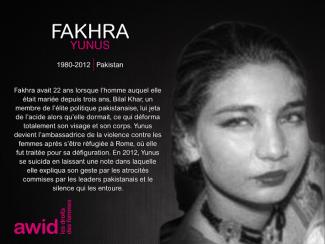
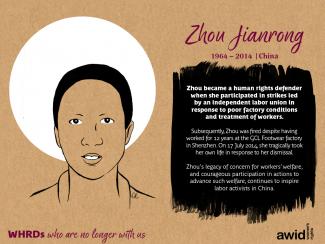
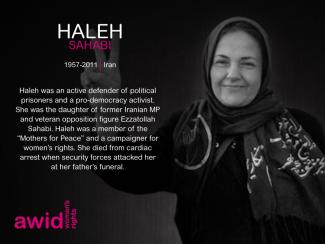
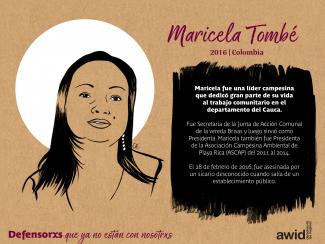
Women Human Rights Defenders

WHRDs are self-identified women and lesbian, bisexual, transgender, queer and intersex (LBTQI) people and others who defend rights and are subject to gender-specific risks and threats due to their human rights work and/or as a direct consequence of their gender identity or sexual orientation.

WHRDs are subject to systematic violence and discrimination due to their identities and unyielding struggles for rights, equality and justice.

The WHRD Program collaborates with international and regional partners as well as the AWID membership to raise awareness about these risks and threats, advocate for feminist and holistic measures of protection and safety, and actively promote a culture of self-care and collective well being in our movements.


Risks and threats targeting WHRDs  

WHRDs are exposed to the same types of risks that all other defenders who defend human rights, communities, and the environment face. However, they are also exposed to gender-based violence and gender-specific risks because they challenge existing gender norms within their communities and societies.

By defending rights, WHRDs are at risk of:

  • Physical assault and death
  • Intimidation and harassment, including in online spaces
  • Judicial harassment and criminalization
  • Burnout

A collaborative, holistic approach to safety

We work collaboratively with international and regional networks and our membership

  • to raise awareness about human rights abuses and violations against WHRDs and the systemic violence and discrimination they experience
  • to strengthen protection mechanisms and ensure more effective and timely responses to WHRDs at risk

We work to promote a holistic approach to protection which includes:

  • emphasizing the importance of self-care and collective well being, and recognizing that what care and wellbeing mean may differ across cultures
  • documenting the violations targeting WHRDs using a feminist intersectional perspective;
  • promoting the social recognition and celebration of the work and resilience of WHRDs ; and
  • building civic spaces that are conducive to dismantling structural inequalities without restrictions or obstacles

Our Actions

We aim to contribute to a safer world for WHRDs, their families and communities. We believe that action for rights and justice should not put WHRDs at risk; it should be appreciated and celebrated.

  • Promoting collaboration and coordination among human rights and women’s rights organizations at the international level to  strengthen  responses concerning safety and wellbeing of WHRDs.

  • Supporting regional networks of WHRDs and their organizations, such as the Mesoamerican Initiative for WHRDs and the WHRD Middle East and North Africa  Coalition, in promoting and strengthening collective action for protection - emphasizing the establishment of solidarity and protection networks, the promotion of self-care, and advocacy and mobilization for the safety of WHRDs;

  • Increasing the visibility and recognition of  WHRDs and their struggles, as well as the risks that they encounter by documenting the attacks that they face, and researching, producing, and disseminating information on their struggles, strategies, and challenges:

  • Mobilizing urgent responses of international solidarity for WHRDs at risk through our international and regional networks, and our active membership.

Related Content

Snippet FEA ASOM Challenges Story 1 (EN)

CHALLENGES:

  • Climate Change
  • Access to financial credit Intermediaries
  • Cultivation for illicit usage

Ma langue ne fait pas partie des langues officielles de l’enquête, et j’ai du mal à y répondre - que puis-je faire?

L’AWID est engagée en faveur de la justice linguistique, et nous regrettons que l’enquête WITM ne puisse, à l’heure actuelle, être accessible dans d’autres langues. Cependant, si vous avez besoin d’une aide à la traduction ou que vous souhaitez participer à l’enquête dans une autre langue, n’hésitez pas à nous contacter à l’adresse witm@awid.org.

這次論壇會召開會前會嗎?

全球和區域的合作夥伴已就論壇會前會的一些想法與我們聯繫,我們將很快分享有關這些想法的更多信息。

如果您打算在論壇之前組織會前會,請告訴我們!

聯繫我們


由諮詢小組組織,AWID資助的2016年黑人女權主義論壇(BFF)湧現出許多美好的事物。BFF產生了一些獨立組織包括巴西的黑人女權組織。儘管今年我們不會再舉辦BFF,但我們仍致力於與有興趣繼續圍繞黑人女權主義組織開展工作的任何人分享一些重要的經驗。

Snippet FEA Barcelona, Spain (ES)

Barcelona, España

Metzineres


Lxs Mujerxs Toman Drogas.

SUPÉRALO

How much time does the survey take to complete?

The estimated time to complete the survey is 30 minutes.

下一屆AWID國際論壇於何時何地舉辦?

第十四屆AWID國際論壇將於西元2021年9月20日至23日在台北举行。

了解詳情

Elisa Badayos

Elisa was the coordinator for the human rights organization Karapatan in Negros Oriental Province in the Philippines.

She also served as an organiser of urban poor communities in Cebu Province, and worked with Desaparecidos, an organization of families of the disappeared.

Elisa and two of her colleagues were killed on November 28, 2017 by two unidentified men at Barangay San Ramon, Bayawan city in the Negros Oriental province during a mission to investigate alleged land rights abuses in the area.

She is survived by four children.


Elisa Badayos, Philippines

Snippet FEA Metzineres has supported (FR)

Depuis sa fondation,

Metzineres a accompagné plus de

383

personnes.

No me siento cómodx al compartir el nombre de mi agrupación o nuestra información de contacto con AWID, ¿aun así debería responder la encuesta?

Absolutamente; esas preguntas son opcionales y valoramos tu derecho a la anonimidad. Te pedimos que respondas la encuesta independientemente de tu decisión de compartir el nombre de tu agrupación, organización o movimiento y la información de contacto con AWID.

Guadalupe Campanur Tapia

Guadalupe fue una activista ambiental comprometida en la lucha contra el crimen en Cherán, México.

En abril de 2011 ayudó a derrocar el gobierno local, y participó en patrullas locales de seguridad, que abarcaban los bosques municipales. Era unx de lxs líderes indígenas de Cherán que llamaban a la población a defender sus bosques contra la tala forestal ilegal y despiadada. Su trabajo en defensa de adultxs mayores, niñxs y trabajadorxs la convirtió en un ícono de su comunidad.

Fue asesinada en Chilchota, México, aproximadamente 30 kilómetros al norte de su ciudad natal de Cherán.


Guadalupe Campanur Tapia, Mexico

Clone of Snippet FEA Environments Of Shelter (FR)

Metzineres fournit les types de soutien suivants, connus sous le nom de

Environnements d'abri :

Illustration of a pink house with a yellow background

La Couverture
Soin et guérison

Illustration of a pink human in white underwear doing a power pose

La puissante
Autoprotection et renforcement

An illustration of a vine with vine like leaves in neon with purple background

Le lierre
Communauté et quartier

Three arms with fist raised: one black, pink, and the last one in purple

Le hurlement
Participation et activisme

Yellow and pink cog wheels

L’audacieux·se
Production et entrepreneuriat

A pink paint palette with a pink brush with yellow details

L’Artisan·e
Art et créativité

Quand les résultats seront-ils disponibles?

L’analyse des réponses nous permettra de tirer des conclusions et de définir des tendances. Les résultats seront présentés à l’occasion du 15e Forum international de l’AWID à Bangkok, et en ligne, en décembre 2024. Inscrivez-vous ici pour participer au Forum!

Winnie Madikizela- Mandela

Winnie a été décrite comme une « militante enflammée » qui a combattu le régime de l’apartheid en Afrique du Sud.

Son engagement lui a valu d’être emprisonnée et placée en cellule d’isolement de nombreuses fois.

Affectueusement surnommée Ma’Winnie, elle était connue pour être quelqu’un qui parlait ouvertement des défis auxquels les femmes noires étaient confrontées pendant et après l’apartheid et cela, après avoir elle-même subi ces brutalités en tant que mère, épouse et militante pendant la lutte. Elle a su transcender l'idée couramment répandue selon laquelle le leadership est fondé sur le genre, la classe ou la race. Bien qu’étant une personnalité controversée, elle était connue par son nom xhosa, « Nomzamo », qui signifie « celle qui supporte les épreuves ».

Ma’Winnie continue d’être une source d’inspiration pour de nombreuses personnes, en particulier des jeunes femmes sud-africaines.

Sa mort a impulsé la naissance d’un mouvement qui a pour mantra : « Elle n’est pas morte, elle s’est multipliée ».


Winnie Madikizela-Mandela, South Africa