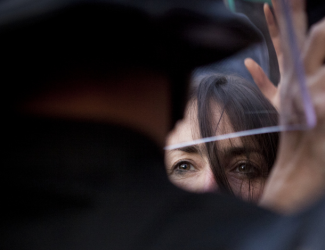
Philippe Leroyer | Flickr (CC BY-NC-ND 2.0)

Special Focus

AWID is an international, feminist, membership organisation committed to achieving gender equality, sustainable development and women’s human rights

Women Human Rights Defenders

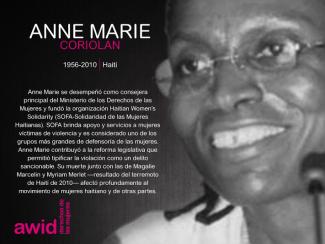
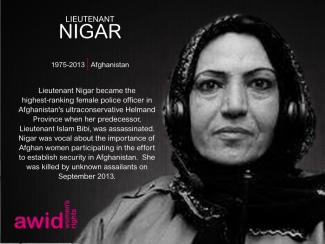
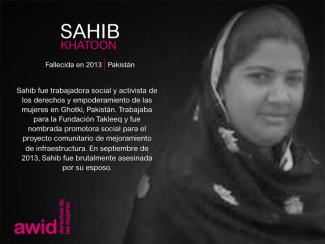
WHRDs are self-identified women and lesbian, bisexual, transgender, queer and intersex (LBTQI) people and others who defend rights and are subject to gender-specific risks and threats due to their human rights work and/or as a direct consequence of their gender identity or sexual orientation.

WHRDs are subject to systematic violence and discrimination due to their identities and unyielding struggles for rights, equality and justice.

The WHRD Program collaborates with international and regional partners as well as the AWID membership to raise awareness about these risks and threats, advocate for feminist and holistic measures of protection and safety, and actively promote a culture of self-care and collective well being in our movements.


Risks and threats targeting WHRDs  

WHRDs are exposed to the same types of risks that all other defenders who defend human rights, communities, and the environment face. However, they are also exposed to gender-based violence and gender-specific risks because they challenge existing gender norms within their communities and societies.

By defending rights, WHRDs are at risk of:

  • Physical assault and death
  • Intimidation and harassment, including in online spaces
  • Judicial harassment and criminalization
  • Burnout

A collaborative, holistic approach to safety

We work collaboratively with international and regional networks and our membership

  • to raise awareness about human rights abuses and violations against WHRDs and the systemic violence and discrimination they experience
  • to strengthen protection mechanisms and ensure more effective and timely responses to WHRDs at risk

We work to promote a holistic approach to protection which includes:

  • emphasizing the importance of self-care and collective well being, and recognizing that what care and wellbeing mean may differ across cultures
  • documenting the violations targeting WHRDs using a feminist intersectional perspective;
  • promoting the social recognition and celebration of the work and resilience of WHRDs ; and
  • building civic spaces that are conducive to dismantling structural inequalities without restrictions or obstacles

Our Actions

We aim to contribute to a safer world for WHRDs, their families and communities. We believe that action for rights and justice should not put WHRDs at risk; it should be appreciated and celebrated.

  • Promoting collaboration and coordination among human rights and women’s rights organizations at the international level to  strengthen  responses concerning safety and wellbeing of WHRDs.

  • Supporting regional networks of WHRDs and their organizations, such as the Mesoamerican Initiative for WHRDs and the WHRD Middle East and North Africa  Coalition, in promoting and strengthening collective action for protection - emphasizing the establishment of solidarity and protection networks, the promotion of self-care, and advocacy and mobilization for the safety of WHRDs;

  • Increasing the visibility and recognition of  WHRDs and their struggles, as well as the risks that they encounter by documenting the attacks that they face, and researching, producing, and disseminating information on their struggles, strategies, and challenges:

  • Mobilizing urgent responses of international solidarity for WHRDs at risk through our international and regional networks, and our active membership.

Related Content

Snippet - CSW68 - AWID In-Person Exhibit Booth - EN

AWID In-Person Exhibit Booth

📅Tuesday, March 12
🕒 9am-5pm EST

🏢Armenian Cultural Center, 630 2nd Ave. corner of 35th St

2008: la Conférence internationale de Doha se déroule avec des résultats limités

Conférence internationale de suivi sur le financement du développement, Doha, Qatar

Snippet FEA ASOM’s activists in encounters (ES)

 
Black woman in a white headscarf and gray t-shirt, she is smiling and is holding a vessel above her head
People demonstrating and holding a long blue poster
Black woman speaking in a mic, there is a black girl standing next to her and a man sitting at the table
Photo of five black women in the front on a demonstration, wearing facemasks and holding posters
Photo of three women sitting around the table and talking in mics.

Activistas de ASOM en encuentros, desfiles y eventos

Snippet - CSW68 - Follow Socials - ES

¡Síguenos!

A través de eventos presenciales, lives en nuestras redes sociales, un stand de exhibición y más. Nos presentamos para convocar, amplificar y apoyar las voces y la participación de nuestra membresía y aliades.

Juntes vamos a Reclamar Nuestro Poder Feminista al elevar las alternativas y visiones feministas en torno a economías que centran los sistemas colectivos de cuidado y nutren tanto al planeta como a las personas.

¡Síguenos en las redes sociales para más detalles sobre cómo participar! Sea parte de las conversaciones utilizando los hashtags #AWIDatCSW68 y #RecuperarNuestroPoderFeminista

Instagram | Facebook | LinkedIn | X (Twitter)

January 2015: 1st drafting session on the outcome document for the 3rd FfD Conference

The 1st drafting session on the outcome document for the 3rd Financing for Development Conference

  • In January 2015 a series of drafting sessions towards the final outcome document started at UN headquarters in New York.
  • Prior to the first drafting session the co-facilitators of the Addis conference preparatory process presented an elements paper for the so-called “zero-draft” outcome document, as the basis for the intergovernmental negotiations of the outcome document.
  • During the sessions, women’s rights organisations emphasised the need to treat the FfD and means of implementations (MOI) under the post 2015 processes separately, because FfD provides a unique opportunity for states to address the structural causes of inequality

Snippet FEA Aura Roig (FR)

Venez rencontrer Aura Roig, militante féministe visionaire, anthropologue, directrice et fondatrice de la coopérative Metzineres.

Elle a consacré les deux dernières décennies à la recherche, à la conception et à la mise en place de politiques de soutien aux personnes qui se droguent, basées sur la réduction des méfaits, les droits humains et le féminisme intersectionnel.

Après avoir expérimenté et appris des communautés qui consomment des drogues dans le monde entier, elle est retournée à Barcelone pour créer la Xarxa de Dones que Usen Drogues (le Réseau des Femmes qui Consomment des Drogues, XADUD). XADUD était un espace d'entraide et de solidarité avec la lutte pour les droits des groupes marginalisés, qui plus tard deviendra la coopérative Metzineres.

Aujourd'hui, Aura travaille à étendre le modèle Metzineres pour prendre en charge des groupes plus grands, tout en documentant de manière approfondie son parcours et son apprentissage prolifiques.

Feminist Realities Magazine

Description
Feminist realities are the living, breathing examples of the worlds we know are possible.
Add to stories
On

Snippet - WITM To share - ES

Para compartir tu experiencia con el financiamiento de tu organización.

Julio 2015

Foro de Mujeres sobre Financiación para la Igualdad de Género

  • Este Foro se realizó el 10 de julio de 2015 en Adís Abeba y reunió a feministas, mujeres de las bases, activistas de género, académicas/os y representantes de organizaciones/redes por los derechos de las mujeres, además de recibir aportes específicos de representantes de la ONU y otras/os hacedoras/es de políticas públicas.
  • Los objetivos del Foro de Mujeres son: compartir información actualizada sobre el estado de las más recientes negociaciones en torno a la FpD; analizar colectivamente el panorama de la FpD y su seguimiento; acordar una postura en común sobre los derechos de las mujeres; y formular estrategias para participar de manera significativa y sustantiva con una perspectiva feminista en la Conferencia sobre la FpD en Adís Abeba.
  • El WWG organizó el Foro de Mujeres en colaboración con FEMNET, el African Women’s Development Fund [Fondo para el Desarrollo de las Mujeres Africanas, AWDF en inglés] y la Post-2015 Women’s Coalition [Coalición de Mujeres por el Post-2015] con el apoyo de ONU Mujeres.

Foro de las OSC en la Conferencia Internacional sobre la FpD

  • El Foro de las OSC en la Conferencia sobre la FpD tuvo lugar en Adís Abeba el 11 y 12 de julio de 2015 con los siguientes objetivos: informar a las OSC participantes sobre el estado del proceso oficial y coordinar la participación de la sociedad civil en la tercera Conferencia sobre la FpD; redactar colectivamente una Declaración del Foro de OSC, así como los mensajes de las OSC para las Mesas Redondas de la Conferencia sobre la FpD, los eventos paralelos organizados por el Grupo de las OSC y cualquier otra oportunidad que pueda surgir; planificar y organizar las futuras áreas de participación de las OSC en el proceso de Financiación para el Desarrollo más allá de la tercera Conferencia sobre la FpD.
  • Para más información, por favor visita el sitio del Grupo de OSC en la Conferencia Internacional sobre la FpD (en inglés) o contacta al Grupo Coordinador de las OSC en Adís Abeba (addiscoordinatinggroup@gmail.com).

Tercera Conferencia Internacional de la ONU sobre la Financiación para el Desarrollo

  • La tercera Conferencia Internacional de la ONU sobre la Financiación para el Desarrollo se realizó en Adís Abeba, Etiopía, del 13 al 16 de julio de 2015 y estuvo centrada en: evaluar los progresos realizados en cuanto a la aplicación del Consenso de Monterrey (2002) y la Declaración de Doha (2008); abordar temas nuevos y emergentes, incluso en el contexto de los recientes esfuerzos multilaterales por promover la cooperación internacional para el desarrollo, teniendo en cuenta el panorama actual y en permanente evolución de la cooperación para el desarrollo, la interrelación entre todas las fuentes de financiación para el desarrollo, las sinergias entre objetivos de la financiación en las tres dimensiones del desarrollo sostenible (económica, social y ambiental) y la necesidad de apoyar el desarrollo de la agenda de Naciones Unidas más allá de 2015; así como revitalizar y fortalecer el proceso de seguimiento a la financiación para el desarrollo.
  • La Agenda de Acción de Addis Ababa fue adoptada el 15 de julio de 2015 por jefes de estado, de gobierno y altos representantes ante las Naciones Unidas.
  • Sin embargo, los países en desarrollo, las organizaciones de la sociedad civil y, más específicamente, las organizaciones de mujeres consideran que la Agenda de Acción de Addis Ababa no logró cumplir su cometido. El Grupo de Trabajo de Mujeres expresó su fuerte decepción y demandó cambios estructurales en la gobernanza económica mundial y la arquitectura para el desarrollo. Puedes leer aquí la reacción al documento final. Cientos de organizaciones y redes de la sociedad civil de todo el mundo también expresaron sus profundas preocupaciones y reservas. Puedes leer aquí la respuesta al documento final.

Snippet FEA Occupation’s kitchen Instagram 2 (EN)

Occupation’s kitchen campaign:

Women sustain Care | Care Sustains Life | Life Sustains Economy | Who takes care of women?  | Not one less1 | Together | Sunday lunch

1Nenhuna a menos literally translates as “not one woman less” or “ni una menos” in Spanish - a famous feminist slogan in Latin America that emerged in Argentina as a response to increasing gender-based violence.

Snippet - WITM Why now_col 1 - EN

Why should I take it now?

A monochromatic orange illustration of a woman with curly hair with her hand on her chin. She seems to inquisitive or posing a question.

Feminist, women’s rights, gender justice, LBTQI+ and allied movements around the world are at a critical juncture, facing a powerful backlash on previously-won rights and freedoms. Recent years have brought the rapid rise of authoritarianism, violent repression of civil society, criminalization of women and gender-diverse human rights defenders, escalating war and conflict in many parts of our world, continued perpetuation of economic injustices, and the intersecting health, ecology and climate crises.

Quel est le thème du 14e Forum de l’AWID ?

Le 14e Forum a pour thème « Réalités féministes: notre pouvoir en action ».

Nous concevons les Réalités féministes comme différentes façons d’exister et d’être qui nous révèlent ce qui est possible, au mépris et malgré les systèmes de pouvoir dominants, et en résistance à ces derniers. Nous concevons ces réalités féministes comme des revendications et des incarnations d’espoir et de pouvoir, et comme des réalités multidimensionnelles, dynamiques et ancrées dans des contextes et des moments historiques spécifiques. 

En savoir plus sur les réalités féministes

Snippet FEA EoS The Howl (EN)

Three arms with fist raised: one black, pink, and the last one in purple

The Howl
Participation and activism