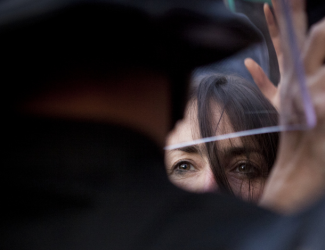
Philippe Leroyer | Flickr (CC BY-NC-ND 2.0)

Special Focus

AWID is an international, feminist, membership organisation committed to achieving gender equality, sustainable development and women’s human rights

Women Human Rights Defenders

WHRDs are self-identified women and lesbian, bisexual, transgender, queer and intersex (LBTQI) people and others who defend rights and are subject to gender-specific risks and threats due to their human rights work and/or as a direct consequence of their gender identity or sexual orientation.

WHRDs are subject to systematic violence and discrimination due to their identities and unyielding struggles for rights, equality and justice.

The WHRD Program collaborates with international and regional partners as well as the AWID membership to raise awareness about these risks and threats, advocate for feminist and holistic measures of protection and safety, and actively promote a culture of self-care and collective well being in our movements.


Risks and threats targeting WHRDs  

WHRDs are exposed to the same types of risks that all other defenders who defend human rights, communities, and the environment face. However, they are also exposed to gender-based violence and gender-specific risks because they challenge existing gender norms within their communities and societies.

By defending rights, WHRDs are at risk of:

  • Physical assault and death
  • Intimidation and harassment, including in online spaces
  • Judicial harassment and criminalization
  • Burnout

A collaborative, holistic approach to safety

We work collaboratively with international and regional networks and our membership

  • to raise awareness about human rights abuses and violations against WHRDs and the systemic violence and discrimination they experience
  • to strengthen protection mechanisms and ensure more effective and timely responses to WHRDs at risk

We work to promote a holistic approach to protection which includes:

  • emphasizing the importance of self-care and collective well being, and recognizing that what care and wellbeing mean may differ across cultures
  • documenting the violations targeting WHRDs using a feminist intersectional perspective;
  • promoting the social recognition and celebration of the work and resilience of WHRDs ; and
  • building civic spaces that are conducive to dismantling structural inequalities without restrictions or obstacles

Our Actions

We aim to contribute to a safer world for WHRDs, their families and communities. We believe that action for rights and justice should not put WHRDs at risk; it should be appreciated and celebrated.

  • Promoting collaboration and coordination among human rights and women’s rights organizations at the international level to  strengthen  responses concerning safety and wellbeing of WHRDs.

  • Supporting regional networks of WHRDs and their organizations, such as the Mesoamerican Initiative for WHRDs and the WHRD Middle East and North Africa  Coalition, in promoting and strengthening collective action for protection - emphasizing the establishment of solidarity and protection networks, the promotion of self-care, and advocacy and mobilization for the safety of WHRDs;

  • Increasing the visibility and recognition of  WHRDs and their struggles, as well as the risks that they encounter by documenting the attacks that they face, and researching, producing, and disseminating information on their struggles, strategies, and challenges:

  • Mobilizing urgent responses of international solidarity for WHRDs at risk through our international and regional networks, and our active membership.

Related Content

I’m trying to submit a proposal but the online form is not working?

For any questions related to the Call for Forum Activities please contact us, selecting Forum Call for Activities as the subject of your email.

Contact us


Asma Jahangir

Asma fue una destacada activista pakistaní por los derechos humanos, valiente crítica de la interferencia de los militares en la política, y firme defensora del estado de derecho.

Fue la fundadora y presidenta de la Human Rights Commission of Pakistan [Comisión de Derechos Humanos de Pakistán, un grupo independiente], y una de las administradoras del International Crisis Group. Obtuvo premios internacionales, y fue Relatora Especial de Naciones Unidas sobre derechos humanos y ejecuciones extrajudiciales.

Es recordada con afecto por sus colegas y amigxs de AWID

«Con su vida, Asma reescribió la historia que a muchas nos contaron, como mujeres. Asma cambió el mundo. Lo cambió en Pakistán, y lo cambió en nuestras imaginaciones.»


Asma Jahangir, Pakistan

Snippet - WITM to claim - FR

Pour revendiquer votre pouvoir en tant qu’experte sur la situation du financement des mouvements féministes.

Chers mouvements féministes : Une lettre du conseil d'administration

Chers mouvements féministes,

Au nom du Conseil d’administration, je souhaite exprimer notre plus profonde gratitude, notre appréciation et tout notre respect pour Hakima Abbas et Cindy Clark, nos deux extraordinaires codirectrices exécutives ces cinq dernières années, qui quittent leurs fonctions pour laisser place à un nouveau leadership de l’AWID, alors que nous entrons dans une nouvelle phase de la vie de notre organisation avec un nouveau plan stratégique. Elles ont systématiquement mis en application les meilleurs principes de leadership organisationnel féministe et d’éthique du soin lorsqu’elles nous guidaient, lors des temps bien troubles et imprévisibles de la récente histoire du monde, cette syndémie de COVID-19 et la spirale politique mondiale descendante qui s’en est suivie. Elles ont tenu l’AWID, notre personnel et notre CA fermement, doucement et avec amour alors que nous éprouvions toutes et tous ces situations inconnues. Elles se sont également accrochées à la vision et à la mission de l’AWID lorsqu’elles ont dû, avec respect et stratégie, réagir aux différents changements, dont la difficile annulation du forum de l’AWID.

La nature, la portée et le poids des responsabilités de la direction de l’AWID nous incitent à choisir de conserver, à l’avenir, ce modèle de codirection. Notre première expérience de cette codirection a été une véritable réussite, comme tout le monde a pu le constater.

Reconnaissant tout à fait le potentiel immense qui existe au sein de l’équipe actuelle, le CA a décidé de privilégier un processus de recrutement en interne dans un premier temps. Nous pensons terminer cette transition d’ici la fin de l’année 2022. Hakima et Cindy décaleront leur départ, pour permettre une transition en douceur vers le nouveau leadership.

Il est difficile pour le Conseil d’administration et d’autres, qui ont travaillé étroitement avec elles et qui les aiment, de voir Cindy et Hakima quitter l’AWID. Rassurez-vous, le CA de l’AWID mène ce processus de transition de manière à ce que les belles marques indélébiles et inspirantes que laissent Hakima et Cindy soient inscrites dans les quatre décennies de notre histoire. Nous assurerons l’arrivée et le soutien de la nouvelle direction et veillerons à ce que ce processus nous inspire à faire mieux encore à cette étape de la vie de l’AWID.

Les grandes transformations dans les organisations ne sont jamais simples ni faciles. Elles sont parfois contraintes, hors du contrôle de quiconque, tendues, voire destructrices. J’ai vu, mais vous aussi, des exemples de telles transitions. Il arrive également que les besoins et les aspirations du personnel soient alignés avec ceux de l’organisation. Bien que nous n’ayons ni choisi ni souhaité le départ de Cindy et Hakima, leur décision et l’entrée de l’AWID dans un nouveau plan stratégique et une nouvelle décennie d’existence sont alignées. Et mieux que tout encore, nous sommes entre les mains merveilleuses, super compétentes, créatives et féministes du personnel et du CA de l’AWID.

Nous vous remercions, chers mouvements féministes, pour votre confiance dans l’AWID. Nous vous demandons également de soutenir notre transition de leadership au cours des mois à venir. Continuons à construire, approfondir et renforcer nos connexions, comme nous le faisons depuis 40 ans.

Nous reviendrons vers vous dans les prochaines semaines pour vous tenir au courant de nos mises à jour et des évolutions concrètes.

Avec solidarité et amour féministes,
Margo Okazawa-Rey,
Présidente, Conseil d’administration de l’AWID

Snippet FEA São Paulo City Center (ES)

Centro de la ciudad de São Paulo

Fuente: Censo de População de Rua, Prefeitura de São Paulo

A woman sitting on the floor on a piece of cloth and a cup for change in front of her
   

Edificios abandonados/desocupados

Illustration of an abandoned, run down building to depict the housing crisis

Personas que viven en la calle


31,000


40.000

How much does registration cost?

This information will only be available when registration opens. 

Olivia Arévalo Lomas

Olivia était la cheffe spirituelle des peuples autochtones Shipibo Konibo.

Sage femme et grand-mère autochtone, elle était connue pour sa préservation de la médecine traditionnelle et des chants sacrés de son peuple (les íkaros). Olivia Arévalo était une défenseure engagée en faveur des droits culturels et environnementaux de son peuple. L’assassinat d’Olivia s’est produit dans un contexte de conflit territorial entre la communauté Shipibo et les entreprises qui souhaitent s’accaparer leurs terres pour cultiver de l’huile de palme.

Les membres de sa communauté ont déclaré: « Sa mort est une agression contre toute la communauté Shipibo. Elle était la mémoire vivante de son peuple ».


Olivia Arévalo Lomas, Peru

Snippet - WITM Why now_col 2 - ES

La dotación de recursos de los movimientos feministas es fundamental para garantizar una presencia más justa y pacífica y un futuro en libertad. En las últimas décadas, los donantes comprometieron una cantidad más considerable de dinero para la igualdad de género; sin embargo, apenas el 1% del financiamiento filantrópico y para el desarrollo se ha destinado real y directamente a dotar de recursos al cambio social encabezado por los feminismos.

Para luchar por la abundancia y acabar con esta escasez crónica, la encuesta ¿Dónde está el dinero? es una invitación a lxs promotorxs feministas y por la justicia de género a sumarse al proceso de la construcción colectiva de razones fundadas y evidencias para movilizar más y mejores fondos y recobrar el poder en el ecosistema de financiamiento de hoy. En solidaridad con los movimientos que continúan invisibilizados, marginados y sin acceso a financiamiento básico, a largo plazo, flexible y fiduciario, la encuesta ¿Dónde está el dinero? pone de relieve el estado real de la dotación de recursos, impugna las falsas soluciones y señala cómo los modelos de financiamiento necesitan modificarse para que los movimientos prosperen y puedan hacer frente a los complejos desafíos de nuestro tiempo.

Love letter to Feminist Movements #3

Love Letter to Feminism

By: Marianne Mesfin Asfaw

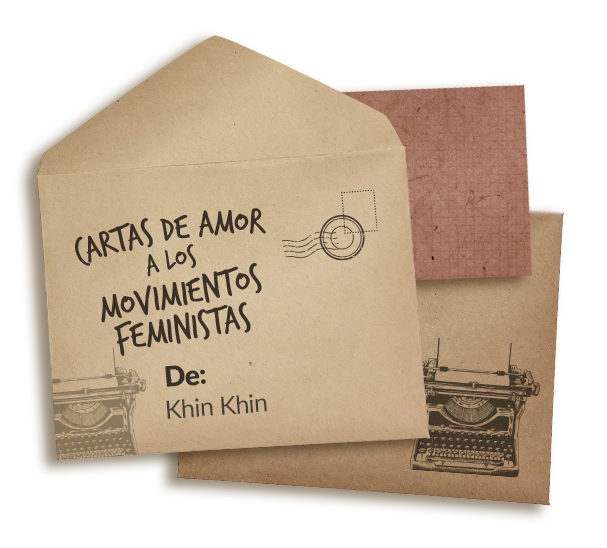
Scrapbook envelopes that say Love Letters to Feminist Movements. The envelope on top says From Marianne Mesfin Asfaw

I have many fond memories in my journey with feminism, but one in particular that stands out. It was during my time at graduate school, at a lecture I attended as part of a Feminist Theory course. This lecture was on African feminism and in it the professor talked about the history of Pan Africanism and the ways in which it was patriarchal, male-centric, and how Pan Africanist scholars perpetuated the erasure of African women. She talked about how African women’s contributions to the anti-colonial and decolonial struggles on the continent are rarely, if ever, discussed and given their due credit. We read about the African feminist scholars challenging this erasure and actively unearthing these stories of African women led movements and resistance efforts. It seems so simple but what stood out to me the most was that somebody put the words African and feminist together. Better yet, that there were many more of us out there wrestling with the complicated history, politics and societal norms in the various corners of the continent and we were all using a feminist lens to do this. I came out of that lecture feeling moved and completely mind-blown. After the lecture three of my friends (all African feminists) and I spent some time debriefing outside the classroom. We were all so struck by the brilliance of the lecture and the content but, more than anything, we all felt so seen. That feeling stood out to me. 

Falling in love feminism was thrilling. It felt like finally getting to talk to your longtime crush and finding out that they like you back. I call it my crush because in high school I referred to myself as a feminist but I didn’t feel like I knew enough about it. Was there a right way to be feminist? What if I wasn’t doing it right? Attending my first Women’s Studies lecture answered some of these questions for me. It was thrilling to learn about stories of feminist resistance and dismantling the patriarchy. I felt so affirmed and validated, but I also felt like something was missing.

Deepening my relationship with feminism through academia, at an institution where the students and teaching staff were mostly white meant that, for those first few years, I noticed that we rarely had discussions about how race and anti-blackness show up in mainstream feminist movements. In most courses we had maybe 1 week, or worse 1 lecture, dedicated to race and we would usually read something by bell hooks, Kimberly Crenshaw’s work on intersectionality, and maybe Patricia Hill Collins. The following week we were back to sidelining the topic. I dealt with this by centring race and black feminism in almost all my assignments, by writing about black hair and respectability politics, the hypersexualization of black women’s bodies, and so much more. Over time I realized that I was trying to fill a gap but didn’t quite know what it was. 

Encountering and learning about African feminism was a full circle moment. I realized that there was so much more I had to learn.

Mainly that my Africanness and my feminist politics did not have to be separate. In fact, there was so much that they could learn from each other and there were African feminists out there already doing this work. It was the missing piece that felt so elusive during my exploration of feminism throughout my academic journey.

Feminism to me is the antithesis to social and political apathy. It also means once you adopt a feminist lens, nothing can ever be the same. My friends and I used to talk about how it was like putting on glasses that you can never take off because you now see the world for what it is, mess and all. A mess you can’t simply ignore or walk away from. Therefore my vow to the feminist movement is to never stop learning, to keep stretching the bounds of my empathy and to never live passively. To dedicate more time and space in my life to feminist movements and to continue to amplify, celebrate, document and cite the work of African feminists. I also commit to centring care and prioritizing pleasure in this feminist journey because we can’t sustain our movements without this.
 

Snippet FEA Occupation’s kitchen Instagram (FR)

Campagne publicitaire d'Ocupação 9 de Julho :

Photo of Cozinha Ocupação 9 de Julho team in aprons
Yellow square that says "As mulheres sustentam o cuidado" or Women sustain care in Portuguese.
Yellow square that says "O cuidado sustenta a vida" or "Care sustains life" in Portuguese.
Yellow square that says "A vida sustenta a economia" or "Life sustains the economy" in Portuguese.
Yellow square that says: "Mas quen cuida das mulheres?" or "But who is taking care of women?" in Portuguese.
A yellow square that says "Nenhuma a menos" which translates to "Not another woman less"
Yellow square that says "Juntas, Juntos, Juntes" which translates to "Together, together, together"
Yellow square announcing Sunday Lunch at the Occupation's Kitchen

Les Femmes Maintiennent les Soins | Les Soins Soutiennent la Vie | La Vie Soutient l'Économie | Qui s'Occupe des Femmes ? | Pas Une de Moins1 | Ensemble | Déjeuner du Dimanche

1Nenhuna a menos se traduit littéralement par « pas une femme de moins » ou « ni una menos » en espagnol - un célèbre slogan féministe en Amérique latine qui a émergé en Argentine en réponse à l'augmentation de la violence sexiste.

What languages will be included in the Forum?

English, French, Spanish and Mandarin.

Carmen Griffiths

Carmen was the Head of the Construction Resource and Development Collective (CRDC) and was instrumental in supporting women’s involvement in the construction industry in Jamaica.

She also worked on issues of disaster preparedness for rural and urban women. She worked closely with women (especially single mothers) teaching them how to use hurricane straps and other technology to secure their homes. She worked in the area of water and sanitation and was a strong advocate for sustainable environmental management and development.

She was a part of the Huairou Commission and advocated for grassroots women on such issues as shelter, energy, and sustainable livelihoods.


Carmen Griffiths, Jamaica

Snippet - WITM Identify opportunities - EN

Identify and demonstrate opportunities to shift more and better funding for feminist organizing, expose false solutions and disrupt trends that make funding miss and/or move against gender justice and intersectional feminist agendas.

Carta de amor a los movimientos feministas #5

Feministas sudanesas: «Una revolución dentro de la revolución»

«Mientras estaba en la primera línea de la protesta, fui sometida a violencia sexual, a lesiones físicas y a otras formas de violencia. Pero no me detendré hasta que logremos pleno gobierno civil en Sudán. Debemos impedir la militarización del Estado. Nuestros cuerpos no deben seguir siendo tratados como campos de batalla»

dijo Amal,1 una manifestante de 23 años.2 

Durante los últimos cuatro años, las mujeres lideraron la revolución en Sudán. Su liderazgo no fue solo callejero, sino que constituyó el poder que impulsó la resistencia constante en todos los niveles. Las mujeres y las jóvenes feministas se convirtieron en la conciencia alerta del movimiento de cambio y democratización sudanés. Desde la primera protesta del 13 de diciembre de 2018 contra el régimen anterior, en la ciudad de Aldmazein, en el área de conflicto del Nilo Azul, las jóvenes estudiantes fueron las voces que demandaron el fin de la dictadura de los militares y los Hermanos Musulmanes, que ya lleva treinta años en el poder.

Love letter to feminist movements from Your dramatically cloaked jungle nymph.

El movimiento feminista, liderado por mujeres de entre 16 y 35 años, ha entablado una revolución dentro de la revolución en Sudán durante los últimos cuatro años de lucha ininterrumpida. Las potentes voces de las jóvenes que ocupan espacios en las calles, las redes sociales, la sociedad civil y las organizaciones políticas se elevaron lo suficiente como para reconfigurar la opinión pública y desafiar las normas sociales. Por primera vez en la historia de Sudán, las discusiones sobre violencia sexual y de género y sobre los tabúes de la violencia doméstica y los procesos de toma de decisiones dominados por los hombres se convirtieron en debates generalizados. Los equipos de fútbol de mujeres designaron voceras ante los comités de resistencia, y los sindicatos profesionales liderados por mujeres son parte de la expresión de la nueva ola del movimiento feminista de Sudán. El logro más importante es que las jóvenes se identifican como feministas en forma orgullosa y pública, en un país regido por el fundamentalismo islámico durante tres décadas. Los jóvenes varones que apoyan el activismo feminista -y se identifican como feministas- son otra señal de progreso notable.

Bajo el actual régimen del golpe militar, las jóvenes que lideran estas iniciativas y los grupos de mujeres que trabajan en el territorio no pueden mencionarse aquí debido a varios problemas de seguridad. Pero su resiliencia, su fuerza y su valentía serán incluidas en los libros de historia. Las audaces jóvenes que encabezan la resistencia en las calles y detrás de las pantallas, y que trabajan en diferentes profesiones y áreas de activismo están dando forma al futuro de Sudán. Las jóvenes feministas de Sudán están creando nuevos espacios para que las narrativas y los discursos feministas reestructuren la distribución del poder a nivel político, económico y social.

A pesar de la inmensa violencia, del resurgimiento del islamismo fundamentalista, de la militarización y de la reducción de los espacios cívicos, las activistas feministas de Sudán se mantienen arraigadas en su sororidad. Siguen siendo una gran inspiración para los movimientos feministas de todo el mundo.


Nazik Awad


1 «Amal» es un seudónimo utilizado para proteger a la joven activista citada.
2 Desde 2018, Sudán vive en una revolución constante. Una nueva ola opositora arrancó a partir del golpe militar del 25 de octubre de 2021.

Snippet FEA Clemencia (EN)

Meet Clemencia Carabalí Rodallega, an extraordinary Afro-Colombian feminist.

She has worked relentlessly for three decades towards the safeguarding of human rights, women’s rights and peace-building in conflict areas on the Pacific Coast of Colombia.

Clemencia has made significant contributions to the fight for truth, reparations and justice for the victims of Colombia’s civil war. She received the National Award for the Defense of Human Rights in 2019, and also participated in the campaign of newly elected Afro-Colombian and long-time friend, vice-president Francia Marquez.

Although Clemencia has faced and continues to face many hardships, including threats and assassination attempts, she continues to fight for the rights of Afro-Colombian women and communities across the country.

What happens to the activity proposals submitted through the CfA?

  1. Activity proposals will initially be screened by AWID staff.
  2. Organizers of shortlisted proposals will then be invited to participate in a voting process, to choose among the shortlisted activities. Those with the most votes will be included in the Forum program. AWID may make a few adjustments to the final selection to ensure our program has an adequate balance across regions, constituencies, issues and methodologies.  
  3. Our Forum Content and Methodology Committee will reach out to the organizers of selected proposals to support them in further developing their activities.

We will update the outcomes of this process in the website in due time.