WHRDs are self-identified women and lesbian, bisexual, transgender, queer and intersex (LBTQI) people and others who defend rights and are subject to gender-specific risks and threats due to their human rights work and/or as a direct consequence of their gender identity or sexual orientation.
WHRDs are subject to systematic violence and discrimination due to their identities and unyielding struggles for rights, equality and justice.
The WHRD Program collaborates with international and regional partners as well as the AWID membership to raise awareness about these risks and threats, advocate for feminist and holistic measures of protection and safety, and actively promote a culture of self-care and collective well being in our movements.
Risks and threats targeting WHRDs
WHRDs are exposed to the same types of risks that all other defenders who defend human rights, communities, and the environment face. However, they are also exposed to gender-based violence and gender-specific risks because they challenge existing gender norms within their communities and societies.
By defending rights, WHRDs are at risk of:
Physical assault and death
Intimidation and harassment, including in online spaces
Judicial harassment and criminalization
Burnout
A collaborative, holistic approach to safety
We work collaboratively with international and regional networks and our membership
to raise awareness about human rights abuses and violations against WHRDs and the systemic violence and discrimination they experience
to strengthen protection mechanisms and ensure more effective and timely responses to WHRDs at risk
We work to promote a holistic approach to protection which includes:
emphasizing the importance of self-care and collective well being, and recognizing that what care and wellbeing mean may differ across cultures
documenting the violations targeting WHRDs using a feminist intersectional perspective;
promoting the social recognition and celebration of the work and resilience of WHRDs ; and
building civic spaces that are conducive to dismantling structural inequalities without restrictions or obstacles
Our Actions
We aim to contribute to a safer world for WHRDs, their families and communities. We believe that action for rights and justice should not put WHRDs at risk; it should be appreciated and celebrated.
Promoting collaboration and coordination among human rights and women’s rights organizations at the international level to strengthen responses concerning safety and wellbeing of WHRDs.
Supporting regional networks of WHRDs and their organizations, such as the Mesoamerican Initiative for WHRDs and the WHRD Middle East and North Africa Coalition, in promoting and strengthening collective action for protection - emphasizing the establishment of solidarity and protection networks, the promotion of self-care, and advocacy and mobilization for the safety of WHRDs;
Increasing the visibility and recognition of WHRDs and their struggles, as well as the risks that they encounter by documenting the attacks that they face, and researching, producing, and disseminating information on their struggles, strategies, and challenges:
Mobilizing urgent responses of international solidarity for WHRDs at risk through our international and regional networks, and our active membership.
Tshegofatso Senne es unx feminista queer negrx con una enfermedad crónica. Buena parte parte de su trabajo se inscribe en el placer, la comunidad y los sueños, para el que se nutre del abolicionismo somático y la discapacidad, la sanación y las justicias transformadoras. Escribiendo, investigando y expresándose sobre cuestiones concernientes al feminismo, la comunidad, la justicia sexual y reproductiva, el consentimiento, la cultura de la violación y la justicia, Tshegofatso ha adquirido ocho años de experiencia teorizando sobre la intersección de estos tópicos con el placer. Tiene su propia actividad comercial, Thembekile Stationery, y la plataforma comunitaria Hedone, un espacio de reunión para analizar y comprender el poder de la toma de conciencia del trauma y el placer en la vida cotidiana. Tshegofatso trabaja con jóvenes de todo el continente, organiza talleres, presta asesoramiento en cuestiones de placer y liberación, y usa la creatividad y la narración como soluciones fractales a las injusticias sociales.
El cuerpo. El hogar más permanente que tenemos.
En el cuerpo, no en el cerebro pensante, es donde experimentamos la mayoría de nuestro dolor, placer y alegría y donde procesamos la mayoría de lo que nos pasa. Es también donde realizamos la mayor parte de nuestra sanación, incluyendo nuestra sanación emocional y psicológica. Y es donde experimentamos la resiliencia y una sensación de fluidez.
Estas palabras, escritas por Resmaa Menakem en su libro My Grandmother’s Hands [Las manos de mi abuela], se han quedado conmigo.
El cuerpo alberga nuestras experiencias. Nuestras memorias. Nuestra resiliencia. Y como ha escrito Menakem, el cuerpo también alberga nuestros traumas. Responde con mecanismos de protección espontáneos para detener o evitar más daños. El poder del cuerpo. El trauma no es el evento mismo; es cómo responden nuestros cuerpos a los eventos que sentimos como peligrosos. A menudo queda atravesado en el cuerpo, hasta que lo abordamos. No se puede convencer a nuestro cuerpo de que no responda, simplemente lo hace.
Utilizando Digital Superpower, la aplicación de Ling Tan, fui registrando cómo se sentía mi cuerpo mientras recorría diferentes partes de mi ciudad, Johannesburgo, Sudáfrica. La aplicación es una plataforma guiada por gestos que te permite registrar tus percepciones mientras te mueves a través de diferentes lugares, cargando y grabando los datos. Yo la usé para registrar mis síntomas psicosomáticos (reacciones físicas conectadas a una causa mental). Podían ser flashbacks. Ataques de pánico. Opresión en el pecho. Un ritmo cardíaco rápido. Dolores de cabeza tensionales. Dolor muscular. Insomnio. Dificultad para respirar. Registré estos síntomas mientras caminaba y recorría distintas partes de Johannesburgo. Y me pregunté.
¿Dónde podemos estar segurxs? ¿Podemos estar segurxs?
Las respuestas psicosomáticas pueden ser causadas por una cantidad de cosas, y algunas no son tan severas como otras. Después de vivir cualquier tipo de trauma, puedes sentir un intenso malestar en eventos o situaciones parecidas. Registré mis sensaciones, ordenadas en una escala del 1 al 5, en la que el 1 representaba las instancias en las que apenas sentí alguno de estos síntomas – me sentía más cómoda que en guardia o nerviosa, mi respiración y mi ritmo cardíaco eran estables, no estaba mirando sobre mi hombro – y el 5 era lo opuesto: los síntomas me tenían cerca del ataque de pánico.
Como persona negra. Como persona queer. Como persona de género queer que puede ser percibida como mujer, dependiendo de cuál sea mi expresión de género ese día.
Me pregunté. ¿Dónde podemos estar segurxs?
Incluso en barrios que se podrían considerar «seguros», me he sentido constantemente en pánico. Mirando alrededor mío para asegurarme de que no me estaban siguiendo, acomodándome la camiseta de manera que no se me noten tanto los pechos, mirando alrededor para asegurarme de encontrar numerosas rutas para salir del lugar en el que estaba si me sintiera en peligro. Un camino vacío provoca ansiedad. Uno atestado también lo hace. Estar en un Uber también. Caminar en un camino público también. Estar en mi departamento también. Y también lo hace recibir una entrega a domicilio en la puerta de entrada del edificio.
¿Podemos estar segurxs?
Pumla Dineo Gqola habla de la fábrica de miedo femenino. Puede o no resultarte familiar, pero si eres alguien socializadx como mujer, conocerás bien esta sensación. La sensación que te hace planificar cada paso que das, ya sea que vayas a trabajar, a la escuela, o simplemente a hacer algún trámite. La sensación de que tienes que fijarte cómo te vistes, cómo actúas, cómo hablas tanto en público como en privado. La sensación en la boca del estómago si tienes que viajar de noche, recibir una entrega a domicilio o tratar con cualquier persona que sigue socializado como hombre cis. Acosadx en la calle, siempre con la amenaza de la violencia. Nuestra existencia en cualquier espacio viene con un miedo innato.
El miedo es tanto un fenómeno individual como sociopolítico. A nivel individual, el miedo puede presentarse como parte de un sistema de alarma saludable y bien desarrollado [...] Cuando pensamos en el miedo, es importante sostener ideas tanto acerca de la experiencia emocional individual como de las maneras políticas en las cuales el miedo ha sido utilizado para el control en diferentes épocas. - Pumla Dineo Gqola, en su libro Rape: A South African Nightmare [La violación, una pesadilla sudafricana]
Las mujeres, femmes y queers sudafricanxs sabemos que cada paso que damos afuera – pasos para hacer las cosas cotidianas: caminar a las tiendas, un taxi al trabajo, un Uber desde una fiesta – todos estos actos son una negociación con la violencia. Este miedo es parte del trauma. Para soportar el trauma que cargamos en nuestros cuerpos, desarrollamos respuestas para detectar el peligro: mirar las respuestas emocionales de aquellxs a nuestro alrededor, leer buscando la «simpatía». Estamos constantemente en guardia.
Día tras día. Año tras año. Vida tras vida. Generación tras generación.
Acerca del desafío adicional de este sistema de defensa aprendido, Bessel Van Der Kolk, autor de The Body Keeps Score [El cuerpo lleva la cuenta], dijo:
Es que perturba esta capacidad de leer a otrxs con precisión, dejando a lx sobreviviente de trauma menos capaz de detectar el peligro o más proclive a percibir erróneamente peligro donde no lo hay. Insume una tremenda cantidad de energía seguir funcionando mientras se carga con la memoria del terror y la vergüenza de la absoluta debilidad y vulnerabilidad.
Como ha dicho Resmaa Menakem, el trauma está en todo. Se infiltra en el aire que respiramos, el agua que tomamos, los alimentos que comemos. Está en el sistema que nos gobierna, en la institución que nos enseña y que también nos trauma y dentro de los contratos sociales que acordamos con lxs demás. Lo que es más importante, lo llevamos con nosotrxs a todos lados a donde vamos, en nuestros cuerpos, mientras nos agota y erosiona nuestra salud y felicidad. Llevamos esa verdad en nuestros cuerpos. Lo hemos hecho durante generaciones.
Así que, mientras camino por mi ciudad, ya sea en un área que es considerada «segura» o no, llevo los traumas de generaciones cuyas respuestas están integradas a mi cuerpo. Mi corazón palpita, se hace difícil respirar, mi pecho se tensa, porque mi cuerpo siente como si el trauma estuviera sucediendo en ese mismo momento. Vivo en hiper vigilancia. Hasta el punto en el que unx está demasiado en guardia como para poder disfrutar plenamente su vida, o demasiado adormecidx para absorber nuevas experiencias.
Para comenzar a sanar, debemos reconocer estas verdades.
Estas verdades que viven en nuestros cuerpos.
Este trauma es lo que nos impide a muchxs vivir las vidas que queremos. Pregunta a cualquier femme o persona queer cómo es para ellxs la seguridad y seguramente te darán ejemplos de tareas simples: ser capaz de simplemente vivir vidas alegres, sin la amenaza constante de la violencia.
Las sensaciones de seguridad, de comodidad y de facilidad, son espaciales. Cuando encarnamos nuestro trauma, afecta las formas en las que percibimos nuestra propia seguridad, afecta las maneras en las que interactuamos con el mundo y altera las maneras en las que somos capaces de experimentar y encarnar cualquier cosa placentera y alegre.
Tenemos que rehusarnos a esta pesada responsabilidad y luchar por un mundo seguro para todxs. Caminando heridxs, como estamos muchxs, somos luchadorxs. El patriarcado puede aterrorizarnos y brutalizarnos, pero no abandonaremos la lucha. Cada vez que salimos a la calle, desafiando el miedo de maneras espectaculares y aparentemente insignificantes, nos defendemos y hablamos en nuestro propio nombre. - Pumla Dineo Gqola, en su libro Rape: A South African Nightmare [Violación, una pesadilla sudafricana]
¿Dónde podemos estar segurxs? ¿Cómo comenzamos a defendernos, no solo en el sentido físico, sino en sentido emocional, psicológico y espiritual?
«El trauma nos convierte a todxs en armas», dijo adrienne maree brown en una entrevista realizada por Justin Scott Campbell. Y su obra, Pleasure Activism [Activismo del placer], nos ofrece numerosas metodologías para sanar ese trauma y afianzarnos en la comprensión de que la sanación, la justicia y la liberación también pueden ser experiencias placenteras. Especialmente quienes estamos más marginadxs, quienes puede que hayamos sido criadxs para equiparar el sufrimiento con «El trabajo». El trabajo que nos hemos tomado tantxs como activistas, constructorxs de comunidades, aquellxs que atienden a lxs más marginadxs, El trabajo que luchamos por hacer, quemándonos y raramente cuidando nuestras mentes y cuerpos. La alternativa es hacernos más conscientes de nuestro trauma, capaces de identificar nuestras propias necesidades y encarnar eso profundamente. Ese encarnar significa simplemente que somos más capaces de experimentar el mundo a través de los sentidos y las sensaciones en nuestros cuerpos, reconociendo lo que nos dicen, en vez de suprimir e ignorar la información que nos están comunicando.
Estar en conversación constante con nuestro cuerpo vivo y sostener intencionalmente esas conversaciones nos conecta más profundamente con lo encarnado, nos permite hacer tangibles las emociones que sentimos cuando interactuamos con el mundo, amigarnos con nuestros cuerpos y entender todo lo que están tratando de enseñarnos. Cuando entendemos que el trauma y el encarnar están acoplados, podemos comenzar la sanación y acceder al placer más integralmente, saludablemente, y en nuestras vidas cotidianas sin vergüenza ni culpa. Podemos comenzar a acceder al placer como una herramienta para el cambio individual y social, aprovechando el poder de lo erótico, como lo describió Audre Lorde. Un poder que nos permite compartir la alegría a la que accedemos y que vivimos, ampliando nuestra capacidad para la felicidad y entendiendo que somos merecedorxs de ello, incluso con nuestro trauma.
Aprovechar el placer y la encarnación de lo erótico nos da la amplitud de estar deliberadamente vivxs, sintiéndonos afianzadxs y estables y entendiendo nuestros sistemas nerviosos. Nos permite entender y descargarnos del equipaje generacional que hemos estado acarreando sin darnos cuenta; podemos tener el poder que nos da el conocimiento de que incluso tan traumatizadxs como estamos, tan traumatizadxs como podríamos estar en el futuro, aún somos merecedorx de vidas placenteras y alegres, que podemos compartir ese poder con nuestra gente. Es el aspecto comunitario lo que está faltando en la forma en que nos cuidamos; el autocuidado no puede existir sin cuidado comunitario. Somos capaces de sentir una confianza, seguridad y poder internos más profundos en nosotrxs mismxs, especialmente de cara a traumas futuros que van a ser disparadores, sabiendo cómo tranquilizarnos y estabilizarnos. Todo este entendimiento nos lleva a un poder interior más profundo que tiene recursos para enfrentar cualquier desafío que surja en nuestro camino.
Como somos lxs que vivimos con profundos traumas generacionales, nos hemos vuelto desconfiadxs y quizás pensemos que somos incapaces de contener y acceder al poder que tenemos. En «Los usos de lo erótico: lo erótico como poder», Lorde nos enseña que lo erótico nos ofrece una fuente de recarga, una forma de exigir lo mejor para nosotrxs y para nuestras vidas.
Porque lo erótico no es solo se trata de lo que hacemos, es una cuestión de con cuánta intensidad y plenitud podemos sentirnos mientras lo hacemos. Una vez que sabemos en qué medida somos capaces de sentir esa sensación de satisfacción y completitud, podemos observar cuál de nuestros diversos esfuerzos vitales nos lleva más cerca de esa plenitud.
No digo nada de esto livianamente, sé que es más fácil decirlo que hacerlo. Sé que muchxs de nosotrxs estamos impedidxs de entender estas verdades, de internalizarlas o incluso de sanarlas. La resistencia viene con momentos de inseguridad, pero no es imposible. Resistir las estructuras de poder que mantienen a salvo a lxs más poderosxs siempre pondrá en peligro a quienes fuimos empujadxs a los márgenes. Reconocer los traumas que has enfrentado es una recuperación de tus experiencias vividas, las que han pasado y las que vendrán; es la resistencia la que encarna el conocimiento de que somos merecedorxs de algo más que las migajas que estos sistemas nos han obligado a engullir. Es una resistencia que entiende que el placer es complicado por el trauma, pero que se puede acceder a él de formas arbitrarias y poderosas. Es una resistencia que reconoce que nuestro trauma es un recurso que nos conecta entre nosotrxs y que nos puede permitir mantenernos mutuamente a salvo. Es una resistencia que entiende que incluso con el placer y la alegría esto no es una utopía; aún causaremos y recibiremos daño, pero estaremos mejor equipadxs para sobrevivir y prosperar en una comunidad de cuidados diversos y amabilidad. Una resistencia que da paso a la sanación y la conexión con nuestro ser plenamente humanxs.
Sanar nunca será un recorrido fácil y optimista, pero comienza con el reconocimiento de la posibilidad. Cuando la opresión nos hace creer que el placer no es algo a lo que todxs podamos tener igual acceso, una de las maneras en las que comenzamos a hacer el trabajo de reclamar nuestro ser pleno – nuestro ser completo y liberado – es reclamando nuestro acceso al placer.
En su artículo en Pleasure Activism (con el cual ha contribuido), Leah Lakshmi Piepzna-Samarasinha ha dicho:
Sé que para la mayoría de la gente las palabras «cuidado» y «placer» ni siquiera pueden estar en la misma oración. Todxs estamos empapadxs en un odio capacitista hacia los cuerpos que tienen necesidades, y nos dan una opción realmente de mierda: o no tener necesidades para conseguir tener autonomía, dignidad y control sobre nuestra vida o admitir que necesitas cuidado y perder todo lo anterior.
¿Qué poder tiene esto? Entendemos nuestros traumas, de este modo, entendemos los de otrxs; encarnamos las sensaciones que experimentamos y vamos hacia ellas en vez de distraernos y evitarlas. Accedemos al placer de maneras que nos hacen querer compartir esa alegría con quienes son nuestra comunidad. Cuando tenemos conciencia del trauma, nos damos más lugar para experimentar todo esto y nos damos, a nosotrxs y a otrxs, el permiso para sanar. Imagina una comunidad en la cual todxs tienen acceso, recursos y tiempo para vivir vidas placenteras, en la forma que sea que quieran y merezcan; en la cual los traumas territoriales están mitigados porque las personas que los ocupan son conscientes del trauma y están llenas de cuidado tierno. ¿No es eso sanador? ¿No es eso trabajar los traumas generacionales? ¿No construye y sostiene eso futuros más sanos para todxs?
Es tiempo de que reconectemos con el conocimiento ancestral de que merecemos vivir vidas plenas. Necesitamos volver a estar en contacto con nuestro derecho natural a la alegría y a existir para nosotrxs. A sentir placer simplemente por el hecho de sentirlo. A no vivir vidas de terror. Suena radical, se siente radical. En un mundo donde hemos sido socializadxs y traumatizadxs para el entumecimiento, para el miedo, para sentirnos y seguir estando impotentes, para ser codiciosxs y vivir con temas estructurales que nos llevan a la enfermedad mental, qué regalo y qué maravilla es empezar a sentir, a estar en comunidad con quienes sienten, a ser sanamente interdependientes, a amarnos mutuamente. Sentir es radical. El placer es radical. Sanar es radical.
Tienes permiso para sentir placer. Tienes permiso para bailar, crear, hacerte el amor a ti mismx y a otrxs, celebrar y cultivar la alegría. Te aliento a que lo hagas. Tienes permiso para sanar. No te lo guardes dentro, no intentes atravesar este momento solx. Tienes permiso para hacer el duelo. Y tienes permiso para vivir. - adrienne maree brown, «You Have Permission» [Tienes permiso]
La encarnación somática nos permite explorar nuestro trauma, trabajarlo y establecer conexiones significativas con nosotrxs mismxs y con el colectivo. Hacer esto a lo largo del tiempo sostiene nuestra sanación; al igual que el trauma, la sanación no es un evento de una única vez. Esta sanación nos ayuda a avanzar hacia la liberación individual y colectiva.
En «A Queer Politics of Pleasure» [Una política queer del placer], Andy Johson habla acerca de las formas en las que hacer que el placer sea queer nos ofrece fuentes de sanación, aceptación, liberación, juego, plenitud, desafío, subversión y libertad. ¡Qué amplio! Cuando encarnamos el placer en formas que son tan integrales, tan queer, somos capaces de reconocer la limitación.
Hacer que el placer sea queer también nos plantea las preguntas que entrecruzan nuestros sueños con nuestras realidades de vida.
¿Quién es libre o consideradx suficientemente valiosx para sentir placer? ¿Cuándo se tiene permitido sentir placer o satisfacción? ¿Con quién se puede sentir placer? ¿Qué clase de placer es accesible? ¿Qué nos limita para acceder a todo nuestro potencial erótico y de satisfacción? - Andy Johnson, «A Queer Politics of Pleasure» [Una política queer del placer]
Cuando nuestras prácticas de placer conscientes del trauma están basadas en el cuidado comunitario, comenzamos a responder algunas de estas preguntas. Comenzamos a entender el potencial liberador. Como activistas del placer, esta es la realidad en la que nos afirmamos. La realidad que dice: mi placer puede ser fractal, pero tiene el potencial de sanarme no solo a mí y a mi comunidad, sino a futuros linajes.
Soy un sistema entero; somos sistemas enteros. No somos solo nuestros dolores, solo nuestros miedos ni solo nuestros pensamientos. Somos sistemas enteros preparados para el placer y podemos aprender cómo decir sí desde adentro. - Prentis Hemphill, entrevistadx por Shar Jossell
Hay un mundo de placer que nos permite comenzar a entendernos integralmente, de formas que nos dejen lugar para reconstruir las realidades que afirman que somos capaces y merecedorxs de placer cotidiano. El BDSM, uno de mis placeres más profundos, me permite dar un vistazo a estas realidades en las que puedo tanto sentir como sanar mi trauma, así como sentir innumerables oportunidades para decir sí desde adentro. Mientras que el trauma me mantiene estancada en un ciclo de luchar o huir, el bondage , el estar de rodillas, el impacto y el juego de asfixia me alientan a mantenerme en tierra y conectadx, reconectando con la reparación. El placer que es lúdico me permite sanar, identificar dónde está guardada en mi cuerpo la energía traumática y enfocarla ahí. Me permite expresar las sensaciones que siente mi cuerpo a través de gritos de dolor y de placer, expresar mi no sin miedo y deleitarme en el puto sí. Con un plan de seguridad, cuidado posterior y una comprensión profunda del trauma, lo retorcido ofrece un lugar para el placer y la sanación que es invaluable.
Así que tanto si tu placer es cocinar una comida a tu gusto, tener sexo, pasar el día en la cama con tu gente, participar en colectivos de cuidado de personas con discapacidad, que alguien te escupa en la boca, ir a excursiones accesibles, tener citas tiernas, asistir a una fiesta bailable en línea, dedicar tiempo a tu jardín, ser ahogadx en un calabozo, espero que lleves el placer contigo donde sea que vayas. Espero que te sane a ti y a tu gente.
Reconocer el poder de lo erótico en nuestras vidas puede darnos la energía para buscar un cambio genuino en nuestro mundo. - Audre Lorde, «Uses of the Erotic: The Erotic as Power» [Los usos de lo erótico: lo erótico como poder]
ExplorarCorporalidades Transnacionales
Esta edición en alianza con Kohl: una publicación para Body and Gender Research analizará soluciones, propuestas y realidades feministas para transformar nuestro mundo actual, nuestros cuerpos y nuestras sexualidades.
نصدر النسخة هذه من المجلة بالشراكة مع «كحل: مجلة لأبحاث الجسد والجندر»، وسنستكشف عبرها الحلول والاقتراحات وأنواع الواقع النسوية لتغيير عالمنا الحالي وكذلك أجسادنا وجنسانياتنا.
Dilma Ferreira Silva was a leading Amazonian rights activist who fought for decades for the rights of people affected by dams.
She herself was among the 32,000 people displaced by the Tucuruí, a mega-hydroelectric power plant, built in Brazil during the 1964-1985 military dictatorship.
In 2005 Dilma was invited to join the Movement of Dam-Affected Peoples in Brazil (MAB), and in 2006 she formed the women’s collective, eventually becoming regional coordinator of the movement.
In speaking about her activism, her colleagues commented:
“She stood out very fast because she was always very fearless in the struggle.”
Dilma lived in the rural settlement of Salvador Allende,50 kilometers from Tucuruí, and dedicated her life to better protect communities and the land affected by the construction of mega projects. She was especially concerned with the gendered impacts of such projects and advocated for women’s rights.
At a national MAB meeting in 2011, Dilma spoke to women affected by the dams, saying:
“We are the real Marias, warriors, fighters who are there, facing the challenge of daily struggle”.
In the following years, Dilma organized grassroots MAD groups and worked with the community to form farming cooperatives that created a better distribution of food for the community. They improved the commercialization of fishing, and developed a cistern project for safe drinking water. She was also an advocate for farmers whose lands were being coveted by ‘grileiros’ (land grabbers).
On 22nd March 2019, at the age of 48, Dilma, her husband and their friend were all brutally murdered. The three killings came as part of a wave of violence in the Amazon against the Movimento dos Trabalhadores Sem Terra (translates as ‘landless workers’ movement’), environmental and indigenous activists.
📅 Wednesday, March 12, 2025
🕒 6.30–8:00pm EST
🏢 Church Center of the United Nations, 777 United Nations Plaza, New York, NY 10017
🎙️Co-facilitated by: Inna Michaeli, Co-Executive Director
Organizer: Jass, Gender at Work, and Count Me In! Consortium
40 Años de AWID: El Álbum
Reunir, sembrar, irrumpir
En 2022, en AWID celebramos los 40 años de nuestra fundación. Estamos aprovechando este momento para reflexionar sobre nuestro pasado y aprender sobre el camino transitado, como preparación para poner nuestra mira al futuro y construir trayecto de ahora en adelante. A medida que avanzamos a través de ciclos de crecimiento y retroceso, comprendemos que las luchas por los derechos de las mujeres y la justicia de género son iterativas y nunca lineales.
En colaboración con la artista Naadira Patel, creamos un álbum que resalta algunos momentos de las últimas cuatro décadas de apoyo a los movimientos feministas por parte de AWID. No hicimos todo eso solxs. Lo compartimos con profunda apreciación por la constelación de activistas y grupos feministas que hicieron posible ese trabajo. En este contexto de tantas crisis convergentes, escogimos esta oportunidad para celebrar el poder y la resiliencia de los movimientos feministas en el mundo.
"Pero, ¿ fue el maestro alguna vez
seducido por el poder?
¿Alguna vez se rompió
un sistema con aceptación ?
¿Cuándo el JEFE te entregará el poder con amor?
¿En Jo'Burg, en Cancún o en la ONU? - Molara Ogundipe
En una entrevista, realizada en la Feria Internacional del Libro de Ghana de 2010, Molara Ogundipe se presentó con estas palabras "...Soy una nigeriana. He vivido, posiblemente, en todo el mundo, excepto en la Unión Soviética y China".
A través de los diferentes continentes y países, la profesora Ogundipe enseñó literatura comparada, escritura, género y filología inglesa, y utilizó la literatura como vehículo para la transformación social y el replanteamiento de las relaciones de género.
Molara Ogundipe, como pensadora, escritora, editora, crítica social, poeta y activista feminista, logró combinar el trabajo teórico con la creatividad y la acción práctica. Se la considera una de las principales voces críticas de los feminismos africanos, los estudios de género y la teoría literaria.
Molara acuñó el concepto de "estiwanismo" a partir de las siglas STIWA (Social Transformations in Africa Including Women) [Transformaciones Sociales en África Incluyendo a las Mujeres], con el fin de reconocer la necesidad de “alejar la definición del feminismo y los feminismos en relación con Euro-América u otro lugar, y declamar lealtades o deslealtades". Con su obra fundamental, "Recreándonos Nosotras Mismas", de 1994, Molara Ogundipe (publicada bajo el nombre de Molara Ogundipe-Leslie) dejó tras de sí un inmenso cuerpo de conocimientos que descolonizó el discurso feminista y "re-centró a las mujeres africanas en sus completas y complejas narrativas... guiadas por una exploración de la liberación económica, política y social de las mujeres africanas y la restauración de la agencia femenina en las diferentes culturas de África".
Comentando los retos a los que se enfrentó como joven académica, dijo:
"Cuando empecé a hablar y escribir sobre el feminismo a finales de los años sesenta y en los setenta, se me veía como una chica buena y admirable que se había extraviado, una mujer cuya cabeza se había arruinado con un exceso de aprendizaje".
Molara Ogundipe se destacó por su liderazgo a la hora de combinar el activismo con el mundo académico; en 1977 fue una de las fundadoras de la Asociación de Mujeres en la Investigación y el Desarrollo, AAWORD (por sus siglas en inglés),. En 1982 fundó Mujeres en Nigeria, WIN (por sus siglas en inglés), con el fin de abogar por un acceso pleno a los "derechos económicos, sociales y políticos" para las mujeres nigerianas. Posteriormente, estableció y dirigió la Fundación Internacional para la Educación y el Monitoreo y pasó muchos años en el consejo editorial del periódico The Guardian.
Luego de haber crecido con el pueblo yoruba, sus tradiciones, cultura e idioma, dijo una vez:
"Creo que la celebración de la vida, de las personas que mueren después de una vida llena de logros, es uno de los aspectos más hermosos de la cultura yoruba".
El nombre de alabanza yoruba 'Oiki' de Molara era Ayike. Molara nació el 27 de diciembre de 1940 y falleció el 18 de junio de 2019 a la edad de 78 años, en Ijebu-Igbo, Estado de Ogun, Nigeria.
Le Forum est un exemple vivant de ce que le grand NOUS peut faire. Nous allons au Forum, nous sommes des graines, nous sommes ensuite semées. Nous devons célébrer cela. - Sara Abu Ghazal, Liba
Snippet - WCFM Movement and Struggle - EN
Movement in focus:
Filter your search by funders’ priority support areas that speak to your organizing efforts
Le(s) plaisir(s) comme clé de liberté personnelle
Par Nkhensani Manabe
Le titre de la conversation « Pansexuel, Gynasexuel ou Abrosexuel ? Une plongée dans la queerness, le plaisir et la positivité sexuelle » donne matière à réflexion. Tiffany Kagure Mugo, auteure, éducatrice et programmatrice de HOLAAfrica, commence la discussion par une lecture de Touch, une collection récemment publiée d'essais de fiction et de non-fiction sur le sexe, la sexualité et le plaisir. Dans cet extrait, l'auteure avance l'idée que le plaisir est constant et continu, qu'il se retrouve dans les activités quotidiennes et ne se limite pas aux relations sexuelles.
Cette idée, du plaisir faisant autant partie de la vie quotidienne qu'autre chose, guide la discussion, couvrant également les thèmes du désir, de l'attirance et de l'orientation sexuelle.
Dès le départ , il y a ce sentiment d'espoir et de possibilité. Tiffany présente des options et explique les alternatives, nous donnant un nouveau langage pour parler de qui nous sommes, de ce que nous aimons et de comment nous le voulons. Il est question de désir et de sexe, mais surtout de connaissance de soi et d'autonomisation. Tiffany parle avec passion du fait de prendre des décisions à partir d'un lieu de pouvoir : apprendre de sa propre identité afin de pouvoir faire les meilleurs choix pour soi-même.
Dans une discussion ouverte et libre, représentant l'attitude que Tiffany voudrait que nous adoptions tou·te·s, nous apprenons que les savoirs sur le sexe et la sexualité sont en constante évolution, et que leurs limites se déplacent. Ce qu’on a peut-être appris ou, plus important encore, ce dont nous avons été tenus à l'écart en tant qu'enfants ou adultes, est précisément le point de départ pour désapprendre et se déprogrammer. Tiffany souligne que les jeunes de nos jours ont besoin d'outils pour comprendre les expériences qu'iels vivent déjà, un rappel sur le fait de ne jamais sous-estimer ce que les enfants et les adolescent·e·s savent sur le type de plaisir(s) qu’iels poursuivent dans la vie.
La conversation m’a ouvert l’esprit sur un point : me connaître m'aidera à prendre confiance en moi ; je pourrai aborder les relations en prenant soin non seulement de moi-même mais des autres. Apprendre le langage de l'orientation, de l'attirance, du désir et du plaisir contribuera à approfondir mes relations futures. J'ai apprécié le fait d'avoir un espace pour réfléchir à cet aspect de ma vie - ces parties privées et intimes auxquelles je n'accède pas souvent. L'enthousiasme de Tiffany pour le plaisir et l'identité a repoussé mes propres limites et m’a permis d'ouvrir de nouvelles possibilités personnelles.
L'idée d'apprendre à établir des liens holistiques n'est pas encore courante. Globalement, nous vivons dans une culture de connexions instantanées et éphémères. Il n'y a pratiquement jamais de temps pour réfléchir réellement à la raison et au type de relation ou de partenariat que nous recherchons - du moins, pas avant une période de crise.
Bien sûr, il existe des espaces dédiés à accueillir les questions et les discussions, tels que le festival AWID Crear Résister Transform et d'autres plateformes ou publications en ligne de pensée libre - mais l'accès à l'information à partir d'une source utile et sans jugement est toujours laborieux . Cela peut être dû en partie au fait que les gens ne font pas confiance au langage de la sexualité et du plaisir.
La notion de langage et d'outils se répète tout au long de la présentation. Tiffany et ses collègues assurent la fonction de parler, d'enseigner et d’alimenter. Voir ce dont les personnes ont besoin, où elles se trouvent, ce qu'elles veulent pour elles-mêmes et marcher à leurs côtés pendant qu'elles construisent leurs mondes idéaux. Leur donner de nouveaux mots et définitions pour les aider à façonner leurs identités à différentes étapes de leur vie.
Les conversations de ce type sont nécessaires, même dans une société qui diffuse à tout moment une myriade de messages sur la santé, plus ou moins détaillés. Les gens ont parfois besoin d’être tirés à l'écart pendant les grands moments collectifs et encouragés à connaître leurs opinions et leurs désirs individuels. C'est ce que fait le discours de Tiffany : il donne aux gens un espace au sein du plus grand puzzle.
Un des points phares de l’intervention de Tiffany était la partie sur les différents types d'attractions.
Sexuel - signifie le désir exprimé d'avoir des relations avec une ou plusieurs personnes Sensuel - le désir de toucher une ou plusieurs personnes, d'être physiquement proche sans nécessairement avoir des rapports sexuels Romantique - le désir de sortir ou d'être en relation avec une ou plusieurs personnes Platonique - le désir de nouer des amitiés étroites Esthétique - le désir de regarder et d'apprécier l'apparence d'une ou de plusieurs personnes
Ces cinq types ou niveaux d'attraction offrent un raccourci du désir et du plaisir, et aident à contextualiser les différents types de plaisir que les gens peuvent éprouver.
Penser l'attirance au-delà du physique ou du sexuel offre une nouvelle perspective sur les liens. C'est une chance de relâcher la pression sur les relations, ouvrant des opportunités pour des partenariats différents, plus éclairés et épanouissants.
Cette liberté et ces connaissances soulignées par Tiffany constituent une feuille de route pour l'avenir. La présentation a ainsi offert une perspective nouvelle sur ce qui est possible.
Comme le soulignait l'extrait d'ouverture, le plaisir est continu. À la lumière de la discussion de Tiffany, il devient clair que le plaisir est également dynamique et excitant. Il y a toujours plus à apprendre.
Cela peut être intimidant au début, mais de l'autre côté de l'hésitation, il y a de l'espoir, du potentiel et de la liberté.
Out Run (2016) English | Tagalog with English subtitles
Mobilizing working-class transgender hairdressers and beauty queens, the dynamic leaders of the world’s only LGBT political party wage a historic quest to elect a trans woman to the Philippine Congress.
Yamile Guerra était une avocate bien connue, leader communautaire et activiste politique dans la région de Santander en Colombie.
Activement impliquée dans la résolution de litiges entre les communautés locales et les promoteurs immobiliers, elle s’est battue contre l’appropriation des terres illégale. Yamile a occupé plusieurs fonctions politiques, dont celle de secrétaire générale du gouvernement de Santander à Bogota, et s’était également présentée comme candidate à la mairie de Bucaramanga. Au cours des dernières années de sa vie, Yamile s’était de plus en plus impliquée dans les causes environnementales, et particulièrement celle de la défense de la biodiversité des zones humides de Santurbán, une région qui approvisionnait près de deux millions de personnes en eau potable, contre les promoteurs du développement économique.
D’après sa famille et ses ami·e·s, Yamile recevait quotidiennement des menaces de mort et avait demandé la protection des autorités.
« Elle était tout à fait consciente de la question [du litige foncier] et avait à plusieurs reprises mentionné qu’elle se sentait en danger. » - Alixon Navarro Muñoz, journaliste et amie de la famille Guerra
Le 20 juillet 2019, Yamile a été tuée par balles par deux hommes à Floridablanca, Santander. Elle venait de clore une discussion avec eux en lien avec le litige foncier. Un suspect a ensuite été arrêté pour son meurtre, lequel a admis avoir été payé pour organiser son assassinat. Selon des rapports, Yamile est la troisième membre de sa famille a avoir été assassinée, en lien avec des litiges fonciers. Son père, Hernando Guerra, avait lui aussi été assassiné plusieurs années auparavant.
L’assassinat de Yamile s’inscrit dans une vague de violences et de meurtres systématiques de centaines d’activistes sociaux et défenseur·e·s des droits humains en Colombie. L’Institut d’études sur le développement et la paix (INDEPAZ) rapporte qu’au moment du décès de Yamile, plus de 700 leaders communautaires et activistes pour les droits humains ont été tué·e·s depuis la signature en août 2016 d’un traité de paix par la Colombie. La plupart furent assassiné·e·s pour s’être opposé·e·s à des trafics de drogue et des opérations minières; y compris les peuples autochtones, les Afro-Colombiens et les défenseures des droits humains étant les plus exposé·e·s.
Moins d’une semaine après le décès de Yamile, des milliers de Colombien·ne·s ont manifesté dans les petites et grandes villes, brandissant des photos en noir et blanc d’activistes tué·e·s, et sur lesquelles était écrit : « Il ne peut y avoir de paix sans leaders » et « Fini les bains de sang ».
Yamile Guerra n’avait que 42 ans au moment de son assassinat.
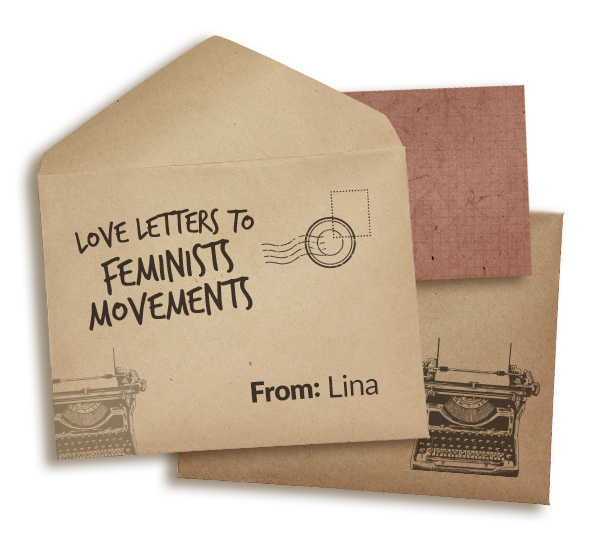
I have belonged to you for as long as I can remember. As a young girl, I did not know there was a word -feminist- for us people, who aspire to overcome and dismantle the patriarchy, who seek refuge in the arms of inclusion and intersectionality, who treat people as equals regardless of their gender, race, sexuality, religion, and ethnicity, who are constantly learning to do better, to be better and to use their privilege to uplift others.
When I was 14, my middle school French teacher, a 6ft tall thirty-year-old man, assaulted a female student in my class in front of all of us. The student, who was a childhood friend of mine, and several girls in my class went to the headmaster to report him, parents got involved, and the entire class of 30 students vouched for the girl. But all our attempts to hold him accountable failed and the administration covered up the girl’s story and he never got fired or persecuted. The girls in my class and I were outraged so we did what every young raging feminist would do. WE EGGED HIS CAR! and though the eggs get washed off easier and the paint we used to write “Pig” and “Khamaj '' -scumbag- needed to get scrubbed off. I will never forget how that made us girls feel. Liberated, enraged, happy, close-knit, and in power. The same feeling replicates in every feminist setting I have been in ever since. The teen feminist in me grew up to join Women Deliver, AWID, Unootha, facilitate feminist workshops at university, and even get persecuted for my feminist affiliation at 19, but that’s another story for another letter.
Feminist movements and spaces offer me safety and empowerment. They are the mothers we wished we had and the link we needed to connect and organize ourselves despite our differences against a common enemy that has been undermining everyone, patriarchy. It is through you that I learned to be resilient and to gather my strengths and skills and direct them towards uplifting others and bringing to light the marginalized and giving a voice to the voiceless.
What I love most about you, feminist movements is that you mess up sometimes, you disregard and marginalize as well, you have bias as does every other movement but what makes you different is that you always strive to be better. Accountability is not something you’re afraid of and you are an ever-changing collective that reflects how altruism and philanthropy in the effort of gender equity change as time passes.
May you always grow, may you do better, may you always rage, may you always roar, may you always love, may you always speak different tongues, and may you always be in power.
Conoce el programa del Club de Cine Feminista de AWID «Holding up the Skies» [«Sosteniendo los cielos»], una serie de películas sobre realidades feministas de África y la Diáspora Africana, curada por Gabrielle Tesfaye.