.


WHRDs are self-identified women and lesbian, bisexual, transgender, queer and intersex (LBTQI) people and others who defend rights and are subject to gender-specific risks and threats due to their human rights work and/or as a direct consequence of their gender identity or sexual orientation.
WHRDs are subject to systematic violence and discrimination due to their identities and unyielding struggles for rights, equality and justice.
The WHRD Program collaborates with international and regional partners as well as the AWID membership to raise awareness about these risks and threats, advocate for feminist and holistic measures of protection and safety, and actively promote a culture of self-care and collective well being in our movements.
WHRDs are exposed to the same types of risks that all other defenders who defend human rights, communities, and the environment face. However, they are also exposed to gender-based violence and gender-specific risks because they challenge existing gender norms within their communities and societies.
We work collaboratively with international and regional networks and our membership
We aim to contribute to a safer world for WHRDs, their families and communities. We believe that action for rights and justice should not put WHRDs at risk; it should be appreciated and celebrated.
Promoting collaboration and coordination among human rights and women’s rights organizations at the international level to strengthen responses concerning safety and wellbeing of WHRDs.
Supporting regional networks of WHRDs and their organizations, such as the Mesoamerican Initiative for WHRDs and the WHRD Middle East and North Africa Coalition, in promoting and strengthening collective action for protection - emphasizing the establishment of solidarity and protection networks, the promotion of self-care, and advocacy and mobilization for the safety of WHRDs;
Increasing the visibility and recognition of WHRDs and their struggles, as well as the risks that they encounter by documenting the attacks that they face, and researching, producing, and disseminating information on their struggles, strategies, and challenges:
Mobilizing urgent responses of international solidarity for WHRDs at risk through our international and regional networks, and our active membership.
.
La durée est estimée à 30 minutes.

Before starting the WITM research methodology, it is important you prepare the background and know what to expect.
With AWID’s WITM research methodology, we recommend that you first review the entire toolkit.
While this toolkit is designed to democratize WITM research, there are capacity constraints related to resources and research experience that may affect your organization’s ability use this methodology.
Use the “Ready to Go?” Worksheet to assess your readiness to begin your own WITM research. The more questions you can answer on this worksheet, the more prepared you are to undertake your research.
Before beginning any research, we recommend that you assess your organization’s connections and trust within your community.
In many contexts, organizations may be hesitant to openly share financial data with others for reasons ranging from concerns about how the information will be used, to fear of funding competition and anxiety over increasing government restrictions on civil society organizations.
As you build relationships and conduct soft outreach in the lead-up to launching your research, ensuring that your objectives are clear will be useful in creating trust. Transparency will allow participants to understand why you are collecting the data and how it will benefit the entire community.
We highly recommend that you ensure data is collected confidentially and shared anonymously. By doing so, participants will be more comfortable sharing sensitive information with you.
We also recommend referring to our “Ready to Go?” Worksheet to assess your own progress.
Contenu lié
TV5Monde: Kate Millett, décès d'une féministe qui combattait avec caresses et plaisir

If, for any reason, you want your response to be withdrawn and deleted, you have the right to do so. Please contact us via the form here, indicating “WITM Survey” as the title of your message, and we will withdraw and delete your response.
Cooperativa Textil Nadia Echazú
This section will guide you on how to ensure your research findings are representative and reliable.
In this section:
- Collect your data
1. Before launch
2. Launch
3. During launch- Prepare your data for analysis
1. Clean your data
2. Code open-ended responses
3. Remove unecessary data
4. Make it safe- Create your topline report
- Analyze your data
1. Statistical programs
2. Suggested points for analysis
If you also plan to collect data from applications sent to grant-making institutions, this is a good time to reach out them.
When collecting this data, consider what type of applications you would like to review. Your research framing will guide you in determining this.
Also, it may be unnecessary to see every application sent to the organization – instead, it will be more useful and efficient to review only eligible applications (regardless of whether they were funded).
You can also ask grant-making institutions to share their data with you.
Your survey has closed and now you have all this information! Now you need to ensure your data is as accurate as possible.
Depending on your sample size and amount of completed surveys, this step can be lengthy. Tapping into a strong pool of detail-oriented staff will speed up the process and ensure greater accuracy at this stage.
Also, along with your surveys, you may have collected data from applications sent to grant-making institutions. Use these same steps to sort that data as well. Do not get discouraged if you cannot compare the two data sets! Funders collect different information from what you collected in the surveys. In your final research report and products, you can analyze and present the datasets (survey versus grant-making institution data) separately.
There are two styles of open-ended responses that require coding.
Questions with open-ended responses
For these questions, you will need to code responses in order to track trends.
Some challenges you will face with this is:
If using more than one staff member to review and code, you will need to ensure consistency of coding. Thus, this is why we recommend limiting your open-ended questions and as specific as possible for open-ended questions you do ask.
For example, if you had the open-ended question “What specific challenges did you face in fundraising this year?” and some common responses cite “lack of staff,” or “economic recession,” you will need to code each of those responses so you can analyze how many participants are responding in a similar way.
For closed-end questions
If you provided the participant with the option of elaborating on their response, you will also need to “up-code” these responses.
For several questions in the survey, you may have offered the option of selecting the category “Other” With “Other” options, it is common to offer a field in which the participant can elaborate.
You will need to “up-code” such responses by either:
Analyze the frequency of the results
For each quantitative question, you can decide whether you should remove the top or bottom 5% or 1% to prevent outliers* from skewing your results. You can also address the skewing effect of outliers by using median average rather than the mean average. Calculate the median by sorting responses in order, and selecting the number in the middle. However, keep in mind that you may still find outlier data useful. It will give you an idea of the range and diversity of your survey participants and you may want to do case studies on the outliers.
* An outlier is a data point that is much bigger or much smaller than the majority of data points. For example, imagine you live in a middle-class neighborhood with one billionaire. You decide that you want to learn what the range of income is for middle-class families in your neighborhood. In order to do so, you must remove the billionaire income from your dataset, as it is an outlier. Otherwise, your mean middle-class income will seem much higher than it really is.
Remove the entire survey for participants who do not fit your target population. Generally you can recognize this by the organizations’ names or through their responses to qualitative questions.
To ensure confidentiality of the information shared by respondents, at this stage you can replace organization names with a new set of ID numbers and save the coding, matching names with IDs in a separate file.
With your team, determine how the coding file and data should be stored and protected.
For example, will all data be stored on a password-protected computer or server that only the research team can access?
A topline report will list every question that was asked in your survey, with the response percentages listed under each question. This presents the collective results of all individual responses.
Tips:
- Consistency is important: the same rules should be applied to every outlier when determining if it should stay or be removed from the dataset.
- For all open (“other”) responses that are up-coded, ensure the coding matches. Appoint a dedicated point person to randomly check codes for consistency and reliability and recode if necessary.
- If possible, try to ensure that you can work at least in a team of two, so that there is always someone to check your work.
Now that your data is clean and sorted, what does it all mean? This is the fun part where you begin to analyze for trends.
Are there prominent types of funders (government versus corporate)? Are there regions that receive more funding? Your data will reveal some interesting information.
Smaller samples (under 150 responses) may be done in-house using an Excel spreadsheet.
Larger samples (above 150 responses) may be done in-house using Excel if your analysis will be limited to tallying overall responses, simple averages or other simple analysis.
If you plan to do more advanced analysis, such as multivariate analysis, then we recommend using statistical software such as SPSS, Stata or R.
NOTE: SPSS and Stata are expensive whereas R is free.
All three types of software require staff knowledge and are not easy to learn quickly.
Try searching for interns or temporary staff from local universities. Many students must learn statistical analysis as part of their coursework and may have free access to SPSS or Stata software through their university. They may also be knowledgeable in R, which is free to download and use.

• 2 - 3 months
• 1 or more research person(s)
• Translator(s), if offering survey in multiple languages
• 1 or more person(s) to assist with publicizing survey to target population
• 1 or more data analysis person(s)
• List of desired advisors: organizations, donors, and activists
• Optional: an incentive prize to persuade people to complete your survey
• Optional: an incentive for your advisors
Survey platforms:
• Survey Monkey
• Survey Gizmo (Converts to SPSS for analysis very easily)
Examples:
• 2011 WITM Global Survey
• Sample of WITM Global Survey
• Sample letter to grantmakers requesting access to databases
Visualising Information for Advocacy:
• Cleaning Data Tools
• Tools to present your data in compelling ways
• Tutorial: Gentle Introduction to Cleaning Data

With a legal career spanning more than 30 years, Oby was known across Africa and around the world as a champion for gender justice and human rights.
She founded and served as Executive Director of the Civil Resource Development and Documentation Centre (CIRDDOC), a Nigerian NGO which sponsors trainings and network-building activities for members of civil society, parliamentarians and other key stakeholders to promote human rights, good governance and access to justice and rule of law.
Oby is remembered fondly by activists in Nigeria as an “extraordinary activist who displayed energy and passion towards the fight for gender equality and gender justice in Nigeria and across Africa.”

¡Sí, por favor! Te alentamos a compartir el enlace a la encuesta con tus redes. Cuanto más diversas sean las opiniones que recolectemos, más completa será nuestra comprensión del panorama financiero para las organizaciones feministas.
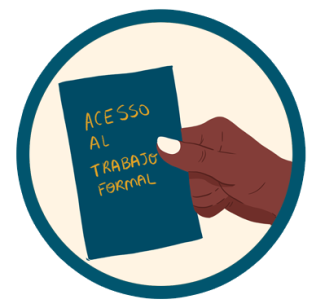
Solo el 18% de las personas trans y travestis en Argentina acceden a un trabajo formal
Los resultados de la investigación también influirán sobre tu trabajo de incidencia ya que, por ejemplo, te habrán revelado qué sectores otorgan más financiamiento y cuáles consideras que necesitan mayor formación para ejercer su rol de donantes.
En esta sección
- Desarrolla la estrategia de incidencia
- Ponte en contacto con tus redes
- Adapta la estrategia a cada sector
1. Organizaciones por los derechos de las mujeres
2. Entidades bilaterales y multilaterales
3. Fundaciones privadas
4. Fondos de mujeres
5. Sector privado y nuevos donantes
En la sección de este Manual dedicada a «Prepara el marco para la investigación», te recomendamos que pensaras en las metas que esperabas alcanzar con la investigación. Esas metas te permitirán desarrollar una estrategia de incidencia una vez que hayas completado la investigación.
Una estrategia de incidencia es un plan para difundir los resultados de la investigación de una forma tal que te permita cumplir las metas, dentro del objetivo más amplio que es hacer incidencia con sectores clave para introducir cambios positivos en cuanto a los recursos disponibles para los procesos organizativos por los derechos de las mujeres.
Cómo utilizar las metas definidas en el marco para la investigación:
De esa lista — que será lo más exhaustiva posible — elige los medios más eficientes para alcanzar tus metas. (Más abajo encontrarás ejemplos específicos de audiencias y métodos de incidencia)
Una vez que hayas desarrollado la estrategia, podrás comenzar con la difusión.
Para difundir los resultados, primero ponte en contacto con las personas/organizaciones a través de las cuales distribuiste la encuesta, y también con todas las que respondieron la encuesta y fueron entrevistadas.
No te olvides de pedirles que identifiquen quién será tu contacto en cada organización y pídeles que te confirmen una vez que hayan realizado cualquier publicación referida a tus materiales.
Esto te permitirá tener un registro de quiénes difundieron el informe pero también construir vínculos más sólidos con las organizaciones y personas con las que trabajas.
A modo de ejemplo te presentamos una lista de sectores sobre los que AWID realiza incidencia.
Para esto te resultará útil la lista de organizaciones y personas que te asesoraron durante la investigación (consultorxs). Ellxs te ayudarán a difundir el informe en distintos espacios y también podrán presentarte a nuevas organizaciones o llevarte a nuevos espacios para hacer incidencia.
Objetivos propuestos: Que las organizaciones por los derechos de las mujeres actualicen sus conocimientos acerca de las tendencias en el financiamiento; pensar colectivamente iniciativas conjuntas para la movilización de recursos utilizando los resultados de la investigación; influir sobre cómo abordan la movilización de recursos
Ejemplos de posibles métodos de incidencia:
Objetivo propuesto: Crear conciencia acerca de cómo el sector del financiamiento no está cumpliendo con sus compromisos establecidos y cómo necesita mejorar los mecanismos de apoyo para financiar los procesos organizativos por los derechos de las mujeres.
Identifica qué entidades bilaterales y multilaterales son las más influyentes en cuanto al financiamiento; esto podría incluir a las sedes locales de las embajadas.
Ejemplos de posibles métodos de incidencia:
Objetivo propuesto: Expandir la calidad y cantidad del apoyo a las organizaciones por los derechos de las mujeres.
Ejemplos de posibles métodos de incidencia:
Objetivo propuesto: Alentarlas a continuar y expandir su trabajo.
Ejemplos de posibles métodos de incidencia:
Objetivos propuestos: Incrementar su conocimiento del campo y alentar a la coherencia entre sus intereses filantrópicos y sus prácticas comerciales.
Ejemplos de posibles métodos de incidencia:
Asegúrate de adaptar las presentaciones, propuestas y aplicaciones a cada uno de los grupos a los que quieres llegar.
Insistimos en recomendarte que consultes nuestra Planilla ¿Estoy listx? para evaluar cómo has ido avanzando.

1-2 años, dependiendo de los objetivos de incidencia
• 1 persona (o más) de comunicación
• Lista de espacios para hacer publicidad de la investigación
• Lista de los blogs y revistas en línea donde se pueden publicar artículos acerca de su hallazgo de la investigación
• Lista de asesores
• Sus productos de información WITM
• Ejemplo de plan para incidencia

Laura fue una abogada y líder activista que luchó valientemente por la descriminalización del trabajo sexual en Irlanda.
Es recordada como «una combatiente por la libertad de lxs trabajadorxs sexuales, una feminista, una madre para su hija y una amiga necesaria para mucha gente».
Laura promovió el reconocimiento de las personas de la industria del sexo como trabajadorxs merecedorxs de derechos. Presentó demandas por la descriminalización, e inició una revisión judicial en la Corte Suprema de Belfast respecto de las provisiones que criminalizan la compra de servicios sexuales. Declaró que su intención era llevar el caso a la Corte Europea de Derechos Humanos.


Чтобы поделиться опытом финансирования в вашей организации