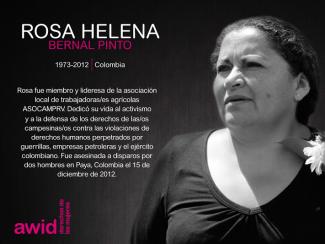
Rosa Helena Bernal Pinto

WHRDs are self-identified women and lesbian, bisexual, transgender, queer and intersex (LBTQI) people and others who defend rights and are subject to gender-specific risks and threats due to their human rights work and/or as a direct consequence of their gender identity or sexual orientation.
WHRDs are subject to systematic violence and discrimination due to their identities and unyielding struggles for rights, equality and justice.
The WHRD Program collaborates with international and regional partners as well as the AWID membership to raise awareness about these risks and threats, advocate for feminist and holistic measures of protection and safety, and actively promote a culture of self-care and collective well being in our movements.
WHRDs are exposed to the same types of risks that all other defenders who defend human rights, communities, and the environment face. However, they are also exposed to gender-based violence and gender-specific risks because they challenge existing gender norms within their communities and societies.
We work collaboratively with international and regional networks and our membership
We aim to contribute to a safer world for WHRDs, their families and communities. We believe that action for rights and justice should not put WHRDs at risk; it should be appreciated and celebrated.
Promoting collaboration and coordination among human rights and women’s rights organizations at the international level to strengthen responses concerning safety and wellbeing of WHRDs.
Supporting regional networks of WHRDs and their organizations, such as the Mesoamerican Initiative for WHRDs and the WHRD Middle East and North Africa Coalition, in promoting and strengthening collective action for protection - emphasizing the establishment of solidarity and protection networks, the promotion of self-care, and advocacy and mobilization for the safety of WHRDs;
Increasing the visibility and recognition of WHRDs and their struggles, as well as the risks that they encounter by documenting the attacks that they face, and researching, producing, and disseminating information on their struggles, strategies, and challenges:
Mobilizing urgent responses of international solidarity for WHRDs at risk through our international and regional networks, and our active membership.
Hakima Abbas, AWID
"We're using the tools that we have to share our resistance, strategies and continue to build our power to take action and create new brave and just worlds."
En este reporte presentamos aspectos destacados de cómo AWID contribuyó a la cocreación y la resistencia feminista: rescate feminista, contrarrestar a lxs anti-derechos, financiamiento, conversaciones entre movimientos y la revista de las Realidades Feministas
คุณสามารถส่งกิจกรรมได้มากถึง 2 กิจกรรมในฐานะผู้จัดกิจกรรม และคุณยังสามารถเป็นผู้ร่วมจัดในการส่งกิจกรรมของผู้อื่นได้
Tonya Haynes, CAISO
Angelique V. Nixon, CAISO

With over ten years of finance experience, Lucy has devoted her career to for profit and furthering nonprofit missions. She also worked and volunteered at non-for-profit organizations. From the fast-paced world of Finance, Lucy has passion for staying tuned with tech skills in the finance field. Lucy joined AWID in 2014. During her spare time she enjoys music, traveling, and variety sports.
ได้หรือไม่ เพราะได้มีการเสนอกิจกรรมเป็นเวลาเกือบ 1 ปีก่อนกิจกรรมจริง
แน่นอน! ในตอนนี้แบบฟอร์มสำหรับเสนอกิจกรรมได้ให้ระบุชื่อวิทยากร แม้วิทยากรเหล่านั้นอาจยังไม่ได้ยืนยันเข้าร่วมเราเข้าใจว่าการเปลี่ยนแปลงอาจเกิดขึ้นได้ภายในระยะเวลา 1 ปี
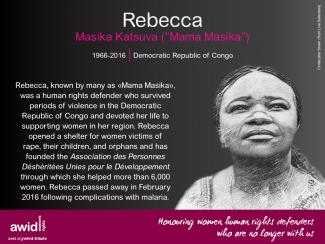
Naike Ledan
Semi Kaefra Alisha Fermond, Trans Rights Activist ACIFVH
Natalie Desrosiers
Fédorah Pierre-Louis
Kasia viene apoyando la labor de los movimientos feministas y por la justicia social desde hace 15 años. Antes de sumarse a AWID, se lideró las acciones de política e incidencia ActionAid y Amnistía Internacional, a la vez que participaba en procesos de organización feministas y de distintas agrupaciones por la justicia social en Polonia, en pro del acceso al aborto y contra la violencia en las fronteras europeas. Es una apasionada del financiamiento para la movilizaciónfeminista en toda su audacia, riqueza y diversidad. Reparte su tiempo entre Varsovia y su aldea comunitaria de trabajo artesanal en el bosque. Le encanta tomar saunas y adora con locura a su perro Wooly.
Contenido relacionado
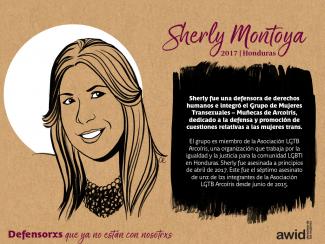
Organización Mundial Contra la Tortura: Honduras: Asesinato de Sherly Montoya, integrante del Grupo de Mujeres Transexuales “Muñecas de Arcoíris”
In this selection of films you will find the voices of filmmakers who are not content with simply recording the feminist realities that palpitate in every corner of this vast and diverse territory. These are works that from their very conceptualization are questioning for what, by whom, and how films and videos are made. They understand film to be an instrument of struggle, something more than images to be enjoyed on a screen. These are individual or collective filmmakers who see film and video making as an instrument to promote discussion, open a debate, and thus serve as a resource for popular and feminist pedagogies.
Faye est une féministe panafricaine passionnée, engagée dans les mouvements pour les droits des femmes, la justice raciale, les droits des migrant·e·s et des travailleur·euse·s, et la justice environnementale. Son activisme s'appuie sur l'héritage de la lutte contre l'apartheid en Afrique du Sud et de ses suites au Zimbabwe.
En 2019, Faye rejoint l'AWID en tant que Directrice des Finances, des Opérations et du Développement. Elle s’est efforcée de garantir que l’AWID respecte les principes et les valeurs féministes dans toutes ses opérations. Elle y apporte plus de 20 années d’expérience en leadership féministe, en stratégie et autres aspects du développement organisationnel et financier.
Faye est membre engagée du conseil d'administration de Urgent Action Fund-Africa et d'autres organisations de défense des droits des femmes. Auparavant, elle a occupé des postes de responsable des finances et des opérations chez Pediatric Adolescent Treatment for Africa et JASS - Just Associates Inc. en Afrique australe. Elle a également occupé des postes de direction chez International Computer Driving Licence (ICDL) en Afrique centrale et australe. Elle est titulaire d'une licence en sciences comptables de l'Université d'Afrique du Sud ainsi que membre du Southern African Institute for Business Accountants.
Cette année, aux côtés de militant.e.s féministes du monde entier, nous serons à la CSW68 à New York. Nous serons là pour contester les discours capitalistes et néolibéraux et les fausses solutions autour de la pauvreté, du développement et de la finance. À travers des événements en présentiel, des lives sur nos réseaux sociaux, un stand d'exposition et bien plus encore, nous visons à nous rassembler, amplifier et soutenir les voix et la participation de nos membres et allié.e.s.
Apprenez-en davantage sur notre programme cette année ci-dessous.