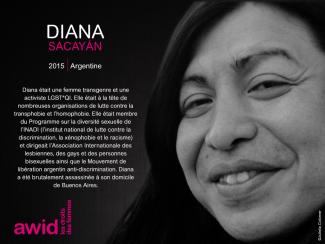
Diana Sacayan

WHRDs are self-identified women and lesbian, bisexual, transgender, queer and intersex (LBTQI) people and others who defend rights and are subject to gender-specific risks and threats due to their human rights work and/or as a direct consequence of their gender identity or sexual orientation.
WHRDs are subject to systematic violence and discrimination due to their identities and unyielding struggles for rights, equality and justice.
The WHRD Program collaborates with international and regional partners as well as the AWID membership to raise awareness about these risks and threats, advocate for feminist and holistic measures of protection and safety, and actively promote a culture of self-care and collective well being in our movements.
WHRDs are exposed to the same types of risks that all other defenders who defend human rights, communities, and the environment face. However, they are also exposed to gender-based violence and gender-specific risks because they challenge existing gender norms within their communities and societies.
We work collaboratively with international and regional networks and our membership
We aim to contribute to a safer world for WHRDs, their families and communities. We believe that action for rights and justice should not put WHRDs at risk; it should be appreciated and celebrated.
Promoting collaboration and coordination among human rights and women’s rights organizations at the international level to strengthen responses concerning safety and wellbeing of WHRDs.
Supporting regional networks of WHRDs and their organizations, such as the Mesoamerican Initiative for WHRDs and the WHRD Middle East and North Africa Coalition, in promoting and strengthening collective action for protection - emphasizing the establishment of solidarity and protection networks, the promotion of self-care, and advocacy and mobilization for the safety of WHRDs;
Increasing the visibility and recognition of WHRDs and their struggles, as well as the risks that they encounter by documenting the attacks that they face, and researching, producing, and disseminating information on their struggles, strategies, and challenges:
Mobilizing urgent responses of international solidarity for WHRDs at risk through our international and regional networks, and our active membership.
Cette politique régit toutes les pages hébergées sur le site www.awid.org, et tout autre site web géré par l'AWID, ainsi que les pages d’inscription à ces sites. Elle ne s'applique pas aux pages hébergées par des organisations autres que l'AWID auxquelles nous pouvons nous associer, et dont les politiques de confidentialité peuvent différer. Veuillez lire le document suivant pour comprendre notre politique de confidentialité concernant la nature, le but, l'utilisation et le partage de vos données personnelles collectées via ce site web.
D’une manière générale, vous pouvez naviguer sur ce site web sans nous soumettre vos informations personnelles. Cependant, dans certaines circonstances, nous vous demanderons de nous fournir certaines données personnelles.
Lorsque vous êtes sur le site web et que nous vous demandons des données personnelles, ces informations ne sont pas partagées en dehors de l’AWID.
1.1.1 Les données que vous fournissez pour obtenir des mises à jour de l'AWID :
Lorsque vous vous inscrivez pour avoir accès au site web - par exemple, que vous vous abonnez pour recevoir des courriels de notre part ou que vous demandez à devenir membre – nous vous demandons de fournir des données personnelles telles que votre nom, pays, langue, courriel pour recevoir les mises à jour. Vous nous transmettez ces informations grâce à des formulaires sécurisés et elles sont stockées sur des serveurs sécurisés.
1.1.2 Les données de paiement que vous envoyez pour devenir membre ou vous inscrire à un événement :
En devenant membre ou en vous inscrivant à des événements, vous devrez peut-être également fournir des données de paiement. L’AWID ne stocke aucune information de carte de crédit sur ses serveurs et utilise des systèmes de paiement sécurisés pour traiter ces informations.
1.1.3 Les informations facultatives que vous avez choisi de nous fournir (avec votre consentement) :
Lorsque vous communiquez avec l’AWID ou que vous fournissez des informations facultatives via des formulaires en-ligne ou utilisez le site pour communiquer avec d'autres membres, nous recueillons ces informations et toute information que vous choisissez de donner.
1.1.4 Les données que nous recueillons via des formulaires de contact ou lorsque vous communiquez directement avec nous :
Lorsque vous communiquez avec nous, nous recueillons ces données ainsi que toute autre information que vous choisissez de nous fournir.
Nous collectons et stockons également certaines autres informations concernant l'utilisation de notre site web par nos utilisateurs-trices afin que des tiers puissent nous fournir des rapports et des analyses concernant l'utilisation et les modes de navigation des utilisateurs-trices.
Pour plus d'informations sur les cookies, veuillez consulter la page suivante : www.allaboutcookies.org/fr/.
Si vous ne souhaitez pas recevoir de cookies, vous pouvez facilement modifier le paramétrage de votre navigateur web pour refuser de recevoir des cookies, ou pour demander d’être informé-e lorsque vous recevez un nouveau cookie. Cliquez ici pour voir comment procéder.
L'AWID utilise les informations collectées à propos de vous pour :
Si vous vous êtes abonné-e aux bulletins électroniques de l'AWID ou à des mises à jour par courrier électronique ou si vous êtes devenu-e membre, nous vous enverrons régulièrement des informations, ainsi qu’indiqué dans la section correspondante du site web. Vous pouvez vous désabonner à tout moment des bulletins électroniques ou des mises à jour par courriel en suivant les liens vers les informations de désabonnement incluses dans nos courriels.
L'exactitude des données vous concernant personnellement est importante pour l'AWID. Nous sommes en permanence à la recherche de moyens pour vous faciliter l’accès aux données que l'AWID conserve à votre sujet via notre site web et à la possibilité et les modifier. Si vous changez votre adresse e-mail, ou si l'une des autres informations que nous détenons est inexacte ou n’est plus d’actualité, merci de nous contacter ici.
Si vous avez consenti à ce que l’AWID utilise vos données personnelles, vous pouvez néanmoins changer d’avis à tout moment en nous contactant et en spécifiant l’autorisation que vous annulez. Veuillez noter que le retrait de votre consentement n'affecte pas la légalité des activités de traitement basées sur ce consentement avant son retrait.
Excepté dans le cas détaillé ci-dessous, l'AWID ne divulgue aucune de vos informations personnelles et ne vend ni ne loue des listes contenant vos informations à des tiers. L'AWID peut divulguer des informations quand elle a votre permission de le faire ou dans des circonstances particulières, par exemple lorsqu’elle croit de bonne foi que la loi l'exige.
Nous mettons continuellement en œuvre et mettons à jour les mesures de sécurité administratives, techniques et physiques afin de protéger vos données contre tout accès non autorisé, perte, destruction ou altération de celles-ci. Certaines des mesures de protection que nous utilisons pour protéger vos informations sont les pare-feu, le cryptage des données et les contrôles d'accès aux informations. Si vous savez, ou avez des raisons de croire, que vos informations d'identification AWID ont été perdues, volées, détournées ou autrement compromises, ou en cas d'utilisation non autorisée réelle ou suspectée de votre compte d'adhésion à l’AWID, veuillez nous contacter.
Cette politique est susceptible d’être modifiée de temps à autre. La dernière version de la politique sera postée sur notre site web, ainsi que la date de sa dernière mise à jour. En cas de modification(s) apportées à cette politique, vous recevrez une mise à jour par courriel. Au cas où vous ne seriez pas d'accord avec la politique ainsi révisée, vous aurez la possibilité d'annuler votre (vos) abonnement(s) chez nous. N’hésitez pas à nous contacter. Tous vos commentaires au sujet de cette politique sont les bienvenus !
Dernière mise à jour : mai 2019
Panels, ateliers, sessions plénières et espaces d’échanges entre collectives, activistes et organisations en lutte pour prendre collectivement le chemin vers un agenda et un programme de lutte pour l’éco-socialisme.
📅 Du 8 au 11 novembre 2025
📍 Buenos Aires, Argentine
En espagnol et en portugais

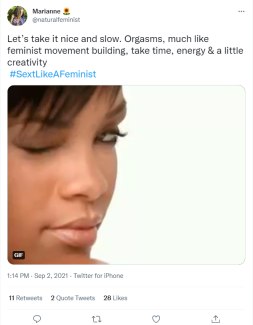
Prenons notre temps. Les orgasmes, comme la constitution des mouvements féministes, prennent du temps, de l’énergie et un peu de créativité.
對於與“論壇活動徵集”有關的任何問題,請與我們聯繫,請使用“論壇活動徵集”作為您電子郵件的主題。
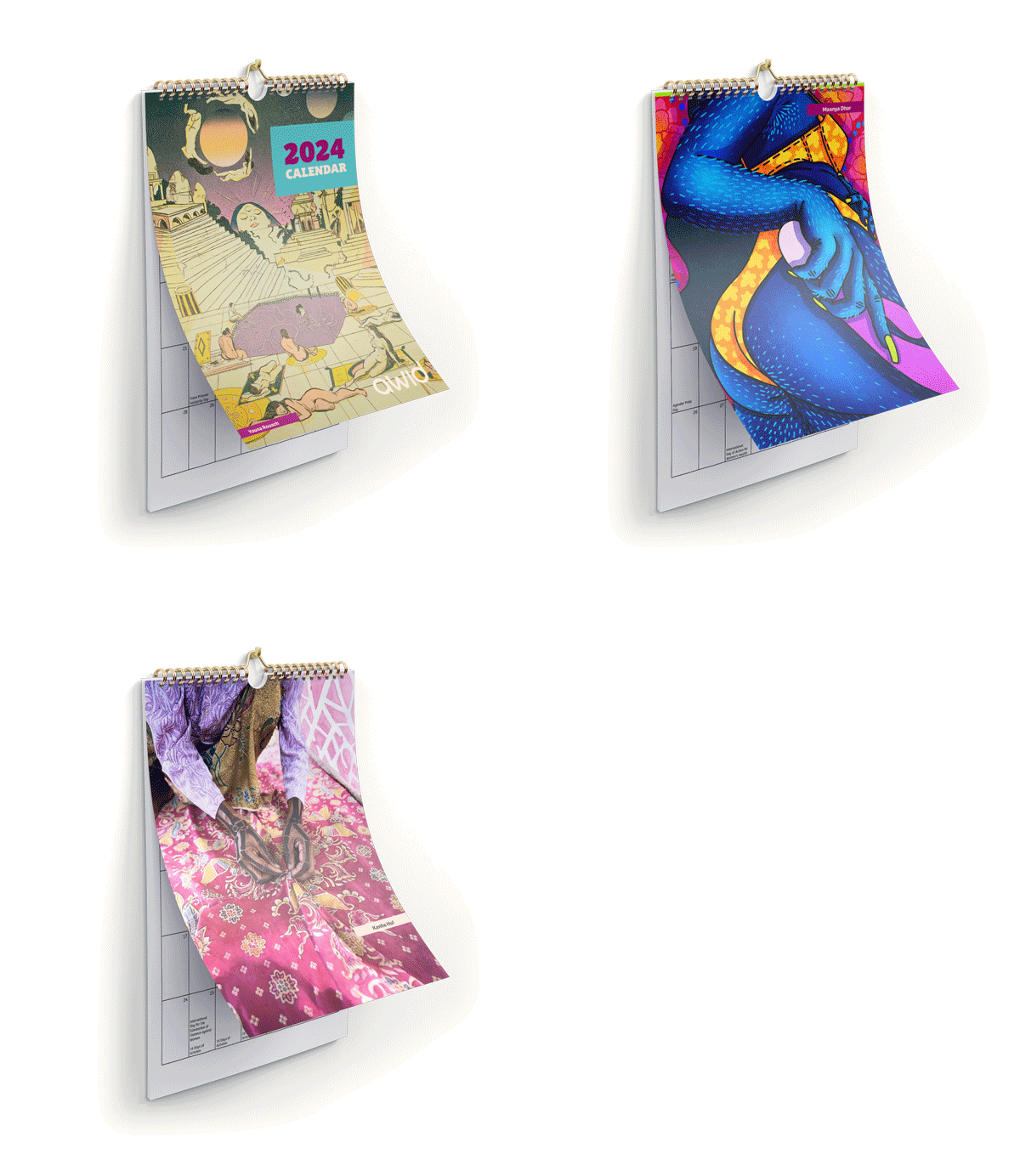
This calendar invites us to immerse ourselves in the inspiring world of feminist artistry. Each month, as it gently unfolds, brings forth the vivid artwork of feminist and queer artists from our communities. Their creations are not mere images; they are profound narratives that resonate with the experiences of struggle, triumph, and undying courage that define our collective quest. These visual stories, bursting with color and emotion, serve to bridge distances and weave together our diverse experiences, bringing us closer in our shared missions.
This calendar is our call to you: Use it, print it, share it. Let it be a daily companion in your journey, a constant reminder of our interconnectedness and our shared visions for a better world.
Let it inspire you, as it inspires us, to keep moving forward together.

Get it in your preferred language! |
| English |
| Français |
| Español |
| Português |
| عربي |
| Русский |
| Thai |

Follow Updates on Social Media
"مهمتي في الحياة ليست مجرد البقاء على قيد الحياة، بل أن أزدهر؛ وأن أفعل ذلك ببعض الشغف، وبعض التعاطف، وبعض الفكاهة، وبعض الأناقة". - مايا أنجيلو
يعتبر المنتدى الدولي الخامس عشر لجمعية حقوق المرأة في التنمية حدثًا مجتمعيًا عالميًا ومساحة للتحول الشخصي الجذري. يجمع المنتدى، وهو اجتماع فريد من نوعه، الحركات النسوية وحقوق المرأة والعدالة الجندرية ومجتمع الميم عين والحركات الحليفة، بكل تنوعنا وإنسانيتنا، للتواصل والشفاء والازدهار. المنتدى هو المكان الذي تحتل فيه نسويات ونسويو الجنوب العالمي والمجتمعات المهمشة تاريخياً مركز الصدارة، حيث يضعون الاستراتيجيات مع بعضهم/ن البعض، مع الحركات الحليفة الأخرى، ومع المموّلين وصانعي السياسات بهدف تحويل السلطة، إقامة تحالفات استراتيجية، والدخول في عالم أفضل ومختلف.
عندما يجتمع الناس على نطاق عالمي، كأفراد وحركات، فإننا نولد قوة جارفة. انضموا إلينا في بانكوك، تايلاند في عام 2024. تعالوا وارقصوا وغنوا واحلموا وانهضوا معنا.
متى: 2-5 ديسمبر 2024
أين: بانكوك، تايلاند؛ وعلى الانترنت
من: ما يقرب الـ 2500 ناشط/ة نسوية من جميع أنحاء العالم يشاركون شخصيًا، و3000 يشاركون افتراضيًا
開放報名時會公布。

This collaborative zine originated from a series of sharing circles that brought together feminists from around the world throughout 2022. The purpose was to exchange ideas and mutually learn how communities are responding to the climate crisis in various local contexts.
محاضرة: في المحاضرة النقاشية، يتم استكشاف قضية أو تحد معين من وجهات نظر مختلفة، أو مشاركة علم أو تجربة، متبوعة بأسئلة الجمهور إذا سمح الوقت بذلك.
برنامج حواري: إجراء محادثة أكثر عفوية بأسلوب البرامج الحوارية. يمكن أن تكون البرامج الحوارية عبارة عن محادثة بين عدة أشخاص، ويتم تيسيرها بواسطة ميسّر/ة برنامج حواري. يمكن لأسئلة الجمهور أن تحدد اتجاه المحادثة.
نقاش: يمكن أن يتخذ النقاش شكل المقاهي العالمية، وأحواض السمك، وغيرها من المنهجيات التي تسهل المشاركة النشطة للمشاركين/ات في المحادثات. يعتبر شكل التقديم هذا تشاركي للغاية.
ورشة عمل: جلسات تفاعلية تدعو المشاركين/ات لبناء مهارات جديدة في جميع مجالات الحياة والنضال.
جلسة إستراتيجية: دعوة للتفكير في قضية أو استراتيجية بعمق مع الآخرين/ الأخريات. مساحة للتعلم من بعضنا البعض: ما الذي ينجح، وما الذي لا ينجح، وكيف يمكننا تطوير استراتيجيات جديدة وجماعية لخلق العوالم التي نحلم بها.
دائرة المشاركة (المعروفة أيضًا باسم "الطيور المتشابهة"): مثالية للمجموعات الصغيرة، في بيئة أكثر حميمية، للاستماع إلى بعضهم/ن البعض، وإثارة النقاش ومعالجة مواضيع محددة وحساسة ومعقدة بعناية.
الفنون – ورشة عمل تشاركية: أنشطة تشاركية تتضمن الفنون والتعبير الإبداعي. سواء من خلال الفن البصري أو المسرح أو الأفلام أو الجداريات أو الرقص أو الموسيقى أو الحرف الجماعية أو صناعة الفن، وما إلى ذلك، فإننا نرحب بجميع الأفكار التي تحتفي بالفن النسوي والإبداع كشكل من أشكال التغيير الاجتماعي والشفاء والتعبير والتحول.
الفنون - العروض والتركيبات والمعارض: نرحب بالمساهمات التي تقدم للمشاركين/ات في المنتدى تجارب ووجهات نظر جديدة وتوسع آفاقنا وتتحدانا وتلهمنا للتفكير والشعور والتنظيم بطرق جديدة.
الشفاء: أنشطة متنوعة مصممة خصيصًا للمجموعات والأفراد، بدءًا من تعلم تقنيات الاسترخاء إلى مناقشة الوقاية من الإحتراق النفسي، ومن ممارسات الرعاية الواعية للصدمات لجسمنا وعقولنا وأرواحنا إلى معالجة الخلافات داخل حركاتنا.

Lindiwe Rasekoala es una instructora de vida que se especializa en la intimidad y en orientación sobre el bienestar de las relaciones. Es una entusiasta de la salud sexual y contribuye con trabajos en línea. Por su propia experiencia y métodos no convencionales de investigación, cree que puede superar la brecha educativa y la falta de acceso a la información en torno al bienestar sexual. Colabora con varios programas de radio y televisión, y ha concluido una capacitación en orientación con Certified Coaches Alliance. La misión de Lindiwe es derribar las barreras que impiden el diálogo sobre el bienestar sexual y como medio de empoderamiento para sus clientes, de tal modo que puedan alcanzar una mayor autocomprensión y experimentar una vida y relaciones más saludables y holísticas.
英文、法文、西班牙文和中文

Thanks to our global feminist community! From May to August 2024, nearly 1,200 organizations working for Women's rights, gender justice, and LBTQI+ equality shared their experiences in the WITM survey. The results offer a unique picture of how feminist movements are resourced and where gaps remain.