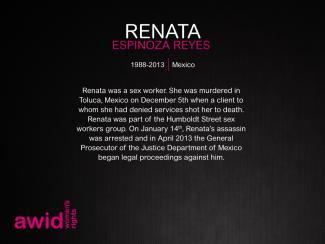
Renata Espinoza Reyes
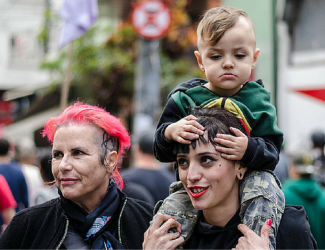
Over the past few years, a troubling new trend at the international human rights level is being observed, where discourses on ‘protecting the family’ are being employed to defend violations committed against family members, to bolster and justify impunity, and to restrict equal rights within and to family life.
The campaign to "Protect the Family" is driven by ultra-conservative efforts to impose "traditional" and patriarchal interpretations of the family, and to move rights out of the hands of family members and into the institution of ‘the family’.
Since 2014, a group of states have been operating as a bloc in human rights spaces under the name “Group of Friends of the Family”, and resolutions on “Protection of the Family” have been successfully passed every year since 2014.
This agenda has spread beyond the Human Rights Council. We have seen regressive language on “the family” being introduced at the Commission on the Status of Women, and attempts made to introduce it in negotiations on the Sustainable Development Goals.
AWID works with partners and allies to jointly resist “Protection of the Family” and other regressive agendas, and to uphold the universality of human rights.
In response to the increased influence of regressive actors in human rights spaces, AWID joined allies to form the Observatory on the Universality of Rights (OURs). OURs is a collaborative project that monitors, analyzes, and shares information on anti-rights initiatives like “Protection of the Family”.
Rights at Risk, the first OURs report, charts a map of the actors making up the global anti-rights lobby, identifies their key discourses and strategies, and the effect they are having on our human rights.
The report outlines “Protection of the Family” as an agenda that has fostered collaboration across a broad range of regressive actors at the UN. It describes it as: “a strategic framework that houses “multiple patriarchal and anti-rights positions, where the framework, in turn, aims to justify and institutionalize these positions.”
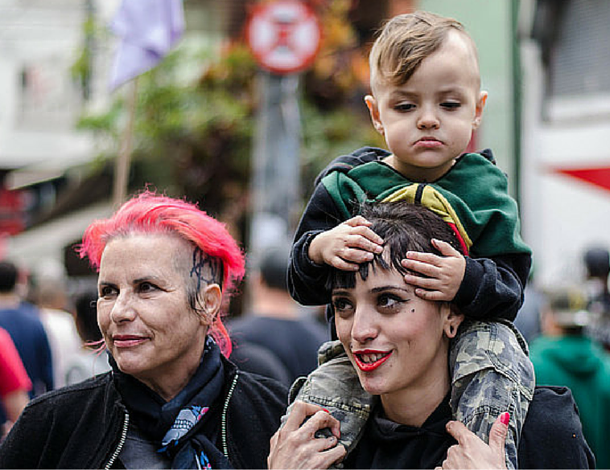
Le Groupe de travail des femmes sur le financement du développement (Women's Working Group on Financing for Development – WWG on FfD) , une alliance composée d’organisations et de réseaux de défense des droits des femmes, a été créée en octobre 2007 pour mener, dans le cadre des processus des Nations Unies sur le FdD, des activités de plaidoyer en faveur de l’égalité de genre, de l’autonomisation des femmes et des droits humains.
Troisième Dialogue de haut niveau sur le financement du développement, 23-25 octobre 2007
Jour 2
For decades, feminist scholars and advocates have articulated important concepts related to gender to understand and challenge oppression and discrimination. Those concepts have now become the target of anti-rights actors who claim that oppressive patriarchal gender roles are “common sense”, strategically painting all other ideas, cultural norms, and forms of social life as a dangerous, conspirative ideology.
Read our Brief on “Gender Ideology” Narratives: A Threat To Human Rights
Launch of the Intergovernmental preparatory process for the 3rd Financing for Development Conference, October 2014
ECONOMIAS DE CUIDADOSAGROECOLOGÍA Y SOBERANÍA ALIMENTARIACOOPERATIVISMO FEMINISTASINDICALISMO FEMINISTA
Related content
African Women's Development Fund: Remembering a Warrior: Prudence Mabele
BBC: Prudence Mabele: The life of the South African HIV campaigner
Mail and Guardian: The Pied Piper of the broken-hearted: HIV activist Prudence Mabele
Face2Face Africa: Prudence Mabele, 1st Black SA Woman To Reveal HIV Positive Status Dies At 46
Ms. Prudence Mabele - I'm committed to respond to HIV! (Video)
AWLN Interview with Prudence Mabele of South Africa (Video)
Sangoma: Why I take ARVs (Video)

Sesiones adicionales para redactar el Documento Final de Adís Abeba
Para saber más sobre este proceso, puedes consultar la CSO Hitchhiker’s Guide (en inglés).
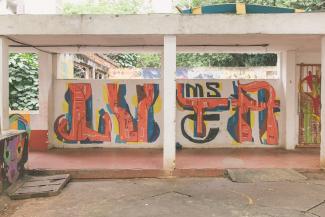 |
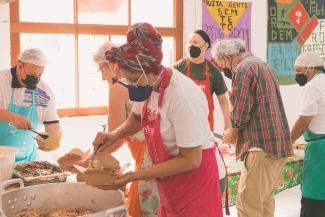 |
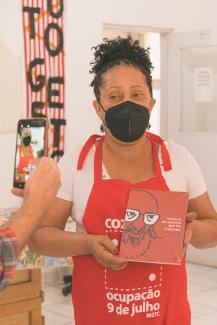 |
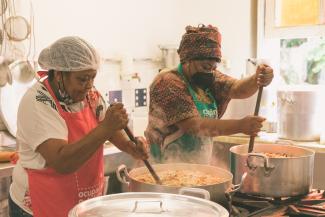
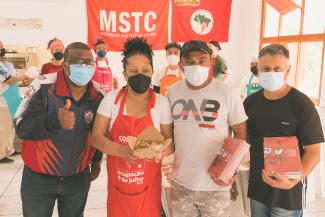 Femmes et collaborateurs à la cuisine de l'Ocupação 9 de Julho |
 |
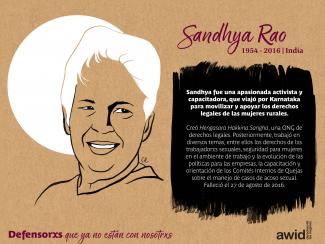

‘A geopolitical Analysis of Financing for Development’ by Regions Refocus 2015 and Third World Network (TWN) with DAWN.
The Zero Draft Language Map, by Regions Refocus
‘Addis Ababa financing conference: Will the means undermine the goals?‘ by RightingFinance
Pour renforcer notre voix et notre pouvoir collectifs en faveur de davantage de financement de meilleure qualité pour l’organisation des mouvements féministes, de défense des droits des femmes, des personnes LBTQI+ et des mouvements alliés dans le monde entier.
Asociación de Mujeres Afrodescendientes del Norte del Cauca