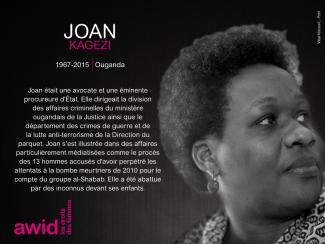
Joan Kagezi
Over the past few years, a troubling new trend at the international human rights level is being observed, where discourses on ‘protecting the family’ are being employed to defend violations committed against family members, to bolster and justify impunity, and to restrict equal rights within and to family life.
The campaign to "Protect the Family" is driven by ultra-conservative efforts to impose "traditional" and patriarchal interpretations of the family, and to move rights out of the hands of family members and into the institution of ‘the family’.
Since 2014, a group of states have been operating as a bloc in human rights spaces under the name “Group of Friends of the Family”, and resolutions on “Protection of the Family” have been successfully passed every year since 2014.
This agenda has spread beyond the Human Rights Council. We have seen regressive language on “the family” being introduced at the Commission on the Status of Women, and attempts made to introduce it in negotiations on the Sustainable Development Goals.
AWID works with partners and allies to jointly resist “Protection of the Family” and other regressive agendas, and to uphold the universality of human rights.
In response to the increased influence of regressive actors in human rights spaces, AWID joined allies to form the Observatory on the Universality of Rights (OURs). OURs is a collaborative project that monitors, analyzes, and shares information on anti-rights initiatives like “Protection of the Family”.
Rights at Risk, the first OURs report, charts a map of the actors making up the global anti-rights lobby, identifies their key discourses and strategies, and the effect they are having on our human rights.
The report outlines “Protection of the Family” as an agenda that has fostered collaboration across a broad range of regressive actors at the UN. It describes it as: “a strategic framework that houses “multiple patriarchal and anti-rights positions, where the framework, in turn, aims to justify and institutionalize these positions.”
Ya está disponible nuestro primer programa del Club de Cine Feminista: «Tenderness is the Sharpest Resistance» [«La ternura es la resistencia más intensa»], que es una serie de películas sobre realidades feministas de Asia-Pacífico curada por Jess X. Snow.
Una nómada de las culturas, nacida en Hong Kong y con raíces turco-paquistaníes, el amor de Fatima por la narración, ya sea su lectura o su creación conjunta, le infundió la pasión por el activismo de las comunicaciones. Formada en periodismo, ha trabajado durante siete años en los ámbitos de la comunicación digital y los medios de comunicación con ONG que brindan oportunidades educativas y asistencia jurídica a personas refugiadas y solicitantes de asilo, así como con el movimiento feminista musulmán, que aplica un enfoque feminista y de derechos para comprender y buscar la igualdad y la justicia en la tradición jurídica musulmana. Escribe con habitualidad artículos de opinión sobre asuntos feministas en el Sur Global.
Mediante la narración en esta era hiperdigital de las redes sociales, Fatima sigue colaborando con organizadores comunitaries y activistas de base para crear contenido audiovisual, a fin de tender puentes de comprensión hacia la liberación colectiva y la descolonización. Durante los días en que no trabaja, mira atentamente largometrajes feministas independientes de Irán, Marruecos y Pakistán, e interpreta poesía oral con sus camaradas de Kuala Lumpur.
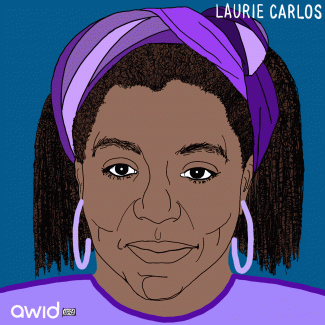
Laurie Carlos was an actor, director, dancer, playwright, and poet in the United States. An extraordinary artist and visionary with powerful ways of bringing the art out in others.
“Laurie walked in the room (any room/every room) with swirling clairvoyance, artistic genius, embodied rigor, fierce realness—and a determination to be free...and to free others. A Magic Maker. A Seer. A Shape Shifter. Laurie told me once that she went inside people’s bodies to find what they needed.” - Sharon Bridgforth
She combined performance styles such as rhythmic gestures and text. Laurie mentored new actors, performers, writers and helped amplify their work through Naked Stages, a fellowship for emerging artists. She was an artistic fellow at Penumbra Theater and supported with identifying scripts to produce, with a goal of “bringing more feminine voices into the theater”. Laurie was also a member of Urban Bush Women, a renowned contemporary dance company telling stories of women of the African diaspora.
In 1976, as Lady in Blue, she made her Broadway debut in Ntozake Shange’s original and award-winning production of the poetic drama For colored girls who have considered suicide / when the rainbow is enuf. Laurie’s own works include White Chocolate, The Cooking Show, and Organdy Falsetto.
“I tell the stories in the movement—the inside dances that occur spontaneously, as in life—the music and the text. If I write a line, it doesn’t necessarily have to be a line that is spoken; it can be a line that’s moved. A line from which music is created. The gesture becomes the sentence. So much of who we are as women, as people, has to do with how we gesture to one another all the time, and particularly through emotional moments. Gesture becomes a sentence or a state of fact. If I put on a script ‘four gestures,’ that doesn’t mean I’m not saying anything; that means I have opened it up for something to be said physically.” Laurie Carlos
Laurie was born and grew up in New York City, worked and lived in Twin Cities. She passed away on 29 December 2016, at the age of 67, after a battle with colon cancer.
“I believe that that was exactly Laurie’s intention. To save us. From mediocrity. From ego. From laziness. From half-realized art making. From being paralyzed by fear.
Laurie wanted to help us Shine fully.
In our artistry.
In our Lives.” - Sharon Bridgforth for Pillsbury House Theatre
“There’s no one that knew Laurie that wouldn’t call her a singular individual. She was her own person. She was her own person, her own artist; she put the world as she knew it on stage with real style and understanding, and she lived her art.” - Lou Bellamy, Founder of Penumbra Theater Company, for Star Tribune

Los movimientos feministas han cambiado y se han adaptado enormemente desde la última vez que nos reunimos de esta manera - así que para recordar por qué son importantes los Foros de AWID, pedimos a activistas de todo el mundo que reflexionaran y compartieran sus historias, impresiones y recuerdos. Esto es lo que aprendimos.
✉️ By registration only. Register here
📅 Wednesday, March 12, 2025
🕒 6.30–8:00pm EST
🏢 Church Center of the United Nations, 777 United Nations Plaza, New York, NY 10017
🎙️Co-facilitated by: Inna Michaeli, Co-Executive Director
Organizer: Jass, Gender at Work, and Count Me In! Consortium
LA CARAPACE DE MON PÈRE raconte l'histoire d'un homme mystérieux dont la vie a été modelée par la fuite, l’expulsion, la vie en exil et un retour raté en Palestine. Le film comporte la quête d’une fille cherchant à obtenir des réponses de la part de son père.
Nana est militante féministe et chercheuse spécialisée dans les droits reproductifs et les politiques démographiques. Elle exerce ses activités en Égypte. Elle collabore avec Realizing Sexual and Reproductive Justice (RESURJ), siège au conseil consultatif de l’A Project au Liban et fait partie du comité communautaire de Mama Cash. Nana est diplômée d’un master en santé publique de l’Institut KIT et de l’Université Vrije d’Amsterdam. Son travail consiste à analyser et contextualiser les politiques démographiques nationales tout en documentant les questions liées à l’eugénisme contemporain, aux programmes d’aide internationale régressifs et aux régimes autoritaires. Auparavant, elle a collaboré avec la Fondation genevoise pour la formation et la recherche médicales, l’Initiative égyptienne pour les droits de la personne, ainsi qu’avec le Collectif féministe Ikhtyar au Caire.
Fadila M. fue una activista tribal soulaliyate de Azrú, en la región Ifrane de Marruecos. Luchó contra una forma específica de discriminación territorial dirigida a las mujeres tribales.
Como parte del Movimiento de Mujeres Soulaliyate por el Derecho a la Tierra, trabajó para reformar el marco legislativo relacionado con la administración de la propiedad comunitaria, a través de la adopción, en 2019, de tres proyectos de ley que garantizan la igualdad de mujeres y varones.
Según las leyes consuetudinarias vigentes, las mujeres no tenían derecho a beneficiarse de la tierra, en especial aquellas que eran solteras, viudas o divorciadas. En Marruecos, los derechos a las tierras colectivas eran transmitidos tradicionalmente entre los varones de la familia mayores de 16 años. Desde 2007, Fadila M. ha sido parte del movimiento de mujeres, la primera movilización nacional de base por los derechos a la tierra. Una de sus conquistas ha sido que, en 2012, las mujeres soulaliyate pudieron registrarse por primera vez en las listas de beneficiarixs, y recibir compensaciones relacionadas con la cesión de tierras. El movimiento también logró la enmienda del dahir (decreto del Rey de Marruecos) de 1919, para garantizar el derecho a la igualdad de las mujeres.
Fadila M. falleció el 27 de septiembre de 2018. Las circunstancias de su muerte no son claras. Participó en una marcha de protesta relacionada con el tema de las tierras colectivas y, si bien las autoridades informaron que su muerte fue accidental y que tuvo un paro cardíaco camino al hospital, la sección local de la Asociación de Derechos Humanos de Marruecos (AMDH) señaló que Fadila fue sofocada por un miembro de la fuerza policial utilizando una bandera marroquí. Su familia solicitó una investigación, pero los resultados de la autopsia no fueron dados a conocer.
Más información sobre el Movimiento de Mujeres Soulaliyate por el Derecho a la Tierra (en inglés)
Nota: Como no ninguna fotografía/imagen de Fadila M. disponible, la obra de arte (en lugar de un retrato) pretende representar por lo que luchó y trabajó: la tierra y los derechos a vivir y tener acceso a esa tierra y lo que crece en ella.
Nous surveillons attentivement ce risque parmi d'autres, et nous publierons des informations détaillées concernant la santé et la sécurité dès l'ouverture des inscriptions afin que vous puissiez prendre une décision en toute connaissance de cause. En outre, le format hybride est conçu de façon à offrir une expérience de participation significative aux personnes qui préféreront ne pas voyager ou qui ne sont pas en mesure de le faire.

Filter your search by funders’ priority support areas that speak to your organizing efforts
Nous œuvrons à renforcer les répercussions et l’influence des organisations, mouvements et défenseur-euse-s des droits des femmes sur la scène internationale et à amplifier leur voix collective, en vue de la pleine réalisation de la justice de genre et des droits humains des femmes.
Rosa Candida Mayorga Muñoz était une travailleuse sociale, leader syndicale et défenseure des droits humains du Guatemala. On la surnommait affectueusement Rosita.
Dans les années 1980, Rosa devient la première femme à siéger au comité exécutif du syndicat de l’Institut d’électrification nationale (STINDE), syndicat qu’elle avait rejoint en premier lieu pour défendre les droits des femmes au travail. Cela signifiait, à ses yeux, de lutter pour l’égalité des chances dans une entreprise où de nombreuses femmes affrontaient un système discriminatoire et violent mis en place par la direction de l’entreprise. Rosa avait également subi du harcèlement sexuel sur son lieu de travail, tant de la part de collègues que de responsables. Elle n’entendait cependant pas rester silencieuse.
Rosa a continué à se battre et fait partie des efforts pour façonner la lutte afin qu’elle prenne la forme du « Pacte collectif pour les conditions de travail du INDE-STINDE ». Ce pacte était le premier du genre et le premier au Guatemala à caractériser le concept de harcèlement (sexuel). Il fait désormais référence dans la loi guatémaltèque pour les questions de travail, et sert d’encouragement aux autres syndicats.
« Elle n’avait d’autres outils pour se battre que ses propres idéaux... Elle a été intimidée à plusieurs reprises, harcelée pour abandonner la lutte, mais son courage a fait naître l’espoir chez les syndicalistes de la base. Rosita a créé une image de respect non seulement au sein de son syndicat mais également face aux autorités de l’institution et au sein du mouvement des femmes. Elle a été reconnue comme une pionnière du mouvement des femmes du syndicat, dans un espace qui avait davantage été dominé par les hommes. » - Maritza Velasquez, ATRAHDOM
Rosa est décédée le 4 avril 2018, elle avait 77 ans.
No, you don't have to be an AWID member to participate but AWID members receive a discounted registration fee as well as a number of other benefits. Learn more on how to become an AWID member.