Contenu lié
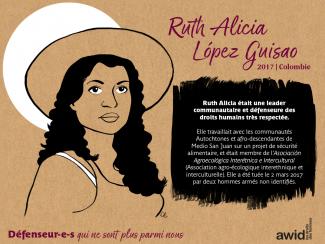
Front Line Defenders: Assassinat de Ruth Alicia Lopez Guisao
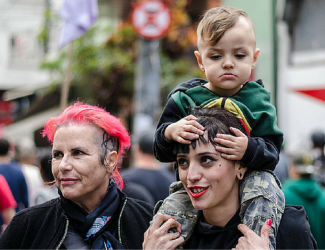
Over the past few years, a troubling new trend at the international human rights level is being observed, where discourses on ‘protecting the family’ are being employed to defend violations committed against family members, to bolster and justify impunity, and to restrict equal rights within and to family life.
The campaign to "Protect the Family" is driven by ultra-conservative efforts to impose "traditional" and patriarchal interpretations of the family, and to move rights out of the hands of family members and into the institution of ‘the family’.
Since 2014, a group of states have been operating as a bloc in human rights spaces under the name “Group of Friends of the Family”, and resolutions on “Protection of the Family” have been successfully passed every year since 2014.
This agenda has spread beyond the Human Rights Council. We have seen regressive language on “the family” being introduced at the Commission on the Status of Women, and attempts made to introduce it in negotiations on the Sustainable Development Goals.
AWID works with partners and allies to jointly resist “Protection of the Family” and other regressive agendas, and to uphold the universality of human rights.
In response to the increased influence of regressive actors in human rights spaces, AWID joined allies to form the Observatory on the Universality of Rights (OURs). OURs is a collaborative project that monitors, analyzes, and shares information on anti-rights initiatives like “Protection of the Family”.
Rights at Risk, the first OURs report, charts a map of the actors making up the global anti-rights lobby, identifies their key discourses and strategies, and the effect they are having on our human rights.
The report outlines “Protection of the Family” as an agenda that has fostered collaboration across a broad range of regressive actors at the UN. It describes it as: “a strategic framework that houses “multiple patriarchal and anti-rights positions, where the framework, in turn, aims to justify and institutionalize these positions.”
Contenu lié
Front Line Defenders: Assassinat de Ruth Alicia Lopez Guisao
Tenue des autres sessions de rédaction du document final d’Addis-Abeba
Pour plus d’informations, voir le « guide du routard des OSC » (le CSO Hitchhiker’s Guide – en anglais).
เราตระหนักดีถึงอุปสรรคในทางปฏิบัติและความทุกข์ทางอารมณ์ในการเดินทางระหว่างประเทศ โดยเฉพาะอย่างยิ่งจากซีกโลกใต้ โดย AWID กำลังทำงานร่วมกับ TCEB (สำนักงานส่งเสริมการจัดประชุมและนิทรรศการของประเทศไทย) เพื่อสนับสนุนผู้เข้าร่วมฟอรัมในการขอวีซ่า ข้อมูลอื่นๆเกี่ยวกับการขอวีซ่าจะถูกนำเสนอในช่วงที่เปิดให้ลงทะเบียน รวมถึงสถานที่และวิธีการขอวีซ่า
Speaking on behalf of the Board, I write to express our deepest gratitude, appreciation, and respect for Hakima Abbas and Cindy Clark, our extraordinary Co-Executive Directors during the past five years who will be stepping aside to refresh the AWID leadership as we move into a new strategic plan and phase of our organizational life. They have consistently practiced the best principles of feminist organizational leadership and ethics of care as they navigated us through one of the most unpredictable, turbulent times in recent history of the world, the COVID-19 syndemic, and the subsequent downward global political spiral. They held AWID, our Staff, and Board firmly, gently, and lovingly as all of us experienced various impacts. They also held steadfastly to AWID vision and mission as they responded respectfully and strategically to various changes, not least the cancellation of the AWID Forum.
The Board decided to prioritize an internal recruitment process first, fully recognizing the great potential that exists within the current team. We expect to complete the transition by the end of 2022. Hakima and Cindy will stagger their departure, and will facilitate a smooth transition to the new leadership.
Seeing Cindy and Hakima leave AWID is difficult for the Board as well as others who have worked closely with them and love them. Nonetheless, rest assured the AWID Board is leading the transition process in a way that fully recognizes the beautiful and inspiring indelible marks Hakima and Cindy will be leaving as part of our 40-year history, that embraces the next step of on-boarding and supporting new leadership, and that inspires us to do better at this moment in AWID's life.
Major organizational transitions are neither simple nor easy. Sometimes they are forced, beyond anyone’s control, fraught, or even destructive. I, and many of you, have seen examples of those kinds of transitions. At other times, the staff’s needs and aspirations are aligned with those of the organization. Although we did not choose or wish Cindy and Hakima to leave AWID, their decision and AWID moving into the next strategic plan and new decade of existence are aligned. Best of all, we are in the wonderful, super competent, creative, and feminist hands of the Staff and Board.
We thank you, dear Feminist Movements, for your confidence in AWID. We also ask you to support our leadership transition in the coming months. Let’s continue to build, deepen, and strengthen our connections, as we have done for the past 40 years.
Please stay tuned for more concrete developments and updates. You will be hearing from us in the coming weeks.
In feminist solidarity and love,
Margo Okazawa-Rey
President, AWID Board
Les inscriptions commenceront début 2024. Nous annoncerons bientôt la date exacte et les tarifs d'inscription. L'inscription comprendra la participation au Forum, et inclura le déjeuner et les collations (le petit-déjeuner sera fourni par les hôtels), ainsi qu’un dîner sur place.
Una red compleja de actores anti-derechos, en constante evolución, está ejerciendo cada vez más influencia en los espacios internacionales y en las políticas nacionales. Respaldados a menudo por financiaciones poco transparentes, estos actores construyen alianzas tácticas sobre distintos temas y cruzando diferentes regiones y credos para aumentar su impacto.
.
The 14th Forum theme is “Feminist Realities: our power in action”.
We understand Feminist Realities as the different ways of existing and being that show us what is possible, despite dominant power systems, and in defiance and resistance to them. We understand these feminist realities as reclamations and embodiments of hope and power, and as multi-dimentional, dynamic and rooted in specific contexts and historical moments.
Read more about Feminist Realities
Cada año, en AWID buscamos renovar y enriquecer las perspectivas y la experiencia reflejadas en nuestra Junta Directiva a través de la incorporación de nuevxs afiliadxs.
Por favor, ayúdanos a identificar a feministas audaces y dedicadxs a fin de incluirlxs en la lista de nominaciones para la elección a la Junta Directiva de AWID, a realizarse el 29 de julio de 2022.
Las personas elegidxs se sumarán por un período de 3 años, a partir de principios de 2023. Esta es una oportunidad para contribuir a la gobernanza de nuestra organización y formar parte de un grupo increíble de feministas de todo el mundo
Por favor, también comparte esta invitación a candidaturas entre tus redes.
Ante todo, estamos buscando candidatxs comprometidxs con la misión de AWID, capaces de establecer conexiones entre las luchas locales y globales, y que puedan ayudarnos en la reflexión sobre cómo optimizar el posicionamiento y las fortalezas de AWID en un contexto en constante evolución. Además, lxs candidatxs deben estar dispuestxs a cumplir con los deberes y las responsabilidades legales de la Junta Directiva de AWID en beneficio de la organización.
La participación en la Junta de AWID es una función voluntaria que requiere compromiso y dedicación durante todo el año. Se espera que lxs integrantes de la Junta se comprometan a dedicar un mínimo de 10 a 15 días al año para asistir a reuniones presenciales y virtuales, y contribuir con otras comunicaciones.
En AWID, aspiramos a que nuestro Consejo refleje la diversidad en todas sus formas, especialmente, en términos de identidad de género, orientación sexual, edad, geografía y origen. Además, buscamos integrantes de la Junta con experiencia relevante para las áreas de trabajo prioritarias de AWID.
Si bien consideraremos todas las candidaturas recibidas, teniendo en cuenta la composición actual de la Junta, daremos prioridad a los siguientes aspectos:
Candidatxs con experiencia de trabajo en las intersecciones de los derechos de las mujeres / justicia de género y
Candidatxs de las siguientes regiones:
La Junta Directiva es clave para orientar la dirección estratégica de AWID y apoyar a nuestra organización para que cumpla su misión en coherencia con el mundo en el que vivimos y las necesidades de nuestros movimientos.
Lxs integrantes de la Junta Directiva contribuyen al día a día de la organización de muchas maneras: aportando su experiencia en gobernanza en otros espacios, como también perspectivas de diversos sectores de los movimientos feministas y experiencia sustantiva en áreas relevantes para la estrategia de AWID.
Lxs candidatxs que finalmente resulten elegidxs se incorporarán a la Junta Directiva de AWID en 2023, acompañándonos en el lanzamiento de nuestro nuevo plan estratégico liderado por lxs nuevxs Codirectorxs Ejecutivxs de AWID, y en la planificación de nuestro próximo Foro internacional.
(Puedes nominarte a ti mismx o a alguien que conozcas, con su consentimiento
Por favor, ayúdanos a difundir este llamado a candidaturas compartiéndolo en tus redes.
¡Gracias, desde ya, por ayudarnos a encontrar a lxs próximxs maravillosxs integrantes de la Junta Directiva que apoyarán a AWID en su camino hacia el futuro!
We are acutely aware of the practical hurdles and emotional distress associated with international travel, particularly from the Global South. AWID is working with TCEB (the Thailand Convention and Exhibition Bureau) to support Forum participants with acquiring visas. More information about this visa assistance will be available upon registration, including contact information for where and how to apply.
Le tout dernier rapport de l’Observatoire sur l’universalité des droits (OURs) détricote les discours de « l’idéologie du genre », du « génocide prénatal » et de « l’impérialisme culturel ». Il creuse également la réalité de CitizenGo, de l’Alliance Defending Freedom et des flux de financement antidroits. Vous y trouverez, en outre, une analyse des systèmes régionaux des droits humains et des stratégies féministes victorieuses !
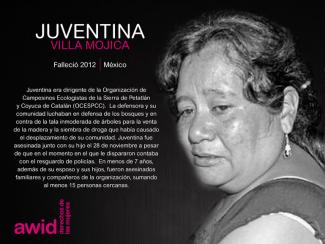
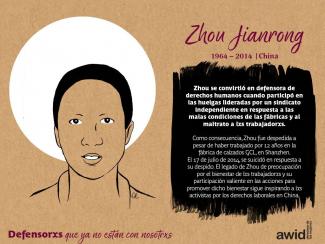
We have always worked towards ensuring that our Forums are co-developed with partners, movements and our priority constituencies.
For our upcoming Forum, we aim to deepen and strengthen that spirit and practice of co-creation and collaboration. We also recognize the need to improve the balance between the inclusion of many voices and experiences with room for participants and staff to breathe, take pause and enjoy some downtime.
This Forum will be different in the following ways:
📅Lunes 11 de marzo
🕒4:30 p. m. - 6:00 p. m. EST
Organizan:AWID, IJSC y NAWI
🏢 Church Center de las Naciones Unidas, 777 United Nations Plaza, piso 11, Nueva York.
(Interpretación disponible en francés y español)
Les deux amies se font appeler les Triple Cripples (invalides en triple) parce qu'elles subissent trois niveaux de discrimination en tant que femmes noires handicapées. Jay, aujourd'hui âgée de 31 ans, a eu la polio bébé et utilise une attelle de jambe et des béquilles pour se soutenir, tandis que Kym, âgée de 25 ans, a la sclérose en plaques et utilise un fauteuil roulant pour se déplacer. Le nom de leur duo découle d'une tentative de redéfinir le mot « invalide », qui, selon elles, « a été affligé aux personnes handicapées comme une insulte, une façon certaine de nous rappeler que nous étions « défectueuses » et allions toujours être moins que. »
En tant que femmes noires, Kym et Jay ont été victimes du stéréotype racial mondialisé qui hypersexualise les peaux foncées. Dans leur livre intitulé Heart of The Race: Black Women's Lives in Britain, Bryan, Dadzie et Scafe décrivent comment les femmes noires ont été historiquement décrites comme un « risque élevé de promiscuité » par les médecins en raison de leur libido et de leur fertilité. Jay explique que « les gens pensent que je suis toujours prête à tout faire, n'importe où n'importe quand, parce que je suis une femme noire. » Alors que les deux femmes ont été soumises à une fétichisation intense en raison de leur couleur de peau, leurs handicaps ont semé la confusion totale dans l'esprit de plusieurs. Kym décrit ainsi son expérience de femme à courbes : « J'ai le type de corps que les gens veulent malmener et ils ont l'impression que je devrais être capable de supporter cela, mais parallèlement, il y a cette idée que je ne devrais pas avoir de critères à cause de mon handicap. »
Sur les sites de rencontre en ligne, on a demandé à Jay si elle pouvait effectuer certaines positions sexuelles car des partenaires potentiel.le.s « ont décidé qu'ielles voulaient être avec vous de cette façon et savoir si votre physicalité pouvait permettre cela. » Lors d'un contrôle, Kym s'est même fait demander des excuses par un professionnel de la santé, remplissant un formulaire, pour lui avoir demandé combien de partenaires sexuel.le.s elle avait eu.e.s, avec une nuance sous-entendant « je sais que (ces questions) ne s'appliquent pas à vous, mais nous devons suivre le processus d'interrogation normé. »
L'idée fausse selon laquelle le manque d'autonomie physique équivaut à un manque de désir sexuel est omniprésente.
À l'école, Jay a été exclue des cours d'éducation sexuelle en raison de son incapacité présumée à avoir des relations sexuelles. Elle explique que même les organisations bien intentionnées qui militent pour l'accès aux services de santé sexuelle et reproductive ne tiennent souvent pas compte des besoins spécifiques des femmes handicapées. Par exemple, les pilules contraceptives sont souvent saluées comme une méthode efficace de contrôle des naissances, sans aucune mention qu'elles peuvent accentuer les risques de caillots sanguins pour les femmes en fauteuil roulant.
Basées à Londres, les Triples Cripples attendaient avec impatience leur participation aux côtés de l'équipe Décoloniser la Contraception à SexFest2020, un festival d'une journée créé pour les personnes racisées, dédié à la santé et au bien-être sexuels. Malheureusement, l'évènement a été annulé en raison de la pandémie de la COVID-19. Néanmoins, sans se décourager, Jay et Kym se sont tournées vers leurs plateformes de plaidoyer en ligne pour contrer la façon dont la sexualité est vue d'un point de vue strictement hétéronormatif et pour contester l'idée que la féminité est définie par la capacité de procréer. Le duo a lancé une chaîne YouTube et un podcast, également appelé The Triple Cripples, pour promouvoir la représentation des personnes subissant des discriminations multiples en tant qu'êtres humains holistiques. Leurs projets futurs comprennent un documentaire artistique et une exposition photographique consacrée à la lutte contre la discrimination et à l'amplification des voix des personnes handicapées racisées.
Bien que les femmes handicapées raciées partagent des expériences de capacitisme avec d'autres personnes handicapées, des expériences de sexisme avec d'autres femmes et des expériences de racisme avec d'autres personnes racisées, ces expériences interagissent et ne peuvent être séparées : les femmes handicapées racisées subissent une discrimination unique en tant que femmes handicapées racisées.
Alors que les Triple Cripples reconnaissent que les approches toutes faites et superficielles à la diversité ne se transformeront pas comme par magie en espaces inclusifs du jour au lendemain, elles restent confiantes que leurs petits coups de hache finiront par faire tomber les grands chênes que les pratiques discriminatoires représentent pour elles.
La joie de s’accepter soi-même et de grandir dans cette lumière.

La féminité obligatoire est un dispositif de violence colonial hétéro-cis-patriarcal envers les corps assignés féminins à la naissance. Les corps trans continuent de résister malgré l’invisibilisation et le silencement historique. Je ne suis pas une
![“Asignado Nderentendei Al Nacer” [Assigned Nderentendei at Birth] by Bastión Moral](https://web.archive.org/web/20210928161447/https://www.awid.org/sites/default/files/thumbnails/image/web_bastion-nderentendei.png "“Asignado Nderentendei Al Nacer” [Assigned Nderentendei at Birth] by Bastión Moral")
Volveremos a ponernos en contacto con contrapartes que hayan colaborado en el pasado, para asegurarnos de que se respetan los esfuerzos realizados.Si tus datos de contacto han cambiado desde el último proceso del Foro, por favor, actualízalos para que podamos contactarte.
When our embodied labor becomes profit in the hands of the systems we seek to dismantle, it is no wonder that our sexualities and pleasures are once again relegated to the sidelines – especially when they are not profitable enough. In many instances during the production of this issue, we asked ourselves what would happen if we refused to accommodate the essential services of capitalism.