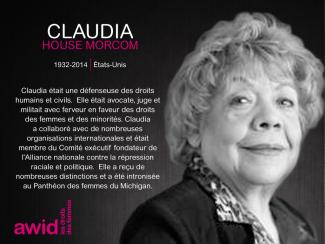
Claudia House Morcom
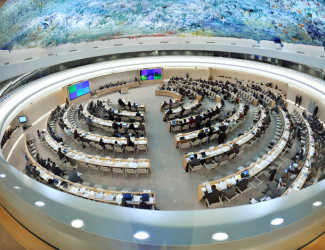
The Human Rights Council (HRC) is the key intergovernmental body within the United Nations system responsible for the promotion and protection of all human rights around the globe. It holds three regular sessions a year: in March, June and September. The Office of the UN High Commissioner for Human Rights (OHCHR) is the secretariat for the HRC.
Debating and passing resolutions on global human rights issues and human rights situations in particular countries
Examining complaints from victims of human rights violations or activist organizations on behalf of victims of human rights violations
Appointing independent experts (known as “Special Procedures”) to review human rights violations in specific countries and examine and further global human rights issues
Engaging in discussions with experts and governments on human rights issues
Assessing the human rights records of all UN Member States every four and a half years through the Universal Periodic Review
AWID works with feminist, progressive and human rights partners to share key knowledge, convene civil society dialogues and events, and influence negotiations and outcomes of the session.
#FreezeFascisms
Depuis l’adoption de la Déclaration et du programme d’action de Beijing il y a 30 ans, les groupes fascistes exercent un pouvoir et une influence croissantes dans les espaces multilatéraux, faisant reculer les acquis en matière d’égalité de genre et de protection des droits humains dans le monde.
À l’approche de la CSW69, nous co-organisons de courageuses initiatives horizontales, sur le terrain et en ligne, pour échanger des stratégies et bâtir un pouvoir féministe au-delà de Beijing+30. Notre présence collective perturbe les mécanismes d’exclusion des institutions dans ces espaces tout en soutenant les mouvements qui s’organisent autour d’alternatives féministes aux systèmes d’oppression.
Participez aux conversations du 10 au 21 mars 2025 pour, collectivement, faire de la CSW69 un espace de résistance et de solidarité.
Elina est une jeune avocate des droits humains afro-dominicaine et féministe intersectionnelle, engagée à utiliser sa voix et ses compétences pour construire un monde plus juste, empathique et inclusif. Elle a commencé la faculté de droit à 16 ans, convaincue que cela lui donnerait les outils nécessaires pour comprendre et promouvoir la justice sociale. Après un JD (doctorat en droit) en République dominicaine, elle a poursuivi un LL.M. (maîtrise en droit) en droit international public et droits humains au Royaume-Uni en tant que boursière Chevening. Seule femme latino-caribéenne de sa classe, elle a obtenu son diplôme avec distinction.
Elina a travaillé à l'intersection des droits humains, du genre, de la migration et de la politique et ceci à plusieurs niveaux : des instances étatiques aux collectifs de base aux organisations internationales. Elle a aidé à plaider des cas de violence sexiste devant la Cour interaméricaine des droits de l'homme. En tant que membre du Groupe consultatif des jeunes du FNUAP, elle a contribué au renforcement des droits sexuels et reproductifs en République dominicaine. Elle a codirigé la première campagne d'Amnesty International sur les droits des travailleur.euse.s du sexe dans les Amériques, développant des partenariats solides avec des organisations dirigées par des travailleur.euse.s du sexe et utilisant la position d'Amnesty pour amplifier la voix des femmes défenseurs des droits humains et des travailleur.euse.s du sexe. Elina fait partie de Foro Feminista Magaly Pineda et de la Global Shapers Community. Elle parle espagnol, français et anglais.
Grâce à la richesse de son expérience, Elina apporte à l’AWID de solides compétences de gouvernance et de planification stratégique et un savoir-faire éprouvé en matière de mécanismes des Nations Unies et des droits humains régionaux. Elle affirme également très clairement sa détermination à continuer de faire de l’AWID une organisation inclusive pour toutes les femmes, et particulièrement les jeunes féministes et celles des Caraïbes. C’est avec la diversité de ces apports qu’Elina rejoint une sororité de féministes internationales qui ont du mordant. Elle pourra continuer à y développer son leadership féministe, pour ne plus jamais se sentir seule dans cette voie.
"[Ella] era una persona que se caracterizaba por su arduo trabajo a favor de la defensa de los derechos humanos y la construcción de la paz en Nariño, especialmente en el municipio de Samaniego-Nariño". - Jorge Luis Congacha Yunda para Página10.
Paula se especializó en los derechos civiles y políticos, las problemáticas de la impunidad y la justicia, y contribuyó a descubrir abusos de poder, incluida la corrupción. Paula participó también en proyectos para la consolidación de la paz en su ciudad natal, Samaniego, a través del Consejo Municipal de Paz y la Junta Municipal de Mujeres.
Paula recibió amenazas de muerte tras exponer el manejo irregular de los recursos y de denunciar actos de corrupción en el Hospital Lorencita Villegas del municipio nariñense. Fue asesinada el 20 de mayo de 2019, cuando dos hombres se acercaron y le dispararon a corta distancia.
Después de haber evaluado la capacidad de la organización y fijado los objetivos de la investigación, tal vez decidas realizar una encuesta como uno de los métodos de recolección de datos para analizar.
En esta sección:
- ¿Por qué realizar una encuesta?
- Define la población a la que vas a entrevistar
1. Encuesta en línea
2. Encuesta en papel- Elabora las preguntas
1. Preguntas claras y breves
2. Lenguaje simple y universal
3. Preguntas «cerradas» y «abiertas»
4. Estructura lógica
5. Duración: menos de 20 minutos
6. Simple e interesante- Prueba la encuesta y tradúcela
1. Lxs consultorxs
2. Borrador y puesta a prueba
3. Traducción- Dirígela a la población adecuada
1. Tamaño de la muestra
2. Grado de participación
3. Base de datos y lista de contactos
Una encuesta es una excelente forma de reunir información sobre organizaciones específicas para identificar tendencias a nivel colectivo.
Por ejemplo, el tamaño del presupuesto de una organización no te dice demasiado acerca de una tendencia en el financiamiento para los derechos de las mujeres, pero si conoces los presupuestos de 1000 organizaciones por los derechos de las mujeres e incluso de 100, puedes comenzar a darte una idea de la situación del financiamiento para los derechos de las mujeres en su conjunto.
Cuando elabores las preguntas de la encuesta, ten presente el marco de investigación que elaboraste en la sección previa.
Recuerda: El marco te ayuda a decidir qué información intentarás obtener a través de la encuesta. La información que recojas de ella debería permitirte cumplir con las metas, responder a las preguntas principales y generar los productos finales.
Este es un paso importante: cuanta más claridad tengas acerca de las poblaciones a las que quieres encuestar, más podrás refinar las preguntas.
Según cuáles sean los objetivos de la investigación, tal vez quieras crear encuestas separadas para organizaciones por los derechos de las mujeres, fondos de mujeres y donantes. O tal vez quieras centrar la encuesta en los grupos de mujeres y hacer entrevistas con los fondos de mujeres y lxs donantes, dado que hacer una encuesta con cada una de esas poblaciones podría demandar demasiados recursos.
Las preguntas que formules a los grupos de mujeres pueden ser diferentes que las dirigidas a los fondos de mujeres. Si piensas encuestar a más de una población, te sugerimos que adaptes la recolección de datos a cada una de ellas.
Al mismo tiempo, algunas de las principales preguntas para cada población pueden y deben ser comunes, para poder hacer análisis comparativos de las respuestas.
Si puedes llegar a través de Internet a la población que quieres entrevistar, te será útil y eficiente generar una encuesta en línea.
Te recomendamos dos herramientas en línea que tienen versiones gratuitas:
Survey Gizmo te permite convertir la información para el SPSS, un programa estadístico que se usa para análisis avanzado de información.
La persona o el equipo que analice la información podrá determinar qué herramienta es la mejor para la encuesta, según la capacidad humana de tu organización y cómo piensan analizar los datos.
Para hacerla más accesible, piensa en producir una versión en PDF de la encuesta que puedas enviar por correo electrónico. Con esto te asegurarás de que las organizaciones con conexión inestable a Internet o las que deben pagar su conexión por minuto puedan descargar la encuesta y completarla sin tener que estar conectadas en forma permanente.
Tal vez decidas que la encuesta en línea no resulta lo suficientemente accesible o incluyente para la población a la que quieres relevar.
En ese caso, tendrás que crear una encuesta en papel y métodos para contactarte con la o las poblaciones relevantes (mediante eventos muy concurridos o por correo, incluyendo sobres con estampillas para que puedan enviarte la respuesta sin que hacerlo les ocasione gastos).
Haz que a lxs participantes les resulte fácil responder la encuesta.
Si las preguntas son confusas o requieren respuestas complejas, corres el riesgo de que lxs participantes la dejen sin completar o que las respuestas que obtengas te resulten inútiles para el análisis.
Asegúrate de que cada una de las preguntas pida solo una información.
Por ejemplo:
- ¿Cuál es el presupuesto de la organización para este año?
Pregunta fácil de responder: es una información que lxs participantes pueden encontrar con facilidad y solo pide una información.
- ¿Para qué porcentaje del presupuesto has identificado probables fuentes de financiamiento para tu organización pero todavía no las tienes confirmadas?
Pregunta confusa y difícil de responder: ¿estás pidiendo una lista de las fuentes de financiamiento aún sin confirmar, o de los financiamientos que son probables pero todavía no están confirmados?
Esta información es difícil de obtener: La persona que completa la encuesta tendrá que calcular el porcentaje, y tal vez no tenga esta información a mano. Con esto, se incrementa el riesgo de que abandone la encuesta sin haberla completado.
Muchas palabras y siglas que a ti te resultan familiares pueden no serlo para las personas que responden la encuesta, como por ejemplo «movilización de recursos», «M&E» o «IVE», así que asegúrate de utilizar un lenguaje más universal en la redacción de las preguntas.
Si no tienes más remedio que utilizar la jerga de tu sector — frases o palabras que tú y tus colegas manejan pero no la población en general — entonces ofrecer una definición hará que resulte más fácil entender las preguntas de la encuesta.
Asegúrate de explicar las siglas que utilices. Por ejemplo, si escribes «IVE», aclara que se trata de «Interrupción voluntaria del embarazo».
Preguntas cerradas:
Solo admiten una respuesta (por ejemplo «sí», «no» o una cifra). No es posible responder con las propias palabras, sino que se debe optar entre categorías predeterminadas o ingresar una cifra específica. Las respuestas a las preguntas cerradas son más fáciles de cuantificar como un todo y suelen ser cuantitativas.
Ejemplo de pregunta cerrada: ¿Cuál es el presupuesto de tu organización?
Preguntas abiertas:
Son preguntas cualitativas y muchas veces son descriptivas. Se responden con las propias palabras. Son más adecuadas para entrevistas que para encuestas.
Resultan más difíciles de analizar como un todo, en comparación con las preguntas cerradas, sobre todo si tienes una muestra grande. Pero si formulas las preguntas abiertas en forma muy precisa, te resultará más fácil analizar las respuestas.
Siempre que te sea posible, diseña las preguntas de la encuesta de forma tal que quienes la respondan deban optar por una o más opciones de una lista en lugar de ofrecerles preguntas abiertas. Esto te ahorrará tiempo y esfuerzo en la limpieza y el análisis de la información.
Ejemplo de pregunta abierta: ¿Qué desafíos específicos enfrentaron este año para movilizar recursos?
Familiarízate con los distintos tipos de preguntas
Existen diferentes formas de formular preguntas cerradas. A continuación te ofrecemos algunos ejemplos para que los estudies y decidas cuál encaja mejor con el tipo de información que quieres obtener:
Si piensas realizar esta investigación a intervalos regulares (por ejemplo, una vez cada dos años), te recomendamos elaborar una encuesta de línea de base que puedas repetir y que te permita seguir la evolución de las tendencias a lo largo del tiempo.
Grupo 1: Preguntas-filtro
Las preguntas-filtro determinan si la persona/organización que responde forma parte de la población que quieres encuestar.
Las opciones de encuestas en línea que te proporcionamos te permiten poner fin a la encuesta si quien la responde no cumple con los criterios de elegibilidad que fijaste. En ese caso, quien responde pasará directamente a una página que le agradecerá su interés pero le explicará que esta encuesta está destinada a una población diferente.
Imagina que solo quieres que respondan la encuesta los grupos por los derechos de las mujeres de una zona determinada. Las preguntas-filtro te pueden ayudar a saber dónde está ubicada la organización que responde e impedir que las ubicadas en otras zonas sigan adelante con la encuesta.
Grupo 2: Preguntas estandarizadas y básicas sobre características de la población encuestada
Estas preguntas recogen información específica sobre cada organización que responde la encuesta, tal como su nombre y dónde está ubicada. Pueden superponerse con las preguntas-filtro.
Si cuentas con los recursos necesarios, puedes guardar estas respuestas en una base de datos y pedir que las respondan solo el primer año que cada organización participe de la encuesta.
Así, cuando repitas la encuesta en los años subsiguientes, las organizaciones podrán responder la encuesta en menos tiempo, lo que incrementa la probabilidad de que la completen.
Grupo 3: Preguntas estandarizadas y de respuesta obligatoria sobre financiamiento
Estas preguntas te permitirán indagar acerca de los ingresos y la sostenibilidad en términos de financiamiento. Si formulas estas preguntas una vez por año, o una vez cada dos años, podrás identificar tendencias a lo largo de los años.
Grupo 4: Preguntas sobre temas especiales
Estas preguntas tienen que ver con el contexto. Pueden referirse a cambios en el clima político o económico, o también pueden ser preguntas de respuesta no obligatoria sobre financiamiento, como por ejemplo acerca de las actitudes frente a la movilización de recursos.
Por ejemplo, la Encuesta Global WITM 2011 de AWID incluyó preguntas sobre la nueva tendencia a «invertir en las mujeres y las niñas» por parte del sector privado.
Cuanto más corta, mejor: responder tu encuesta no debería llevar más de 20 minutos. Esto garantizará que quienes comiencen a responderla la completen y también es una señal de respeto al tiempo de esas personas.
Es natural apasionarse y dejarse llevar pensando en todas las preguntas que podrías formular y en toda la información que podrías obtener. Pero las encuestas largas cansan, hacen que las personas dejen la encuesta sin terminar o que no quieran tener nada más que ver con tu organización.
Cada pregunta que agregues a la encuesta, implicará también más tiempo y esfuerzo para su análisis posterior.
Consejos generales
- Pide los presupuestos exactos en lugar de solicitar que elijan dónde se ubica el suyo dentro de un rango determinado (nuestra experiencia nos indica que las cantidades específicas son más útiles para el análisis).
- ¡Especifica la moneda! Si es necesario, pide que conviertan las cantidades a una moneda determinada o que digan claramente en qué moneda están expresados los montos para las preguntas referidas a finanzas.
- Asegúrate de recoger la suficiente información sobre las características de cada organización que responda la encuesta para contextualizar los resultados y poder extraer tendencias que reflejen más matices.
Por ejemplo, si estás analizando dónde está el dinero para un país determinado, te resultará útil saber de qué región proviene cada organización o en qué ámbito (rural, urbano, nacional, local) trabaja para poder identificar tendencias importantes como por ejemplo si hay más financiamiento disponible para los grupos urbanos o para temáticas determinadas.
Involucrar desde el comienzo a las organizaciones con las que te asocias para la investigación te permitirá construir un vínculo más profundo con ellas y te garantizará una investigación más incluyente, de mejor calidad.
Estas organizaciones y también personas a título individual (lxs «consultorxs») te harán llegar comentarios sobre la versión borrador de la encuesta, la responderán como parte del piloto y revisarán el análisis preliminar de los resultados de la encuesta y de los otros tipos de información que hayas recogido.
También difundirán la encuesta en sus ámbitos de acción una vez que esté lista. Si planeas difundir la encuesta en varios idiomas, asegúrate de asociarte con organizaciones que utilicen esos idiomas en su trabajo.
Si decides hacer tanto una encuesta como entrevistas, lxs consultorxs-organizaciones asociadas que te hayan asesorado en el diseño de la encuesta también podrán ser tus entrevistadas.
Una vez que tengas lista la versión borrador de la encuesta, ponla a prueba con las organizaciones con las que te has asociado antes de difundirla entre la población a la que quieres entrevistar. Esto te permitirá identificar los problemas técnicos o las preguntas confusas de la encuesta.
También te dará una idea realista del tiempo que lleva completar la encuesta.
Una vez que cuentes con una versión final de la encuesta y la hayas puesto a prueba, puedes traducirla.
Asegúrate de poner a prueba las versiones traducidas de la encuesta. Por lo menos algunas de las personas con las que la pruebes deben ser hablantes nativxs de los idiomas en los que la encuesta se tradujo, para garantizar su claridad.
El tamaño de la muestra es la cantidad de personas que responden la encuesta.
La muestra a la que le apliques la encuesta debe reflejar las características de la población a la que intentas analizar.
Por ejemplo, supongamos que quieres analizar los millones de grupos por los derechos de las mujeres que existen en Valyria (país imaginario) pero no tienes tiempo ni recursos para entrevistar a cada uno de ellos. Entonces puedes entrevistar a una cantidad más reducida – que será el tamaño de tu muestra – que, tomada como un todo, refleje las características de los grupos por los derechos de las mujeres en ese país.
Tamaño recomendado de la muestra
Aunque no es necesario que decidas el tamaño exacto de la muestra antes de comenzar a difundir la encuesta, tener un tamaño en mente te permitirá decidir en qué momento ya cuentas con una cantidad suficiente de respuestas y si deberás o no extender el plazo si consideras que todavía no alcanzaste la cantidad ideal.
Todavía más importante que el tamaño de la muestra es en qué medida la población meta a la que quieres estudiar tiene la posibilidad de responder la encuesta.
Si segmentos grandes o importantes de esa población están sistemáticamente excluidos (por razones de idioma, accesibilidad, tiempo, problemas con la base de datos, acceso a Internet u otro factor), resultará imposible evaluar con precisión la confiabilidad estadística de la información proporcionada por la encuesta.
En nuestro ejemplo: necesitarás asegurarte de que todos los grupos de mujeres de Valyria tengan la oportunidad de participar en la encuesta.
Si un segmento de los grupos de mujeres de Valyria no utiliza Internet, y la encuesta solo se puede responder en línea, te estarás perdiendo a un segmento importante y la muestra definitiva no representará en forma adecuada a todos los grupos de mujeres de Valyria.
Si la muestra no incluye a segmentos de la población que quieres estudiar, no podrás derivar de ella conclusiones apropiadas; garantizar una muestra representativa te permitirá no cometer ese error.
Para darte una idea de cómo es el panorama de los grupos de mujeres dentro del área que estás investigando (por región, población, temática, etc.), te puede resultar útil estudiar bases de datos.
Si tienes claro el panorama general de los grupos de mujeres a los que vas a estudiar, podrás darte una idea de cómo tendrá que ser la muestra, que debería ser una versión más pequeña de esa población en general.
Una vez que cuentes con respuestas a la encuesta, podrás evaluar si la población a la que llegaste (el tamaño de la muestra) refleja la composición general de la población que estás estudiando. Si no lo refleja, puedes salir a buscar a los sectores que consideras que están ausentes o extender el período durante el cual será posible responder a la encuesta.
Si no tienes certeza de cuán representativa es tu muestra, no te paralices: intenta de la mejor manera expandirla lo máximo que puedas, en todos los sentidos.
2. Prepara el marco para la investigación

• 1 persona (o más) de investigación
• Traductores si ofrecer encuesta en varios idiomas
• 1 persona (o más) para ayudar en la difusión de la encuesta a la población objetivo
• 1 persona (o más) para la análisis de los datos
• Lista de asesores deseados: organizaciones, donantes y activistas
• Opcional:incentivo(sà para convencer a la gente para completar la encuesta
• Opcional: incentivo(s) para asesores
• Survey Monkey o Survey Gizmo (en inglés)
• Encuesta Global WITM de AWID
2. Prepara el marco para la investigación
4. Recoge la información y analízala
Nous avons le plaisir de vous présenter Mariama Sonko, agricultrice rurale, éco-féministe et défenseuse des droits humains, vivant actuellement à Niaguis, une ville du sud-ouest du Sénégal.
Ayant grandi dans une famille et une communauté rurale d’agriculteur·rices, elle a été témoin du rôle essentiel des femmes dans la production alimentaire et la conservation des semences depuis son plus jeune âge, tout en étant immergée dans le travail de la terre.
Mariama défend les savoirs agricoles locaux et les pratiques paysannes depuis les années 90. En tant que mère de 5 enfants, la nourriture qu'elle cultive elle-même est la principale source de subsistance de sa famille.
Elle est actuellement présidente de Nous Sommes la Solution et s'engage à promouvoir les pratiques agroécologiques et l'agriculture familiale, à encourager la souveraineté alimentaire, la biodiversité et la préservation des semences paysannes, et à exiger un accès équitable aux ressources et à la terre à travers l'Afrique de l'Ouest.
Source: AWID’s Feminist Realities Festival Crear | Résister | Transform - Day 2/ 2ème jour/ 2º día
Veena Singh is a Fiji Islander, feminist, and woman of colour. Born and raised in a small rural town in Fiji, she draws strength from her rich mixed heritage (her mother is an Indigenous Fijian woman and her father is Fijian of Indian descent). Veena’s identity and lived experiences deeply inform her commitment to justice, equity, and inclusion. With over two decades of experience in human rights, gender equality, community development, and social inclusion, Veena is a passionate advocate for shifting power to create transformative change and for building an “economy of kindness”. Her work spans diverse areas including community development; women, peace and security; social policy; human rights; and policy advocacy.
Veena is deeply committed to advancing inclusion, peace and justice, sexual and reproductive health and rights (SRHR), climate justice, transitional justice, and human rights. She brings a wealth of experience working across grassroots networks, international organizations, and government institutions, always centering community and locally led approaches and feminist principles.
Outside of her ‘office life’, Veena is an environmental advocate, mental health champion, and writer. She is a mum to 11 cats, a saree wearer, and a lover of snail-mails and postcards. A thoughtful observer of feminist movements in Fiji and the Pacific, Veena is on a personal journey to “decolonise the mind and the self through radical self-reflection.” Above all, she is driven by a desire and dream to produce relatable, resonant writing that connects with the Pacific diaspora and amplifies voices from the margins.
Carol Thomas était une pionnière de la défense des droits sexuels et reproductifs des femmes en Afrique du Sud. Gynécologue aguerrie et fondatrice du WomenSpace, elle pratiquait et promouvait des modes de prestation de soins aux femmes non traditionnels, en proposant des soins à la fois de haute qualité, empathiques et accessibles.
« Elle inscrivait cela non seulement dans la joie de la grossesse et des nouveaux bébés, mais également dans les angoisses de la stérilité, des accouchements prématurés et des cancers féminins et dans le déchirement des fausses couches et des mortinaissances. » -Helen Moffett
Carol fonctionnait selon de nouveaux paradigmes, mettant au centre de sa pratique les besoins des femmes ayant le moins d’accès aux services et aux droits dans la société :
« L’environnement socioéconomique dans lequel nous nous trouvons majoritairement implique que les femmes supportent un fardeau disproportionné de maladies et du chômage... En tant que femme noire précédemment désavantagée, je comprends très bien ce qui se passe dans nos communautés. » - Carol Thomas
Son entreprise sociale innovante «iMobiMaMa», s’étant mérité de nombreux prix, prend appui sur les kiosques de téléphonie mobile et la technologie interactive pour connecter directement les femmes avec les services, l’information et le soutien en soins prénataux et de santé sexuelle dans les communautés de toute l’Afrique du Sud.
Carol soutenait les femmes à la fois lors des grossesses désirées et non désirées, et a encadré de nombreux·ses infirmier·ère·s et médecins au cours de sa vie.
On la décrivait également comme la gynécologue chez qui se rendre « pour les trans qui souhaitaient des soins trans affirmatifs. Elle savait y faire lorsque tant d’autres butaient sur les pronoms ou les mots à employer. Ses couvertures chaudes, son écoute attentive et ses mots qui tombaient toujours justes étaient vraiment réconfortants. » - Marion Lynn Stevens
On disait de Carol Thomas qu’elle était au point culminant de sa carrière lorsqu’elle est décédée, le 12 avril 2019, des complications d’une double transplantation pulmonaire.
Les très nombreux hommages qui lui ont été rendus suite à son décès inattendu faisaient mention qu’elle était, entre autres :
« un modèle à suivre, une guerrière, une innovatrice, une leader dynamique, une rebelle, une boule d’énergie, une brillante scientifique, une doctoresse bienveillante ».
Nul doute que Carol Thomas restera dans nos mémoires et que nous lui rendrons hommage pour avoir été tout cela, et bien plus.
Le produit de l’ensemble de votre recherche est maintenant organisé et révisé. Vous désirez maintenant que les résultats soient visuellement accessibles et attrayants afin d’en faciliter la diffusion.
Dans cette section
- Mettez en forme votre rapport final pour publication
1. Pensez comme pense votre public
2. Collaborez avec un-e graphiste professionnel-le
3. Veillez à la cohérence- Contrôlez la qualité des traductions
Pensez à élaborer des produits plus courts qui accompagnent le rapport complet.
Comme il a été mentionné à la section Synthétisez les résultats de votre recherche, l’AWID tire fréquemment des produits plus succincts du long rapport de recherche. Cela facilite une distribution plus vaste, particulièrement destinée à des publics clés.
Ne perdez jamais de vue votre population cible : qui lira votre rapport ?
Exemples de produits plus courts tirés du long rapport de recherche :
Les gens sont constamment submergés d’information. Votre produit devra être visuellement percutant afin de maintenir l’intérêt de votre public. Ici encore, le fait d’avoir une idée précise de ce que vous souhaitez accomplir et de ceux et celles que vous voulez toucher permettra à la-au graphiste de créer des produits ciblés.
Un très long rapport en format PDF pourrait sembler être la seule façon de présenter votre recherche. Cependant, ce genre de document peut rebuter la plupart des gens, particulièrement s’il est affiché en ligne.
Si vous voulez partager votre produit avec une communauté en ligne, pensez à créer des mèmes (symboles culturels transmis de façon virale) et des infographies à diffuser dans les médias sociaux, les blogs et les plateformes Web.
Lorsque vous devez décider de créer ou non des produits plus courts, considérez la possibilité de diviser vos résultats en produits plus succincts que vous pourrez partager avec les populations ciblées ou encore à différents moments de l’année, pour susciter un intérêt renouvelé à l’égard de votre produit.
Si avez peu de temps et un peu de ressources financières, nous vous recommandons d’embaucher une entreprise de conception graphique.
Pour des raisons économiques, il peut sembler tentant d’avoir recours au personnel interne pour mettre en forme votre produit. Cependant, un-e graphiste professionnel-le peut avoir d’énormes incidences sur l’aspect de votre produit final et sur les retombées qu’il peut avoir !
La-le graphiste (interne ou embauché-e) doit pouvoir :
Ce dont la-le graphiste aura besoin de votre part :
Les graphistes sont des spécialistes du design visuel. Ils/Elles n’ont pas forcément de connaissances dans le domaine des droits des femmes et ne sont pas au fait des résultats de votre recherche, particulièrement si vous travaillez avec un prestataire externe. Indiquez-leur clairement quels sont les éléments importants du rapport et le public que vous ciblez.
En fonction de ces détails, la personne chargée du graphisme suggérera des moyens de mettre en exergue ces éléments et rendra l’ensemble du produit attrayant.
Lorsque vous créez une série de produits plus succincts, n’oubliez pas de les lier les uns aux autres :
Il est également important d’assurer la participation du personnel afin que ses membres puissent garantir que tous les produits dérivés demeurent fidèles aux résultats de la recherche.
Si vous avez modifié le texte une fois que la conception graphique et la mise en forme du rapport de votre recherche ont été finalisées, assurez-vous de faire parvenir ces changements aux traducteurs-trices.
Si vous créez des produits plus succincts, vous devrez aussi les traduire lorsqu’ils auront été conçus et mis en forme. Ces traductions doivent être suffisamment claires pour permettre à la personne chargée du graphisme de la mettre en page, même si elle ne parle pas la langue.
Après la traduction du produit et avant de le partager, assurez-vous de faire revoir le document par une personne dont la langue maternelle est celle dans laquelle le produit est présenté.
7. Synthétisez les résultats de votre recherche

• 2-3 mois
• 1 personne (ou plus) chargée de la recherche
• 1 éditeur-trice (ou plus)
• Graphiste
• Traducteur(s)-trice(s), si nécessaire
• Liste des espaces de publication
7. Synthétisez les résultats de votre recherche
9. Parlez-en au monde entier !

Con más de 30 años de experiencia en finanzas, Christine ha dedicado su carrera a fomentar misiones sin fines de lucro en todo el mundo. Sus contribuciones incluyen desempeñarse como tesorera en la junta de una ONG . Se sumó a AWID en 2007 como Fiscalizadora y, en 2023, asumió el rol de Directora de Finanzas. En su tiempo libre, disfruta de viajar, la jardinería y el senderismo.
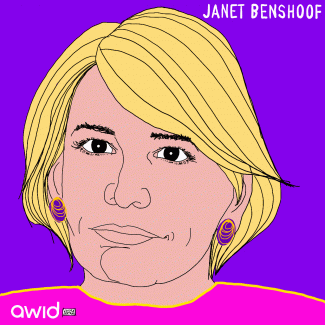
Janet Benshoof was a human rights lawyer from the United States and an advocate for women’s equality, sexual and reproductive rights.
She campaigned to broaden access to contraceptives and abortions across the world, and battled anti-abortion rulings and in the American territory of Guam. She was arrested in 1990 for opposing her country’s most restrictive abortion law, but won an injunction at the local court in Guam that blocked the law and eventually won at the Ninth Circuit Court of Appeals, striking down the law for good.
“The women in Guam are in a very tragic situation. I never intend to be quiet about that.” - Janet Benshoof for People Magazine
Janet established landmark legal precedents including the US Food and Drug Administrations’ approval of emergency contraception, as well as the application of international law to ensure the rights of rape victims in the Iraqi High Tribunal’s prosecution of Saddam-era war crimes.
Janet was President and founder of the Global Justice Center, as well as founder of the Center for Reproductive Rights, the world’s first international human rights organization focused on reproductive choice and equality. She served 15 years as Director of the American Civil Liberties Union’s Reproductive Rights Project, where she spearheaded litigation shaping US constitutional law on gender equality, free speech, and reproductive rights.
“Janet was known for her brilliant legal mind, her sharp sense of humor, and for her courage in the face of injustice.” - Anthony D. Romero
Named one of the “100 Most Influential Lawyers in America” by the National Law Journal, Janet was the recipient of numerous awards and honors.
She was born in May 1947 and passed away in December 2017.
The solidarity economy (including cooperative economy and gift economy) is an alternative framework that is allowing for different forms in different contexts, open to continual change.
This framework is grounded in the principles of:
The producers in a solidarity economy develop economic processes that are intimately related to their realities, preservation of the environment and mutual cooperation.
According to feminist geographer Yvonne Underhill-Sem, the gift economy is an economic system in which goods and services flow between people without explicit agreement of their value or future reciprocity.
Behind gifting is human relationship, generation of goodwill, and attention to the nurturance of the whole society and not just one’s immediate self and family, it is about the collective.
For example, in the Pacific region, this includes: collecting, preparing, and weaving terrestrial and marine resources for mats, fans, garlands, and ceremonial items; and raising livestock and storing seasonal harvests.
The incentives for women to be involved in economic activities are diverse, ranging from the fulfillment of career aspirations and making money for a long-term comfortable life to making money to make ends meet, paying off debt, and escaping from the drudgery of routine life.
To accommodate the diverse environments that women operate in, the concept of solidarity economy is in continual development, discussed and debated.