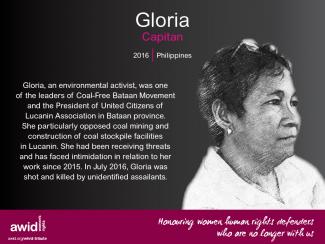
Gloria Capitan

In September 2016, the 13th AWID international Forum brought together in Brazil over 1800 feminists and women’s rights advocates in a spirit of resistance and resilience.
This section highlights the gains, learnings and resources that came out of our rich conversations. We invite you to explore, share and comment!
One of the key takeaways from the 2016 Forum was the need to broaden and deepen our cross-movement work to address rising fascisms, fundamentalisms, corporate greed and climate change.
With this in mind, we have been working with multiple allies to grow these seeds of resistance:
And through our next strategic plan and Forum process, we are committed to keep developing ideas and deepen the learnings ignited at the 2016 Forum.
AWID Forums started in 1983, in Washington DC. Since then, the event has grown to become many things to many peoples: an iterative process of sharpening our analyses, vision and actions; a watershed moment that reinvigorates participants’ feminisms and energizes their organizing; and a political home for women human rights defenders to find sanctuary and solidarity.
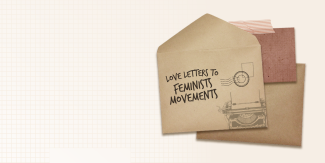
Hello again, and again, and again. I have known and loved you my entire adult life, since I first met you meaningfully, after graduating from university. I’d seen you one time before then. That was you appearing as Betty Friedan on a local TV talk show in the US Midwest, in the late-1960s. At the time, Mrs. Wells, my other mother, and I commented on what wild, far-fetched ideas this woman was trying to convince us about. Decade after decade since then I have fallen more deeply in love with you, Beloved, and understand and witness your political and theoretical brilliance, ethical and moral authority, creativity, joy, and love, above all. Nearly 60 years later, I know we are partners forever.

The early years of our acquaintanceship was ok. I was quite self-involved--figuring racial, gender, and sexual identity; getting clear on my core politics, values, and ethics; completing my formal education--and you provided numerous settings, intellectual drop-in centers, and comforting holding environments where and through which I was able to craft the young-adult building blocks of the feminist and human being whom I would become.
The predominantly white women’s movement of Cambridge and Boston, including Daughters of Bilitis, was my starting place. That suited me at the time but soon realized I desired something more. Poof! Like magic (serendipity), I connected with a small group of radical, anti-imperialist, Black, socialist lesbian women and we soon became the Combahee River Collective.
That early Combahee experience, combined with critical life lessons and particular African-American/Korean immigrant racial politics of early-1990s in the US, prepared me for the journey that has led me to identify and work as a transnational feminist to address militarism and to dedicate myself to imagining other worlds where all living beings will thrive.
The next two critical women’s-movement moments were decades after Combahee years but deeply linked. First was meeting and being invited into the Korean feminist movement organizing against US military bases and supporting the “kijichon women” the Korean women whose lives, including for some, their mixed-race children, revolved around servicing US military personnel in numerous ways in villages and towns adjacent to the bases. Korean Beloved Feminists, especially Kim Yon-Ja and Ahn Il-Soon, the first sisters I met and traveled with, made me see and understand the critical importance of nation as an analytical and organizing principle. The “capstone” was living, working in occupied Palestine. The late Maha Abu-Dayyeh introduced me to the Palestinian women’s movement, with a profound comment, “you can leave Palestine but Palestine will never leave you.” So true. And, all my work and experiences across many borders brought me to AWID--my second home.
As you know, Beloved, being with you has not been easy or simple. Indeed, you are demanding, consistently riddled with contradictions, and sometimes even hurtful. Nonetheless, you continue to grow and develop, as you are supporting my political, emotional, and spiritual growth and development. I guess we are growing each other--a very profound process to which I will dedicate the rest of my time in my current form.
The through-line of being with you all these decades is this:
Feminists Collectively Engaging the Heads, Hearts, Hands, and Spirits to transform our worlds
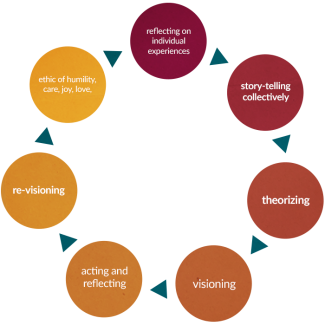
So much love, Feminist Movements!
Your Margo
AKA DJ MOR Love and Joy
Wellfleet Massachusetts USA
La comunicación del deseo
Anfitrionx: Tendemos a pensar en la comunicación del deseo como algo circunscrito a la intimidad de la alcoba y nuestras relaciones personales. Sin embargo, ¿podemos también pensar este tipo de comunicación como una estructura, una práctica que nutre nuestro trabajo, y cómo somos, y cómo actuamos en el mundo?

LindiweCreo que, desafortunadamente, en el pasado expresar tu sexualidad tenía sus limitaciones. Se te permitía expresarla dentro de los confines del matrimonio, lo cual estaba permitido; siempre el tabú y el estigma estuvieron asociados a todo intento de expresarla de una forma distinta. Cuando se trata de comunicar, obviamente, el hecho de que ciertos estigmas se asocien a la expresión de tu sexualidad o la expresión de tu deseo hace mucho más difícil comunicar eso en la alcoba o en la intimidad con tu pareja. Desde mi experiencia personal creo que, obviamente, si me siento más cómoda expresándome fuera de la alcoba acerca de otros asuntos u otros temas, para mí es más fácil construir esa confianza, porque comprendes la resolución de conflictos con esa persona en particular, comprendes exactamente qué hacer para que esa comunicación sea especial para esa persona en particular. No es fácil. Se hace constantemente en todo tipo de relación, ya sea la pareja, algo casual o solo un momento. Pero creo que la confianza en el afuera puede traducirse definitivamente en cómo comunicas tu deseo.
Manal
Desde la infancia, a una mujer se la cría con eso de: «no tienes permiso para hablar de tu cuerpo, no tienes permiso para hablar de tu deseo», lo que hace recaer una enorme responsabilidad en las mujeres, sobre todo en las niñas en su adolescencia, cuando necesitan expresarse y hablar de estos temas. Por lo tanto, en mi opinión, este es un gran problema. ¿Sabes? Llevo casada más de 25 años, pero todavía, hasta el día de hoy, no puedo hablar de mis deseos. No puedo decir lo que quiero o prefiero, porque es como si no tuviera permitido cruzar esa línea. Es como un pecado, a pesar de ser mi derecho. Lo mismo sucede con todas mis amigas, no pueden expresarse de forma correcta.
Louise
Personalmente creo que expresar nuestros deseos, mis deseos, sea como sea que se expresen, tiene que ver con la otra persona y la mirada que esa otra persona tenga sobre mí. Así que esto también es algo que podemos vincularlo con el cine. Y la mirada que tenga sobre mí misma también: lo que creo que soy como persona, pero también lo que la sociedad espera de mí y mi sexualidad. En el pasado, de algún modo, solía establecer una analogía entre lo que sucede en la alcoba y lo que sucede en el lugar de trabajo, porque a veces se da esta dinámica de poder, lo quiera o no. Y a menudo, la comunicación verbal es más difícil de lo que pensamos. Pero cuando se trata de representarlo en el cine, es un juego absolutamente distinto. Estamos muy lejos de lo que supongo que a todxs lxs presentes nos gustaría ver en la pantalla cuando se trata de comunicar deseos sexuales dentro y fuera de la alcoba.
Anfitrionx: Podemos pensar en el mundo digital como hecho cuerpo: aunque sea virtual, no es menos real. Y eso quedó claro en el contexto del festival de las Realidades Feministas de AWID, el cual se celebró íntegramente en línea. Entonces, ¿qué implica hablar de sexualidad de forma colectiva, política, en los espacios en línea? ¿Navegamos por los espacios virtuales con nuestros cuerpos y afectos y, en dicho caso, cuáles son las distintas consideraciones en juego? ¿Qué implica para la comunicación y la representación?

LindiweLas redes sociales te hacen sentir en comunidad. Cuando expresas lo que quieres o lo que te agrada, habrá alguien que va a estar de acuerdo o en desacuerdo, pero quienes concuerdan contigo te hacen sentir que perteneces a una comunidad. Así que es más fácil lanzarlo al universo, o que otras personas lo vean, y potencialmente que no se te juzguen tanto. Y digo esto muy libremente porque a veces, según lo que expreses, serás humilladx o aprobadx. Pero cuando se trata de la alcoba, hay una intimidad y casi una vulnerabilidad que te expone a ti y a diferentes partes tuyas sobre las cuales no es fácil opinar. Cuando se trata de expresar tu deseo, hablarlo y manifestarlo y, quizás crear un tuit o un posteo en una red social, o incluso darle un «me gusta» y leer a otras comunidades con ideas afines, eso es más fácil que decirle a tu pareja, «así es como quiero recibir placer» o «así quiero que hagas ahora», debido al temor al rechazo. Pero no es eso únicamente. Sólo el aspecto de la vulnerabilidad – permitirte desnudarte a tal punto que la otra persona vea lo que estás pensando, sintiendo, deseando –, creo que es ahí donde radica la diferencia. Siento que en las redes sociales hay más comunidad y es más fácil involucrarse en conversaciones. Mientras que en la habitación, no quieres arruinar el momento necesariamente. Pero creo que eso, en cierta forma, te ayuda a comprender, según la relación con la persona, cómo te relacionarías de allí en más. Así que siempre sé que si intento comunicar algo y no lo logro en el momento, siempre puedo mencionarlo fuera de ese momento y ver cuál sería la reacción para saber cómo abordarlo en el futuro.
Louise¿Sabes? La cuestión con las películas es que no sé si la mirada masculina es intencionada o no. En verdad no lo sabemos. Lo que sí sabemos es la razón por la que la sexualidad en general ha sido tan heteronormativa y se ha centrado en la penetración, y por qué a las mujeres no se les da ningún espacio para realmente pedir algo en el cine: es porque la mayoría de la gente que ha trabajado en esta industria y tomado decisiones en cuanto a, ya sabes, la narración y la edición, han sido varones blancos. La venganza por violación es este género cinematográfico tan extraño que nació en la década de 1970, en donde la mitad de la historia sería sobre una mujer que fue violada por una o varias personas y, en la otra mitad, ella busca vengarse. Generalmente la mujer asesinará y matará a la persona que la violó y, en algunos casos, a otras personas cercanas al violador. Cuando este género comenzaba a surgir y, durante 30 años como mínimo, los varones eran quienes escribían, producían y dirigían esas películas. Por eso también buscamos tanto la representación. Muchxs feministas y pionerxs en la cinematografía queer también usaron el acto de filmar para hacerlo y reivindicar su propia sexualidad. Se me viene a la mente Barbara Hammer, una pionera queer y feminista del cine experimental de los Estados Unidos, que decidió filmar a mujeres teniendo sexo en 16mm., y, al hacerlo, reclamó un espacio dentro de la narrativa que se exhibía en el cine en aquel momento. Y también está el tema de la invisibilización: ahora sabemos, por Internet y el intercambio de conocimientos, que cineastas mujeres y queer vienen intentando y filmando desde los inicios del cine. Recién ahora nos damos cuenta porque tenemos acceso a bases de datos y al trabajo de activistas y curadorxs y cineastas.
Anfitrionx: Y esto abre la conversación sobre la importancia de mantener vivas las historias feministas. Los mundos en línea también han desempeñado un rol crucial en la documentación de las protestas y las resistencias. Desde Sudán hasta Palestina, pasando por Colombia, los feminismos han tomado nuestras pantallas por asalto y desafiado las realidades de la ocupación, el capitalismo y la opresión. Entonces, ¿podemos hablar de la comunicación del deseo, del deseo de algo más, como la descolonización?
ManalQuizás porque en mi pueblo hay apenas 600 habitantes y es una única familia – la Tamimi – no hay barreras entre varones y mujeres. Hacemos todo de manera conjunta. Entonces, cuando comenzamos nuestra resistencia no violenta o cuando nos unimos a la resistencia no violenta en Palestina, nadie discutió si las mujeres debían participar o no. Asumimos un papel muy importante en el movimiento aquí en el pueblo. Pero cuando otros pueblos u otros lugares comenzaron a sumarse a nuestras protestas semanales, algunos hombres pensaban que, si estas mujeres participaban o se unían a las manifestaciones, ellas lucharían con los soldados y entonces serían mujeres fáciles. Algunos hombres que no eran del pueblo intentaron acosar sexualmente a las mujeres. Pero una mujer fuerte que es capaz de enfrentar a un soldado puede también confrontar el acoso sexual. En ocasiones, cuando otras mujeres de otros lugares se suman a nuestra protesta, en un principio son tímidas; no se quieren acercar porque hay muchos hombres. Si quieres participar en la protesta, si quieres ser parte del movimiento no violento, tienes que quitarte todas esas restricciones y todas esas ideas de la cabeza. Tienes que enfocarte simplemente en luchar por tus derechos. Desafortunadamente, la ocupación israelí conoce todo esto. Por ejemplo, la primera vez que me arrestaron, tenía puesta la hijab, entonces intentaron quitármela, intentaron sacarme la ropa, frente a todo el mundo. Había entre 300 y 400 personas y lo intentaron. Cuando me llevaron para interrogarme, el interrogador dijo: «lo hicimos para castigar a otras mujeres a través suyo. Conocemos su cultura». Yo le respondí: «No me importa, creo en lo que hice. Aun si me quitaran toda la ropa, todo el mundo sabe que Manal está resistiendo».
LindiwePienso que incluso desde una perspectiva cultural, lo cual es muy irónico, si observas la cultura en África, antes de ser colonizada, se ve que mostrar la piel no era un problema. Usar piel animal o cuero para protegerte, no era ningún problema y la gente no estaba sexualizada salvo que se diera en un contexto determinado. Pero nos hemos condicionado a decir «deberías cubrirte» y cuando no te cubres, quedas expuesta y, por lo tanto, estarás sexualizada. La desnudez se sexualiza en lugar de estar simplemente desnuda; no quieres que a una niña pequeña la vean desnuda. ¿Qué tipo de sociedad nos hemos condicionado a ser si vamos a sexualizar a alguien que está desnudx fuera del contexto del vínculo sexual? Pero el entorno definitivamente juega un papel importante, porque tu madre y tu padre y tus abuelas y abuelos y tías y tíos dicen «no, no te vistas de manera inapropiada», o «no, eso es muy corto». Entonces, primero escuchas todo eso en el hogar, y luego, en el momento en que te expones al exterior, según el entorno, ya sea eurocéntrico o más occidentalizado que el que estás acostumbrada, entonces eres un poco libre de hacerlo. E incluso entonces, por más libre que seas, eso trae consigo muchas otras cuestiones en términos de abucheos y la gente que todavía sexualiza tu cuerpo. Puedes vestir una falda corta, y alguien se siente con derecho de tocarte sin tu permiso. Hay tanto asociado a la regulación y el control sobre el cuerpo de las mujeres, y la narrativa comienza en casa. Y luego sales a la comunidad, a la sociedad, y la narrativa se perpetúa, y te das cuenta de que la sociedad te sexualiza en general, sobre todo si eres una persona de color.

Anfitrionx: Por último, ¿cómo puede nuestra resistencia traspasar lo que está permitido? ¿Hay un lugar para el placer y el gozo para nosotrxs y nuestras comunidades?
LouiseEncontrar placer en la resistencia y resistencia en el placer; en primer lugar, para mí está la idea del cine de guerrilla o el acto de filmar cuando se supone que no deberías o cuando alguien te dijo que no lo hagas, lo cual es el caso de muchas realizadoras, incluidas lxs realizadorxs queer, en el mundo de hoy. Por ejemplo, en el Líbano, que es un terreno cinematográfico que conozco muy bien, la mayoría de las historias de lesbianas que he visto las han rodado estudiantes en formatos muy cortos «sin valor de producción», como se diría en Occidente: sin dinero, debido a la censura en el ámbito institucional, pero también en la esfera familiar y privada. Creo que filmar lo que sea, pero también filmar el placer y el placer en la narrativa lesbiana, es un acto de resistencia en sí mismo. Muchas veces, tan solo tomar una cámara y conseguir que alguien edite y que alguien interprete es sumamente difícil y requiere de mucha convicción política.
LindiweTengo un grupo de apoyo para casos de violación. Intento asistir a las mujeres para que se restablezcan desde una perspectiva sexual: si quieren volver a tener intimidad, que los traumas del pasado no influyan a la hora de seguir adelante. No es fácil, pero es individual. Por eso siempre comienzo por comprender el cuerpo. Creo que cuanto más lo comprendes y lo amas y más orgullo sientes por él, serás mucho más capaz de recibir a alguien en ese espacio. Lo denomino entrenamiento en la sensualidad, donde hago que comiencen a verse a sí mismas no como objetos sexuales, sino como objetos de placer y deseo que pueden ser intercambiables. De ese modo eres tan digna de recibir como de dar. Pero no solo desde un punto de vista psicológico, también es físico. Cuando sales de la ducha, sales de la tina, y te pasas loción por el cuerpo, miras cada parte de tu cuerpo, sientes cada parte de tu cuerpo, sabes cuando hay cambios, conoces tu cuerpo tan bien que si te sale un grano nuevo en la rodilla, eres tan consciente de ello porque hasta hace unas horas no lo tenías. Con este tipo de cosas intento hacer que las personas se amen a sí mismas desde su interior, se sientan que son dignas de recibir amor en un espacio seguro, así las guío hacia la reivindicación de su sexualidad y su deseo.
Manal
¿Sabes? Comenzamos a ver mujeres de Nablus, de Jerusalén, de Ramallah, incluso de las 48 zonas ocupadas, que tienen que conducir entre tres y cuatro horas solo para sumarse a las protestas. Luego intentamos ir a otros lugares, hablar con las mujeres, decirles que no sean tímidas, que simplemente tienen que creer en sí mismas y que no hay nada de malo en lo que estamos haciendo. Puedes protegerte, entonces, ¿qué tiene de malo participar o sumarte? Cuando les pregunté a algunas de ellas por qué se habían sumado, respondieron, «si las mujeres Tamimi pueden, nosotras también». Con toda honestidad, escuchar esa respuesta me hizo muy feliz porque éramos una especie de modelo para otras mujeres. Si tengo que defender mis derechos, deberían ser todos mis derechos, no apenas uno o dos. Los derechos no se dividen.

Enciende tu fuego feminista leyendo nuestras investigaciones y publicaciones varias sobre financiamiento, defensoras de derechos humanos, construcción de movimientos, fundamentalismos, justicia económica, seguimiento y evaluación feminista y más
El cuerpo es una entidad poderosa. Por ser mujeres, nuestros cuerpos son controlados, oprimidos y vigilados desde que estamos en el útero. Nuestro aspecto, la forma en que nos movemos, nos vestimos, caminamos, hablamos, gesticulamos, reímos. A menudo me he preguntado qué es lo que genera los temores patriarcales respecto del poder de los cuerpos femeninos.
En el lugar de donde provengo, se murmuraba sobre el trabajo sexual y lxs trabajadorxs sexuales con desprecio, asco, fascinación, lástima y condena, todo en simultáneo.

Descubrí el trabajo sexual y a lxs trabajadorxs sexuales cuando tenía 22 años. En conversaciones sencillas, sentadxs en círculo, charlando mientras tomábamos café y té, explorábamos nuestras vidas, experiencias, pensamientos y sentimientos.
Para lxs trabajadorxs sexuales, el trabajo sexual era la opción más conveniente de todas, para pagar las cuentas, para sostener a la familia, para tener un horario laboral más flexible, para tener sexo. Así elegí mi trabajo, como el más conveniente, para pagar las cuentas, para sostener a la familia, para tener un horario laboral más flexible.
Estas personas, mujeres y hombres, me enseñaron que yo tomaba mis propias decisiones sobre mi cuerpo: dónde focalizo su vida y su energía, si lo uso para el placer o para el dolor, si lo comercializo o lo ofrezco en forma gratuita, y cómo quiero sentirme en relación con mi cuerpo. Esta conciencia fue tan excitante como empoderadora.
Crear | Résister | Transform: un festival para movimientos feministas – 2021… ustedes me acompañaron a lo largo de una serie de momentos que cambiaron mi vida (¡!¡!¡!)
Los llamamos «eventos», pero en verdad, para mí, sus espacios de aprendizaje feministas son el lugar adonde llevo un poco de lo que tengo adentro, y de donde me llevo un poco de lo que dicen sus disertantes y algo de las discusiones que penetran más profundamente en nuestra comprensión.
Compartir... Participar... Sumergirse...
en la fortaleza, en la vulnerabilidad, en el placer.
Simplemente siendo la feminista transformadora que soy, sin pretensiones, sin recelos...
Apreciando a la feminista transformadora que siempre he sido, sin siquiera conocer la palabra ni reconocerla de esa manera o en esos términos...
Encontrar un hogar para la feminista ferozmente transformadora que vive dentro de mí...
A pesar de la ira, la rabia y la frustración por no ser tratada como una igual y ser tratada como alguien «menos _ que».
No siempre me consideré feminista ni me reconocí a mí misma dentro del movimiento feminista o del discurso feminista. De verdad, aprecio que las puertas me fueran abiertas, que se me acercaran sillas para sentarme, el reconocimiento como mujer, el reconocimiento de mi feminidad.
Algunas veces desestimé al patriarcado con fastidio, otras veces respondí con frustración y enojo, pero no lo enfrenté... no notaba su toxicidad siniestra e insidiosa... era lo suficientemente privilegiada como para poder trabajar a través de él, para sobrevivir a él, para superarlo, para destacarme a pesar de él... no lo cuestionaba lo suficiente, no lo desafiaba lo suficiente, no sobrepasaba mis límites lo suficiente... no hacía lo suficiente...
…conectándome con trabajadorxs sexuales, explorando la sexualidad y las mujeres para tener paz y seguridad…
Hasta que fui plenamente consciente y comprendí las implicancias tanto del privilegio como de la opresión que eran interseccionales.
Hasta que me di cuenta de lo que significaba pelear por la justicia de género y no simplemente por la «igualdad para todxs».
Ya no más practicante y facilitadora: soy una practicante y facilitadora feminista transformadora.
Ser feminista significa que voy a actuar
Zambulléndome en un futuro incierto, frágil, complejo (y posiblemente bastante violento)…
Estoy profundamente agradecida por tenerlxs a ustedes y les prometo continuar siendo implacable al enfrentar y reparar los temas problemáticos relacionados con el género, la raza, la etnia, la clase social, la orientación sexual y la capacidad, y seguir estando presente y siendo fiel a la lucha por la inclusión, la equidad y la justicia.
- Khin Khin
نصدر النسخة هذه من المجلة بالشراكة مع «كحل: مجلة لأبحاث الجسد والجندر»، وسنستكشف عبرها الحلول والاقتراحات وأنواع الواقع النسوية لتغيير عالمنا الحالي وكذلك أجسادنا وجنسانياتنا.
Pendant Women Deliver, des Movement Hubs aux Fidji et en Géorgie conçoivent leurs propres programmes, ancrés dans leurs communautés, afin de se connecter virtuellement à la Conférence Women Deliver. En savoir plus sur leur programme !
Cela vous intéresse d’accueillir des Movement Hubs pour d’autres événements mondiaux de mouvements et des espaces de dialogue politique ? Contactez l’équipe Adhésions de l’AWID : membership @ awid.org
By joining AWID, you are becoming part of worldwide feminist organizing, a collective power that is rooted in working across movements and is based on solidarity.
Join AWID as an individual for free
Join AWID as an individual by paying a nominal amount
مريم مكيوي مخرجة أفلام ومصورة من الإسكندرية تعيش وتعمل في برلين.
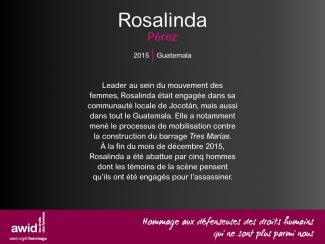
Organisé par MADRE, Fondo Semillas et Feminist Church
📅 Mercredi 29 avril
🕒 16 h 00 – 17 h 30
🏢 Melbourne Convention and Exhibition Centre, Salle n° 204
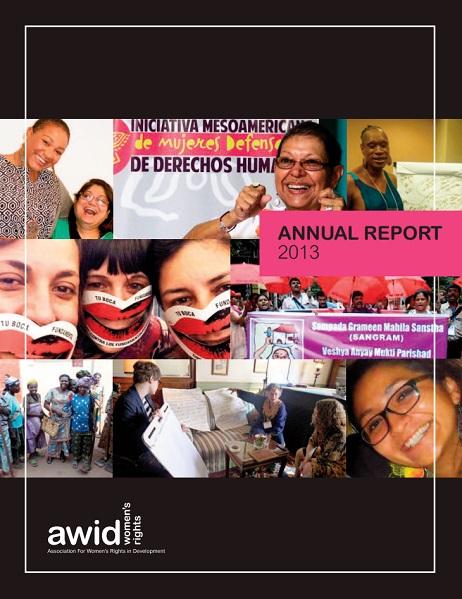
2013 marked the beginning of our 2013-2016 Strategic Plan, developed in response to the current global context. This report provides highlights of our analysis of the global context, how we position ourselves as a global feminist membership organization in this context, the outcomes we seek to achieve, and how our work is organized to achieve these outcomes.
Esta política rige para todas las páginas alojadas en https://www.awid.org/ y para cualquier otro sitio web bajo el control de AWID (el «Sitio web») y para las suscripciones a estos sitios. No se aplica a páginas alojadas por otras organizaciones distintas a AWID, hacia las cuales podemos dirigir un hipervínculo y cuyas políticas de privacidad pueden ser diferentes. Por favor, lee la siguiente política para que puedas comprender nuestra política de privacidad en cuanto a su naturaleza, propósito, uso y divulgación de tu información personal e identificable que es recogida a través de este sitio web.
En general, puedes navegar este sitio web sin enviarnos información personal. Sin embargo, en algunas circunstancias, te pediremos esa información personal.
Cuando te encuentras en el sitio web y se te pide información personal, estás compartiendo esa información sólo con AWID.
1.1.1 La información que nos das para recibir actualizaciones de AWID:
Cuando te registras para usar el sitio (por ejemplo, te suscribes para recibir correos electrónicos o para solicitar membresía) nos das la información necesaria acerca de ti, como tu nombre, país, idioma, para recibir actualizaciones por correo electrónico. Nos das esta información a través de formularios seguros y es almacenada en servidores seguros.
1.1.2 La información de pago que nos das para hacerte miembrx o para anotarte en algún evento:
Además, puede ser necesario que nos des información sobre el pago cuando te haces miembrx o cuando te anotas para eventos. AWID no almacena en sus servidores ninguna información relativa a tarjetas de crédito y usa portales seguros para procesar la información relativa a pagos.
1.1.3 La información opcional que decidiste darnos (con consentimiento)
Cuando te comunicas con AWID o nos das información opcional a través de formularios en el sitio web o utilizas el sitio para comunicarte con otrxs miembrxs, recogemos información sobre tu comunicación y cualquier otra información que elijas dar.
1.1.4 Información que nos das a través de los formularios de contacto o cuando te comunicas directamente con nosotrxs
Cuando te comunicas con nosotrxs, recogemos tu comunicación y toda otra información que decidas darnos.
Además, cuando interactúas con el Sitio web, nuestros servidores pueden llevar un registro de actividad que no te identifica personalmente («Información no personal»). Por lo general, recogemos las siguientes categorías de información no personal:
Para más información sobre las cookies, por favor consulta All about cookies.
Si no deseas recibir cookies puedes cambiar fácilmente tu navegador web para que rechace las cookies o notificarte cuando recibes una nueva cookie. Puedes mirar aquí cómo hacerlo.
AWID utiliza la información que recogemos acerca de ti para:
Si te has subscrito a los boletines electrónicos de AWID o a nuestras actualizaciones por correo electrónico o si te has hecho miembrx, te enviaremos comunicaciones regularmente en la forma especificada en el área correspondiente del sitio web. Puedes cancelar la suscripción de cualquiera de los boletines electrónicos o actualizaciones de correo electrónico en cualquier momento siguiendo los pasos indicados para ello en nuestros correos.
Es importante para AWID que tu información de identificación individual sea precisa. Siempre estamos buscando cómo hacer más fácil que puedas revisar y corregir la información que AWID tiene acerca de ti en nuestro sitio web. Si cambias tu dirección de correo electrónico, o si cualquier otra información que tengamos es incorrecta o desactualizada, por favor escríbenos a esta dirección.
Con excepción de lo explicado más abajo, AWID no revelará ninguna información personal acerca de ti que sea identificable, y no venderá ni alquilará a tercerxs listados conteniendo tu información. AWID podrá revelar información cuando tenga tu permiso para hacerlo o bajo circunstancias especiales, por ejemplo cuando crea de buena fe que la ley se lo exige.
De manera permanente implementamos y actualizamos las medidas administrativas, técnicas y de seguridad física para proteger tu información de accesos no autorizados, pérdida, destrucción o alteración. Algunas de las salvaguardas que usamos para proteger tu información son cortafuegos, encriptación de datos y controles de acceso a la información. Si sabes o tiene razones para creer que tus credenciales de membresía a AWID se han perdido, han sido robadas, malversadas o comprometidas de alguna forma o en caso de que sepas o sospeches de uso no autorizado de tu cuenta de membresía a AWID, por favor ponte en contacto con nosotrxs a través de nuestra página.
Esta política puede cambiar periódicamente. La política modificada será publicada en este sitio web y al final del texto se actualizará la fecha de Última actualización. Se enviará un correo electrónico con la actualización de la política revisada y si no estás de acuerdo con ella tendrás la opción de cancelar tu suscripción o suscripciones con nosotrxs. También puedes escribirnos aquí. ¡Agradecemos tus opiniones!
Última actualización: mayo de 2019
Lo voy a admitir: cuando Angélica y Fabi me invitaron a ser curadora de una colección de textos eróticos de mujeres negras, no sabía qué era la curaduría. Entendía bien lo erótico, pero la curaduría…
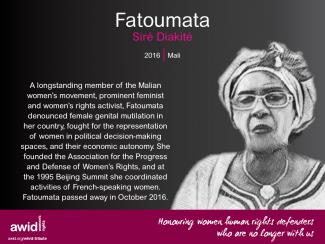
In the SWANA region, states are seeking new ways to cling to power. This report maps two mutually reinforcing technologies of governance in the SWANA region:
The findings reveal how surveillance, criminalization, and the persecution of activists are normalized and concealed by states that brand themselves as tolerant and progressive. It also traces the ways these technologies are rooted in colonial structures and sustained through global capitalist systems.

Hemos contribuido a algunas victorias importantes, como expandir el panorama de financiamiento para los derechos de las mujeres con investigación e incidencia innovadoras y de gran alcance. Al mismo tiempo, hemos sufrido algunos golpes devastadores, como el asesinato de defensoras de derechos humanos como Berta Cáceres de Honduras, Gauri Lankesh de India y Marielle Franco de Brasil, así como el aumento de la movilización de los sectores antiderechos en los espacios de derechos humanos.
Hace cinco años, nos comprometimos con nuestro papel en la construcción de movimientos al generar conocimiento sobre las tendencias de los movimientos antiderechos, así como sobre temas en los que las feministas tienden a involucrarse menos, como los flujos financieros ilícitos. Activamos junto a los movimientos que son nuestrxs compañerxs, fortaleciendo el activismo feminista joven y el activismo intergeneracional y expandiendo la protección integral de lxs defensorxs de derechos humanos. En el cierre del plan estratégico, estamos orgullosxs de nuestros logros y nuestro crecimiento como organización. ¡Terminamos el 2017 con un compromiso renovado, ideas y aprendizaje para sostener la lucha que tenemos por delante!
En tant que mouvements féministes et mouvements pour les droits des travailleur·euses, nous articulons en solidarité les points suivants dans le cadre d’une vision collective des économies des soins qui plaçant les travailleuses domestiques au centre
Le travail domestique et des soins est sur le devant de la scène depuis la pandémie de COVID-19, car il a permis à tout le monde de continuer à fonctionner pendant les crises mondiales. La Banque Mondiale, le Fond Monétaire International et autres institutions multilatérales reconnaissent également l’importance du travail des soins et domestique dans la pérennisation de l’économie. Cette attention répond cependant généralement à une approche instrumentale - dans laquelle le travail des soins soutient l’économie « productive » - centrée sur la réalisation de profits, qui ne reconnaît pas les soins comme un droit humain et un bien public et ne prend pas en compte les travailleuses qui assurent une grande partie du labeur.
Los hospitales son instituciones, espacios vivientes del capitalismo, y lo que se manifiesta cuando alguien está supuestamente haciendo reposo allí es un microcosmos del sistema en que vivimos.