Special Focus

AWID is an international, feminist, membership organisation committed to achieving gender equality, sustainable development and women’s human rights

AWID Forum: Co-creating Feminist Futures

In September 2016, the 13th AWID international Forum brought together in Brazil over 1800 feminists and women’s rights advocates in a spirit of resistance and resilience.

This section highlights the gains, learnings and resources that came out of our rich conversations. We invite you to explore, share and comment!


What has happened since 2016?

One of the key takeaways from the 2016 Forum was the need to broaden and deepen our cross-movement work to address rising fascisms, fundamentalisms, corporate greed and climate change.

With this in mind, we have been working with multiple allies to grow these seeds of resistance:

And through our next strategic plan and Forum process, we are committed to keep developing ideas and deepen the learnings ignited at the 2016 Forum.

What happens now?

The world is a much different place than it was a year ago, and it will continue to change.

The next AWID Forum will take place in the Asia Pacific region (exact location and dates to be announced in 2018).

We look forward to you joining us!

About the AWID Forum

AWID Forums started in 1983, in Washington DC. Since then, the event has grown to become many things to many peoples: an iterative process of sharpening our analyses, vision and actions; a watershed moment that reinvigorates participants’ feminisms and energizes their organizing; and a political home for women human rights defenders to find sanctuary and solidarity.

Learn more about previous Forums

Related Content

Media Centre

AWID in the media

News compilation regarding AWID's work and organization.


Press releases

Press kits and statements


Social Media Kits


Videos

Conferences, talks, seminars video recordings

Impunity for violence against women defenders of territory, common goods, and nature in Latin America
March 16, 2018
Rural women's resistance to closing civic space
March 15, 2018
 
Empowering rural women in mining affected environments
March 13, 2018
Feminist Perspectives on Accountability
March 13, 2018
Gender Perspectives on Corporate Accountability
March 12, 2018


Media contact

Contact email

+1 416 594 3773

Кому следует принять участие в опросе?

Группы, организации и движения, работающие исключительно или главным образом в интересах женщин, девочек, гендерной справедливости, прав ЛГБТКИ+ людей во всех регионах и на всех уровнях, как недавно созданные, так и давно существующие.

2009: l´ONU organise une conférence sur l´impact de la crise économique

La Conférence des Nations Unies de 2009 sur la crise financière et économique mondiale et son incidence sur le développement

  • La  conférence  de 2009  était l’aboutissement de celle de Doha en 2008. La Déclaration de Doha avait  mandaté  les Nations Unies  pour organiser, sous l’égide du Président de l’Assemblée générale, une conférence consacrée à la crise financière et économique mondiale et à son incidence sur le développement.
  • Pendant la conférence, les groupes de femmes, par le biais du WWG ont souligné l’impact de la crise financière mondiale sur les groupes les plus vulnérables. Dans sa déclaration aux membres (en anglais), le WWG a  proposé une liste d’actions nécessaires que les États membres devraient mettre en œuvre pour pallier  aux conséquences de la crise sur les femmes. Le groupe de travail a également déclaré que la prise en compte des autres groupes sociaux touchés par la crise était essentielle pour apporter une réponse qui soit en accord avec les normes et les engagements internationaux relatifs à l’égalité des genres, aux droits des femmes, aux droits humains et à l’autonomisation. 

Juana Raymundo

Membre de la communauté autochtone maya ixil, Juana était infirmière professionnelle et coordinatrice du Comité de développement des agriculteurs (CODECA)

CODECA est une organisation de défense des droits humains composée d'agriculteurs autochtones et vouée à la promotion des droits à la terre et du développement rural pour les familles autochtones dans la microrégion de Nebaj Quiché. Elle a d'abord rejoint le CODECA en tant que membre de la Juventud de CODECA (branche de la jeunesse). 

Au moment de son décès, elle venait d’être élue membre du Comité exécutif du Mouvement de libération des peuples (MLP).

Le corps de Juana a été retrouvé par des voisins au bord d’une petite rivière sur la route située près de Nebaj et du village d’Acambalam, au Guatemala. Selon le CODECA, son corps portait des traces de torture.
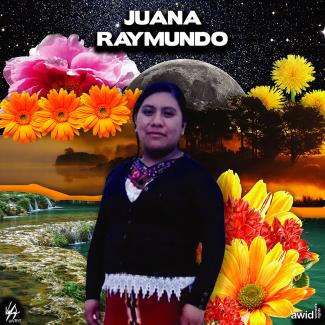

 

Juana Raymundo, Guatemala

Snippet FEA Decent Pay (ES)

Ilustración de una mano de piel blanca que sostiene dinero rosa sobre un fondo turquesa.

SALARIOS DECENTES

Reason to join 1

Forma parte de una organización feminista de membresía internacional y de una comunidad. Nuestrxs afiliadxs residen en todas las regiones del mundo. Aprenden entre sí y se brindan apoyo mutuo en una red global fundada en la solidaridad.

Merci d'avoir téléchargé la Boîte à outils des réalités féministes

O nosso grupo, organização e/ou movimento não recebeu ou mobilizou financiamento de financiadores externos. Devemos participar no inquérito?

Sim! Reconhecemos e valorizamos diferentes motivos pelos quais as feministas nos seus respetivos contextos não dispõem de financiamento externo: desde não serem elegíveis para se candidatar a subsídios e/ou receber dinheiro do exterior, até dependerem de recursos gerados autonomamente como uma estratégia política por si só. Queremos saber mais sobre vocês, independentemente da vossa experiência com financiamento externo.

March 2015: The Zero-Draft Outcome Document is released

Release of the Zero-Draft Outcome Document, March 2015

  • The zero-draft outcome document (dated 16 March), prepared by the Co-facilitators, was released for discussion at the 2nd drafting session from 13-17 April 2015
  • During the opening session, the WWG on FfD called for dedicated resources for gender equality and women’s empowerment as stated in both the Monterrey Consensus and Doha Declaration,to be added into the Zero draft. 

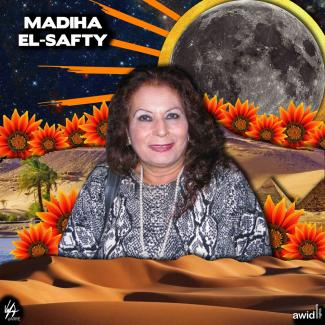
Madiha El Safty

Madiha was a prominent Professor of Sociology who actively engaged with civil society as an advocate for women’s rights in the Arab region.

She chaired the Alliance for Arab Women and was a member of the Committee on Civil Society and the Committee on the Development of Minia Governorate with the National Council for Women. She produced numerous papers that shed light on, and analyzed, gender inequalities and discrimination against women.

She is remembered fondly by colleagues, students and friends.


Madiha El Safty, Egypt

Snippet FEA Sopo Japaridze Quote (FR)

"Nous savons que tout est contre nous et il y a très peu de chances de changer cela. Mais nous croyons en l'intervention et je pense que nous avons une opportunité et nous devrions l'utiliser. C'est pourquoi nous faisons tout ce que nous faisons. Nous sommes prêt·e·s à pousser pour des choses inouïes."

Sopo Japaridze dans OpenDemocracy

Photo @სოლიდარობის ქსელი / Solidarity Network

Reason to join 6

Participez au Forum international de l'AWID - un rassemblement féministe mondial majeur - et bénéficiez de réductions spéciales et de points d'entrée pour le dialogue virtuel réservés aux membres de l'AWID. Co-créé par des mouvements féministes, le Forum est un espace unique de discussion profonde et d'imagination où nous remettons en question et renforçons notre organisation, et joignons nos luttes et nos réalités féministes.

Disclaimer: Communications with AWID staff

If you have received emails from any staff members at AWID, we would like you to understand the following:

  • The information contained in this communication is confidential and is intended solely for the addressee. 

  • This communication may contain information proprietary to the Association for Women’s Rights in Development (AWID), and may not be reproduced or disseminated in whole or in part without AWID's written consent. 

  • AWID does not warrant that any information contained herein is complete or correct. This communication is not an offer to enter into any agreement and is not a confirmation of any agreement described herein unless the context clearly indicates the contrary. 

  • AWID is not acting as your adviser in any agreement that may be proposed herein, and this communication does not constitute a recommendation, guidance or proposal to enter into any agreement. 

  • AWID does not guarantee or otherwise assure the expected results of any agreement. This communication may contain views or opinions that are not necessarily those of AWID. 

  • You shall not be entitled to place any reliance on the information contained in this communication for the purposes of entering into any proposed agreement or otherwise.

ما هي لغات استطلاع "أين المال" الرسمية؟

حالياً سيتواجد الاستطلاع على منصة KOBO باللغات العربية، الإنجليزية، الفرنسية، البرتغالية، الروسية والاسبانية. ستكون لديكم/ن الفرصة لاختيار اللغة التي تريدون تعبئة الاستطلاع بها في بداية الاستطلاع.

¿Qué es el Proceso de la Financiación para el Desarrollo de Naciones Unidas?

El proceso de la Financiación para el Desarrollo (FpD) de Naciones Unidas (ONU) se propone abordar distintas formas de financiación y cooperación para el desarrollo. Según lo acordado en el Consenso de Monterrey, se centra en seis áreas prioritarias:

  • Movilización de recursos financieros nacionales para el desarrollo;
  • Movilización de recursos internacionales para el desarrollo: la inversión extranjera directa y otras corrientes de capitales privados;
  • El comercio internacional como promotor del desarrollo;
  • Aumento de la cooperación financiera y técnica internacional para el desarrollo;
  • La deuda externa;
  • Tratamiento de cuestiones sistémicas: fomento de la coherencia y la cohesión de los sistemas monetarios, financieros y comerciales internacionales en apoyo al desarrollo.

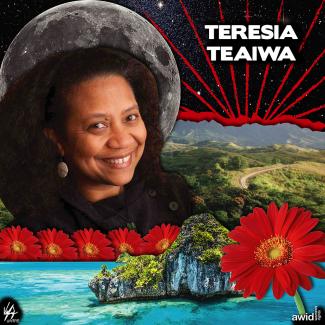
Teresia Teaiwa

Retratada en The Guardian como uno de los íconos nacionales de Kiribati, Teresia fue una valiente activista.

Trabajó estrechamente con los grupos feministas en Fiji y que puso sus investigaciones al servicio de las cuestiones feministas y de género en el Pacífico. Además, fue coeditora de la publicación International Feminist Journal of Politics. Su influencia se extendió desde la frontera académica hasta los movimientos por la justicia social en la región de Oceanía.


Teresia Teaiwa, Fiji

Snippet FEA Union Otras Photo 1 (EN)

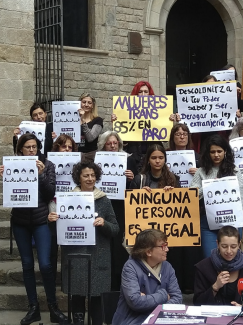
Photo shows shows four people with posters at a protest and in the middle a woman with a megaphone speaking.

Our values - Justice and systemic change

Justice and systemic change

We work towards a world based on social, environmental, and economic justice; and interdependence, solidarity, and respect. We work towards dismantling systems of oppressive power and against all its manifestations, including patriarchy, fundamentalisms, militarisms, fascisms and corporate power that threaten our lives and our world. We want a just world where resources and power are shared in ways that enable everyone to thrive.