There is a myth in my family that the first words I ever managed to put together were “it’s not fair.” Unsurprisingly, decades later I find myself dedicated to fighting systems of oppression and building alternatives to them.
I am a second generation migrant from the former Yugoslavia, a socialist country shaped by a strong welfare state and workers’ self-management, where workers collectively decided about production, management, and the use of profits for the common good. Though Yugoslavia was dismantled by Western imperialism and replaced with neoliberal economies, I still carry its legacy of cooperativism, solidarity, and collective care with(in) me (mostly thanks to growing up in a Yugo-nostalgic family)! I am also the proud grandchild of two prominent antifascist figures who joined the communist resistance against the Axis forces and survived concentration camps. Journalist Edin Smailović wrote of my grandfather that despite “going to hell and back,” he always kept faith in equality, social justice, and the possibility of a better world.1
How could I, then, believe otherwise?
As a queer, trans non-binary person, I also understand existence itself as a form of alternative world-making. Queerness and transness - rooted in anticapitalism, antifascism, antiracism, transfeminism, and disability justice - go far beyond mere resistance: they are the lived, alternative realities we embody every single day.
My journey into alternatives deepened in 2017 during the mobilizations against the World Trade Organization meeting in Argentina. At the People’s Summit, I encountered initiatives like agroecology, food sovereignty, seed sovereignty, or the commons not as theories, but as lived practices. As a young activist and recent graduate in critical development studies, witnessing these alternatives I had only read about and meeting practitioners was mesmerizing. At the same time, the physical walls separating the forums mirrored how fragmented these struggles often felt. That’s how I became (slightly) obsessed with the question of how to weave together alternatives in theory and practice.
Shortly after, I started my PhD “Towards a Pluriverse of Systemic Alternatives”2 (thankfully now finished), and joined forces with other activists and intellectuals to envision, build and launch a process in 2019 which came to be known as the Global Tapestry of Alternatives, a network of networks of alternatives.3 That same year, AWID approached me about being part of a working group on feminist economic realities. “Realities” felt exactly right: not distant utopias, but practices already happening in the here and now. I’ve then had the pleasure of joining AWID’s Building Feminist Economies team in 2021.
Whether through academia, the non-profit sector, transnational and local organizing, there has (and continues to be - luckily!) an incalculable amount of conversations, debates, ideations, about what is and what is not an economic alternative.
After ten years, this is where I’ve landed.
We often speak about “the economy” as though it were singular, but in reality there are many economies shaping how we live, work, care, and relate to each other and the planet. Today, most operate within neoliberal capitalism: a system built on endless growth, privatization, extraction, and exploitation. Wealth and power are concentrated in the hands of a few while governments actively sustain inequality through austerity, deregulation, and cuts to public services.
At the same time, communities everywhere are building alternatives grounded in care, solidarity, justice, and ecological sustainability. Feminist economic alternatives are especially powerful because they expose how capitalism is intertwined with patriarchy, colonialism, racism, and environmental destruction, while also creating practical ways of organizing life differently. And what is branded “green” or “inclusive” is not necessarily an alternative. False solutions like green growth leave the root causes of exploitation intact while allowing corporations and elites to make more money while appearing progressive.
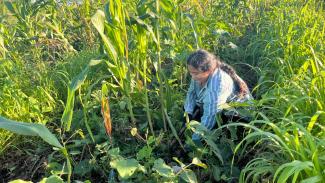
Instead, feminist economic alternatives center life over profit. It’s about collective wellbeing, autonomy, democracy, care, and reciprocal relationships with nature. And these alternatives already exist all around us: feminists taking control over a textile factory in Argentina to prevent it from closing, queer cooperatives in the Dominican Republic providing queer people with employment opportunities and access to essential financial services, feminist unions in Spain organizing migrant women working as cleaners for better working conditions, interconnected networks of grassroot alternatives in India spanning across all sectors of the economy, feminist agro-ecological initiatives in Mexico resisting monoculture and extractivism while reforesting the land and safeguarding Mayan indigenous knowledges, networks of women practicing food and seed sovereignty in West Africa, a cooperative bank by and for sex workers in India providing them with loans and other financial services they struggle to access, feminist giving circles and gift economies like table banking initiatives in East Africa, transgender clinics in the Netherlands, eco-feminist villages in Moldova living more sustainably and other intentional communities, amongst so many others!4
These alternatives are not perfect, monolithic entities and we have to avoid romanticizing/idealizing them: they are messy, paradoxical and full of contradictions, precisely because they emerge within (yet are outside) this oppressive system. They are also very context-specific, place-based and dependent on different local realities.
So how do we grow feminist economic alternatives into a powerful force capable of challenging and transforming the system? This is where we can turn to the political framework of the Pluriverse as one possible path forward. Inspired by the Zapatistas’ vision of “a world in which many worlds fit,” it rejects the idea that change must come from a single model, institution, or top-down solution. Instead, it calls for a world built through interconnected struggles, grassroots economies, collective care, and community autonomy. A pluriversal feminist politique is about articulating together and expanding already-existing alternatives. It’s not about merging them into one unified model, but strengthening the connections between them and creating webs of alternative systems from below that can effectively challenge the current oppressive system. Feminist economic alternatives do not need to “scale up” into the dominant system to be credible. Instead, the pluriverse can teach us about the power of scaling out: spreading through solidarity, horizontal connections, and collective organizing (think about mycorrhizal underground networks in forests connecting individual plants together)!
As the polycrisis deepens, these alternatives and networks of alternatives are more important than ever. They will not replace the current system overnight, but they are helping communities survive and resist every day, and they are the pillars of the more just, equitable and sustainable world we need. In other words, another world isn’t just possible: it’s already here. And we must continue to invest our time, energy, money and other resources to support feminist economies that sustain life.
1. Smailović, Edin. 2022. "Antifašista Muhamed Musić – čovjek koji je preživio Dachau [Antifascist Muhamed Musić - a Man who Survived Dachau]" Al Jazeera, 07 May 2022. https://balkans.aljazeera.net/blogs/2022/5/7/antifasista-muhamed-mule-music-covjek-koji-je-prezivio-dachau.
2. https://ddd.uab.cat/pub/tesis/2024/hdl_10803_690702/mamu1de1.pdf
3. https://greattransition.org/gti-forum/global-tapestry-kothari-bajpai/#endnote_5