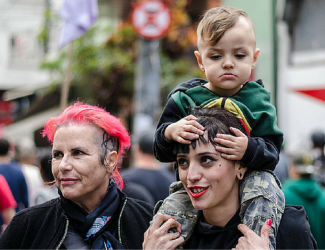
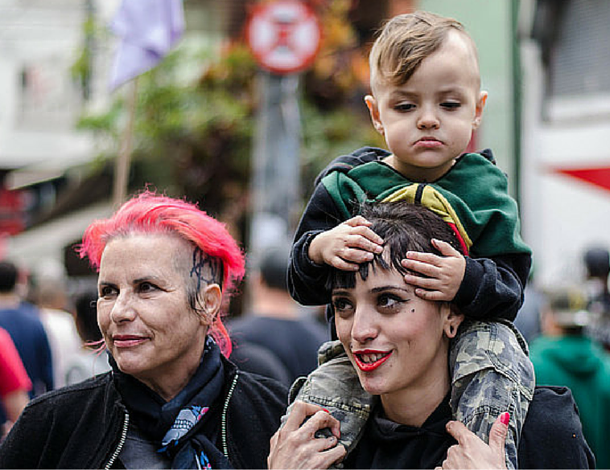
Flickr/Leonardo Veras (CC BY 2.0)

Análisis Especiales

AWID es un organización feminista internacional de membresía, que brinda apoyo a los movimientos que trabajan para lograr la justicia de género y los derechos de las mujeres en todo el mundo.

Protección de la familia

El contexto

Esta sección de análisis especial ofrece un análisis feminista crítico y acceso a los recursos clave relacionados con la «protección de la familia» en los espacios internacionales de derechos humanos.

Durante los últimos años, venimos observando una nueva y preocupante tendencia en el ámbito internacional de derechos humanos, donde se están empleando discursos sobre la «protección de la familia» para defender violaciones cometidas contra miembros de la familia, de modo de reforzar y justificar la impunidad y para coartar la igualdad de derechos en el seno de la familia y la vida familiar. 

La campaña para «proteger a la familia» es impulsada por proyectos conservadores que tienen como fin imponer interpretaciones «tradicionales» y patriarcales de familia; quitando los derechos de las manos de sus miembros para ponerlos en las de la institución «familia».

Los proyectos de «protección de la familia» tienen su origen en los siguientes fenómenos:

  • el auge del tradicionalismo,
  • el auge del conservadurismo cultural, social y religioso, y
  • posturas hostiles a los derechos humanos de las mujeres, los derechos sexuales, los derechos de las niñas y los niños y los derechos de las personas con identidades de género y orientaciones sexuales no normativas.  

Desde 2014 un grupo de estados opera como bloque en espacios de derechos humanos, bajo el nombre «Group of Friends of the Family» [Grupo de amigos de la familia], y a partir de entonces se han aprobado resoluciones sobre la «Protección de la familia» todos los años.

Esta agenda se ha extendido más allá del Consejo de Derechos Humanos (HRC, por sus siglas en inglés).  Hemos visto cómo el lenguaje regresivo sobre «la familia» se ha introducido en la Comisión de la Condición Jurídica y Social de las Mujeres (CSW, por sus siglas en inglés), y hemos asistido a intentos por incluir este lenguaje en las negociaciones sobre los Objetivos de Desarrollo Sostenible.


Nuestro enfoque

AWID trabaja con asociadxs y aliadxs para resistir conjuntamente las agendas regresivas de «Protección de la familia» y otras, y para defender la universalidad de los derechos humanos.

En respuesta a la creciente influencia de actores regresivos en los espacios de derechos humanos, AWID se ha unido con aliadxs para formar el Observatorio de la Universalidad de los Derechos (OURs, por sus siglas en inglés).  OURs es un proyecto colaborativo que monitorea, analiza y comparte información sobre iniciativas anti-derechos tales como la «Protección de la familia».

Derechos en Riesgo, el primer informe de OURs, traza un mapa de los actores que conforman el cabildeo global anti-derechos e identifica sus discursos y estrategias principales, señalando los efectos que estos discursos y estrategias están teniendo sobre nuestros derechos humanos.

El informe expone a la «Protección de la familia» como una agenda que ha promovido la colaboración entre una amplia gama de actores regresivos en las Naciones Unidas. La describe como un marco estratégico que aloja «múltiples posiciones patriarcales y anti-derechos, cuyo marco, a su vez, apunta a justificar e institucionalizar estas posiciones».

Contenido relacionado

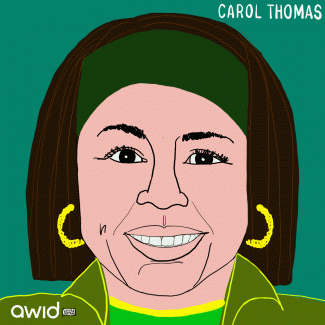
Carol Thomas

Carol Thomas was a trailblazer for women’s sexual and reproductive rights in South Africa. A gifted gynecologist and founder of the WomenSpace, she practiced and advocated for non-traditional ways of delivering healthcare to women, offering services that were high quality, empathetic and accessible.

“She entered into not only the joy of pregnancies and new babies, but the anxieties of infertility and premature deliveries and female cancers, the heartbreak of miscarriages and stillbirths.” Helen Moffett

Carol thought in new paradigms that centered the needs of women with the least access to services and rights in society:

“The prevailing socio-economic environment that we find ourselves in means that women bear a disproportionate burden of disease and unemployment…As a black, previously disadvantaged woman I have a good sense of what is happening in our communities.” - Carol Thomas

Carol’s innovative and multi-award-winning social venture “iMobiMaMa” used mobile kiosks and interactive technology to connect women directly with antenatal and reproductive health services, information and support in communities all over South Africa.

Carol supported women both in wanted and unwanted pregnancies, mentoring many nurses and doctors during her lifetime.

She was also described as the go-to gynecologist “for trans folks who could have affirming care. She got it right when so many did not have the language or pronouns. Her warm blankets, listening and saying just what you needed to hear was so comforting.” -Marion Lynn Stevens

Carol Thomas was described as being at the height of her professional career when she died on 12 April 2019 of complications following a double lung transplant.

The tributes that poured in following her unexpected death referred to her as many things:

“a role model, warrior woman, innovator, dynamic leader, mould-breaker, dynamo, brilliant scientist, compassionate doctor.”

Undoubtedly, Carol Thomas will be remembered and honored for being all of this and much more.
Clone of CFA 2023 - Intro 2 - EN

Italian Trulli

“My mission in life is not merely to survive, but to thrive; and to do so with some passion, some compassion, some humor, and some style.” - Maya Angelou

AWID Forum

Welcome to the 15th International AWID Forum!

The International AWID Forum is both a global community event and a space of radical personal transformation. A one-of-a-kind convening, the Forum brings together feminist, women’s rights, gender justice, LBTQI+ and allied movements, in all our diversity and humanity, to connect, heal and thrive. The Forum is a place where Global South feminists and historically marginalized communities take center stage, strategizing with each other and social justice movements, in order to shift power, make strategic alliances, and usher in a different, better world. When people come together on a global scale, as individuals and movements, we generate a sweeping force. Join us in Bangkok, Thailand in 2024. Come dance, sing, dream and rise with us.

Snippet - COP30 - Partner intro - EN

This campaign is held by 8 partner organizations across continents, building feminist alternatives to the climate crisis, ecocides and genocides.

Chinelo Onwualu Snippet FR

Chinelo Onwualu est une conseillère éditoriale ayant près de 10 ans d’expérience dans l’élaboration de communications stratégiques pour des organisations à but non lucratif du monde entier. Elle a notamment travaillé pour ActionAid Nigeria, The BBC World Trust, Open Society Initiative for West Africa (OSIWA) et l’AWID. Elle est titulaire d’un master en journalisme de l’Université de Syracuse et a travaillé comme rédactrice, éditrice et chercheuse au Nigeria, au Canada et aux États-Unis. Elle est également l’éditrice non-romanesque du magazine Anathema et cofondatrice d’Omenana, un magazine de fiction spéculative africaine. Ses nouvelles ont été publiées dans plusieurs anthologies primées et elle a été nominée pour les British Science Fiction Awards, les Nommo Awards for African Speculative Fiction et le Short Story Day Africa Award. Elle est originaire du Nigeria mais vit à Toronto avec son compagnon et son enfant.

Rapport Annuel 2012

Notre rapport annuel 2012 fournit les points saillants de notre travail durant l'année pour contribuer de manière hardie, créative et efficace à la promotion des droits des femmes et l'égalité de genre dans le monde entier. 

Amusez-vous en regardant des vidéos, des photos et des histoires sur nos contributions !


Mereani Naisua Senibici

Mereani Naisua Senibici, también llamada "Sua", fue, durante mucho tiempo,  integrante del movimiento de la Asociación Cristiana de Mujeres Jóvenes de Fiji (YWCA, por sus siglas en inglés).

Trabajó con diversos grupos de mujeres en entornos multirraciales, rurales y urbanos y se comprometió a apoyar y promover los derechos de las mujeres y las jóvenes.

En el YWCA de Lautoka, Sua trabajó con mujeres de ascendencia india, y se convirtió en  una figura destacada en el desarrollo del deporte y de la participación de atletas mujeres y personas trans en Lautoka.

"Sua es muy querida por lxs integrantes del YWCA de Fiji, a causa de su dedicación y apoyo persistente a todo lo que la organización se ha esforzado por hacer". - Tupou Vere

Mereani formaba parte de House of Sarah [La Casa de Sarah] (HoS, por sus siglas en inglés ), una iniciativa de la Asociación de Mujeres Anglicanas (AAW), lanzada en 2009, que tenía por objetivos tanto sensibilizar sobre los problemas relacionados con la violencia de género, como brindar apoyo a las mujeres que sufren violencia. Mereani empezó como una voluntaria comprometida y ofreció apoyo a las mujeres de todo el Pacífico.

Mereani falleció en 2019.

"Una persona  con don de gente y  una trabajadora todoterreno en el empoderamiento de las mujeres y construcción de movimientos a nivel comunitario. Descansa en paz, Sua". - Tupou Vere

CFA 2023 - breadcrumbs Menu _ cfa-forum-en

COP30: Homepage Banner - FR

COP30: Reclaim climate action from corporate capture

Tandis que les dirigeant·es du monde entier se réunissent au Brésil, les mouvements féministes manifestent, se rassemblent et bouleversent le statu quo à la COP30 et partout ailleurs ! Nous voilà en route vers Belém au Brésil, aux côtés d’autres féministes, pour assister à la COP30 du 10 au 21 novembre 2025. Nous continuerons d’y dénoncer les fausses solutions.

En savoir plus

#9 - Sexting like a feminist Tweets Snippet EN

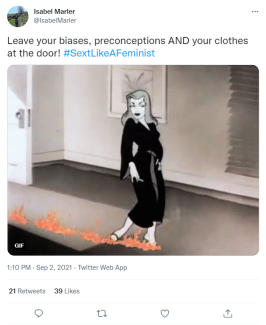
Always good to establish ground rules.

Leave your biases, preconception, and your clothes at the door!

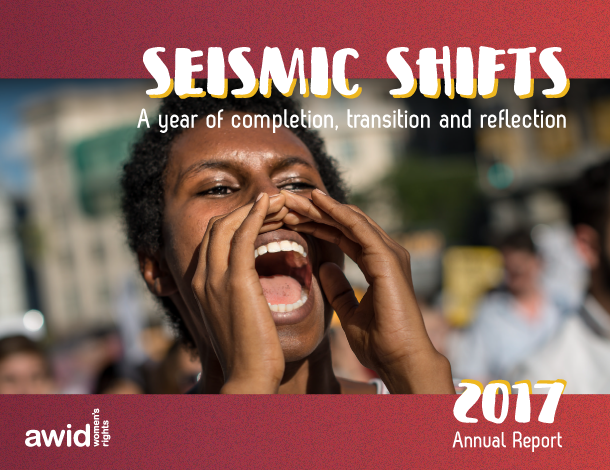
Seismic shifts: A year of completion, transition and reflection | Annual report 2017

The past five years have been huge for AWID.

We have contributed to some major victories, like expanding the women’s rights funding landscape with ground-breaking, far-reaching research and advocacy. At the same time, we have experienced some devastating setbacks, including the assassination of Women Human Rights Defenders (WHRDs) like Berta Cacares of Honduras, Gauri Lankesh of India and Marielle Franco of Brazil, as well as the rise of anti-rights mobilizing in human rights spaces.

Five years ago, we committed to our movement-building role by producing knowledge on anti-rights movement trends, as well as on issues that feminists often engage with less, like illicit financial flows. We advocated side by side with our movement partners, strengthening young feminist and inter-generational activism, and expanding the holistic protection of WHRDs. As we close out the strategic plan, we are proud of our accomplishments and our growth as an organization. We end 2017 with renewed commitment, insights and learning for the continued struggle ahead!


Sylvia Robinson

« La vie... c’est vivre dans la joie, se lever avec un but, sentir son énergie créative, répondre à son appel. » – Sylvia Robinson

Sylvia Robinson, infatigable leader et organisatrice communautaire, fut la fondatrice et directrice générale de l’Emergence Community Arts Collective (ECAC) à Washington, D.C.

Cet espace de performances créatrices foisonnantes rassemblait des initiatives d’éducation, d’engagement citoyen, d’arts, de services sociaux et spirituels et de pratiques de développement durable. Sylvia considérait cet endroit comme une maison où « il existe un équilibre et une synergie avec les activités dont les gens ont besoin pour entretenir la vie ».

Elle comptait également parmi les membres fondateur·trice·s du Georgia Avenue Community Development Taskforce, dans le nord-ouest de la capitale, un groupe de quartier actif dans le domaine de la justice sociale et de l’organisation qui veillait à ce que la communauté ait son mot à dire dans le redéveloppement et l’embourgeoisement du secteur.

« Nous demandons des logements abordables. Nous demandons que les petits commerces qui sont ici depuis longtemps ne soient pas balayés par de nouvelles enseignes. Nous demandons des espaces verts et des lieux où les gens peuvent se rencontrer. Nous demandons à ce que le paysage urbain soit amélioré, avec des rues en meilleur état et des éclairages publics. » – Sylvia Robinson, à propos du travail de la Taskforce

Avant de devenir organisatrice, et après avoir obtenu son diplôme en informatique, Sylvia avait travaillé dans le domaine des systèmes de contrôle du trafic aérien pendant plus d’une décennie. Elle s’est ensuite orientée vers le conseil relatif à la consommation d’alcool et de drogue, s’impliquant davantage dans le travail communautaire.

« Cette implication dans la communauté, c’était ma vocation. » – Sylvia Robinson

Née à Washington D.C. le 14 août 1961, Sylvia est décédée le 18 septembre 2017 après avoir lutté contre le cancer.

« L’esprit et l’héritage de Sylvia continueront d’inspirer cette communauté pour de nombreuses années. » – ECAC

CFA 2023 - Submit application card - EN

We welcome applications across the full range of thematic areas and intersections important to feminist and gender justice movements.

Submit an Application

Snippet 5 - What's happening at HRC61 Intro

Interactive Dialogues and Reports related to Gender and Sexuality


#5 - Sexting like a feminist Tweets Snippet ES

Para hacer un análisis a fondo, tenemos que usar todas las herramientas a nuestro alcance… 

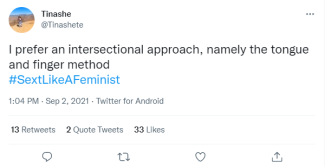
Image of a tweet. Text says: I prefer an intersectional approach, namely the tongue and finger method.

Yo prefiero un enfoque interseccional: el método lengua-y-dedo

2020: Annual Report

For many of us, 2020 was an especially challenging year due to the global health pandemic. Feminists and activists rose to the new challenges meeting community needs in innovative ways. Here are 5 highlights of how AWID contributed to feminist co-creation and resistance.


Watch our Annual Report Video below

Sarah Maldoror

“I’m no adherent to the concept of the ‘Third World’. I make films so that people - no matter what race or color they are - can understand them. For me there are only exploiters and the exploited, that’s all. To make a film means to take a position.” - Sarah Maldoror 

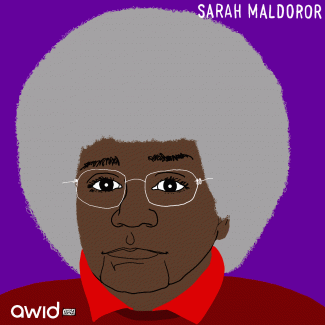
Sarah Maldoror, a French filmmaker of West Indies descent, was a pioneer of Pan-African cinema. At the core of her work, she placed political concerns along with her longstanding involvement in decolonization movements.

Her groundbreaking film and “revolutionary picture” Sambizanga (1972) follows Angolan militants’ anti-colonial liberation struggle, as well as captures a woman’s perspective in a historical moment she finds herself in. 

“For many African filmmakers, cinema is a revolutionary tool, a political education to raise consciousness. It is inscribed in the evolution of a Third Cinema striving to decolonize thought and advocate radical changes in society.” - Sarah Maldoror

Throughout her career, Sarah - together with a number of African and Caribbean artists - co-founded (1956) the first Black theatre troupe in France. She made around 40 films, comprising important documentaries that amplify the lives and work of black artists, including her friend and poet Aimé Césaire who wrote to her: 

“To Sarah Maldo
who, a camera in hand,
fights oppression, alienation
and flies in the face
of human bullshit.”

Sarah was also committed to giving African women more ownership of the filmmaking process. In an interview, she pointed out: 

"African women must be everywhere. They must be in the images, behind the camera, in the editing room and involved in every stage of the making of a film. They must be the ones to talk about their problems." 

Sarah left an incredibly powerful legacy to be carried forward. 

Born 19 July 1929, Sarah passed away on 13 April 2020 from complications of the coronavirus.


Watch Sambizanga and read a film review in a 1973 New York Times article