Ana Fabricia Cordóba Cabrera
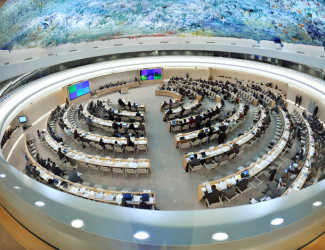
El Consejo de Derechos Humanos (CDH) es el cuerpo intergubernamental del sistema de las Naciones Unidas responsable de la promoción y protección de todos los derechos humanos en todo el mundo. El HRC se reúne en sesión ordinaria tres veces al año, en marzo, junio y septiembre. La La Oficina del Alto Comisionado para los Derechos Humanos (ACNUDH) es la secretaría del Consejo de Derechos Humanos.
Debate y aprueba resoluciones sobre cuestiones mundiales de derechos humanos y el estado de los derechos humanos en determinados países
Examina las denuncias de víctimas de violaciones a los derechos humanos o las de organizaciones activistas, quienes interponen estas denuncias representando a lxs víctimas.
Nombra a expertos independientes que ejecutarán los «Procedimientos Especiales» revisando y presentado informes sobre las violaciones a los derechos humanos desde una perspectiva temática o en relación a un país específico
Participa en discusiones con expertos y gobiernos respecto a cuestiones de derechos humanos.
A través del Examen Periódico Universal, cada cuatro años y medio, se evalúan los expedientes de derechos humanos de todos los Estados Miembro de las Naciones Unidas
Se está llevarando a cabo en Ginebra, Suiza del 30 de junio al 17 de julio de 2020.
AWID trabaja con socios feministas, progresistas y de derechos humanos para compartir conocimientos clave, convocar diálogos y eventos de la sociedad civil, e influir en las negociaciones y los resultados de la sesión.
Опрос предназначен для групп, организаций и движений, работающих исключительно или главным образом по вопросам защиты прав женщин, ЛГБТКИ+, гендерной справедливости во всех контекстах, на всех уровнях и во всех регионах. Если одно из этих направлений является основным видом деятельности вашей группы, коллектива, сети или любого другого типа организации – независимо от того, зарегистрирована она или нет, недавно создана или существует уже давно, мы приглашаем вас принять участие в этом опросе.

* На данном этапе мы не ожидаем ответов от частных лиц или женских и феминистских фондов.
Узнайте больше об опросе:
загляните в часто задаваемые вопросы
Mona était économiste et consultante indépendante sur les questions de genre et de développement.
Elle a été professeure d'économie et directrice de l'Institut d'études féminines du monde arabe à l'Université libanaise américaine. Elle est décédée subitement le 6 janvier 2018.
Des amis et d'anciens collègues disent de Mona: « Pour lui rendre hommage, la meilleure chose à faire est de continuer à faire ce qu'elle a commencé: l'égalité de genre, à tout prix.

Esta política rige para todas las páginas alojadas en https://www.awid.org/ y para cualquier otro sitio web bajo el control de AWID (el «Sitio web») y para las suscripciones a estos sitios. No se aplica a páginas alojadas por otras organizaciones distintas a AWID, hacia las cuales podemos dirigir un hipervínculo y cuyas políticas de privacidad pueden ser diferentes. Por favor, lee la siguiente política para que puedas comprender nuestra política de privacidad en cuanto a su naturaleza, propósito, uso y divulgación de tu información personal e identificable que es recogida a través de este sitio web.
En general, puedes navegar este sitio web sin enviarnos información personal. Sin embargo, en algunas circunstancias, te pediremos esa información personal.
Cuando te encuentras en el sitio web y se te pide información personal, estás compartiendo esa información sólo con AWID.
1.1.1 La información que nos das para recibir actualizaciones de AWID:
Cuando te registras para usar el sitio (por ejemplo, te suscribes para recibir correos electrónicos o para solicitar membresía) nos das la información necesaria acerca de ti, como tu nombre, país, idioma, para recibir actualizaciones por correo electrónico. Nos das esta información a través de formularios seguros y es almacenada en servidores seguros.
1.1.2 La información de pago que nos das para hacerte miembrx o para anotarte en algún evento:
Además, puede ser necesario que nos des información sobre el pago cuando te haces miembrx o cuando te anotas para eventos. AWID no almacena en sus servidores ninguna información relativa a tarjetas de crédito y usa portales seguros para procesar la información relativa a pagos.
1.1.3 La información opcional que decidiste darnos (con consentimiento)
Cuando te comunicas con AWID o nos das información opcional a través de formularios en el sitio web o utilizas el sitio para comunicarte con otrxs miembrxs, recogemos información sobre tu comunicación y cualquier otra información que elijas dar.
1.1.4 Información que nos das a través de los formularios de contacto o cuando te comunicas directamente con nosotrxs
Cuando te comunicas con nosotrxs, recogemos tu comunicación y toda otra información que decidas darnos.
Además, cuando interactúas con el Sitio web, nuestros servidores pueden llevar un registro de actividad que no te identifica personalmente («Información no personal»). Por lo general, recogemos las siguientes categorías de información no personal:
Para más información sobre las cookies, por favor consulta All about cookies.
Si no deseas recibir cookies puedes cambiar fácilmente tu navegador web para que rechace las cookies o notificarte cuando recibes una nueva cookie. Puedes mirar aquí cómo hacerlo.
AWID utiliza la información que recogemos acerca de ti para:
Si te has subscrito a los boletines electrónicos de AWID o a nuestras actualizaciones por correo electrónico o si te has hecho miembrx, te enviaremos comunicaciones regularmente en la forma especificada en el área correspondiente del sitio web. Puedes cancelar la suscripción de cualquiera de los boletines electrónicos o actualizaciones de correo electrónico en cualquier momento siguiendo los pasos indicados para ello en nuestros correos.
Es importante para AWID que tu información de identificación individual sea precisa. Siempre estamos buscando cómo hacer más fácil que puedas revisar y corregir la información que AWID tiene acerca de ti en nuestro sitio web. Si cambias tu dirección de correo electrónico, o si cualquier otra información que tengamos es incorrecta o desactualizada, por favor escríbenos a esta dirección.
Con excepción de lo explicado más abajo, AWID no revelará ninguna información personal acerca de ti que sea identificable, y no venderá ni alquilará a tercerxs listados conteniendo tu información. AWID podrá revelar información cuando tenga tu permiso para hacerlo o bajo circunstancias especiales, por ejemplo cuando crea de buena fe que la ley se lo exige.
De manera permanente implementamos y actualizamos las medidas administrativas, técnicas y de seguridad física para proteger tu información de accesos no autorizados, pérdida, destrucción o alteración. Algunas de las salvaguardas que usamos para proteger tu información son cortafuegos, encriptación de datos y controles de acceso a la información. Si sabes o tiene razones para creer que tus credenciales de membresía a AWID se han perdido, han sido robadas, malversadas o comprometidas de alguna forma o en caso de que sepas o sospeches de uso no autorizado de tu cuenta de membresía a AWID, por favor ponte en contacto con nosotrxs a través de nuestra página.
Esta política puede cambiar periódicamente. La política modificada será publicada en este sitio web y al final del texto se actualizará la fecha de Última actualización. Se enviará un correo electrónico con la actualización de la política revisada y si no estás de acuerdo con ella tendrás la opción de cancelar tu suscripción o suscripciones con nosotrxs. También puedes escribirnos aquí. ¡Agradecemos tus opiniones!
Última actualización: mayo de 2019

Para dar ênfase à complexidade do financiamento de várias formas de organização feminista;
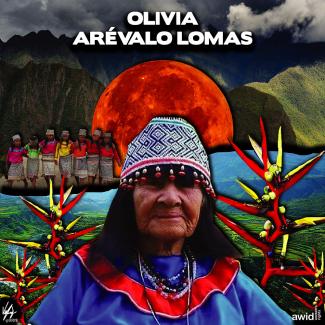
Olivia was the spiritual leader of the Shipibo Konibo indigenous peoples.
A wise Indigenous woman and grandmother, she was known for cultivating traditional medicine and the sacred songs of her people (Íkaros). Olivia Arevalo was an active defender of the cultural and environmental rights of her people. Olivia’s murder occurred in a context of territorial conflict between the Shipibo community and companies that desire to take over their land to cultivate palm oil.
Members of her community have said: “Her death is an aggression against the entire Shipibo community. She was the living memory of her people”.

Ce calendrier nous invite à nous immerger dans le monde inspirant de l'art féministe. Chaque mois, au fur et à mesure de son déploiement délicat, il présentera les œuvres vivantes d'artistes féministes et queer de nos communautés. Leurs créations ne sont pas de simples images; ce sont des récits profonds qui résonnent avec des expériences de lutte, de triomphe et de courage indéfectible établissant notre quête collective. Ces histoires visuelles, débordantes de couleurs et d'émotions, servent à combler les distances et à tisser ensemble nos expériences diverses, nous rapprochant dans nos missions partagées.
Ce calendrier constitue notre appel à vous : utilisez-le, imprimez-le, partagez-le. Laissez-le être votre partenaire quotidien dans votre parcours, un rappel constant de notre interconnexion et de nos visions partagées pour un monde meilleur.
Laissez-le vous inspirer, tout comme il nous inspire, afin d’avancer ensemble.

Obtenez-le dans votre langue préférée ! |
| English |
| Français |
| Español |
| Português |
| عربي |
| Русский |
| Thai |

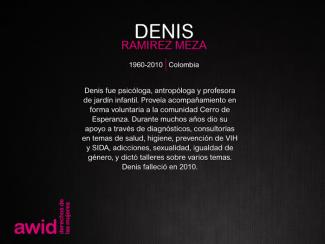
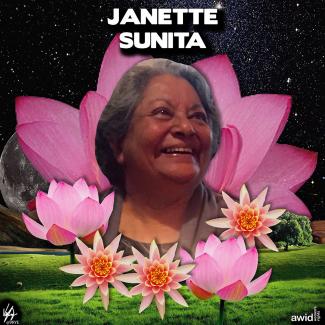
De la India, Janette era enérgica, extraordinaria, compasiva y amorosa.
Su intolerancia de la injusticia y su firme compromiso de defender los derechos de todas las personas la llevaron a trabajar en TARSHI (una ONG que trabaja en temas de la sexualidad y la salud y derechos sexuales y reproductivos) durante más de 15 años. Janette dirigió con destreza las finanzas, los recursos humanos y los aspectos operativos del trabajo de TARSHI, atravesando hábilmente la laberíntica burocracia a la que están sometidas las ONG indias.
Lxs integrantes de su equipo recuerdan que «Ella se quedaba vigilando, de manera que pudiéramos seguir el rumbo en aguas abiertas. Mujer de muchos talentos, Janette no sólo nos ayudó a conseguir nuestra propia oficina sino que también la diseñó para una utilización óptima». Amaba viajar y a los animales, y estaba interesada en la terapia asistida por animales.

Meet the Solidarity Network, a health and service union mostly led by women. Emerging as a response to increasing precarity, severe underpayment and hostile work environments faced by workers in Georgia, Solidarity Network fights for dignified compensation and work places.
Its goal? To create a national worker’s democratic movement. To do so, it has been branching out, organizing and teaming up with other local and regional unions and slowly creating a network of unions and empowering women workers to become union leaders.
Its political approach is a holistic one. For Solidarity Network, labor rights issues are directly connected to broader national political and economic agendas and reforms. That’s why they are pushing for tax justice, women and LGBTQIA+ rights, and fighting against the dismantling of the Georgian welfare state.
The Solidarity Network is also part of Transnational Social Strike (TSS), a political platform and infrastructure inspired by migrant, women and essential worker organizing that works to build connections between labor movements across borders and nurture global solidarity.
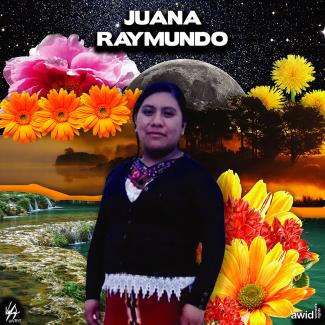
Membre de la communauté autochtone maya ixil, Juana était infirmière professionnelle et coordinatrice du Comité de développement des agriculteurs (CODECA)
CODECA est une organisation de défense des droits humains composée d'agriculteurs autochtones et vouée à la promotion des droits à la terre et du développement rural pour les familles autochtones dans la microrégion de Nebaj Quiché. Elle a d'abord rejoint le CODECA en tant que membre de la Juventud de CODECA (branche de la jeunesse).
Au moment de son décès, elle venait d’être élue membre du Comité exécutif du Mouvement de libération des peuples (MLP).
Le corps de Juana a été retrouvé par des voisins au bord d’une petite rivière sur la route située près de Nebaj et du village d’Acambalam, au Guatemala. Selon le CODECA, son corps portait des traces de torture.