Organizing creatively, facing an increasing threat
Young feminist activists play a critical role in women’s rights organizations and movements worldwide by bringing up new issues that feminists face today. Their strength, creativity and adaptability are vital to the sustainability of feminist organizing.
At the same time, they face specific impediments to their activism such as limited access to funding and support, lack of capacity-building opportunities, and a significant increase of attacks on young women human rights defenders. This creates a lack of visibility that makes more difficult their inclusion and effective participation within women’s rights movements.
A multigenerational approach
AWID’s young feminist activism program was created to make sure the voices of young women are heard and reflected in feminist discourse. We want to ensure that young feminists have better access to funding, capacity-building opportunities and international processes. In addition to supporting young feminists directly, we are also working with women’s rights activists of all ages on practical models and strategies for effective multigenerational organizing.
Our Actions
We want young feminist activists to play a role in decision-making affecting their rights by:
Fostering community and sharing information through the Young Feminist Wire. Recognizing the importance of online media for the work of young feminists, our team launched the Young Feminist Wire in May 2010 to share information, build capacity through online webinars and e-discussions, and encourage community building.
Researching and building knowledge on young feminist activism, to increase the visibility and impact of young feminist activism within and across women’s rights movements and other key actors such as donors.
Promoting more effective multigenerational organizing, exploring better ways to work together.
Supporting young feminists to engage in global development processes such as those within the United Nations
Collaboration across all of AWID’s priority areas, including the Forum, to ensure young feminists’ key contributions, perspectives, needs and activism are reflected in debates, policies and programs affecting them.
Related Content
Présentez la candidature de féministes audacieux·ses pour le Conseil d’administration de l’AWID
Chaque année à l’AWID, nous visons à renouveler et enrichir les points de vue et expériences que reflète notre Conseil d’administration (CA) en accueillant de nouvelles et nouveaux membres.
Nous sommes actuellement à la recherche de personnes pour servir des mandats d’une durée de trois ans au Conseil de l’AWID à compter du début de l’année 2023. Il s’agit d’une occasion de contribuer à la gouvernance de notre organisation et d’intégrer un groupe extraordinaire de féministes du monde entier.
Merci de nous aider à identifier des candidatures de féministes à la fois réfléchi·e·s et audacieux·ses pour l’élection d’ici le 29 juillet 2022.
Merci de partager également cette invitation à candidatures au sein de vos réseaux !
Qui recherchons-nous ?
Nous recherchons avant tout des candidat·e·s engagé·e·s en faveur de la mission de l’AWID capables de faire le lien entre les luttes locales et mondiales. Ces personnes seront également en mesure de nous aider à tirer, avec attention, le meilleur parti du positionnement et des atouts de l’AWID dans un contexte en constante évolution. Les candidat·e·s doivent être disposé·e·s à assumer les fonctions et endosser les responsabilités juridiques du CA de l’AWID, dans l’intérêt supérieur de l’organisation.
Il s’agit d’une fonction bénévole qui nécessite une implication et un engagement tout au long de l’année. Les membres du CA doivent s'engager à consacrer au moins 10 à 15 jours par an à des rencontres en personne et virtuelles, et à contribuer à d'autres communications.
Nous souhaitons que notre CA reflète la diversité sous toutes ses formes, et particulièrement en ce qui concerne l’identité de genre, l’orientation sexuelle, l’âge, le lieu géographique et le milieu socio-économique. Nous recherchons, enfin, des membres de CA ayant une expérience dans l’un des principaux domaines de travail de l’AWID.
Candidat·e·s bénéficiant d'une expérience de travail aux intersections des droits des femmes/de la justice de genre et :
La finance
La justice climatique
La justice pour le personnes handicapées et/ou
La technologie
Candidat·e·s originaires des régions suivantes :
L’Afrique
L’Amérique du Sud
Ce qu’apportent les membres du CA à l’AWID
Le Conseil d’administration joue un rôle clé dans la définition de l’orientation stratégique de l’AWID et le soutien de notre organisation dans l’accomplissement de sa mission, en cohérence avec le monde dans lequel nous vivons et les besoins de nos mouvements.
Les membres du CA contribuent au fonctionnement de l’organisation de diverses manières : ils et elles apportent une expérience d’autres espaces, des perspectives de divers secteurs des mouvements féministes et un savoir-faire conséquent dans des domaines pertinents alignés sur la stratégie de l’AWID.
Les candidat·e·s qui seront finalement élu·e·s intégreront le CA de l'AWID en 2023 et nous accompagneront dans le lancement de notre nouveau plan stratégique dirigé par les nouvelles co-directrices exécutives de l'AWID, ainsi que dans la planification de notre prochain Forum international.
Connaissez-vous quelqu’un qui corresponde à ce profil ?
(Vous pouvez déposer votre candidature ou celle d’une autre personne, avec son consentement.)
Merci de partager également cette invitation à candidatures au sein de vos réseaux !
Si tout le monde peut proposer une candidature au Conseil de l’AWID, seul·e·s les membres de l’AWID peuvent voter aux élections du CA. Adhérez dès aujourd’hui !
Merci d’avance de nous aider à trouver nos prochain·e·s merveilleux·ses membres du Conseil d’administration, qui soutiendront l’AWID lors des étapes à venir !
Avec jusqu'à 2 500 participant·e·s sur place et 3 000 participant·e·s virtuel·e·s/hybrides, il s'agira du plus grand Forum de l'AWID jamais organisé. Nous envisageons de mettre en place de multiples espaces qui vous permettront d'établir des liens significatifs, d'apprendre, d'échanger, d'avoir des échanges stratégiques, de guérir et de fêter. C'est la première fois que nous nous réunissons dans cet espace depuis la pandémie, et nous brûlons d’impatience.
ours chapter 3
Capítulo 3
Discursos anti-derechos
Los discursos anti-derechos continúan evolucionando. Además de utilizar argumentos relacionados con la religión, la cultura y la tradición, los actores antiderechos cooptan el lenguaje de la justicia social y los derechos humanos para ocultar sus verdaderas agendas y ganar legitimidad.
Aïssata Kane, también conocida afectuosamente como «Yaye Kadia»” [«Madre Kadia»], fue una feminista comprometida, durante toda su vida, con la defensa de los derechos de las mujeres africanas y, en especial, mauritanas.
En 1975 fue la primera mujer en ocupar el cargo de Ministra de Protección Familiar y Asuntos Sociales, puesto desde el cual Aïssata trabajó fervientemente para mejorar el estatus de las mujeres de su país.
Este trabajo incluyó el fomento de la educación de niñas y mujeres, la lucha contra la práctica de alimentación forzada de mujeres jóvenes, la incidencia para la inclusión de una legislación sobre derechos maritales, y la promoción de la creación de un cupo de representación femenino en el Parlamento.
«[Aïssata] materializaba todas sus pasiones con humildad, valentía y determinación. No quería molestar a nadie con su lucha en todos estos frentes simultáneos.» - Ball Halimata Dem, sobrina de Aïssata
Fundó la Unión Nacional de Mujeres de Mauritania (UNFM), creando y publicando con otras activistas Marienou, una revista dedicada a la emancipación de las mujeres mauritanas. Aïssata también dirigió varias organizaciones subregionales y locales, por ejemplo, como Presidenta de la Asociación Internacional de Mujeres Francófonas (AIFF) y, como firme ecologista, fue Presidenta de la Asociación para la Protección del Medio Ambiente de Mauritania (APEM).
En 2018, recibió el Premio a la Mujer Pionera, en honor a su trabajo para la promoción del estatus de las mujeres de Mauritania y como reconocimiento de su fuerte liderazgo y su sentido de la innovación.
Reclaim Power to #FreezeFascisms: Resources for Feminists to Survive & Thrive
Feminist and gender justice movements continue to be chronically underfunded in the face of global funding cuts and freezes. Particularly in Global South regions with shrinking civic spaces, resource scarcity has impacted the most vulnerable communities.
In the face of these setbacks, AWID has updated the Who Can Fund Me? Database - an easy-to-use, practical tool for movements looking for funders from philanthropic foundations, multilateral funders to women’s and feminist funds to support vital lifesaving efforts.
Sudanese Feminists: "A Revolution within the Revolution"
"I have been subjected to sexual violence, physical injuries and other forms of violence while protesting at the frontlines. But I will never stop until we achieve complete civilian rule in Sudan. We must stop militarization of the state. Our bodies should not be treated as battlegrounds any longer."
During the last 4 years women led the revolution in Sudan. Their leadership wasn't just on streets, but they were the power driving the consistent resistance at all levels. Women and young feminists became the alerted consciousness of the Sudanese change and democratization movement. Since the first protest against the former regime in Aldmazein town in the conflict area of Blue Nile on December 13th, 2018, young school girls were the voices demanding the end of the rule of the 30 years dictatorship of military and Muslim Brotherhood.
The feminist movement led by young women aging 16 to 35, has established a revolution within the revolution in Sudan in the last 4 years of non stop revolution. The strong voices of young women occupying spaces on streets, social media, civil society and political organizations were high enough to reshape the public opinion and challenge social norms. Discussions of sexual and gender based violence and taboos of domestic violence and male dominant decisions making process became mainstream debates for the first time in Sudan history. Women Football teams appointed spokeswomen for resistance committees, and women led professional unions are part of the manifestation of the new wave of feminist movement in Sudan. Young women identifying as feminist proudly and publicly is the most important achievement in a country ruled by fundamentalist Islam for 3 decades. Young men supporting feminist activism, and identifying as feminist is another progress worth noting.
This progress is not cost free, it is also not perfect. Feminist activists, groups and activists face the same challenges we expect in a conservative, and conflict affected contexts. But the impact of the young feminists movement in Sudan is worth of looking up to. Overcoming internal boundaries of diverse cultures, religions, and conflicts history is a challenge, but young feminists in Sudan seems to work hard to bridge the gaps. Creation of feminist schools in Darfur and Kordofan is something that makes the work of young feminists in Sudan a unique journey worth to learn from.
The young women leading these efforts and the women groups working on the ground cannot be mentioned here due to several security concerns under the current military coup. But their resilience, strength and courage is one for the history books. The audacious young women leading resistance on streets, behind screens, and working in different professions and activism fields are shaping the future of Sudan. The young feminists in Sudan are creating new spaces for a feminist narratives and discourses to restructure the distribution of power at political, economical and social aspects.
Despite the immense violence, reemergence of fundamentalist Islam, militarization and shrinking civic spaces, feminist activists in Sudan remain rooted in their sisterhood. They remain a great inspiration for the feminist movements globally.
Nazik Awad
* Amal is a pseudonym used to protect the young activist quoted. ** Sudan is living under constant revolution since 2018. A new wave started after the military coup on October 25th 2021.
Does AWID provide scholarships to attend the Forum?
Our Access Fund will offer a limited number of scholarships to fund the participation of activists who cannot otherwise make it, and don’t have relationships with funders who could cover their participation. So if you have other possibilities, please explore them. We will do our best to offer as many scholarships as we can, and will share more information about this process and how to apply in early 2024.
Résumé : Identifiez les principaux groupes et réfutez leurs arguments
Résumé :
Identifiez les principaux groupes et réfutez leurs arguments
Décideur·se politique à l’ONU, vous souhaitez apprendre à repérer les principaux groupes et discours antidroits au sein de l’institution ? Vous êtes un·e féministe, à la recherche de contre-arguments éclairs ? Ce résumé vous propose les informations essentielles en 8 pages seulement.
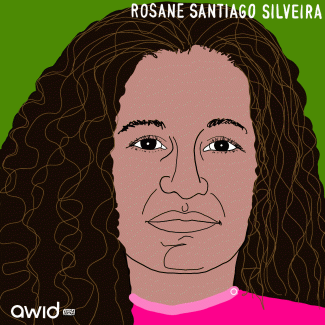
Rosane Santiago Silveira, que l’on appelait affectueusement Rô Conceição, était une activiste brésilienne pour l’environnement et les droits humains qui se battait inlassablement pour protéger l’environnement, là où il était le plus menacé.
Il pouvait entre autres s’agir de le défendre sur l’île de Barra Valha, mise en danger par une exploitation pétrolière, ou de le protéger avec des campagnes contre l’accaparement des terres et l’expansion de plantations d’eucalyptus dans l’État de Bahia, où Rosane était membre du conseil de la réserve d’extractivistes de Cassurubá.
« La réserve d’extractivistes est une zone protégée où les familles résidentes vivent des produits naturels extraits de la forêt. Ces activités contribuent à protéger l’intégrité de la forêt. » - Global Justice Ecology Project (source initiale : Rede Brasil Atual)
Elle participait à des activités syndicales et des mouvements culturels et de défense des droits humains. Rosane consacrait une grande partie de sa vie à des causes qui lui étaient chères, mais qui concernaient également la terre, les forêts, les rivières et les communautés dont les droits et vies sont constamment en danger.
Elle a été torturée et assassinée le 29 janvier 2019 à Nova Viçosa, une ville du sud de Bahia.
« Malheureusement, un sentiment d’insécurité totale règne désormais, parce que l’État ne juge pas ces crimes. Nous étions avec elle à Noël, et tout le monde s’est rendu compte qu’elle était inquiète. Nous savons maintenant qu’elle avait reçu trois menaces de mort », Tuian, le fils de Rosane dans un entretien avec Rádio Brasil Atual. (source initiale : Rede Brasil Atual)
Getting the Money We Need | A 101 Guide on Fundraising for Small Grassroots Organizations
From building prospect funders lists with *templates*, to understand how to write a solid grant proposal, with ‘Getting the Money we Need’ Guide really we don't have to figure this out alone anymore
Lettres d'amour aux mouvements féministes : Une lettre d'Inna et Faye
Chers mouvements féministes,
L'amour est ce qui entretient notre feu féministe. Avec le souci de nos communautés, la colère et la rage face à l'injustice et le courage d'agir.
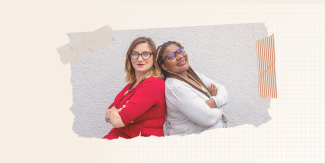
En septembre 2022, nous sommes entrés avec beaucoup d'enthousiasme dans nos rôles de leadership à l'AWID, en tant que co-directeurs exécutifs. Nous avons ressenti la chaleur et l'étreinte de la fraternité féministe lorsque vous nous avez accueillis.
En réfléchissant à nos souvenirs les plus précieux en tant que féministes, nous nous souvenons de puissants moments de solidarité lors de manifestations de rue, d'analyses pointues et de voix courageuses ébranlant le statu quo lors de rassemblements. Nous avons tenu ces conversations intimes la nuit, ri pendant des heures et dansé ensemble lors de fêtes.
Les feux féministes doivent être alimentés, en particulier dans les moments difficiles où les défis extérieurs ne manquent pas, de la crise climatique et de la montée des forces de droite aux économies d'exploitation et aux schémas persistants d'oppression au sein de nos propres mouvements sociaux. Ce sont ces feux, brûlant partout, qui éclairent nos voies et nous gardent au chaud, mais nous ne pouvons pas ignorer les effets épuisants de la violence politique et de la répression dirigées contre nombre de nos luttes, mouvements et communautés.
Nous comprenons le désir de changer le monde comme un ingrédient essentiel de l'organisation féministe. Nous ne pouvons jamais oublier que nous sommes ceux que nous attendions pour construire des alternatives et façonner notre avenir. Pourtant, l'énergie féministe dynamique ne peut être tenue pour acquise et doit être préservée de plusieurs façons. En cela, nous continuerons d'être vigilants. Un accès plus grand et égal aux soins et au bien-être, à la guérison et au plaisir, ne sont pas seulement des instruments pour prévenir l'épuisement professionnel et soutenir nos mouvements, même si c'est une fonction importante ; d'abord et avant tout, ils sont la façon dont nous espérons vivre nos vies.
"Fierce Feminisms: Together We Rise" reflète notre conviction que le moment est venu pour nous d'être féroces et sans vergogne dans nos agendas tout en faisant un effort pour nous connecter entre les mouvements et vraiment connaître les réalités de chacun, afin que nous puissions nous élever ensemble - car, pour nous, c'est le seul moyen.
Nos plans incluent le Forum de l’AWID tant attendu ! Nous sommes impatients de vous rencontrer tous en personne et en ligne en 2024. Nous entendons de vous le besoin de vous connecter et de vous ressourcer, de vous reposer et de guérir, d'être mis au défi et inspiré, de partager de la bonne nourriture, de rire et de danser ensemble. Peu de choses dans ce monde sont aussi puissantes et transformatrices que des féministes de toutes les régions du monde qui se réunissent, et nous retenons vraiment notre souffle pour ce moment, car nous connaissons la magie que nous pouvons créer ensemble.
L'engagement de nos membres a pris vie grâce àla communauté AWID (notre plate-forme en ligne pour les membres), et notre objectif de créer des liens et de la solidarité trouve un écho chez beaucoup d'entre vous. Rejoignez-nous et connectez-vous avec nous et d'autres dans les mouvements féministes du monde entier. Nous connaissons l'importance de la connexion dans un temps et un espace où les règles ne sont pas faites pour nous, et nous tenons à notre communauté, où chacun de nous compte.
Avec nos fantastiques collègues de l'AWID, nous promettons de faire de notre mieux pour soutenir les mouvements féministes, comme c'est la mission et le but de l'AWID. Veuillez nous demander des comptes.
Au cours des 40 dernières années, vous - les mouvements féministes - avez façonné l'histoire de l'AWID et nous avez poussés à être plus courageuses, créatives et radicales. 40 ans est un âge fabuleux, et nous attendons avec impatience 40 autres années avec vous tous. Nous attendons avec impatience les partenariats, les appels à la justice, la collaboration, l'influence sur les politiques et le pouvoir féministe dur à cuire que vous apportez tous pour naviguer dans le contrecoup toujours croissant de la justice de genre, raciale et environnementale. Nous avons tant à apprendre de vous et les uns des autres, alors que nous construisons collectivement les mondes auxquels nous croyons.
Cindy Clark et Hakima Abbas, merci de nous avoir ouvert la voie et de nous préparer à remplir leurs énormes chaussures. Nous apprécions toujours tous ceux sur les épaules desquels nous nous sommes tenus et continuons de nous tenir debout. Nous nous comprenons comme faisant partie d'un paysage de mouvement plus large, d'histoires féministes, de présents et d'avenirs audacieux.
Et pour le Conseil d'administration de l'AWID, nous vous sommes reconnaissants pour le soutien et l'amour féministe que vous nous témoignez, ainsi que pour votre engagement envers le leadership des pays du Sud et le modèle de co-leadership. Nous envoyons notre amour et notre respect à chaque collègue de l'AWID, nous nous sentons honorées de travailler avec une équipe féministe aussi exceptionnelle de professionnelles dévouées.
C'est la première fois que nous écrivons une lettre d'amour ensemble, comment pourrions-nous la conclure sans exprimer de l'amour, de l'attention et du respect l'un envers l'autre ? C'est une relation assez intense dans laquelle nous sommes entrés! Nous apportons tous deux nos perspectives et compétences différentes et diverses à notre travail, et en tant qu'individus, nous apportons également nos expériences vécues et notre moi authentique.
Avec vous tous, nous sommes une histoire en devenir, une partie d'un beau tissage - et souvent magnifiquement stimulant - une tapisserie qui se poursuit à l'avenir. Nous nous sommes amusés à commencer ce voyage les uns avec les autres et avec vous, et nous espérons vraiment que la romance restera vivante.
En solidarité avec l'amour et les soins Inna and Faye
Réserve cette date!
21 février 2023, membre Mixer 5 sur la politique féministe avec Faye et Inna.
¿Habrá encuentros regionales, temáticos o de otro tipo previos al Foro?
¡Creemos que sí! Todavía estamos en las etapas iniciales del proceso de planificación, así que mantente atentx mientras les vamos dando a estos planes.
Animation: Calling all Feminist Superheroes!
Animation:
Calling all Feminist Superheroes!
Follow our Superhero as she embarks on a quest to reclaim the narrative from anti-rights actors across the globe.
Snippet - WITM Infographic annual budget 2 in 4- EN
Ever Wondered What Budgets for Feminist Organizations Look Like?
A closer look at actual budgets reveals major income diversity and inequality.
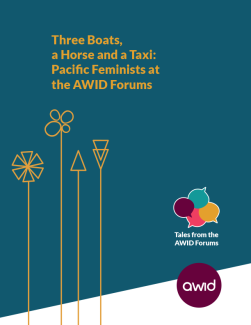
Three Boats, a Horse and a Taxi: Pacific Feminists at the AWID Forums
Three Boats, a Horse and a Taxi: Pacific Feminists at the AWID Forums
This story is about how an increasingly diverse group of feminists from the Pacific organized through the years to attend the AWID Forums and how that process changed them personally, as organizations, and as a movement through what they learned, discovered and experienced. It illustrates the importance of the Forums as a space through which a region that tends to be marginalized or ignored at the global level can build a strong presence in the feminist movement that is then replicated at other international women’s rights spaces.