Helen Rumbali
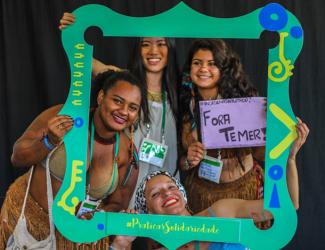
Young feminist activists play a critical role in women’s rights organizations and movements worldwide by bringing up new issues that feminists face today. Their strength, creativity and adaptability are vital to the sustainability of feminist organizing.
At the same time, they face specific impediments to their activism such as limited access to funding and support, lack of capacity-building opportunities, and a significant increase of attacks on young women human rights defenders. This creates a lack of visibility that makes more difficult their inclusion and effective participation within women’s rights movements.
AWID’s young feminist activism program was created to make sure the voices of young women are heard and reflected in feminist discourse. We want to ensure that young feminists have better access to funding, capacity-building opportunities and international processes. In addition to supporting young feminists directly, we are also working with women’s rights activists of all ages on practical models and strategies for effective multigenerational organizing.
We want young feminist activists to play a role in decision-making affecting their rights by:
Fostering community and sharing information through the Young Feminist Wire. Recognizing the importance of online media for the work of young feminists, our team launched the Young Feminist Wire in May 2010 to share information, build capacity through online webinars and e-discussions, and encourage community building.
Researching and building knowledge on young feminist activism, to increase the visibility and impact of young feminist activism within and across women’s rights movements and other key actors such as donors.
Promoting more effective multigenerational organizing, exploring better ways to work together.
Supporting young feminists to engage in global development processes such as those within the United Nations
Collaboration across all of AWID’s priority areas, including the Forum, to ensure young feminists’ key contributions, perspectives, needs and activism are reflected in debates, policies and programs affecting them.

منجزاتك الأكاديمية جسر عبور نحو شهوتك الجنسيّة (جدّيًا، سلِّم الأوراق المطلوبة، الكترونية كانت أم ورقيّة)
Данные будут обработаны в статистических целях, чтобы осветить состояние ресурсного обеспечения феминистских движений во всем мире, и представлены будут только в обобщенном виде. AWID не будет публиковать информацию о конкретных организациях или отображать информацию, которая позволила бы идентифицировать организации по их местоположению или характеристикам, без их согласия.
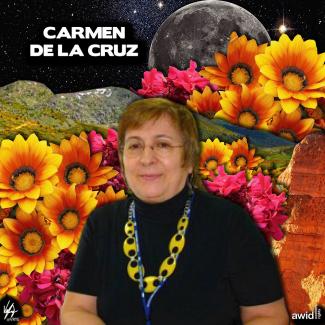
Carmen tuvo una larga carrera en la defensa de los derechos de las mujeres tanto en organizaciones no gubernamentales como en el sistema de las Naciones Unidas.
Dio clases en varias universidades españolas y latinoamericanas y publicó numerosos artículos e informes sobre mujeres, género y paz en países en desarrollo. Sus escritos y reflexiones críticas repercutieron en toda una generación de mujeres jóvenes.
En sus últimos años, fue responsable del Área Práctica de Género en el Centro Regional para América Latina del Programa de las Naciones Unidas para el Desarrollo (PNUD), desde donde apoyó iniciativas muy valiosas en favor de la igualdad de género y los derechos humanos de las mujeres.
Como parte de nuestro compromiso de lograr una interacción más profunda con artistas y la práctica de la creación conjunta de las Realidades Feministas, AWID colaboró con un para promover y fortalecer las agendas y realidades feministas en sus comunidades y movimientos a través de sus expresiones creativas. Nuestra intención en este punto es reunir a creativxs feministas en un espacio pujante y valiente donde puedan desarrollarse y vivir en libertad, y donde puedan romper las narrativas tóxicas para sustituirlas por alternativas transformadoras.
Esta exhibición reúne la obra de artistas y colectivos de todo el globo que están creando activamente la diferencia que queremos ver plasmada en el mundo. Entre estxs creativxs feministas se encuentran Upasana Agarwal, Nicole Barakat, Siphumeze Khundayi, Katia Herrera, Ali Chavez Leeds, el Colectivo Morivivi, Ika Vantiani, y lxs curadorxs detrás de la exhibición #MeToo en China. Sus voces se mantienen firmes en su rechazo a aceptar las limitaciones que impone el patriarcado, y para amplificar sus compromisos con las comunidades con las que trabajan. A su propio modo, cada obra de arte representa los actos cotidianos de resistencia, las historias e identidades que no se han narrado, las conexiones con la tierra y lo ancestral y, lo que es más importante, la solidaridad que existe en el interior de las luchas y los movimientos feministas y entre ellos. Estxs artistas se inspiran en y a la vez inspiran estrategias creativas de resistencia e iniciativas feministas que nos muestran cómo podemos vivir en un mundo más justo, un mundo que pone en el centro los cuidados y la sanación.
Não. Tem por base a história de 20 anos da AWID de mobilizar mais financiamento de maior qualidade para mudanças sociais lideradas por feministas e é a terceira edição do nosso inquérito “Onde está o dinheiro para organização feminista?”. O nosso objetivo é repetir o inquérito WITM a cada 3 anos.
Affectueusement connue sous le nom de « Mama Efua », Efua a lutté contre les mutilations génitales féminines (MGF) pendant trois décennies et a contribué à attirer l'attention et l'action de la communauté internationale pour mettre fin à cette pratique néfaste.
En 1983, Efua a cofondé FORWARD (fondation pour la santé, la recherche et le développement des femmes), qui est devenue une organisation de premier plan dans la lutte contre les MGF. Son livre intitulé « Cutting the Rose: Female Genital Mutilation » (couper la rose), publié en 1994, est considéré comme le premier ouvrage sur les mutilations génitales féminines. Il figure parmi « Les 100 meilleurs livres africains du XXe siècle » de l’Université de Columbia.
Originaire du Ghana et infirmière de formation, Efua a rejoint l'OMS en 1995 et a réussi à faire en sorte que les mutilations génitales féminines fassent partie des agendas politiques des États membres de l'OMS. Elle a également travaillé en étroite collaboration avec le gouvernement nigérian pour élaborer une politique nationale globale qui servirait de base légale aux lois nigérianes contre les mutilations et qui est toujours en vigueur à ce jour.
Son travail de pionnière a abouti à une campagne menée par l'Afrique intitulée « The Girl Generation », qui s'est engagée à mettre fin aux MGF en une génération. Efua a montré comment une seule personne peut devenir la voix unificatrice d'un mouvement : « Une identité partagée peut aider à rassembler des activistes d'horizons différents dans un but commun ». Ces mots, emplis de sagesse, sont plus pertinents que jamais.

Cette édition du journal, en partenariat avec Kohl : a Journal for Body and Gender Research (Kohl : une revue pour la recherche sur le corps et le genre) explorera les solutions, propositions et réalités féministes afin de transformer notre monde actuel, nos corps et nos sexualités.
إن كانت لديكم/ن أسئلة أو أمور تثير قلقكم/ن، الرجاء التوجه الينا عن طريق هذا النموذج وكتابة "استطلاع أين المال" في العنوان أو راسلنا على witm@awid.org
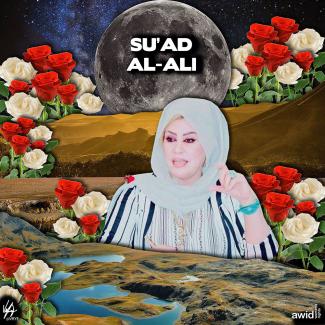
Su’ad was a strong advocate of women’s and children’s rights, and was the head of Al-Weed Al-Alaiami - an Iraqi human rights organisation.
She participated in the July 2018 demonstrations that took place in Basra and several other Iraqi cities protesting unemployment and demanding jobs and proper public services for citizens, as well as calling for the elimination of rampant corruption.
On 25 September 2018, Su’ad was assassinated in the Al-Abbasiyah district in downtown Basra. A video of the incident showed a person approaching her as she was getting into her car, firing a bullet at the back of her head and pointing another bullet at her driver Hussain Hassan, who was injured in the shoulder. Al-Ali was 46 and the mother of four children.
AWID, the Center for Women’s Global Leadership (CWGL), and the African Women's Development and Communication Network (FEMNET), offers this think piece to challenge mainstream understandings of development and put forward initial propositions for a feminist agenda for development, economic and gender justice.
Learn more about where this project comes from
These propositions are intended to be just that - proposals, to be discussed, debated, added to, taken apart, adapted, adopted, and even to inspire others.
Are you job hunting? One of the perks of joining the AWID Community, is getting access to our community curated jobs board. You'll get to explore new opportunities, and you will also have the chance to share vacancies and call for proposals with all members.
“Afterwards
After love the first time,
Our naked bodies and minds
A hall of mirrors,
Wholly unarmed, utterly fragile,
We lie in one another's arms
Breathing with care,
Afraid to break
These crystal figurines.” - Fahmida Riaz
Her work faced harsh criticism from conservatives, who accused her of using erotic and “pornographic” expressions in her poetic language.
Fahimida was eventually blacklisted and charged with sedition under Section 124A of the Pakistan Penal Code) during the dictatorship of Zia Ul Haq. Forced into exile in 1981, she spent almost seven years in India before returning to Pakistan.
As part of the preface to “Badan Dareeda” ('The Torn-Bodied'), a collection of poetry published in 1974, she wrote:
The brilliance of Fahmida was in defying any singular logic or categories of gender, nation, religion or culture. She refused to be put in the role of a ‘woman poet’, breaking with traditional definitions of feminine poetry and concepts and themes (ranging from political consciousness, body, culture, desire, religion, home) and knocking down inhibitions put on her gender.
“You have to understand that culture can have no essence. Cultures move, flowing into one another, forming new cultures. Culture is born this way. There is no clash of cultures.”
Fahmida authored more than 15 books on poetry and fiction including her poem ‘Taaziyati Qaraardaaden’ (‘Condolence Resolutions’) that might serve as an appropriate tribute to her life and legacy and a collection of poems (Apna Jurm To Saabit He ‘My Crime Stands Proven’) published in 1988 during her time in exile.
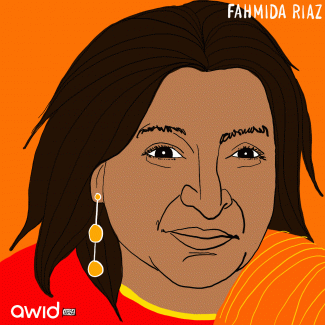
Fahmida Riaz was born in Meerut, India on 28 July 1946 and passed away on 21 November 2018 in Lahore, Pakistan.