Esther Chávez Cano
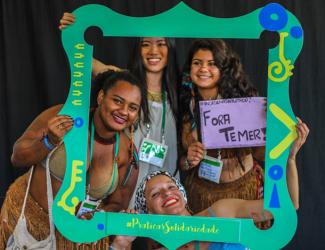
Young feminist activists play a critical role in women’s rights organizations and movements worldwide by bringing up new issues that feminists face today. Their strength, creativity and adaptability are vital to the sustainability of feminist organizing.
At the same time, they face specific impediments to their activism such as limited access to funding and support, lack of capacity-building opportunities, and a significant increase of attacks on young women human rights defenders. This creates a lack of visibility that makes more difficult their inclusion and effective participation within women’s rights movements.
AWID’s young feminist activism program was created to make sure the voices of young women are heard and reflected in feminist discourse. We want to ensure that young feminists have better access to funding, capacity-building opportunities and international processes. In addition to supporting young feminists directly, we are also working with women’s rights activists of all ages on practical models and strategies for effective multigenerational organizing.
We want young feminist activists to play a role in decision-making affecting their rights by:
Fostering community and sharing information through the Young Feminist Wire. Recognizing the importance of online media for the work of young feminists, our team launched the Young Feminist Wire in May 2010 to share information, build capacity through online webinars and e-discussions, and encourage community building.
Researching and building knowledge on young feminist activism, to increase the visibility and impact of young feminist activism within and across women’s rights movements and other key actors such as donors.
Promoting more effective multigenerational organizing, exploring better ways to work together.
Supporting young feminists to engage in global development processes such as those within the United Nations
Collaboration across all of AWID’s priority areas, including the Forum, to ensure young feminists’ key contributions, perspectives, needs and activism are reflected in debates, policies and programs affecting them.
O inquérito global do WITM é um pilar fundamental da terceira edição da nossa investigação orientada para a ação: "Onde está o dinheiro para a organização feminista" (abreviado, "Onde está o dinheiro" ou WITM). Os resultados do inquérito serão aprofundados e explorados através de conversas profundas com ativistas e financiadores, e comparados com outras análises e investigações existentes sobre o estado do financiamento para feministas e para a igualdade de género globalmente
O relatório completo "Onde está o dinheiro para a organização feminista" será publicado em 2026.
 Para mais informações sobre como a AWID tem chamado a atenção para o dinheiro a favor de e contra os movimentos feministas, consulte a nossa história do WITM e os nossos relatórios anteriores aqui.
Andaiye fue considerada una figura transformadora al frente de las luchas por la liberación y la libertad. Fue una de lxs primerxs integrantes y líder activa de la Working People’s Alliance [Alianza de la Gente Trabajadora] (WPA, por sus siglas en inglés), un partido socialista de la Guyana que luchó contra el régimen autoritario existente y continuó, a lo largo de su vida, centrando su activismo en la justicia para la clase trabajadora y los derechos de las mujeres rurales, y en la superación de las barreras étnicas entre las mujeres Indo y Afro-Guyanesas.
Andaiye fue cofundadora de la Red Thread Women [Hilo Rojo Mujeres], una organización que aboga para que el trabajo de cuidados de las mujeres fuese remunerado justamente, también trabajó en la Universidad de West Indies y con el CARICOM. Andaiye señaló, sin ningún temor a desafiar a los gobiernos, los desequilibrios de género en las juntas estatales, la discriminación de lxs trabajadorxs sexuales en las leyes existentes, reclamó el derecho al aborto en Jamaica, y se pronunció abiertamente contra los acuerdos comerciales como el Caribbean Single Market and Economy [Mercado y Economía Únicos del Caribe] (CSME, por sus siglas en inglés) que permitía la libre circulación de las trabajadoras domésticas migrantes, pero no otorgaba esos mismos derechos a sus hijxs.
Andaiye publicó varios ensayos académicos, escribió columnas de prensa y también editó los últimos libros de Walter Rodney, un activista político guyanés y líder de la AMP, que fue asesinado en 1980. Andaiye sobrevivió a un cáncer y fue una de lxs fundadorxs de la Guyana Cancer Society [Sociedad de Guyana Contra el Cáncer] y del Cancer Survivors’ Action Group [Grupo de Acción de Sobrevivientes del Cáncer]. También fue integrante de la Junta Directiva de la Caribbean Association for Feminist Research and Action [Asociación Caribeña para la Investigación y la Acción Feminista] (CAFRA, por sus siglas en inglés), y Directora del Help and Shelter [Ayuda y Refugio] e integrante de la Junta Directiva de la Guyana National Commission on Women [Comisión Nacional de Guyana sobre las Mujeres]. Andaiye recibió varios premios a lo largo de su vida, entre ellos, la Flecha de Oro de los Logros de Guyana (el cuarto premio nacional más importante del país).
Andaiye falleció el 31 de mayo de 2019 a la edad de 77 años. Los homenajes que posteriormente le rindieron activistas, amigxs y personas inspiradas por su vida dan cuenta, elocuentemente, de su asombroso legado y su hermosa humanidad.
Algunos ejemplos:
"Andaiye tuvo un profundo efecto en mí... fue tantas cosas: una educadora, una luchadora; me enseñó a ser autocrítica, a pensar con más claridad, me enseñó sobre la supervivencia, sobre lo increíble que puede ser el coraje, sobre la compasión, a ir más allá de las apariencias externas y a tratar a la gente como personas y no dejarse distraer por su estatus, clase, raza... o cualquier otra cosa". Peggy Antrobus, activista feminista, autora, académica, Barbados.
"El tipo de idealismo convencido que Andaiye expresó, su voluntad de confrontar el mundo y su creencia obstinada en que realmente lo puedes cambiar... Esa política de la esperanza... ¿De qué otra forma podemos rendir homenaje a su vida, legado y memoria si no es haciendo nuestro trabajo de forma ética y con una autocrítica continua? Y situando el trabajo de cuidados de las mujeres en el centro de todo esto." - Tonya Haynes, Barbados.
"Puedo escuchar sus ocurrencias en nuestro entusiasmo colectivo. Así, a través de las lágrimas, puedo reír. Mis más profundas reverencias a ti, querida Andaiye, gracias por todo. Te deseo amor y luz para el viaje de tu espíritu. Saluda a Walter y a todxs lxs ancestrxs". - Carol Narcisse, Jamaica.
We know feminists still need and deserve more and better resources! We have revised our funder database.
The Who Can Fund Me? Database is an easy-to-use, practical tool for movements looking for funders from philanthropic foundations, multilateral funders to women’s and feminist funds to support vital lifesaving efforts.


Forma parte de una organización feminista de membresía internacional y de una comunidad. Nuestrxs afiliadxs residen en todas las regiones del mundo. Aprenden entre sí y se brindan apoyo mutuo en una red global fundada en la solidaridad.
الهدف الأساسي من وراء استطلاع "أين المال" هو تسليط الضوء على على وقائع التمويل المتنوّعة والمركّبة للحركات النسوية، حركات النساء، حركات العدالة الجندرية وحركات مجتمع الميم - عين والحركات الحليفة لها على المستوى العالمي. بناءاً على هذا، وبناءً على ذلك - تعزيز قضية تحويل أموال أكثر وأفضل وتحويل السلطة باتجاه الحركات النسوية.
« C’[elle] était une personne qui se caractérisait par son travail acharné en faveur de la défense des droits humains et la construction de la paix à Nariño, notamment dans la municipalité de Samaniego-Nariño » - Jorge Luis Congacha Yunda pour Página10
Elle s’est concentrée sur les droits civils et politiques, les enjeux d’impunité et de justice, et a contribué à dévoiler les abus de pouvoir, dont la corruption. Elle a également participé à des projets de construction de la paix dans sa ville natale, Samaniego, comme le Conseil municipal pour la paix et le Bureau municipal de femmes.
Paula a reçu des menaces de mort après avoir exposé une gestion irrégulière des ressources, de même que porté plainte contre des actes de corruption au sein de l’Hôpital Lorencita Villegas dans la municipalité de Nariñense. Elle a été assassinée le 20 mai 2019, lorsque deux hommes se sont approchés d’elle et l’ont abattue à bout portant.
Le Forum a été un espace clé pour le Mouvement des femmes autochtones (Indigenous Women’s Movement, IWM) dans son rapport au féminisme. Aux Forums de l’AWID, elles ont appliqué la même stratégie que celle utilisée pour les Nations Unies. Au cours de ce processus, les deux mouvements ont été transformés : de nouvelles voix et questions ont émergé au sein de l’IWM, et les féministes ont commencé à changer leurs discours et leurs pratiques autour des droits fonciers et de la spiritualité, elles ont mieux compris les droits collectifs et ont inclus l’IWM dans leurs événements et leurs programmes. Mónica Alemán et María Manuela Sequeira, de l’IWM, nous ont raconté cette histoire.
"Nous savons que tout est contre nous et il y a très peu de chances de changer cela. Mais nous croyons en l'intervention et je pense que nous avons une opportunité et nous devrions l'utiliser. C'est pourquoi nous faisons tout ce que nous faisons. Nous sommes prêt·e·s à pousser pour des choses inouïes."
Sopo Japaridze dans OpenDemocracy
Photo @სოლიდარობის ქსელი / Solidarity Network

Participez au Forum international de l'AWID - un rassemblement féministe mondial majeur - et bénéficiez de réductions spéciales et de points d'entrée pour le dialogue virtuel réservés aux membres de l'AWID. Co-créé par des mouvements féministes, le Forum est un espace unique de discussion profonde et d'imagination où nous remettons en question et renforçons notre organisation, et joignons nos luttes et nos réalités féministes.
Нет, мы высоко ценим вашу работу, но в данный момент мы не просим откликов от женских и феминистских фондов. Мы будем рады, если вы поделитесь информацией об опросе со своими партнерками(-рами) и контактами внутри феминистской сети.
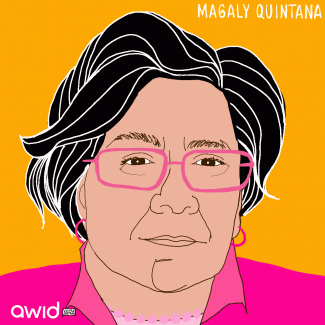
Magaly Quintana was known by many in Nicaragua as ‘La Maga’ (meaning wizard). She was a feminist historian, activist, and an unyielding defender of women’s rights demanding justice for the victims of femicide.
Magaly was committed to documenting and building statistics on women and girls who were killed as a result of sexual violence in the country.
“She rebuilt the life of each one, of their families, to show those lives that had been torn away.” - Dora María Téllez
Magaly also criticized the government for reforming Law 779 addressing violence against women. A product of the hard work of Nicaraguan women’s movements, this law included important provisions to criminalize femicide before its reform. She argued that legislative reforms weakened the law and limited the definition of femicides to homicides, as a result invisibilizing violent crimes against women.
Magaly’s feminist organizing began in the early 1980s. She was the director of Catholic Women for the Right to Choose, advocating for the right to therapeutic abortion after it was banned in 2006. In 2018, she supported the protests against Daniel Ortega’s government.
Magaly was born in May 1952 and passed away in May 2019.
“See you later, my dearest Magaly Quintana. Thanks so much, thanks for your legacy. We’ll see you again, as strong and powerful as ever.”- Erika Guevara Rosas (American Director of Amnesty International)
Les agradecemos su interés por visitar el sitio web de AWID. Para obtener más información sobre nuestro trabajo, visiten https://www.awid.org/es
We work towards a world based on social, environmental, and economic justice; and interdependence, solidarity, and respect. We work towards dismantling systems of oppressive power and against all its manifestations, including patriarchy, fundamentalisms, militarisms, fascisms and corporate power that threaten our lives and our world. We want a just world where resources and power are shared in ways that enable everyone to thrive.