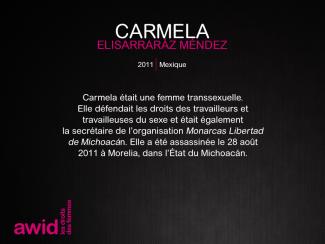
Carmela Elisarraraz Mendez
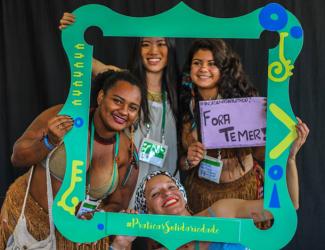
Young feminist activists play a critical role in women’s rights organizations and movements worldwide by bringing up new issues that feminists face today. Their strength, creativity and adaptability are vital to the sustainability of feminist organizing.
At the same time, they face specific impediments to their activism such as limited access to funding and support, lack of capacity-building opportunities, and a significant increase of attacks on young women human rights defenders. This creates a lack of visibility that makes more difficult their inclusion and effective participation within women’s rights movements.
AWID’s young feminist activism program was created to make sure the voices of young women are heard and reflected in feminist discourse. We want to ensure that young feminists have better access to funding, capacity-building opportunities and international processes. In addition to supporting young feminists directly, we are also working with women’s rights activists of all ages on practical models and strategies for effective multigenerational organizing.
We want young feminist activists to play a role in decision-making affecting their rights by:
Fostering community and sharing information through the Young Feminist Wire. Recognizing the importance of online media for the work of young feminists, our team launched the Young Feminist Wire in May 2010 to share information, build capacity through online webinars and e-discussions, and encourage community building.
Researching and building knowledge on young feminist activism, to increase the visibility and impact of young feminist activism within and across women’s rights movements and other key actors such as donors.
Promoting more effective multigenerational organizing, exploring better ways to work together.
Supporting young feminists to engage in global development processes such as those within the United Nations
Collaboration across all of AWID’s priority areas, including the Forum, to ensure young feminists’ key contributions, perspectives, needs and activism are reflected in debates, policies and programs affecting them.
A closer look at actual budgets reveals major income diversity and inequality.
Non, il n'est pas nécessaire d'être membre de l'AWID pour y participer, mais les membres de l'AWID bénéficient d'une réduction sur les frais d'inscription ainsi que d'un certain nombre d'autres avantages.
«Yo no planeaba ser una cantante, el canto planeó estar en mí.» - Dorothy Masuka (entrevista de Mail & Guardian)
Una de estas canciones, titulada «Dr. Malan» (por el político pro-apartheid D.F. Malan) fue prohibida. Luego, en 1961, grabó «Lumumba», una canción sobre el asesinato del líder anticolonial Patrice Lumumba. El trabajo y el activismo de Dorothy atrajeron la atención de la División Especial de la policía sudafricana, y fue forzada a un exilio político que se prolongaría durante tres décadas. Durante ese tiempo, trabajó con grupos independentistas, incluido el Congreso Nacional Africano. En 1992, cuando el apartheid comenzó a desmoronarse y Nelson Mandela fue liberado de prisión, Dorothy regresó a Sudáfrica.
Su trabajo incluye la primera canción que grabó, en 1953, titulada «Hamba Notsokolo», que fue un éxito durante la década de 1950, y hoy es un clásico muy valorado. También escribió «El Yow Phata Phata», una canción que fue adaptada por Miriam Makeba, quien hizo de «Pata, Pata» un hit internacional.
Arraigados en la resistencia, la música y el activismo de Dorothy (popularmente conocida como «Auntie Dot» [«Tía Dot»]) estaban entretejidos, y dejaron un legado magnífico e inspirador.
Dorothy falleció en Johannesburgo el 23 de febrero de 2019 a la edad de 83 años, por problemas de salud.
Entrevista a Dorothy Masuka de Mail & Guardian (en inglés)
Escucha su música:
Querida y maravillosa persona:
Sé que estás muy cerca. Puedes sentirlo, ¿verdad?: cómo las cosas necesitan cambiar y cómo necesitas centrarte.
Esta es una carta para decirte que lo hagas. Elige tu sanación. Elige estar bien. Mejor que bien. Elige estar plenx, ser feliz. Llora a lágrima viva solo por tí y por nadie más. Elige cerrar la puerta ante el mundo y decirle «Vuelvo en 5 minutos». O en cinco días. O en cinco años.
O nunca.
Elige no hacerte cargo de todo. Elige no asumir nada. Porque nada de eso es tuyo. Nunca lo fue. Te dijeron desde que naciste que eran tuyos. Los problemas de tu familia. Los problemas de tus amantes. Los problemas de tus vecinxs. Los problemas del mundo. Ese susurro constante de que esos problemas te pertenecen. Que son tuyos. Tuyos para cargarlos, tuyos para llevarlos sobre los hombros. Tuyos para solucionarlos.
Eso fue una mentira.
Un engaño
Un engaño de larga duración.
Una estafa.
Los problemas del universo no son tuyos.
Los únicos problemas que son tuyos son los tuyos. Todxs lxs demás pueden irse de paseo.
Permítete dejarlo todo y adentrarte en la selva. Hazte amigx de una ninfa vestida de margaritas, crea una biblioteca pequeña en las raíces de un árbol. Baila desnudx y aúlla a la luz de la luna. Conversa con Oshun en el lecho del río.
O simplemente tómate una taza de té cuando necesites un momento para respirar.
Permítete desaparecer en la niebla y reaparecer tres países más allá como unx misteriosx chocolaterx con un pasado dudoso y afición por capas espectaculares y cigarros puros.
O deja de responder a las llamadas del trabajo durante los fines de semana.
Permítete nadar hasta una isla desierta con unx amante y vestirte solo con las cáscaras de los cocos que usaron para hacer el ron de coco que beben al atardecer.
O di que no cuando no tengas la capacidad de crear un espacio de contención para alguien.
Las opciones para sostenerte a ti mismx son infinitas.
Hagas lo que hagas, debes saber que el mundo siempre seguirá girando. Por eso es bello y por eso duele.. No importa a quién o qué elijas por encima de tí mismx y de tu alma, el mundo siempre seguirá girando.
Por lo tanto, elígete a tí mismx.
Por la mañana, con la primera luz, elígete a tí mismx. Cuando sea la hora del almuerzo, o te den ganas de llorar durante las horas de trabajo, elígete a tí mismx. Por la noche, cuando estés calentando las sobras porque no tuviste tiempo de volver a cocinar, elígete a vos mismx. Cuando la ansiedad te despierte y la existencia esté en silencio a las 3:45 am.
Elígete a tí mismx.
Porque el mundo siempre seguirá girando, inclinado, y tú mereces tener a alguien que siempre intente acomodarlo para tí.
Cariños,
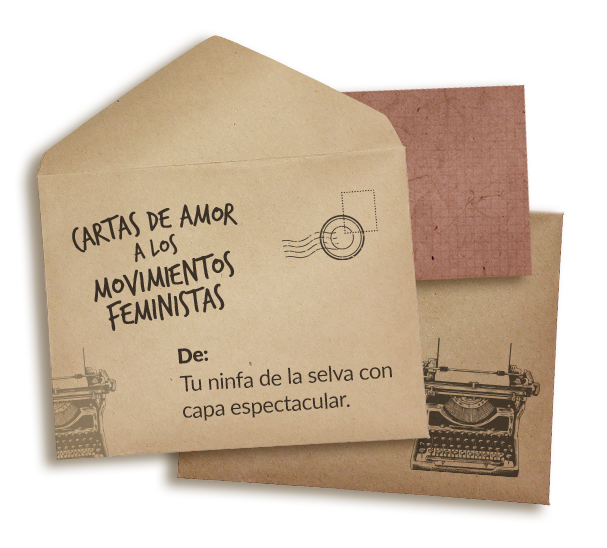
tu ninfa de la selva con capa espectacular.
Una colección viva de recursos para apoyar a los movimientos feministas, a personas que diseñan políticas y a aliadxs que resisten a las tendencias fascistas, fundamentalistas y anti-derechos.
Les organisations féministes et de défense des droits des femmes ne dépendent pas uniquement des financements institutionnels, elles s’autofinancent. Nos mouvements sont animés par la passion, la solidarité, l’engagement politique et le soin collectif.
Ces ressources autonomes et autogénérées sont souvent invisibles dans les budgets, mais elles sont le pilier de notre action collective.
We are in communication with regional, thematic and funder convenings planned for 2023-2024, to ensure flow of conversations and connections. If you are organizing an event and would like to make a connection to the AWID Forum, please get in touch with us!
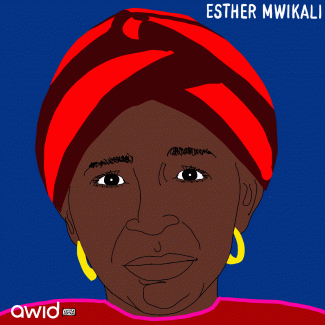
Esther Mwikali habitait dans le village de Mithini, dans le comté de Murang’a au Kenya. Activiste des droits fonciers, importante et appréciée, elle travaillait sur les abus à l’égard de squatters vivant sur des terres revendiquées par des magnats. Esther a participé à une enquête qui comprenait également des violations de droits fonciers à Makaya par de puissants individus.
Suite à l’absence d’Esther lors d’une réunion de village, une équipe de patrouille est partie à sa recherche. Le 27 août 2019, deux jours après sa disparition, on retrouva son corps dans une ferme proche de sa propriété, montrant des signes de torture. Elle fut sauvagement assassinée.
« Esther était reconnue pour son travail auprès des membres de la communauté, empêchant les évictions de terres revendiquées des magnats. Les activistes du coin n’ont aucun doute sur le lien entre son meurtre et les luttes constantes pour les terres dans la région. C’est un tragique rappel de la fréquence alarmante d’assassinats extrajudiciaires régulièrement menés au Kenya » - Global Wittness Report, juillet 2020
« Nous associons la mort de Mwikali aux luttes pour les terres par ici. Nous demandons au gouvernement de mener une enquête sur ce sujet au plus tôt. » - James Mburu, porte-parole des squatters
« Des mesures devraient être prises à l’égard des individus suspectés d’avoir menacé les squatters, et notamment la famille Mwikali. » - Alice Karanja, National Coalition of Human Rights Defenders (coalition nationale des défenseur·e·s des droits humains)
« L’impact de son travail et sa ténacité demeureront encore en vie pour les prochaines décennies au Kenya. CJGEA console avec les personnes endeuillées et appelle à la justice. » - Center for Justice and Governmental Action (Centre pour la justice et l’action gouvernementale, CJGEA) communiqué de presse, 13 septembre 2019
I am pleased to share with you one of my remarkable dates as feminist with disability. It was May 30, 2014 when we (the Nationwide Organization of Visually-Impaired Empowered Ladies NOVEL) participated in the Philippine Fashion Week Holiday 2014 for our white cane advocacy campaign. Two ladies who are blind walked down the catwalk to promote the white cane as one of the symbols of gender equality, empowerment, full inclusion and equal participation of women and girls with visual impairment in society.
Their walk in front of the crowd were extremely a nerve-wracking experience for me, as the proponent of our project with the Runway Productions (I enduringly waited for a year for its approval), knowing that they were not models, they were the crowned Ms. Philippines Vision and 1st Runner Up of 2013 Ms. Philippines on Wheels, Signs and Vision by Tahanang Walang Hagdanan, Inc. (House with No Steps). Also, they fell on their orientation and practiced the evening before the event and they didn’t have practice with professional models. Before the show started, I talked to them via mobile phone to boost their confidence and to pray together for God’s guidance. When they exited the catwalk, I breathed deeply while my tears were flowing. I was feeling euphoric because we did it despite the challenges we’ve been through! Our message to the world that women and girls with visual impairment can walk with dignity, freedom and independence on an equal basis with others, with the use of our assistive device - white canes was successfully delivered! We trended in social media and we were featured by television networks.
My life as a feminist with disability started as a means to mend my broken spirit and to see a different path towards finding my life’s purpose after I became victim-survivor to a vicious acid attack in 2007 while I was waiting for a ride going home from office. My eyes were severely damaged, to the point that I became a woman with low vision.
I never knew how joyful and purposeful my life could be again until I met women leaders in the gender and disability movement who influenced me to keep going. Their words of encouragement attracted me and became the sweetest music to my ears. My broken heart leaped like a hummingbird in flight every time I think of them and feminism which stimulated me to partake in making difference for our invisible sisters with disabilities and to those who continue to experience discrimination. To date, I am consumed by the desire to be with the movement. I cannot hide my excitement whenever I submit project proposals to different stakeholders for our sisters with disabilities' empowerment, development and advancement; and to make representations in local, national and international conversations to amplify our voices even at my expense.
Unexpectedly, I was selected as our country’s female representative in the 2012 World Blind Union (WBU) General Assembly in Thailand even though I was a newcomer in the disability movement. In the same year, I was elected as the only woman officer of the Philippine Blind Union (PBU) in its assembly. I was inspired to reach out, gather and empower our sisters with visual impairment on their rights and to know their intersecting issues. In 2013, we officially launched the Nationwide Organization of Visually-Impaired Empowered Ladies (NOVEL) to support the empowerment of our sisters with disabilities, build coalitions with cross-disability and women’s movements and promote gender and disability-inclusive development.
My participation as co-focal person of women with disabilities in our 2016 CEDAW Shadow Report submission convened by Women’s Legal and Human Rights Bureau (WLB) with the marginalized groups of women, opened many doors such as working with various women’s organizations and attending the 2017 Inclusion Days International in Berlin, Germany together with 3 Filipino women leaders with disabilities to share our good practices, mainly our engagement with the women’s movement in our country.
My journey as feminist with disability has been an emotional roller coaster for me. It gave me happiness and a sense of worth when I participated in promoting for our sisters with disabilities full inclusion, equal and effective participation in society, yet I felt frustrated and upset when I gave my all but I received negative remarks. Nevertheless, I feel that way because I am in love with the movement.
I see my future working in solidarity with the movement to ensure that our sisters with and without disabilities can equally and fully enjoy and participate in society.
Love lots,
Gina Rose P. Balanlay
Feminist with disability
Philippines
Vous souhaitez vous rassembler pour renforcer les résistances ? Cette méthodologie de formation propose des exercices de groupes qui renforcent les connaissances et le pouvoir du collectif, avec des adaptations pour répondre à vos besoins.

Modèles de gouvernance alternative comme moyens de sortir de la crise climatique.
📅 Mercredi 12 novembre 2025
📍 Seminario Mar Nossa Sra Da Assunção, Pará, Brésil
Site web en anglais
Tan pronto como podamos, compartiremos información sobre el programa, los espacios y la forma en que todo el mundo puede participar en su construcción, en camino hacia el Foro y durante el Foro. Sigue con atención las actualizaciones.
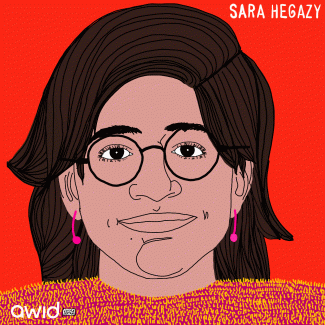
Sara Hegazy, a bold Egyptian LGBTQI+ rights activist, lived in a society where the members of her community, their bodies and lives often face lethal prejudice. The roots of Sara’s resistance were in the deconstruction of a dominant, oppressive and patriarchal system, and its anti-rights actors.
"[In Egypt], every person who is not male, Muslim, Sunni, straight, and a supporter of the system, is rejected, repressed, stigmatized, arrested, exiled, or killed. This matter is related to the patriarchal system as a whole, since the state cannot practice its repression against citizens without a pre-existing oppression since childhood." - Sara Hegazy wrote on March 6, 2020
The suppression of Sara’s voice by the Egyptian government reached its violent peak in 2017, when she was arrested for raising a rainbow flag at the Mashrou’ Leila (Lebanese band whose lead vocalist is openly gay) concert in Cairo. What followed were charges of joining an illegal group along with “promoting sexual deviancy and debauchery”.
"It was an act of support and solidarity — not only with the [Mashrou' Leila] vocalist but for everyone who is oppressed...We were proud to hold the flag. We wouldn't have imagined the reaction of society and the Egyptian state. For them, I was a criminal — someone who was seeking to destroy the moral structure of society." - Sara Hegazy
Sara was jailed for three months, where she was tortured and sexually assaulted. In January 2018, after being released on bail, she sought asylum in Canada where she was safe but imprisoned by the memories of the abuse and violence her body and soul had gone through.
"I left this experience after three months with a very intense, serious case of PTSD [post-traumatic stress disorder]. Prison killed me. It destroyed me." - Sara Hegazy told NPR
Sara took her own life on 14 June 2020, leaving a handwritten note in Arabic:
“To my siblings – I tried to find redemption and failed, forgive me.”
“To my friends – the experience [journey] was harsh and I am too weak to resist it, forgive me.
“To the world – you were cruel to a great extent, but I forgive.”
Her legacy and courage will be carried forward by those who love her and believe in what she fought for.
“To Sarah: Rest, just rest, spared from this relentless violence, this state-powered lethal patriarchy. In rage, in grief, in exhaustion, we resist.” - Rasha Younes, an LGBT rights researcher at Human Rights Watch. Read the complete text
Mashrou’ Leila’s lead vocalist sings tribute to Sara Hegazy
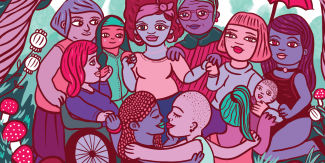
AWID es parte de un impresionante ecosistema de movimientos feministas que trabajan para alcanzar la justicia de género y la justicia social en todo el mundo. Al acercarse nuestro 40° aniversario estamos celebrando todo lo que hemos construido a lo largo de estos últimos cuarenta años. Como organización global de apoyo a los movimientos feministas, sabemos que nuestro camino hacia adelante es trabajar con feminismos apasionados, reconociendo tanto la multiplicidad de los feminismos como el valor de un impulso por la justicia apasionado y sin reservas. El estado del planeta y de los movimientos feministas requiere conversaciones y acciones valientes. Esperamos con ansia trabajar junto con nuestrxs afiliadxs, asociadxs y donantes para crear los mundos en los que creemos,celebrar los logros y expresar la verdad ante el poder, al servicio de los movimientos feministas a nivel global.
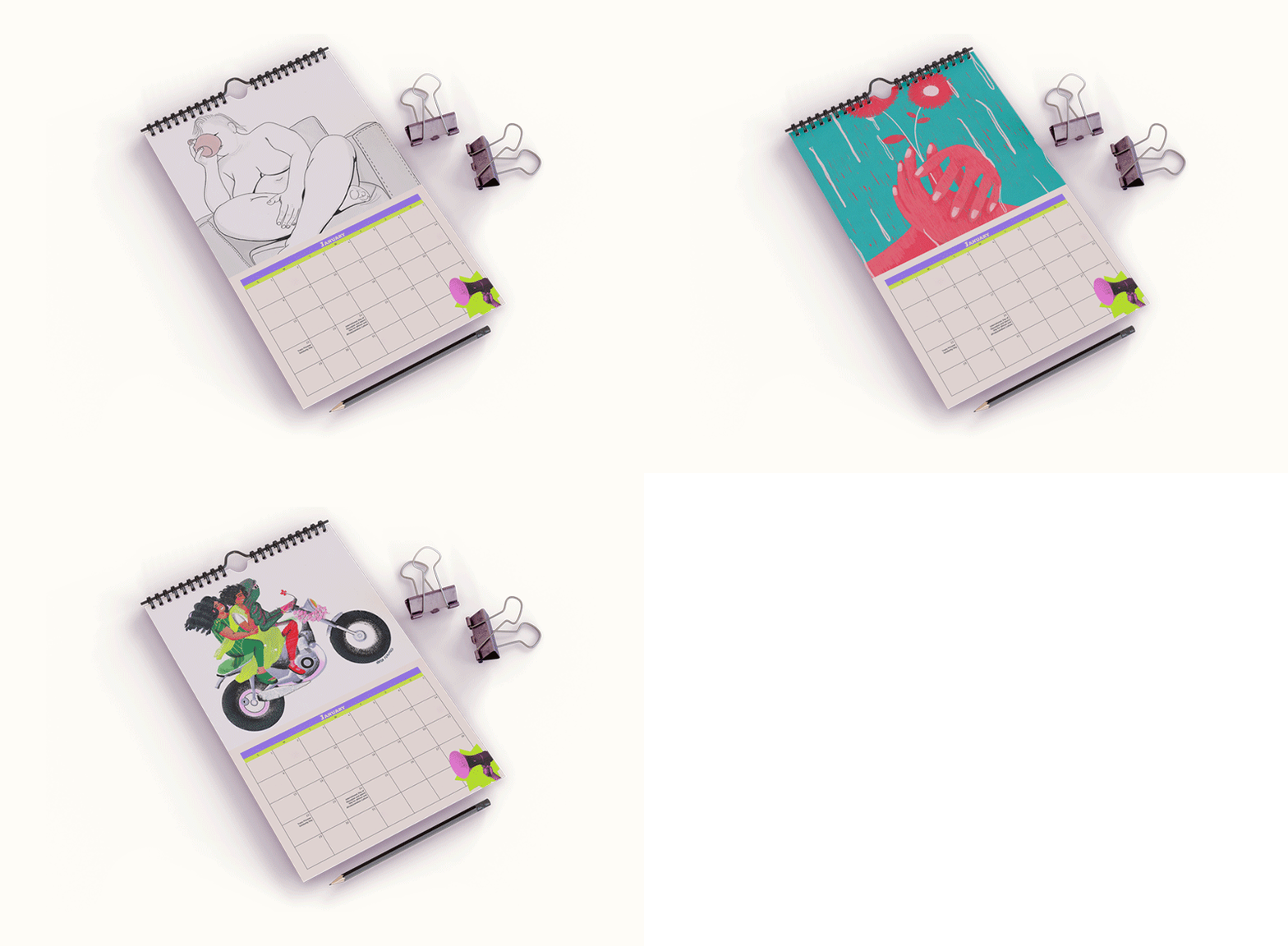
El Calendario Feminista 2023 es un regalo para los movimientos. Presenta las obras de arte de algunxs de nuestrxs maravillosxs afiliadxs de AWID.
¡Consíguelo en tu idioma preferido! |
Escoge la calidad de imagen |
| English | Descarga para impresión | Versión digital |
| Français | Descarga para impresión | Versión digital |
| Español | Descarga para impresión | Versión digital |
| Português | Descarga para impresión | Versión digital |
| عربي | Descarga para impresión | Versión digital |
| Русский | Descarga para impresión | Versión digital |
Alors que le capitalisme hétéropatriarcal s’acharne à nous contraindre au consumérisme et à la conformité, nous constatons que nos luttes sont cloisonnées et séparées par des frontières aussi bien physiques que virtuelles.
Avec les défis supplémentaires d’une pandémie mondiale à surmonter, cette stratégie du « diviser pour mieux régner » a favorisé l’expansion de l’exploitation dans de nombreux domaines.
Malgré tout, du 1er au 30 septembre 2021, le festival Crear | Résister | Transform : un festival dédié aux mouvements féministes ! de l’AWID nous a emmené·e·s à la découverte de ce que cela signifiait d’incarner nos réalités dans des espaces virtuels. Lors du festival, des activistes féministes du monde entier se sont réuni·e·s non seulement pour partager des expériences de libertés, de résistances et de solidarités transfrontalières durement gagnées, mais aussi pour exprimer ce à quoi pourrait ressembler une forme transnationale d’unité.
C’est précisément cette unité qui a le potentiel de dépasser les frontières, permettant de tisser une vision de l’avenir qui est transformatrice parce qu’abolitionniste et anticapitaliste. À travers des infrastructures numériques que nous avons investies avec notre queerness, notre résistance et nos imaginaires, le festival a présenté un moyen de se détourner des systèmes qui nous rendent complices de l’oppression des autres et de nous-mêmes.
Si Audre Lorde nous a appris que « les outils du maître ne détruiront jamais la maison du maître », Sara Ahmed nous a montré en revanche que nous pouvons en faire mauvais usage. Le fait d’avoir à créer un espace de rassemblement, en dépit de toutes les autres contraintes pesant sur nos emplois du temps, nous a permis d’imaginer une façon de rompre avec la réalité du capitalisme hétéropatriarcal.
Maintenant, si nous comprenons le rassemblement comme une forme de plaisir, il devient alors possible de faire le lien entre le plaisir transgressif et la résistance transnationale/transdigitale; entre les types de plaisir qui bousculent les frontières d’une part, et la queerness, la théâtralité, la lutte pour la terre et les autochtones, l’anticapitalisme et l’organisation anticoloniale d’autre part.
La présente édition a tenté de donner une idée de la manière dont l’exercice de rassemblement du festival a revêtu de multiples formes et imaginations. Au-delà des collaborations directes avec certain·e·s de ses orateurices et rêveur·se·s, nous avons fait appel à une pléthore d’autres voix du Sud mondial pour aborder plusieurs de ces sujets et thématiques. Vous trouverez ci-dessous une carte de certains des panels du festival qui nous ont le plus inspiré·e·s.