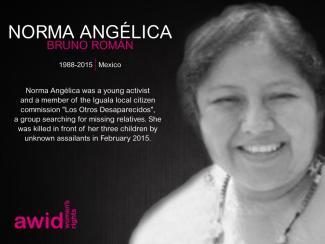
Norma Angelica Bruno Roman
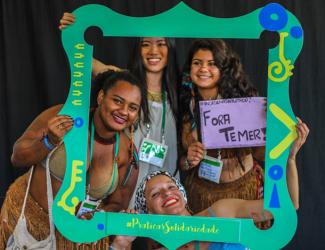
Young feminist activists play a critical role in women’s rights organizations and movements worldwide by bringing up new issues that feminists face today. Their strength, creativity and adaptability are vital to the sustainability of feminist organizing.
At the same time, they face specific impediments to their activism such as limited access to funding and support, lack of capacity-building opportunities, and a significant increase of attacks on young women human rights defenders. This creates a lack of visibility that makes more difficult their inclusion and effective participation within women’s rights movements.
AWID’s young feminist activism program was created to make sure the voices of young women are heard and reflected in feminist discourse. We want to ensure that young feminists have better access to funding, capacity-building opportunities and international processes. In addition to supporting young feminists directly, we are also working with women’s rights activists of all ages on practical models and strategies for effective multigenerational organizing.
We want young feminist activists to play a role in decision-making affecting their rights by:
Fostering community and sharing information through the Young Feminist Wire. Recognizing the importance of online media for the work of young feminists, our team launched the Young Feminist Wire in May 2010 to share information, build capacity through online webinars and e-discussions, and encourage community building.
Researching and building knowledge on young feminist activism, to increase the visibility and impact of young feminist activism within and across women’s rights movements and other key actors such as donors.
Promoting more effective multigenerational organizing, exploring better ways to work together.
Supporting young feminists to engage in global development processes such as those within the United Nations
Collaboration across all of AWID’s priority areas, including the Forum, to ensure young feminists’ key contributions, perspectives, needs and activism are reflected in debates, policies and programs affecting them.
by Émilie Herbert-Pontonnier
Remember Esmeralda? The exotic "Gypsy" heroine born under the pen of the French literary giant Victor Hugo and popularized by Disney studios with their Hunchback of Notre Dame. (...)
< artwork: “Si las marronas lo permiten” by Nayare Soledad Otorongx Montes Gavilan
She herself was among the 32,000 people displaced by the Tucuruí, a mega-hydroelectric power plant, built in Brazil during the 1964-1985 military dictatorship.
In 2005 Dilma was invited to join the Movement of Dam-Affected Peoples in Brazil (MAB), and in 2006 she formed the women’s collective, eventually becoming regional coordinator of the movement.
In speaking about her activism, her colleagues commented:
“She stood out very fast because she was always very fearless in the struggle.”
Dilma lived in the rural settlement of Salvador Allende,50 kilometers from Tucuruí, and dedicated her life to better protect communities and the land affected by the construction of mega projects. She was especially concerned with the gendered impacts of such projects and advocated for women’s rights.
At a national MAB meeting in 2011, Dilma spoke to women affected by the dams, saying:
“We are the real Marias, warriors, fighters who are there, facing the challenge of daily struggle”.
In the following years, Dilma organized grassroots MAD groups and worked with the community to form farming cooperatives that created a better distribution of food for the community. They improved the commercialization of fishing, and developed a cistern project for safe drinking water. She was also an advocate for farmers whose lands were being coveted by ‘grileiros’ (land grabbers).
On 22nd March 2019, at the age of 48, Dilma, her husband and their friend were all brutally murdered. The three killings came as part of a wave of violence in the Amazon against the Movimento dos Trabalhadores Sem Terra (translates as ‘landless workers’ movement’), environmental and indigenous activists.

El creciente poder de los actores anti-derechos no se está desarrollando en un vacío. Entender el auge del ultranacionalismo, del poder corporativo irrestricto, del incremento de la represión y de la disminución del espacio cívico resulta clave para contextualizar las amenazas anti-derechos que enfrentamos actualmente.
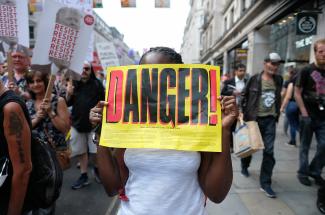
Hoy en día, una cantidad considerablemente mayor a la mitad de la población mundial está gobernada por líderes de extrema derecha. En este escenario, lxs defensorxs de derechos humanos y lxs feministas están trabajando arduamente para «mantenerse firmes» y proteger el multilateralismo y el sistema internacional de derechos humanos. También enfrentan el riesgo de que su compromiso acarree represalias violentas. Al mismo tiempo, estas instituciones están cada vez más sujetas a los intereses del sector privado. Las grandes empresas (en particular, las corporaciones transnacionales) están ocupando asientos en la mesa de negociación y posiciones de liderazgo en una gran cantidad de instituciones multilaterales, incluida la ONU. Este nexo de ultranacionalismo, espacio cívico restringido y captura corporativa está teniendo un tremendo impacto sobre la posibilidad de que, alguna vez, logremos obtener derechos humanos para todxs.
#FreezeFascisms
A 30 años de la adopción de la Declaración y Plataforma de Acción de Beijing, existe una ola creciente de fascismos que ejercen gran poder e influencia en los espacios multilaterales, todo un retroceso para las conquistas de igualdad de género y la protección de los derechos humanos en el mundo entero.
En torno a la CSW69, estamos organizando, en conjunto y de forma horizontal, una serie de valientes espacios sobre el terreno y en línea a fin de compartir estrategias y forjar un poder feminista más allá de Beijing +30. Nuestra presencia colectiva trastorna las prácticas institucionales de exclusión en dichos espacios y, a la vez, apoya los procesos de organización de los movimientos en torno a las alternativas feministas a los sistemas de opresión.
Súmate a las conversaciones desde el 10 al 21 de marzo de 2025, mientras transformamos de forma colectiva la CSW69 en espacios para y sobre la resistencia y la solidaridad.
L'investissement à impact de genre est désormais considéré comme une solution contre les inégalités de genre. Et pourtant, comme le montre notre rapport, il fait partie du problème. Les institutions publiques et privées en font la promotion en tant que moyen pour parvenir à l'égalité de genre et pour accroître les ressources des femmes et des filles.
Au contraire, l’investissement à impact de genre constitue plutôt une nouvelle version de vies et de sociétés soumises à une même logique financière, qui continue de façonner les profondes inégalités de notre monde.
Avec ce rapport, l'AWID offre aux lecteurs·rices - féministes, défenseur·euse·s de la justice de genre et autres parties prenantes de l'investissement à impact de genre - une analyse critique et des preuves étayées pour comprendre l’investissement à impact de genre, ses récits et les implications économiques et politiques qu’il a pour les mouvements féministes.
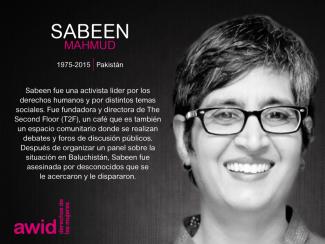
por Siufung Law
«¡97…! 98… ¿dónde está 98? ¡98! ¡Por favor, vuelve a la formación!... ¡99! ¡100!...» La dama detrás del escenario le pedía incesantemente a cada atleta que formara una fila en el espacio húmedo, transpirado y abarrotado detrás de escena. (...)
< arte: «When They See Us» [Cuando nos ven], Lame Dilotsotlhe
"Pero, ¿ fue el maestro alguna vez
seducido por el poder?
¿Alguna vez se rompió
un sistema con aceptación ?
¿Cuándo el JEFE te entregará el poder con amor?
¿En Jo'Burg, en Cancún o en la ONU? - Molara Ogundipe
A través de los diferentes continentes y países, la profesora Ogundipe enseñó literatura comparada, escritura, género y filología inglesa, y utilizó la literatura como vehículo para la transformación social y el replanteamiento de las relaciones de género.
Molara Ogundipe, como pensadora, escritora, editora, crítica social, poeta y activista feminista, logró combinar el trabajo teórico con la creatividad y la acción práctica. Se la considera una de las principales voces críticas de los feminismos africanos, los estudios de género y la teoría literaria.
Molara acuñó el concepto de "estiwanismo" a partir de las siglas STIWA (Social Transformations in Africa Including Women) [Transformaciones Sociales en África Incluyendo a las Mujeres], con el fin de reconocer la necesidad de “alejar la definición del feminismo y los feminismos en relación con Euro-América u otro lugar, y declamar lealtades o deslealtades". Con su obra fundamental, "Recreándonos Nosotras Mismas", de 1994, Molara Ogundipe (publicada bajo el nombre de Molara Ogundipe-Leslie) dejó tras de sí un inmenso cuerpo de conocimientos que descolonizó el discurso feminista y "re-centró a las mujeres africanas en sus completas y complejas narrativas... guiadas por una exploración de la liberación económica, política y social de las mujeres africanas y la restauración de la agencia femenina en las diferentes culturas de África".
Comentando los retos a los que se enfrentó como joven académica, dijo:
"Cuando empecé a hablar y escribir sobre el feminismo a finales de los años sesenta y en los setenta, se me veía como una chica buena y admirable que se había extraviado, una mujer cuya cabeza se había arruinado con un exceso de aprendizaje".
Molara Ogundipe se destacó por su liderazgo a la hora de combinar el activismo con el mundo académico; en 1977 fue una de las fundadoras de la Asociación de Mujeres en la Investigación y el Desarrollo, AAWORD (por sus siglas en inglés),. En 1982 fundó Mujeres en Nigeria, WIN (por sus siglas en inglés), con el fin de abogar por un acceso pleno a los "derechos económicos, sociales y políticos" para las mujeres nigerianas. Posteriormente, estableció y dirigió la Fundación Internacional para la Educación y el Monitoreo y pasó muchos años en el consejo editorial del periódico The Guardian.
Luego de haber crecido con el pueblo yoruba, sus tradiciones, cultura e idioma, dijo una vez:
"Creo que la celebración de la vida, de las personas que mueren después de una vida llena de logros, es uno de los aspectos más hermosos de la cultura yoruba".
El nombre de alabanza yoruba 'Oiki' de Molara era Ayike. Molara nació el 27 de diciembre de 1940 y falleció el 18 de junio de 2019 a la edad de 78 años, en Ijebu-Igbo, Estado de Ogun, Nigeria.
Alors que les fondamentalismes, les fascismes et autres systèmes d’oppression se métamorphosent et trouvent de nouvelles tactiques et stratégies pour consolider leur pouvoir et influence, les mouvements féministes persévèrent et célèbrent leurs victoires nationales, régionales et internationales.
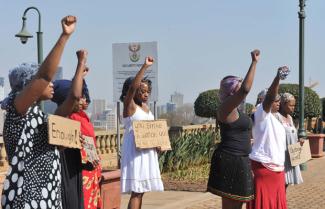
La [MB1] reconnaissance en 2019 par le Conseil des droits de l’Homme du droit à l’intégrité et à l’autonomie corporelles, par exemple, a marqué une étape cruciale. Des résolutions du Conseil sur la discrimination envers les femmes et les filles admettent cependant un recul lié à des groupes de pression rétrogrades, des conceptions idéologiques ou un détournement de la culture ou la religion pour s’opposer à l’égalité de leurs droits. Des avancées féministes sont aussi notées dans le travail des Procédures spéciales, qui soulignent notamment l’obligation des États de contrer les doctrines de l’idéologie du genre, rappellent à l’ordre les antidroits qui détournent des références à la « culture », et signalent que les convictions religieuses ne peuvent pas servir à justifier la violence ou la discrimination.
✉️ Sur inscription pour les grands groupes. Espace ouvert pour les petits groupes. Inscrivez-vous ici
📅 Mardi 11 mars 2025
🕒12.00h-14.00h et 16.00h-18.00h EST
🏢 Chef's Kitchen Loft with Terrace, 216 East 45th St 13th Floor New York
Organisé par : AWID
par Akua Antiwiwaa
J’ai une vieille photo, floue, devant les yeux. J’y suis vêtue tout de blanc, des perles nacrées attachées à mes cheveux, collés contre mes oreilles, à celles qui pendent de mes poignets. (...)
illustration : « Cultura Negra » (“Culture noire”), par Astrid Milena González Quintero >
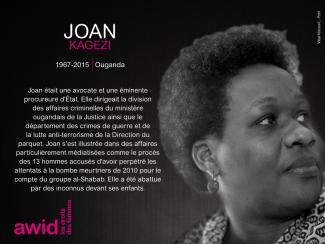
Yamile Guerra était une avocate bien connue, leader communautaire et activiste politique dans la région de Santander en Colombie.
Activement impliquée dans la résolution de litiges entre les communautés locales et les promoteurs immobiliers, elle s’est battue contre l’appropriation des terres illégale. Yamile a occupé plusieurs fonctions politiques, dont celle de secrétaire générale du gouvernement de Santander à Bogota, et s’était également présentée comme candidate à la mairie de Bucaramanga. Au cours des dernières années de sa vie, Yamile s’était de plus en plus impliquée dans les causes environnementales, et particulièrement celle de la défense de la biodiversité des zones humides de Santurbán, une région qui approvisionnait près de deux millions de personnes en eau potable, contre les promoteurs du développement économique.
D’après sa famille et ses ami·e·s, Yamile recevait quotidiennement des menaces de mort et avait demandé la protection des autorités.
« Elle était tout à fait consciente de la question [du litige foncier] et avait à plusieurs reprises mentionné qu’elle se sentait en danger. » - Alixon Navarro Muñoz, journaliste et amie de la famille Guerra
Le 20 juillet 2019, Yamile a été tuée par balles par deux hommes à Floridablanca, Santander. Elle venait de clore une discussion avec eux en lien avec le litige foncier. Un suspect a ensuite été arrêté pour son meurtre, lequel a admis avoir été payé pour organiser son assassinat. Selon des rapports, Yamile est la troisième membre de sa famille a avoir été assassinée, en lien avec des litiges fonciers. Son père, Hernando Guerra, avait lui aussi été assassiné plusieurs années auparavant.
L’assassinat de Yamile s’inscrit dans une vague de violences et de meurtres systématiques de centaines d’activistes sociaux et défenseur·e·s des droits humains en Colombie. L’Institut d’études sur le développement et la paix (INDEPAZ) rapporte qu’au moment du décès de Yamile, plus de 700 leaders communautaires et activistes pour les droits humains ont été tué·e·s depuis la signature en août 2016 d’un traité de paix par la Colombie. La plupart furent assassiné·e·s pour s’être opposé·e·s à des trafics de drogue et des opérations minières; y compris les peuples autochtones, les Afro-Colombiens et les défenseures des droits humains étant les plus exposé·e·s.
Moins d’une semaine après le décès de Yamile, des milliers de Colombien·ne·s ont manifesté dans les petites et grandes villes, brandissant des photos en noir et blanc d’activistes tué·e·s, et sur lesquelles était écrit : « Il ne peut y avoir de paix sans leaders » et « Fini les bains de sang ».
Yamile Guerra n’avait que 42 ans au moment de son assassinat.
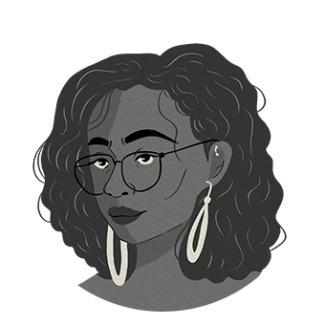 |
Akosua Hanson est une activiste artistique, basée à Accra, au Ghana. Son travail se répartit entre la radio, la télévision, la presse écrite, le théâtre, le cinéma, les expositions de bandes dessinées, les installations artistiques et le roman graphique. L’activisme d’Akosua se concentre sur le panafricanisme et le féminisme et s’intéresse particulièrement au point d’intersection entre l’art, la culture pop et l’activisme. Elle a une maîtrise de philosophie en études africaines axée sur le genre et la pensée philosophique africaine. Akosua Hanson est la créatrice de Moongirls, une série de romans graphiques qui suit les aventures de quatre super-héroïnes luttant pour une Afrique libérée de la corruption, du néocolonialisme, des fondamentalismes religieux, de la culture du viol, de l’homophobie, entre bien d’autres choses. Elle travaille comme animatrice radio à Y 107.9 FM, au Ghana. |
Dans ces panneaux, la Moongirl (fille de la lune) Wadjet est en train de faire l’amour BDSM avec un démon de deux genres. Parmi les quatre Moongirls, Wadjet est la guérisseuse et la philosophe la conduit vers l’Oracle. Elle fait cela pour lancer un processus scientifique et spirituel – une expérience qu’elle appelle « Illumination par la lumière de la pleine lune » – à travers laquelle elle trace un arc temporel vibratoire entre ses souvenirs, ses sensations, ses émotions, ses visions et son imagination. C’est une forme de voyage sensationnel dans le temps pour découvrir ce qu’elle appelle « des révélations de vérité ».
Au cours de l’expérience, Wadjet a des visions troubles, entre autres sur : une apocalypse imminente provoquée par la destruction de l’environnement par les humains au service d’un capitalisme vorace; un souvenir d’enfance sur son hospitalisation après un diagnostic de santé mentale; et une vision de l’histoire d’origine des Moongirls par la figure biblique de Noé présentée comme une ancienne Moongirl noire avertissant des dangers de la pollution de l’environnement.
Plus qu’une entorse amusante pour explorer des sensations, le BDSM peut être un moyen d’aborder la douleur émotionnelle et les traumatismes. Cela a été pour moi un moyen de guérison sexuelle, offrant une forme radicale de libération. Une purge survient lorsque la douleur physique est infligée au corps. Infligée avec consentement, elle fait ressortir la douleur émotionnelle - presque comme un « appel ». Le fouet sur mon corps me permet de libérer des émotions refoulées : l’anxiété, la dépression, mon sentiment d’impuissance face aux stress qui me submergent parfois.
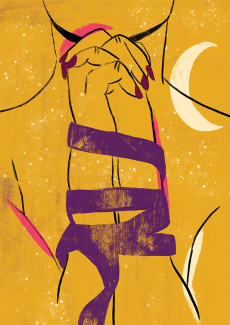
En s’engageant dans le BDSM comme moyen de guérison, les amoureux·ses doivent apprendre à faire preuve d’attention et de responsabilité envers l’autre. Car même si le consentement a été initialement donné, nous devons demeurer aux aguets face aux changements qui pourraient survenir durant le processus, notamment à mesure que les sentiments s’intensifient. J’aborde le BDSM avec la compréhension que pour abandonner la douleur, l’amour et l’empathie doivent être la base du processus, et ainsi, je crée un espace où je m’ouvre à l’amour.
L’implication avec suivi après l’infliction de la douleur vient compléter le processus. Cela peut se faire de manière très simple, en se faisant des caresses, en vérifiant si la personne a besoin d’eau, en regardant un film ensemble, en se prenant dans les bras ou simplement en partageant un joint. Cela peut se faire par n’importe quel langage amoureux que l’on a choisi. Cet espace de soutien, sachant que les plaies ont été ouvertes, est nécessaire pour achever le processus de guérison. C’est la plus importantes des leçons pour mettre en pratique l’empathie, ainsi qu’un apprentissage pour vraiment soutenir son·sa partenaire, notamment en raison de la finesse des lignes entre la douleur et le plaisir. De cette façon, le BDSM est une forme de travail de soins pour moi.
Après le sexe BDSM, je ressens une clarté et un calme qui me placent dans un vaste espace créatif et qui me renforcent sur le plan spirituel. C’est une expérience presque magique de voir la douleur se transformer en quelque chose d’autre instantanément. De même, cette expérience personnelle libératrice du BDSM permet à Wadjet d’accéder à la prescience, à la sagesse et à la clarté, l’aidant dans ses fonctions de Moongirl à lutter contre le patriarcat africain.
Moongirls est née durant mon mandat de directrice de Drama Queens, une jeune organisation militante artistique basée au Ghana. Depuis notre création en 2016, nous avons eu recours à différents modes artistiques dans le cadre de notre activisme féministe, panafricaniste et écologiste. Nous avons utilisé la poésie, les nouvelles, le théâtre, les films et la musique pour traiter de problèmes comme la corruption, le patriarcat, la dégradation de l’environnement et l’homophobie.
Notre production théâtrale inaugurale, « The Seamstress of St. Francis Street » (La couturière de la rue Saint-François) et « Until Someone Wakes Up » (Jusqu’à ce que quelqu’un·e se réveille), abordait le problème de la culture du viol dans nos communautés. De son côté, « Just Like us » (Tout comme nous), a sans doute été l’une des premières productions théâtrales ghanéennes à aborder directement le problème profondément ancré de l’homophobie dans le pays. Notre atelier de cinéma queer pour les cinéastes africains, Queer Universities Ghana (Universités queer Ghana), a formé des cinéastes du Ghana, du Nigéria, d’Afrique du Sud et d’Ouganda. Des films sont nés pendant cet atelier, comme « Baby Girl: An Intersex Story » (Bébé fille : une histoire intersexe) de Selassie Djamey, et ont continué à être projetés durant des festivals de cinéma. Ainsi, le passage aux bandes dessinées fut une évolution naturelle.
Il y a environ sept ans, j’ai commencé un roman, que je n’ai jamais terminé, sur la vie de quatre femmes. En 2018, l’Open Society Initiative for West Africa (OSIWA, Initiative de société ouverte pour l’Afrique de l’Ouest) a initié une opportunité de subvention, laquelle a lancé la production du projet et mon roman inachevé est devenu Moongirls.
Il y a eu deux saisons de Moongirls, comprenant chacune six chapitres. Les auteur·e·s et éditeurs·rices contribuant à la première saison étaient Suhaida Dramani, Tsiddi Can-Tamakloe, George Hanson et Wanlov the Kubolor. Les auteur·e·s de la deuxième saison comprenaient Yaba Armah, Nadia Ahidjo et moi-même. Les illustrations et conceptualisations des personnages ont été réalisées par l’artiste ghanéenne Kissiwa. Et AnimaxFYB Studio, un studio premium d’animation, de conception et d’effets visuels, a réalisé les illustrations.
|
|
L’écriture de Moongirls entre 2018 et 2022 a été pour moi un travail d’amour, voire un travail de libération. Je cherche à faire preuve de beaucoup d’exploration dans la forme et le style : j’ai essayé de convertir d’autres formes d’écriture, telles que des nouvelles et de la poésie, en format bande dessinée. En fusionnant illustration et texte, comme le font les bandes dessinées, Moongirls vise à s’attaquer aux grands problèmes et à honorer les activistes de la vie réelle. Ma décision de mettre au centre des super-héroïnes queer – ce qui est rare à voir dans ce canon – a pris une signification bien plus importante lorsqu’un contexte dangereux a commencé à se développer au Ghana en 2021.
L’année dernière a été le témoin d’une augmentation très claire des violences contre la communauté LGBT+ ghanéenne, déclenchée par la fermeture d’un centre communautaire LGBT+. S’en sont suivies des arrestations arbitraires et l’emprisonnement de personnes soupçonnées d’appartenir au spectre queer, ainsi que de personnes accusées de promouvoir un « agenda LGBT ». Pour couronner le tout, un projet de loi anti-LGBT intitulé « Droits sexuels humains appropriés et valeurs familiales ghanéennes » fut introduit au Parlement ghanéen. C’est sans doute le projet de loi anti-LGBT le plus draconien jamais rédigé dans la région, après des tentatives précédentes dans des pays comme le Nigeria, l’Ouganda et le Kenya.
Je me souviens très bien de la première fois où j’ai lu ce projet de loi.
C’était un vendredi soir, un soir où d’habitude je me repose ou je fais la fête après une longue semaine de travail. Par pure chance, le projet a été divulgué et partagé avec moi sur un groupe WhatsApp. En le lisant, un profond sentiment de peur et d’alerte venait plomber l’ambiance du vendredi soir ordinairement détendu. Ce projet de loi proposait de frapper tout plaidoyer LGBT+ de cinq à dix ans d’emprisonnement, de sanctionner et d’emprisonner les personnes qui s’identifient comme LGBT+, sauf si elles se « rétractaient » et qu’elles acceptaient une thérapie de conversion. Ce projet de loi criminalisait même les personnes asexuées. Il touchait à toutes les libertés fondamentales : la liberté de pensée, d’être, la liberté de détenir sa propre vérité et de choisir de vivre sa vie en fonction. Le projet touchait même aux réseaux sociaux et à l’art. S’il passait, Moongirls aurait été une littérature interdite. Ce que le projet de loi proposait de faire était si néfaste et si large que j’ai chuté dans une dépression à la profondeur de la haine à partir de laquelle il avait été conçu.
En parcourant mon fil Twitter de cette nuit-là, on voit bien la terreur que je ressentais en moi. Le fil était un flux d’émotions en direct alors que les gens réagissaient en temps réel à ce qu’ils lisaient : de la stupéfaction à la terreur en passant par une profonde déception et de la peine en réalisant à quel point le projet de loi voulait aller loin. Certain·e·s ont tweeté être prêt·e à se replier et à quitter le pays. Ensuite, à la manière ghanéenne, le chagrin et la peur se sont transformés en humour. De l’humour est né le zeste d’élever le combat.
Ainsi, le travail continue toujours. J’ai créé Moongirls pour fournir une forme alternative d’éducation, pour fournir des connaissances là où elles ont été supprimées par un patriarcat violent et pour créer de la visibilité là où la communauté LGBT+ a été effacée. Il est également important que le BDSM africain utilise ce support de représentation alors qu’une grande partie de la représentation BDSM est blanche. Le plaisir sexuel, par le biais du BDSM ou autre, ainsi que l’amour non hétérosexuel transcendent les races et les continents, car le plaisir sexuel et sa diversité d’expériences sont aussi vielles que le temps.
Il n'y a rien de tel que d'être dans un espace partagé, d'échanger des énergies corporelles, de regarder dans les yeux de quelqu'un et de tisser des liens, de voir le monde et de faire quelque chose ensemble. Des événements comme le Forum sont parmi les plus forts du mouvement féministe mondial...
- Jac s m Kee, Malaisie
A personal investigation into the mysterious life of the director's Aunt Sally, an Ethiopian aristocrat-turned-communist-rebel who disappeared after the revolution that lead to the overthrow of Emperor Haile Selassie.
June 23 at 12:30pm EST on IG Live