WHRDs are self-identified women and lesbian, bisexual, transgender, queer and intersex (LBTQI) people and others who defend rights and are subject to gender-specific risks and threats due to their human rights work and/or as a direct consequence of their gender identity or sexual orientation.
WHRDs are subject to systematic violence and discrimination due to their identities and unyielding struggles for rights, equality and justice.
The WHRD Program collaborates with international and regional partners as well as the AWID membership to raise awareness about these risks and threats, advocate for feminist and holistic measures of protection and safety, and actively promote a culture of self-care and collective well being in our movements.
Risks and threats targeting WHRDs
WHRDs are exposed to the same types of risks that all other defenders who defend human rights, communities, and the environment face. However, they are also exposed to gender-based violence and gender-specific risks because they challenge existing gender norms within their communities and societies.
By defending rights, WHRDs are at risk of:
Physical assault and death
Intimidation and harassment, including in online spaces
Judicial harassment and criminalization
Burnout
A collaborative, holistic approach to safety
We work collaboratively with international and regional networks and our membership
to raise awareness about human rights abuses and violations against WHRDs and the systemic violence and discrimination they experience
to strengthen protection mechanisms and ensure more effective and timely responses to WHRDs at risk
We work to promote a holistic approach to protection which includes:
emphasizing the importance of self-care and collective well being, and recognizing that what care and wellbeing mean may differ across cultures
documenting the violations targeting WHRDs using a feminist intersectional perspective;
promoting the social recognition and celebration of the work and resilience of WHRDs ; and
building civic spaces that are conducive to dismantling structural inequalities without restrictions or obstacles
Our Actions
We aim to contribute to a safer world for WHRDs, their families and communities. We believe that action for rights and justice should not put WHRDs at risk; it should be appreciated and celebrated.
Promoting collaboration and coordination among human rights and women’s rights organizations at the international level to strengthen responses concerning safety and wellbeing of WHRDs.
Supporting regional networks of WHRDs and their organizations, such as the Mesoamerican Initiative for WHRDs and the WHRD Middle East and North Africa Coalition, in promoting and strengthening collective action for protection - emphasizing the establishment of solidarity and protection networks, the promotion of self-care, and advocacy and mobilization for the safety of WHRDs;
Increasing the visibility and recognition of WHRDs and their struggles, as well as the risks that they encounter by documenting the attacks that they face, and researching, producing, and disseminating information on their struggles, strategies, and challenges:
Mobilizing urgent responses of international solidarity for WHRDs at risk through our international and regional networks, and our active membership.
Related Content
Clone of CFA 2023 - Hybrid like never before: in person - FR
Hybride comme jamais auparavant
Pour la première fois, le Forum de l'AWID propose trois modes de participation :
En personne
Les participant.e.s se réuniront à Bangkok, en Thaïlande. Nous sommes impatient.e.s de vous y retrouver!
Clone of Clone of Clone of Clone of Clone of Snippet - Intro WITM - ES
«¿Dónde está el dinero para las organizaciones feministas?»
¿Cuánto sabes sobre financiamiento feminista? 📊 Pon a prueba tu conocimiento sobre la movilización de recursos para el financiamiento de la organización feminista, respondiendo al cuestionario "¿Dónde está el dinero?":
Queremos expresar nuestro más sincero agradecimiento a todos los diversos grupos, colectivos y organizaciones feministas de todo el mundo que respondieron a la encuesta WITM. Su participación y sus puntos de vista han sido inestimables y enriquecerán enormemente nuestra comprensión colectiva de los recursos feministas a nivel mundial.
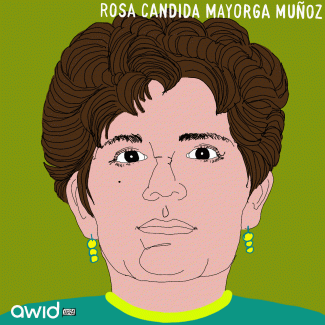
Rosa Candida Mayorga Muñoz was a Guatemalan social worker, union leader and labor rights defender. She was affectionately called Rosita and she inspired change.
In the 1980’s, Rosa became the first female member of the Executive Committee of the Union of Workers of the Institute of National Electrification (STINDE), a union she first joined to advocate for women’s labor rights. For her, this meant fighting for equal opportunities in a company where many women faced a discriminatory and violent system created by company authorities. Rosa had also suffered sexual harassment in her workplace, both by co-workers and managers. She was not to be kept quiet though.
Rosa continued fighting and was part of the effort to mould the struggle into a more specific form, that of the INDE-STINDE Collective Pact of Working conditions. This pact was a pioneer, the first in Guatemala to typify the concept of (sexual) harassment. It serves as a reference for the Guatemalan legislation on labor matters and is an encouragement for other unions.
“She had no fighting tools other than her own ideals... Many times she was intimidated, harassed to put the fight aside, but her courage generated the image of hope for grassroots unionists. Rosita created an image of respect, not only within her union, but before the authorities of the institution, before the women's movement; she was recognized as a pioneer of the trade union women's movement, in a space that had been more dominated by men.” - Maritza Velasquez, ATRAHDOM
Rosa passed away on 4 April 2018 at the age of 77.
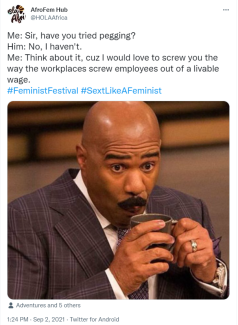
#6 - Sexting like a feminist Tweets Snippet EN
Always be willing to explore new experiences!
¿Cuál es el tema del 14° Foro Internacional de AWID?
El tema del 14° Foro Internacional de AWID es «Realidades feministas: nuestro poder en acción».
Entendemos las realidades feministas como los diferentes modos de existir y ser que nos muestran lo que es posible, a pesar de los sistemas de poder dominantes, y en desafío y resistencia contra ellos. Entendemos estas realidades feministas como recuperaciones y corporizaciones de esperanza y poder, multidimensionales, dinámicas, y arraigadas en contextos y momentos históricos específicos.
Lisez nos recherches sur le financement, sur les défenseuses des droits humains, sur la création de mouvements, sur les fondamentalismes, la justice économique et beaucoup plus
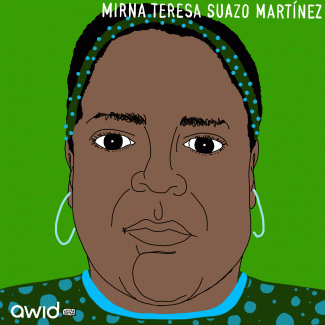
Mirna Teresa Suazo Martínez era parte de la comunidad garífuna (afrodescendiente e indígena) de Masca, en la costa norte del Caribe de Honduras. Era una líder comunitaria, y una ferviente defensora del territorio indígena, tierra que fue vulnerada cuando el Instituto Nacional Agrario de Honduras otorgó licencias territoriales a gente ajena a la comunidad.
Este acto deplorable derivó en repetidos acosos, abusos y violencia contra la comunidad de Masca, dado que los intereses económicos de diferentes grupos se unieron a los de las fuerzas armadas y las autoridades hondureñas. Según la Organización Fraternal Negra Hondureña (OFRANEH), la estrategia de estos grupos es expulsar y exterminar a la población indígena.
«Masca, la comunidad Garífuna localizada junto al valle del Cuyamel, forma parte de la zona de influencia de una de las supuestas ciudades modelo, situación que ha disparado las presiones territoriales a lo largo de la costa Garífuna.» - OFRANEH, 8 de septiembre de 2019
Mirna Teresa, presidenta del Patronato de la comunidad de Masca en Omoa, también rechazaba con firmeza la construcción de dos plantas hidroeléctricas sobre el río que lleva el mismo nombre que su comunidad, Masca.
«La comunidad garífuna atribuye el agravamiento de la situación en su región a su oposición contra la explotación turística, el monocultivo de palma africana y el narcotráfico, al mismo tiempo que busca construir una vida alternativa a través del cultivo del coco y de otros productos de autoconsumo.» - Voces Feministas, 10 de septiembre de 2019
Mirna Teresa fue asesinada el 8 de septiembre de 2019 en su restaurante «Champa los Gemelos».
Fue una de las seis defensoras garífunas asesinadas solo entre septiembre y octubre de 2019. Según OFRANEH, las autoridades no han investigado estos crímenes.
«En el caso de las comunidades Garífunas, buena parte de los homicidios están relacionados con la tenencia y el manejo de la tierra. No obstante, las rencillas entre el crimen organizado han tenido como resultado asesinatos, como los recientemente ocurridos en Santa Rosa de Aguán.» - OFRANEH, 8 de septiembre de 2019
La comunicación del deseo y otras praxis políticas del cuerpo | Title Snippet ES
La comunicación del deseo y otras praxis políticas del cuerpo
con Manal Tamimi, Lindiwe Rasekoala y Louise Malherbe
Crédito del podcast: Zuhour Mahmoud
Siempre hemos trabajado para garantizar que nuestros Foros sean desarrollados conjuntamente con nuestrxs afiliadxs, los movimientos, y nuestros colectivos prioritarios.
Para el Foro 2020 queremos profundizar y fortalecer este espíritu y esta práctica de creación conjunta y colaboración. También reconocemos la necesidad de mejorar el equilibrio entre la inclusión de muchas voces y experiencias y el espacio para que lxs participantes y el equipo respiren, se tomen una pausa, y disfruten de un poco de tiempo de inactividad.
Este Foro será diferente en cuanto a que:
Tendremos muchas menos actividades organizadas, porque queremos que la gente tenga tiempo para relacionarse y hablar entre sí, experimentar, procesar, etc. Es fundamental que sepas que puedes venir al Foro, participar y ser muy activx, y no facilitar ninguna actividad organizada (o «sesión»).
Tendremos Espacios Abiertos (al menos una tarde entera sin ninguna actividad organizada), y también espacios físicos disponibles durante todo el Foro para que la gente organice sus propias reuniones.
Tendremos un Comité de Contenido y Metodología compuesto por feministas de distintas regiones con experiencia en metodologías participativas, para apoyar al equipo de AWID y a quienes lideren actividades en el Foro en el uso de formatos creativos e interesantes para las actividades del Foro.
Co-Creating a Political Home for Feminist Movements
From 27 - 30 April, 2026, AWID will be at the Women Deliver 2026 Conference, co-creating a political home with feminist and gender justice movements that is rooted in transnational care and solidarity.
In a time when fascism and militarization continue to rise globally, feminist connection and solidarity across borders is what we truly need. We are organizing multiple spaces at Women Deliver and online to connect movements with each other in conversations to build feminist agendas of solidarity and action.
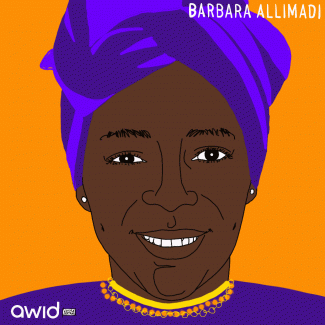
Barbara Allimadi était une militante politique et des droits humains originaire d’Ouganda. En 2012, elle a coorganisé une manifestation contre l’agression policière télévisée d’Ingrid Turinawe, opposante politique dont le sein a été pressé par un officier de police. Durant la manifestation, Barbara et d’autres activistes se sont déshabillées et n’ont gardé que leur soutien-gorge devant le poste central de police de Kampala. Cet épisode fut par la suite désigné par la tristement célèbre « manifestation en soutien-gorge » en Ouganda.
« Nous avons opté pour une manifestation en soutien-gorge. Nous avons pensé qu’elle serait la plus appropriée par rapport aux faits. Ce n’est pas comme si nous étions en train de dire que nous ne nous respections pas. Nous étions dégoûtées par les actes commis. » - Barbara Allimadi, 2013 (Daily Monitor)
Diplômée en électronique et en ingénierie des communications de l’Université métropolitaine de Londres, Barbara était ingénieure réseau au Royaume-Uni et une fervente amatrice de musique reggae. Elle retourna en Ouganda en 2007, au moment du décès de sa mère.
En 2019, elle fut désignée Coordonnatrice pour les affaires internationales et la diaspora de l’Alliance for National Transformation (alliance pour la transformation nationale, ANT), un parti politique lancé la même année par un leader d’opposition.
« Nous voulons disposer d’une vie sûre et de biens, sans souffrance, sans blessure ni même de mort aux mains des forces de sécurité, qui sont censées nous protéger. Nous voulons surtout un environnement stable et propice dans lequel nous pourrons réaliser nos rêves et nos ambitions. » - Barbara Allimadi, vidéo de l’ANT
Barbara est décédée le 27 avril 2020.
Hommages :
« J’étais tellement fière de ma sœur pour plein de raisons, mais surtout pour sa recherche téméraire de la paix, de la démocratie, de la justice et de l’égalité en Ouganda. Au summum de son activisme, elle conduisait de nombreuses marches dans les rues de Kampala, jusqu’aux postes de police et au Parlement. » - Doris Allimadi, sœur de Barbara
« C’est avec une tristesse profonde que nous avons appris le décès précoce de Barbara Allimadi. Elle était une force vaillante, infatigable et courageuse pour le mouvement de libération en Ouganda. Nous adressons nos sincères condoléances à sa famille. Elle nous manquera terriblement. » - Akina Mama wa Afrika (tweet du 28 avril 2020)
« Le décès de Barbara est extrêmement triste pour nous, et pour toute sa famille. Elle s’est dévouée entièrement à lutter pour la justice, la liberté et les droits des autres, tout en servant la société civile jusqu’à sa récente adhésion au parti. » Maj Gen Mugisha Muntu, coordonnateur national de l’ANT
« Une soeur magnifique, charmante, drôle, charismatique et inspirante. Mes enfants ont perdu leur tante. L’Ouganda a perdu une combattante pour les libertés, brave et courageuse. Barbara disait autrefois “tant que vous pouvez respirer, continuez à agir pour atteindre vos rêves” » - Doris Allimadi, sœur de Barbara
Communiquer le désir | Content Snippet FR
Communiquer le désir
et autres pratiques politiques incarnées
Communiquer le désir
Hôte: On pense souvent que la communication de notre désir se cantonne à l’intimité des quatre murs de nos chambres et à nos relations personnelles. Mais est-il également possible d’envisager ce genre de communication comme étant structurelle, une pratique qui éclairerait notre travail et la manière dont nous sommes, dont nous existons dans le monde?
LindiweJe pense que, malheureusement, l’expression de notre sexualité par le passé était restreinte. On était autorisées à l’exprimer dans le strict cadre du mariage, ce qui était permis, mais il y a toujours eu des tabous et une stigmatisation relative à toute autre forme d’expression. Évidemment, lorsqu’il est question de communication, le fait que certaines stigmatisations sont liées à l’expression de notre sexualité ou de nos désirs complique largement la communication dans la chambre ou de manière intime avec notre partenaire. Mon expérience personnelle me fait croire que si je suis beaucoup plus à l’aise à m’exprimer sur d’autres sujets thématiques ou sujets en dehors de la chambre, il m’est plus facile de construire cette confiance parce que je comprends la modalité de résolution de conflits avec cette personne en particulier, je comprends exactement comment rendre la communication spéciale avec cette personne. Ce n’est pas facile. C’est quelque chose que l’on fait tout au long de notre engagement, quel qu’il soit, qu’il s’agisse d’une relation durable ou que cela soit plus informel et ponctuel. Mais je crois que la confiance à l’extérieur peut assurément traduire la manière dont nous communiquons notre désir.
Manal
Depuis la petite enfance, les femmes sont éduquées à coups de « tu n’es pas autorisée à parler de ton corps, tu n’es pas autorisée à parler de ton désir », qui posent une lourde responsabilité sur leurs épaules, et particulièrement des filles à l’adolescence lorsqu’elles ont besoin de s’exprimer et de parler de ces questions. Donc moi, je pense que c’est un gros problème. Tu sais, je suis mariée depuis plus de 25 ans, mais encore aujourd’hui, je ne peux pas parler de mes désirs. Je ne peux pas dire ce que je veux ou ce que je préfère, parce que c’est comme si je n’étais pas autorisée à franchir cette ligne. C’est comme si c’était péché, bien que ce soit mon droit. Et c’est le cas pour toutes mes amies, elles ne peuvent pas s’exprimer de la bonne manière.
Louise
Personnellement, je trouve que l’expression de nos désirs, de mes désirs, quelle que soit la forme que prend cette expression, a à voir avec l’autre, avec le regard que cet autre poserait sur moi. Donc c’est également quelque chose que l’on peut relier au cinéma. Et sur le regard que je poserais sur moi-même aussi : ce que je pense être en tant que personne, mais également ce que la société attend de moi et de ma sexualité. J’ai, par le passé, en quelque sorte fait l’analogie entre ce qui se passe dans la chambre et ce qui se passe sur le lieu du travail, parce qu’il y a parfois cette dynamique de pouvoir, que je le veuille ou non. Et souvent, la communication verbale est plus difficile qu’on ne le pense. Mais quand il est question de représentation dans les films, c’est alors complètement différent. Lorsqu’il est question de simplement communiquer des désirs sexuels dans la chambre ou en dehors, on est très loin de ce que je suppose que nous toutes ici voudrions voir à l’écran.
En ligne et incarné
Hôte: On peut considérer le monde numérique comme étant incarné : alors qu’il peut être virtuel, il n’en est pas moins réel. Et cela a été clairement démontré dans le contexte du Festival des réalités féministes de l’AWID, qui s’est tenu entièrement en ligne. Qu’est-ce que cela signifie, alors, de parler de sexualité, collectivement, politiquement, dans des espaces en ligne? Est-ce que nous naviguons dans les espaces virtuels avec nos corps et nos affects? Et dans ce cas, quels sont les différents éléments à prendre en compte? Qu’est-ce que cela fait à la communication et à la représentation?
LindiweLes réseaux sociaux nous donnent l’impression d’être dans la communauté. Quand on exprime ce qu’on veut ou ce qu’on aime, il y a toujours une personne qui sera d’accord ou pas d’accord, mais celles qui sont d’accord vous donnent le sentiment d’appartenir à une communauté. Donc, c’est plus facile de lancer ça dans l’univers, ou au vu de tout le monde, et de potentiellement ne pas recevoir autant de jugements. Et je parle là en termes très vagues parce que, selon ce que tu exprimes, tu seras vilipendée ou célébrée. Mais quand on est dans la chambre, il y a une certaine intimité à laquelle s’ajoute presque une vulnérabilité qui t’exposent et qui exposent différentes parties de toi, sur lesquelles il n’est pas aussi facile de donner son avis. Quand il est question d’exprimer ton désir, il est beaucoup plus facile d’en parler, de le dire et peut-être même de faire un tweet ou un billet sur les réseaux sociaux, ou même d’aimer et de lire ce que disent d’autres communautés qui pensent de la même manière, que de dire à ta ou ton partenaire « c’est comme ça que je veux ressentir du plaisir » ou « voilà comment je veux que tu fasses ensuite », à cause de la peur du rejet. Mais ce n’est pas tout, rien que la vulnérabilité – de permettre à l’autre personne de te voir à nu au point de savoir à quoi tu penses, ce que tu ressens et ce que tu veux – je pense que c’est là que la différence se ferait pour moi, personnellement. Je pense que c’est beaucoup plus communautaire sur les réseaux sociaux, et c’est plus facile de se lancer dans le récit. Alors que dans la chambre, tu n’as pas forcément envie de tout gâcher. Mais je pense que ça nous aide aussi, en quelque sorte, à comprendre, selon la relation avec la personne, comment agir par la suite. Donc, je sais toujours que si j’essaie de communiquer quelque chose et que je n’y parviens pas sur le moment, je peux toujours essayer d’en parler plus tard et voir quelle est la réaction, pour savoir comment l’aborder ensuite.
LouiseTu sais, la question dans les films c’est que je ne sais pas si le regard masculin est vraiment intentionnel ou pas. On n’en sait vraiment rien, en fait. Ce qu’on sait, c’est que la raison pour laquelle la sexualité en général a toujours été si hétéronormative et centrée sur la pénétration et qu’elle ne donne pas de place aux femmes pour qu’elles puissent vraiment demander quoi que ce soit dans les films, c’est parce que la plupart des gens qui travaillent dans cette industrie et qui prennent les décisions en matière de, tu sais, le déroulement de l’histoire et du montage, sont des hommes blancs. Donc, la revanche suite au viol, c’est ce genre de film très bizarre qui est apparu dans les années 1970, où pendant la moitié de l’histoire, il y aurait une femme qui est violée par une personne ou par plusieurs personnes, et dans l’autre moitié elle obtiendrait sa revanche. Donc, généralement, elle en viendrait à assassiner et à tuer les personnes qui l’ont violée, et parfois d’autres personnes de proximité. Au début de la naissance de ce genre et pendant une trentaine d’années au moins, ces films étaient produits et réalisés par des hommes. C’est aussi pour ça que nous voulons une telle représentation. Beaucoup de féministes et de pionnières dans la réalisation de films queer se sont également servies du fait de filmer pour y parvenir ainsi que pour réclamer leur propre sexualité. Je pense à Barbara Hammer, qui est une féministe et une pionnière queer du cinéma expérimental aux États-Unis, qui a décidé de filmer des femmes faisant du sexe en 16 mm et, ce faisant, réclamé un espace au sein des récits dans les films à cette époque. Il y a également la question de l’invisibilisation : on sait maintenant, grâce à Internet et au partage des connaissances, que les réalisatrices femmes et queer essaient de faire des films depuis les débuts du cinéma. On ne s’en rend compte que maintenant, parce qu’on a accès aux bases de données d’activistes, de conservatrices et de réalisatrices.
Résister face à la colonisation
Hôte: Ça nous permet d’ouvrir la discussion sur l’importance de maintenir nos histoires féministes vivantes. Les mondes en ligne ont également joué un rôle essentiel dans la documentation des protestations et de la résistance. Du Soudan à la Palestine et à la Colombie, les féministes ont déferlé sur nos écrans, remettant en question les réalités de l’occupation, du capitalisme et de l’oppression. Pourrions-nous alors parler de communiquer le désir – le désir de quelque chose d’autre – comme d’une décolonisation?
ManalC’est peut-être parce que mon village ne compte que 600 habitantes et habitants et qu’il n’est constitué que d’une seule famille, les Tamimi, mais il n’y a aucun obstacle entre les hommes et les femmes. Nous faisons tout ensemble. Donc, lorsque nous avons commencé notre résistance non violente ou lorsque nous avons rejoint la résistance non violente en Palestine, il n’était nullement question de savoir si les femmes devraient ou non y participer. Nous avons assumé un rôle très important au sein de ce mouvement ici au village. Mais lorsque d’autres villages et d’autres lieux ont commencé à se joindre à nos manifestations hebdomadaires, certains hommes se sont dit que si des femmes participaient ou rejoignaient les mobilisations, elles se battraient alors avec des soldats, signifiant qu’elles seraient des femmes faciles. Il y a eu des hommes qui n’étaient pas du village et qui ont essayé de harceler sexuellement les femmes. Mais une femme forte qui est capable de se tenir face à un soldat peut également se tenir face au harcèlement sexuel. Parfois, lorsque des femmes d’autres lieux se joignent à nos protestations, elles sont tout d’abord timides, elles n’osent pas s’approcher parce qu’il y a de nombreux hommes. Si tu veux rejoindre une manifestation, si tu veux faire partie du mouvement non violent, tu dois éliminer toutes ces restrictions et toutes ces pensées de ton esprit. Tu ne dois te concentrer que sur la lutte pour tes droits. Malheureusement, l’occupation israélienne est consciente de cette question. Par exemple, la première fois où j’ai été arrêtée, comme je porte le hijab, ils ont essayé de me l’enlever; ils ont essayé de m’enlever mes vêtements, devant tout le monde. Il y avait quelque 300 à 400 personnes, et ils ont essayé de me déshabiller. Quand ils m’ont emmenée pour l’interrogatoire, l’interrogateur m’a dit : « On a fait ça parce qu’on veut punir d’autres femmes par ton biais. On connaît ta culture. » Alors je lui ai répondu : « Je m’en fous, j’ai fait quelque chose en quoi je crois. Même si tu enlèves tous mes vêtements, tout le monde sait que Manal est en résistance. »
LindiweJe pense que même d’un point de vue culturel, ce qui est très ironique si on prend en compte la culture en Afrique, montrer sa peau n’était pas un problème avant d’être colonisée. Porter des peaux ou des cuirs d’animaux pour se protéger n’était pas un problème et les gens n’étaient pas aussi sexualisés, sauf dans un contexte approprié. Mais nous, nous sommes conditionnées à dire : « Tu devrais te couvrir », et dès que l’on n’est pas couverte on est exposée, et ça, c’est sexualisé. La nudité est sexualisée, contrairement à juste être nue; ils ne veulent pas qu’une petite fille soit nue. Mais quel genre de société avons-nous conditionnée pour nous-mêmes, si c’est pour sexualiser une personne qui est nue en dehors du contexte d’une relation sexuelle? Mais l’environnement joue un rôle prépondérant, parce que nos parents, nos grands-mères et nos tantes nous disent : « Ne t’habille pas de manière inappropriée » ou « Non, ça c’est trop court ». Donc, on entend ça d’abord à la maison, et ensuite quand on est exposée à l’extérieur, selon l’environnement, qu’il soit eurocentré ou plus occidentalisé que ce à quoi tu es habituée, alors tu es en quelque sorte libre d’être comme tu veux. Et même là, aussi libre que tu sois, il y a quand même beaucoup de choses qui vont avec, entre les remarques dans la rue et les gens qui continuent à sexualiser ton corps. Tu pourrais porter une jupe courte, et quelqu’un se dirait qu’il a le droit de te toucher sans ta permission. Tellement de choses sont associées avec la réglementation et le contrôle des corps des femmes, et cette rhétorique commence à la maison. Et après, quand tu vas dans ta communauté et dans la société, cette rhétorique continue et tu te rends compte que tu es sexualisée par la société dans son ensemble, particulièrement en tant que personne de couleur.
La résistance en tant que plaisir
Hôte: Et enfin, de quelle manière notre résistance peut-elle être davantage que ce à quoi nous sommes autorisées? Y a-t-il un endroit pour le plaisir et pour la joie, pour nous et nos communautés?
LouiseTrouver le plaisir en tant que résistance et la résistance dans le plaisir, il y a pour moi tout d’abord cette idée du cinéma comme guérilla, ou l’action de filmer quand on ne devrait pas, ou lorsque quelqu’un t’a dit de ne pas le faire, ce qui est le cas pour de nombreuses réalisatrices femmes et queer dans le monde actuellement. Au Liban, par exemple, qui est une scène du cinéma que je connais très bien, la plupart des histoires lesbiennes que j’ai vues avaient été filmées par des étudiantes en format très court avec « aucune valeur de production » comme on le dit en Occident – ce qui signifie sans argent, à cause de la censure au niveau institutionnel, mais également au sein de la famille et de la sphère privée. À mon avis, filmer quoi que ce soit, mais aussi filmer le plaisir et le plaisir dans les histoires lesbiennes, est un acte de résistance en soi. Très souvent, s’emparer d’une caméra et trouver quelqu’un pour le montage et quelqu’un pour jouer est extrêmement difficile et nécessite un fort positionnement politique.
LindiweJ’ai un groupe de soutien pour les victimes de viol. J’essaie d’aider les femmes à se réintégrer d’un point de vue sexuel : vouloir à nouveau avoir des relations intimes, ne pas laisser leur traumatisme avoir une telle influence sur leur avenir. Ce n’est pas chose facile, mais c’est individuel. Donc, je commence toujours par la compréhension de son corps. Je pense que plus on le comprend et l’aime et plus on en est fière, plus on est capable de permettre quelqu’un d’autre dans cet espace. J’appelle ça « la formation à la sensualité », et je les accompagne pour qu’elles commencent à se voir non pas comme des objets sexuels, mais comme des objets de plaisir et de désir qui peuvent être interchangeables. Donc, on mérite de recevoir et de donner. Mais ce n’est pas simplement d’un point de vue psychologique, c’est aussi physique. Quand tu sors de la douche, quand tu sors du bain, et que tu enduis ton corps avec du lait de toilette, regarde toutes les parties de ton corps, touche toutes les parties de ton corps, découvre là où il y a des changements, apprends à connaître ton corps de telle manière que tu sais quand un nouveau bouton apparaît sur ton genou, tu te connais si bien que tu sais qu’il y a quelques heures, il n’était pas là. Donc, des choses comme ça, où je fais en sorte que les femmes s’aiment de l’intérieur, pour sentir qu’elles méritent d’être aimées dans un lieu sûr, c’est comme ça que je les oriente pour qu’elles réclament leur sexualité et leur désir.
ManalTu sais, nous avons commencé à voir des femmes arriver de Naplouse, de Jérusalem, de Ramallah, même des territoires occupés de 1948, qui ont conduit trois ou quatre heures juste pour venir manifester avec nous. Après ça, nous avons essayé d’aller dans d’autres lieux, de parler avec les femmes, de leur dire qu’elles ne doivent pas être timides, qu’elles doivent simplement croire en elles-mêmes et qu’il n’y a rien de mal à ce qu’elles font. Tu peux te protéger, donc où est le mal à participer ou à nous rejoindre? Un jour, j’ai demandé à des femmes : « Pourquoi vous rejoignez-nous? » Et elles ont répondu : « Si les femmes Tamimi peuvent le faire, nous aussi on peut le faire ». En toute honnêteté, j’étais très contente d’entendre ça, parce qu’on était comme un modèle pour d’autres femmes. Si je dois me battre pour mes droits, ça doit être pour tous mes droits, pas juste un ou deux. Les droits, ça ne se divise pas.
¿Cómo puedo financiar mi participación en el Foro de AWID? Muchxs activistas no podrán costearse el Foro: ¿AWID está haciendo algo para brindar asistencia?
Por favor consulta la página «Financiamiento» para obtener algunas ideas sobre cómo puedes financiar tu participación en el próximo Foro. Esto incluye el limitado apoyo que AWID podrá brindar.
📅 Tuesday, April 28
🕒 6.30pm–9.30pm 🏢 Venue: River’s Edge, 18-31 Siddeley St (a 5 minute walk across the river from the Melbourne Convention and Exhibition Centre)
Thank you for your enthusiasm. We're currently at capacity, but have opened a waiting list.
وغيرها من الممارسات السياسيّة الأيديولوجيّة المجسَّدة
التعبير عن الرغبة
المضيفة: نحن نميل إلى الاعتقاد أنّ التعبير عن الرغبة يقتصر على العلاقة الحميمة داخل غرفة النوم وعلى علاقاتنا الشخصيّة. ولكن هل يمكننا أيضًا اعتبار هذا النوع من التعبير كبُنية، أو ممارسة أيديولوجيّة توجّه عملنا، وما نحن عليه، وكيف سنكون في هذا العالم؟
لينديوي: أنا أعتقد للأسف أنّ القيود قد فُرضَت في الماضي على التعبير عن الحياة الجنسيّة/ الجنسانيّة. فكان يُسمَح فقط بالتعبير عنها ضمن إطار الزواج المشروع. ولطالما كان التعبير عنها بأيّ طريقة أخرى مرتبطًا بالمحرّمات والوصمات. وحين يتعلّق الأمر بالتواصل، لا شكّ أن بعض الوصمات المرتبطة بالتعبير عن حياتك الجنسية أو عن رغباتك تجعل إيصال ذلك في غرفة النوم أو لشريكك أمرًا صعبًا جدًا. أنا أؤمن بناءً على تجربتي الشخصيّة أنه إذا شعرت براحة أكبر في التعبير عن أمور أو مواضيع أخرى خارج غرفة النوم، سيصبح من الأسهل أن أبني تلك الثقة، فحين تُدرك كيفيّة حلّ الخلاف مع هذا الشخص المعيّن، تُدرك بالتالي كيف تجعل التواصل مميّزًا معه بالتحديد. المسألة ليست سهلة أبدًا. فهي عمليّة متواصلة تتطوّر طوال فترة تفاعلك، مهما كانت طبيعة هذا التفاعل، سواء كان الأمر يخصّ علاقتك أو علاقة عاديّة ومرتبطة فقط باللحظة التي تعيشها. لكنني أؤمن أن الثقة التي تتمتّع بها في الخارج يمكن أن تجسّد بالتأكيد كيفية التعبير عن رغبتك.
منال: تُربّى المرأة منذ نعومة أظافرها على تلك المفاهيم والقيود، «لا يجوز أن تتحدّثي عن جسدك، لا يجوز أن تتحدّثي عن رغبتك»، ممّا يلقي مسؤولية كبيرة على كاهل النساء، وخاصة الفتيات المراهقات حين يشعرن بالحاجة إلى التعبير عن أنفسهنّ والتحدّث عن هذه المسائل. برأيي، هذه مشكلة كبيرة. فأنا متزوّجة منذ أكثر من 25 عامًا، وحتى الآن، لا يمكنني التحدّث عن رغباتي. لا يمكنني التعبير عمّا أريده أو ما أفضّله، كما لو أنّه لا يحقّ لي تجاوُز هذا الخطّ. كما لو أنّه حرام رغم أنه من حقّي. والأمر سيّان بالنسبة إلى جميع صديقاتي، إذ لا يستطعن التعبير عن أنفسهنّ كما يرغبن.
لويز:
أنا شخصيًا أرى أنّ التعبير عن رغباتنا، أو عن رغباتي، إذا صحّ القول، يتعلّق بالآخر، ونظرته إليّ. وهذا أمرٌ يمكننا ربطه أيضًا بالسينما. ونظرتي إلى نفسي أيضًا: ما أعتقد أنني أجسّده كفرد، ولكن أيضًا ما يتوقّعه المجتمع منّي ومن حياتي الجنسية. قمتُ في السابق إلى حدٍّ ما بمقارنة ما يحدث في غرفة النوم وفي مكان العمل، فنحن نشهد أحيانًا ديناميكية القوة نفسها، شئنا أم أبينا. وفي معظم الأحيان، يكون التواصل اللفظي أصعب مما نعتقد. ولكن عندما يتعلّق الأمر بما تصوّره الأفلام، فالأمر يختلف تمامًا. نحن بعيدون كلّ البعد عمّا نودّ جميعنا هنا رؤيته على الشاشة عندما يتعلّق الأمر ببساطة بالتعبير عن الرغبات الجنسية داخل غرفة النوم أو خارجها.
العالم الافتراضي والمجسَّد
المضيفة: يمكن أن نرى العالم الرقمي متجسّدًا: في حين قد يكون افتراضيًّا، غير أنه ليس أقلّ واقعيّة. وقد برز ذلك بشكل جليّ في سياق «مهرجان الحقائق النسوية» التابع لـ»جمعية حقوق المرأة في التنمية»، والذي تمّ تنظيمه بالكامل عبر الإنترنت. ماذا يعني إذًا الحديث عن الحياة الجنسيّة، بصورة جماعيّة، وسياسيّة، وفي فضاءات الإنترنت؟ فهل ننتقل في الفضاءات الافتراضية بأجسادنا ومشاعرنا، وفي هذه الحالة، ما هي الاعتبارات المختلفة؟ وما هو تأثيرها على التواصل والتمثيل؟
لينديوي: تجعلكِ وسائل التواصل الاجتماعي تشعرين بأنّك مرتبطة بجماعة. فعندما تعبّرين عمّا تريدين أو تحبّين، ستجدين دائمًا من يوافقك أو يخالفك الرأي، لكن أولئك الذين يوافقونك الرأي يجعلونك تشعرين بأنك تنتمين إلى جماعة معيّنة. لذلك من الأسهل أن تطرحي فكرتك أو رأيك بشكل مطلق، أو لكي يطّلع عليها الآخرون، ومن المحتمل أن يخفّف ذلك من الأحكام التي قد يطلقها الناس. وأنا أقول هذا بتصرّف مطلق لأنه أحيانًا، وحسب ما تعبّرين عنه، ستتعرّضين للذمّ أو تكونين جديرةً بالإشادة. ولكن عندما يتعلّق الأمر بغرفة النوم، فهناك نوع من الحميميّة وشبه شعور بالضعف يكشفانِك أنتِ وأجزاء مختلفة منك ولا يمكنكِ بالسهولة نفسها أن تُبدي رأيك بالموضوع. عندما يتعلّق الأمر بالتعبير عن رغبتك، قد يكون التحدّث والإفصاح عنها وربما مشاركة تغريدة أو منشور على وسائل التواصل الاجتماعي، أو حتى الإعجاب بجماعات أخرى متقاربة التفكير وقراءة منشوراتها، أسهل بكثير من أن تقولي لشريكك «أودّ أن تمتعني بهذه الطريقة» أو «هذا ما أريدك أن تفعله بعد ذلك»، والسبب هو الخوف من الرفض. ولكن لا يتعلّق الأمر بذلك فقط، جانب الضعف فقط – السماح لنفسك بأن تكون عارية لدرجة السماح للشخص الآخر بمعرفة ما تفكّرين فيه وتشعرين به وتريدينه – أعتقد أن هنا يكمن الاختلاف بالنسبة إليّ شخصيًا. أشعر أنّ المسألة مرتبطة أكثر بالجماعة على وسائل التواصل الاجتماعي، ومن الأسهل المشاركة في النقاش. بينما في غرفة النوم، لا تريدين بالضرورة قتل اللحظة. لكن أعتقد أن هذا أيضًا يساعدك وأنت تمضين قدمًا، وبحسب العلاقة التي تربطك بالشخص، على فهم كيفية التفاعل بعد ذلك. لذلك أنا أدرك دائمًا أنه إذا حاولتُ إيصال فكرة معيّنة وفشلتُ في ذلك في اللحظة نفسها، فيمكنني دائمًا محاولة طرحها مجددًا خارج تلك اللحظة لأرى ردّ الفعل حتى أعرف كيفية التعامل مع هذا الموضع في المستقبل.
لويز: ما يثير حيرتي في الأفلام هو عدم معرفتي ما إذا كانت النظرة الذكورية مقصودة أو غير مقصودة. فنحن لا نعرف حقيقة ذلك بالفعل. ما نعرفه هو أن السبب الذي جعل الحياة الجنسيّة بشكل عام معياريّة غيريّة إلى حدّ كبير ومتمحورة حول الإيلاج من دون منح المرأة أيّ إمكانيّة لطلب أي شيء بشكل فعليّ في الأفلام، يعود إلى أن معظم الأشخاص الذين كانوا يعملون في هذه الصناعة ويتخذون القرارات في مجال السرد والتحرير هم من الرجال البيض. الانتقام والاغتصاب هو نوع غريب جدًا من الأفلام التي أبصرت النور في السبعينيات، وتقتصر نصف أحداث القصة على أن هناك امرأة تتعرّض للاغتصاب من قبل شخص واحد أو عدة أشخاص، أمّا النصف الآخر، فيدور حول سعيها إلى الانتقام. لذلك عادة ما تقتل الأشخاص الذين اغتصبوها، وأحيانًا أشخاصًا آخرين معهم. منذ نشأة هذا النوع السينمائيّ ولمدّة 30 عامًا على الأقلّ، تولّى رجال كتابة هذه الأفلام وإنتاجها وإخراجها. لهذا السبب نحن بحاجة أيضًا إلى الكثير من التمثيل. لجأ الكثير من النسويات والرائدات في صناعة أفلام الكوير أيضًا إلى التصوير من أجل تحقيق ذلك واستعادة حياتهم الجنسية. وأذكر من بينهم باربرا هامر، وهي نسوية ورائدة في مجال السينما التجريبية في الولايات المتحدة حيث قرّرت تصوير نساء يمارسن الجنس على فيلم بكرة 16 ملم، واستعادت بهذه الطريقة مساحة في مجال السرد كانت مكشوفة في السينما في تلك الفترة. وهناك أيضًا مسألة المحو: نحن ندرك الآن، بسبب الإنترنت ومشاركة المعرفة، أن النساء وصانعي الأفلام الكوير كانوا يحاولون ويصنعون الأفلام منذ بدايات السينما. نحن ندرك ذلك الآن فقط لأنّه بات بإمكاننا الوصول إلى قواعد البيانات وعمل النشطاء والقيّمين وصانعي الأفلام.
مقاومة الاستعمار
المضيفة: وهذا يفتح باب النقاش حول أهمية الحفاظ على تاريخنا النسوي حيّاً. لعِبَت العوالم الافتراضية أيضًا دورًا مهمّاً في توثيق المظاهرات والمقاومة. من السودان مرورًا بفلسطين وصولًا إلى كولومبيا، اجتاحت النسويات شاشاتنا، وتحدّت واقع الاحتلال والرأسمالية والقمع. فهل يمكن أن نتحدث عن التعبير عن الرغبة – الرغبة في شيء آخر – على أنه إنهاء للاستعمار؟
منال: ربّما لأنّ عدد السكّان في قريتي لا يتجاوز 600 نسمة والقرية بأكملها تسكنها عائلة واحدة – عائلة التميمي – فليس هناك حواجز بين الرجال والنساء. نحن نفعل كلّ شيء معًا. لذلك عندما بدأنا المقاومة اللاعنفية أو عندما انضممنا إلى المقاومة اللاعنفية في فلسطين، لم يؤدِّ ذلك إلى إثارة أيّ نقاش حول مشاركة المرأة أو عدم مشاركتها. لقد لعبنا دورًا مهمّاً للغاية ضمن الحراك هنا في القرية. ولكن عندما بدأت قرى وأماكن أخرى بالانضمام إلى مظاهراتنا الأسبوعية، ظنّ بعض الرجال أنه إذا شاركت هؤلاء النساء أو انضممن إلى المظاهرات، فسوف يتشاجرن مع الجنود، وسيبدو الأمر كما لو أنهنّ نساء سهلات المنال. حاول بعض الرجال من خارج القرية التحرّش جنسيًّا بالنساء. لكن المرأة القوية التي بإمكانها الوقوف أمام الجنود يمكنها أيضًا التصدّي للتحرّش الجنسي. في بعض الأحيان، عندما تنضمّ نساء أخريات من مناطق أخرى إلى مظاهرتنا، يشعرن بالخجل في البداية؛ لا يردن الاقتراب لأن هناك الكثير من الرجال. إن كنت ترغبين في الانضمام إلى المظاهرة، وإذا كنت تريدين أن تكوني جزءًا من حركة اللاعنف، فعليك التخلّص من هذه القيود كلّها وإزالة هذه الأفكار كلّها من ذهنك. عليك التركيز فقط على النضال من أجل حقوقك. وللأسف يُدرك الاحتلال الإسرائيلي هذا الأمر. فعلى سبيل المثال، في المرة الأولى التي تمّ فيها اعتقالي، حاولوا نزع حجابي؛ وحاولوا تجريدي من ملابسي أمام الجميع. حاولوا القيام بذلك رغم وجود نحو 300 إلى 400 شخص. عندما اقتادوني إلى التحقيق، قال المحقق: «لقد فعلنا ذلك لأننا نودّ معاقبة النساء الأخريات من خلالك. فنحن نعرف ثقافتك». فأجبته: «أنا لا أبالي بذلك، لقد فعلتُ شيئًا أؤمن به. وحتى لو جرّدتموني من كلّ ملابسي، فالجميع يعلم أن منال تقاوم».
لينديوي:أعتقد أنّه حتى من المنظور الثقافي، وهو أمر مثير للسخرية، إذا نظرت إلى الثقافة في إفريقيا، قبل الاستعمار، ستلاحظين أن إظهار الجلد لم يكن مشكلة. وارتداء جلود الحيوانات لحمايتك، لم يكن مشكلة أيضًا ولم تتمّ جنسنة الناس إلّا ضمن السياق المناسب. لكننا تكيّفنا مع الوضع فأصبحنا نقول، «يجب أن تستتري» وحين لا تكوني مستترة تكونين عارية، وبالتالي ستخضعين للجنسنة. يصبح العُري مُجَنسنًا بدل أن تكوني عارية ببساطة؛ لا يريدون أن يرى أحد فتاة صغيرة عارية. ما هو هذا المجتمع الذي تكيّفنا معه إن كنت ستُجنسِنين شخصًا عاريًا خارج سياق العلاقة الجنسية؟ لكن البيئة تلعب بالتأكيد دورًا مهمّاً لأن والديك وجدّتيك وخالاتك وعمّاتك يقولون لك «لا، لا ترتدي ملابس غير محتشمة» أو «لا، هذا قصير جدًا». لذلك تسمعين هذه الملاحظات في المنزل أولاً، ثم في اللحظة التي تنكشفين فيها في الخارج، وذلك بحسب البيئة، سواء كانت بيئة يطغى عليها الطابع الأوروبي أو تهيمن عليها الأجواء الغربية أكثر ممّا أنت اعتدت عليه، فتصبحين حرّة نوعًا ما للقيام بذلك. وحتى في هذه الحالة، مهما كنتِ حرّة، ما زلتِ ستتعرّضين بسبب ذلك لكثير من المعاكسات وسيستمرّ الناس في جنسنة جسدك. قد تكونين مرتدية تنورة قصيرة، ويشعر أحدهم أنّه يحقّ له لمسك من دون إذنك. هناك الكثير من الأمور المرتبطة بالقوانين التي تخضع لها أجساد النساء وتتحكّم فيها، وتبدأ هذه القصص في المنزل. وبعد ذلك تخرجين إلى بيئتك ومجتمعك وتستمرّ هذه القصص نفسها، وتدركين أنك تتعرّضين للجنسنة من قبل المجتمع ككلّ أيضًا وعلى نطاق واسع، لا سيما إن كنتِ شخصًا ملوّنًا.
المقاومة كمتعة
المضيفة: وأخيرًا، كيف يمكن أن تتخطّى مقاومتنا ما يُسمح به لنا؟ هل هناك مكان للمتعة والفرح لنا ولمجتمعاتنا؟
لويز:
اعتبار المتعة مقاومة والمقاومة في المتعة، أولاً بالنسبة إليّ هناك هذه الفكرة عن صناعة السينما غير التقليدية أو عمليّة التصوير عندما لا يُفترَض بك لقيام بذلك أو عندما يُطلَب منك عدم القيام بذلك، وهذا هو الحال بالنسبة إلى كثير من النساء وصانعي الأفلام الكوير في العالم الآن. فعلى سبيل المثال، في لبنان، حيث أنا مُطلعة جدًا على الواقع السينمائي، قام طلّاب بتصوير معظم قصص المثليات جنسيًا التي شاهدتها وفق تنسيقات قصيرة جدًا «بدون قيمة إنتاج» كما يُقال في الغرب – أي من دون تمويل، وذلك بسبب الرقابة التي تحدث على المستوى المؤسسي، ولكن أيضًا ضمن الأسرة وإطار الحياة الخاصّة. أعتقد أن التصوير بحدّ ذاته، لا بل أيضًا تصوير المتعة والمتعة ضمن إطار سرد قصص المثليات هو بحدّ ذاته تعبير عن المقاومة. في كثير من الأحيان، يكون مجرد التقاط كاميرا وجعل أحدهم يقوم بالتحرير وآخر بالتمثيل مهمّة صعبة للغاية وتتطلّب الكثير من المواقف السياسية.
لينديوي:
لديّ مجموعة لدعم ضحايا الاغتصاب. فأنا أحاول مساعدة النساء على إعادة الاندماج من منظور جنسي: استعادة الرغبة في العلاقة الحميمة، وعدم السماح لصدمات الماضي بالتأثير بشكل كبير على كيفية مضيّهن قدمًا. وهذا ليس أمرًا سهلًا، لكنّها مسألة فرديّة. لذلك أبدأ دائمًا بتشجيعهنّ على فهم جسدهنّ. فأنا أشعر أنّه كلما فهمتِ جسدك وأحببته وافتخرت به، زادت قدرتك على السماح لشخص آخر بالدخول إلى تلك المساحة. أسمّي ذلك التدريب على الشهوانيّة/ الحسّيّة، حيث أدفعهنّ إلى البدء بعدم رؤية أنفسهنّ كسلع جنسيّة، إنّما كمصدر متعة ورغبة يمكن أن يكون قابلًا للتبادل. إذًا فأنت تستحقين التلقّي تمامًا كما تعطين. لكنّ هذه المسألة ليست من وجهة نظر نفسيّة فقط، لا بل هي جسديّة أيضًا. حين تخرجين من الدوش، أو تنتهين من الاستحمام، وتضعين مرطبًا على جسمك، تأمّلي كلّ جزء من أجزاء جسمك، واشعري بكلّ جزء منه، لاحظي ظهور أيّ تغييرات، تعرّفي على جسمك بشكل جيّد لدرجة أنّه إذا ظهرت بثرة جديدة على ركبتك، فستكونين واثقة تمامًا من أنها لم تكن موجودة قبل بضع ساعات. أقوم بأمور من هذا القبيل حيث أجعل النساء يحببن أنفسهنّ من الداخل، لذلك يشعرن أنهنّ يستحققن الحبّ في مكان آمن، وهذه هي الطريقة التي أتّبعها لأرشدهنّ نحو المطالبة بحياتهنّ الجنسية ورغبتهنّ.
منال:
بدأنا نرى نساء قادمات من نابلس، ومن القدس، ومن رام الله، حتى من مناطق الـ48 المحتلة، وكان عليهنّ القيادة لمدّة 3-4 ساعات، فقط للمشاركة في المظاهرات. حاولنا بعد ذلك الانتقال إلى أماكن أخرى، والتحدّث مع النساء، وإخبارهنّ أنّه لا يجب أن يخجلن، وأنّه عليهنّ فقط الإيمان بأنفسهنّ، وأنّه لا عيب في ما نفعله. يمكنك حماية نفسك فأين العيب في المشاركة أو الانضمام إلى المظاهرة؟ سألت مرّة بعض النساء، «لماذا تشاركن في المظاهرة؟» فأجبن، «إذا تمكَّنت نساء التميمي من القيام بذلك، فنحن أيضًا بإمكاننا فعله»، بكلّ صدق، كنتُ سعيدة جدًا لسماع ذلك لأننا كنّا قدوة للنساء الأخريات. إن كان عليّ الدفاع عن حقوقي، فسأدافع عن حقوقي كلّها، وليس مجرّد واحد أو اثنين منها. لا يمكننا تقسيم الحقوق.