Women Human Rights Defenders
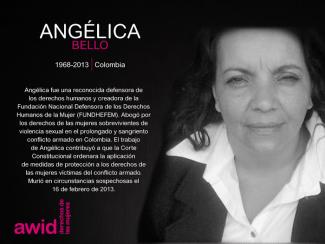
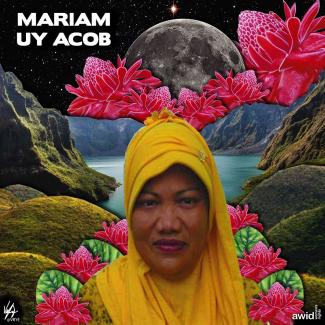
WHRDs are self-identified women and lesbian, bisexual, transgender, queer and intersex (LBTQI) people and others who defend rights and are subject to gender-specific risks and threats due to their human rights work and/or as a direct consequence of their gender identity or sexual orientation.
WHRDs are subject to systematic violence and discrimination due to their identities and unyielding struggles for rights, equality and justice.
The WHRD Program collaborates with international and regional partners as well as the AWID membership to raise awareness about these risks and threats, advocate for feminist and holistic measures of protection and safety, and actively promote a culture of self-care and collective well being in our movements.
Risks and threats targeting WHRDs
WHRDs are exposed to the same types of risks that all other defenders who defend human rights, communities, and the environment face. However, they are also exposed to gender-based violence and gender-specific risks because they challenge existing gender norms within their communities and societies.
By defending rights, WHRDs are at risk of:
- Physical assault and death
- Intimidation and harassment, including in online spaces
- Judicial harassment and criminalization
- Burnout
A collaborative, holistic approach to safety
We work collaboratively with international and regional networks and our membership
- to raise awareness about human rights abuses and violations against WHRDs and the systemic violence and discrimination they experience
- to strengthen protection mechanisms and ensure more effective and timely responses to WHRDs at risk
We work to promote a holistic approach to protection which includes:
- emphasizing the importance of self-care and collective well being, and recognizing that what care and wellbeing mean may differ across cultures
- documenting the violations targeting WHRDs using a feminist intersectional perspective;
- promoting the social recognition and celebration of the work and resilience of WHRDs ; and
- building civic spaces that are conducive to dismantling structural inequalities without restrictions or obstacles
Our Actions
We aim to contribute to a safer world for WHRDs, their families and communities. We believe that action for rights and justice should not put WHRDs at risk; it should be appreciated and celebrated.
-
Promoting collaboration and coordination among human rights and women’s rights organizations at the international level to strengthen responses concerning safety and wellbeing of WHRDs.
-
Supporting regional networks of WHRDs and their organizations, such as the Mesoamerican Initiative for WHRDs and the WHRD Middle East and North Africa Coalition, in promoting and strengthening collective action for protection - emphasizing the establishment of solidarity and protection networks, the promotion of self-care, and advocacy and mobilization for the safety of WHRDs;
-
Increasing the visibility and recognition of WHRDs and their struggles, as well as the risks that they encounter by documenting the attacks that they face, and researching, producing, and disseminating information on their struggles, strategies, and challenges:
-
Mobilizing urgent responses of international solidarity for WHRDs at risk through our international and regional networks, and our active membership.
Related Content
Snippet FEA Principles of Work S4 (EN)

HORIZONTALITY
“Where is the Money for Women’s Rights?" AWID’s WITM Toolkit (landing page intro)
A new edition of the Where is the Money? research is underway.
Learn more.A Do-it-Yourself Research Methodology
AWID offers the WITM Toolkit to support individuals and organizations who want to conduct their own research on funding trends for a particular region, issue or population by adapting AWID’s research methodology.
AWID’s WITM Toolkit builds on 10 years research experience. AWID’s WITM research and WITM Toolkit is a political and practical demonstration of the resources and steps it takes to conduct solid action-research.
Learn more about the context around the WITM research methodology
The Resourcing Feminist Movements team also offers technical and political support before and during the research process. Review the toolkit and contact us at fundher@awid.org if you need more information.
كيف ستعرضون وتعالجون المعطيات التي ستجمعونها في الاستطلاع؟
سيتم جمع المعطيات لأهداف إحصائية لتسليط الضوء على وضع التمويل للحركات النسوية العالمية وسيتم عرضها فقط بشكل إجمالي. لن تنشر AWID المعلومات عن اي منظمة محددة ولن تعرض أي من المعلومات التي ستمكّن من التعرّف على منظمة عن طريق موقعها أو صفاتها دون موافقة المنظمة.
Kunyit Asam: The Roots of Love and Resilience
By Prinka Saraswati, Gianyar, Bali
The menstrual cycle usually lasts between 27 and 30 days. During this time, the period itself would only go on for five to seven days. During the period, fatigue, mood swings, and cramps are the result of inflammation.
In traditional Javanese culture, this is the moment for women to rest and take care of themselves. During this moment, a woman would take Kunyit Asam, a jamu or herbal drink to soothe the inflammation. This elixir consists of turmeric and tamarind boiled together in a pot.
I still remember my first period - it was one day before graduation day in elementary school. I remember pedaling my bike feeling something warm running between my thighs. When I arrived home I did all I could to clean myself and then put on a menstrual pad. My mother came home from work about four hours later. I told her what had happened. She looked me in the eye and asked how I felt. I told her that it was painful, that my body was swollen in every place. Then she asked me to go with her to the backyard. I followed her to our little jungle, my mother sat down on the soil and smiled.
“See this slender leaf? This is the leaf of Kunyit, *empon-empon that leaves the yellow stain on your fingers. What’s most important is not the leaf, but the roots. You dig the soil and slowly grab the roots.”, my mother showed me how to pick Kunyit or Turmeric roots. Then we went to the kitchen where she boiled water along with some tamarind. While waiting for it to boil, she showed me how to wash and grate the orangey-yellow root. Then, we put the grated turmeric into the boiling tamarind water. “Tomorrow, you can make it for yourself. This will help you to feel better!”.
I remember the first time I tasted it - a slightly bitter taste but also sour. My mother always served it warm. She would also put some in a big bottle which I would place on my stomach or lower back for further relief. For days after, my mother’s hands and mine were yellow. My friends could always tell every time I got period because my hands would be yellow.
A year after my first period, I found out that you could get the bottled version in convenience stores. Still, I made my own Kunyit Asam every time I had my period because the one in the convenience stores was cold. It did not smell of wet soil and warm kitchen.
Fast forward, I am a 26 year old woman who casually makes this drink for friends when they have their periods. I’ve made some for my housemates and I’ve delivered some for friends who live in different towns. I do not grow turmeric roots in my garden, but I have grown and shared the love from my mom. What was once from garden to cup is now from *pasar to cup.
A couple of days ago, I asked my mother who taught her how to make the jamu.
“Who else? Yang Ti*! Your grandmother was not just a teacher”, said my mom. I was never close to my grandmother. She passed away when I was eight. All I knew from my mom was that she was a math teacher who had to teach courses after work. I had this image of my grandmother as a hard worker who was kind of distant with her children. My mom did not disagree with that but explained it came from her survival instinct as a mother. “She tried to make time. She tried. She taught me how to make jamu so I could take care of myself and my sisters”.
My mother is the second child out of seven, six of whom are girls. The reason my grandmother taught her is so that all of her children could take care of each other. While my mother was taught how to make the drink, my mother’s older sister was taught how to plant turmeric. Yang Ti knew which one loved the smell of soil more and which one loved the smell of the kitchen. My mother was the latter. She learned how to plant from my aunt, her older sister.
My grandfather worked in a bank but he got laid off when he was in his 40s. So, my grandmother had to do a side-hustle to support their children. My mother was in high school at that time when Yang Ti woke her and her older sister up at dawn. “Would you help me to pick some roots?”. Of course nobody said no. Especially if it was your mother, especially if you were born in Javanese culture where saying “no” sounded like a bad word. Together, the three of them went to the backyard, and they harvested empon - empon, rhizome, that was buried inside the soil. She grew many kinds of rhizome; temu lawak, temu putih, ginger, galangal, kunci, kencur, and kunyit. That was the day where my mother realized that her mother was never far away from her.
That was the day where she could spend more time with her mother. There, in the garden. There, in the kitchen.
“We’re sending these for Ibu Darti, the lady who lives across the river. Kunyit Asam for her and her daughters.”, said my grandmother to my mother and my aunt that day. They poured the Turmeric-Tamarind warm drink into a tall thermos and later my grandmother would deliver it on the way to school.
Over time, my grandmother got more orders for jamu. Everybody in the family helped her to make and deliver her jamu. The small business lasted only a few years, but that was what paid for my mother and her siblings’ education.
Today, my mother, who got laid off just a few days before I wrote this piece, harvested Turmeric and other roots. She’s making her Turmeric Tamarind drink from her kitchen.
My phone rang in the middle of this afternoon, a couple minutes after I boiled the rest of my grated turmeric. Today is one day after my period.
“Ingka, have you washed your pot after boiling those turmeric? It would forever be yellow if you don’t wash it right away!”
-
*empon-empon = roots like ginger, turmeric, etc. coming from the Javanese word “Empu” which means, something or someone that has deep knowledge.
-
*jamu = Indonesia’s traditional elixir made of roots, barks, flowers, seeds, leaves, and fruits.
-
*Yang Ti = Javanese term for grandmother, taken from the term “Eyang Putri” the female you look up to.
-
*pasar = the word for traditional market in Indonesian.
“Feminist Movement”
by Karina Tungari, Hamburg, Germany (@_katung_)
The more women support other women, the quicker we’ll see progress. Together we are stronger and make even more impact.

Carol Thomas
Carol Thomas était une pionnière de la défense des droits sexuels et reproductifs des femmes en Afrique du Sud. Gynécologue aguerrie et fondatrice du WomenSpace, elle pratiquait et promouvait des modes de prestation de soins aux femmes non traditionnels, en proposant des soins à la fois de haute qualité, empathiques et accessibles.
« Elle inscrivait cela non seulement dans la joie de la grossesse et des nouveaux bébés, mais également dans les angoisses de la stérilité, des accouchements prématurés et des cancers féminins et dans le déchirement des fausses couches et des mortinaissances. » -Helen Moffett
Carol fonctionnait selon de nouveaux paradigmes, mettant au centre de sa pratique les besoins des femmes ayant le moins d’accès aux services et aux droits dans la société :
« L’environnement socioéconomique dans lequel nous nous trouvons majoritairement implique que les femmes supportent un fardeau disproportionné de maladies et du chômage... En tant que femme noire précédemment désavantagée, je comprends très bien ce qui se passe dans nos communautés. » - Carol Thomas
Son entreprise sociale innovante «iMobiMaMa», s’étant mérité de nombreux prix, prend appui sur les kiosques de téléphonie mobile et la technologie interactive pour connecter directement les femmes avec les services, l’information et le soutien en soins prénataux et de santé sexuelle dans les communautés de toute l’Afrique du Sud.
Carol soutenait les femmes à la fois lors des grossesses désirées et non désirées, et a encadré de nombreux·ses infirmier·ère·s et médecins au cours de sa vie.
On la décrivait également comme la gynécologue chez qui se rendre « pour les trans qui souhaitaient des soins trans affirmatifs. Elle savait y faire lorsque tant d’autres butaient sur les pronoms ou les mots à employer. Ses couvertures chaudes, son écoute attentive et ses mots qui tombaient toujours justes étaient vraiment réconfortants. » - Marion Lynn Stevens
On disait de Carol Thomas qu’elle était au point culminant de sa carrière lorsqu’elle est décédée, le 12 avril 2019, des complications d’une double transplantation pulmonaire.
Les très nombreux hommages qui lui ont été rendus suite à son décès inattendu faisaient mention qu’elle était, entre autres :
« un modèle à suivre, une guerrière, une innovatrice, une leader dynamique, une rebelle, une boule d’énergie, une brillante scientifique, une doctoresse bienveillante ».
Nul doute que Carol Thomas restera dans nos mémoires et que nous lui rendrons hommage pour avoir été tout cela, et bien plus.
Snippet FEA No feminist economies without feminist unions (ES)
¡No hay economías feministas sin sindicatos feministas!
A través de la organización laboral y sindical, Sopo, Sabrina y Linda no solo luchan por los derechos de lxs mujeres, lxs trabajadorxs esenciales, lxs trabajadorxs migrantes y lxs trabajadores sexuales, sino por los derechos de todxs lxs trabajadorxs.
La lucha para acabar con la explotación de lxs trabajadores es una lucha feminista, y nos muestra que no hay economías feministas sin sindicatos feministas.
Catherine Han Montoya
FRMag - Las Triple (ES)
Las Triple Cripples: ¡hablemos de sexo, nena!
por Nandini Tanya Lallmon
Olajumoke «Jay» Abdullahi y Kym Oliver son feministas revolucionarias en más de un sentido. (...)
arte: «Bloomed» [En flor], de Titash Sen >
Сколько ответов на опрос вы хотели бы получить?
Мы стремимся в общей сложности получить 2000 ответов, что почти вдвое больше, чем в последнем опросе, проведенном в 2011 году.
Pleasure Garden Exhibition
The artwork is a photography and illustration collaboration between Siphumeze and Katia during lockdown. The work looks at black queer sex and plesure narratives, bondage, safe sex, toys, mental health and sex and many more. It was created to accompany the Anthology Touch.


About the Artists:

She is creative director of HOLAAfrica! a pan-Africanist womanist online collective.
Her solo and collaborative performance work has been featured in a number of festivals and theatre spaces such as Ricca Ricca Festival in Japan
She directed two Naledi nominated productions in 2017 and 2018. She directed a show that won a Standard Bank Ovation award in 2020.
As a photographer she was part of a group exhibition titled Flowers of my Soul in Italy organised by the Misfit Project. Produced three publications for HOLAAfrica and was published in and provided the cover for volume two: As You Like of the Gerald Kraak Anthologies.

One of her most lovely and vivaciously titled works, Universe Protector, portrays the black soul as a divine entity full of strength, power, and greatness. In her youth, her love of graphic design was stimulated by her parents’ artistry and the Photoshop they had downloaded on their computer for their professional photography.
Janet Benshoof
Janet Benshoof was a human rights lawyer from the United States and an advocate for women’s equality, sexual and reproductive rights.
She campaigned to broaden access to contraceptives and abortions across the world, and battled anti-abortion rulings and in the American territory of Guam. She was arrested in 1990 for opposing her country’s most restrictive abortion law, but won an injunction at the local court in Guam that blocked the law and eventually won at the Ninth Circuit Court of Appeals, striking down the law for good.
“The women in Guam are in a very tragic situation. I never intend to be quiet about that.” - Janet Benshoof for People Magazine
Janet established landmark legal precedents including the US Food and Drug Administrations’ approval of emergency contraception, as well as the application of international law to ensure the rights of rape victims in the Iraqi High Tribunal’s prosecution of Saddam-era war crimes.
Janet was President and founder of the Global Justice Center, as well as founder of the Center for Reproductive Rights, the world’s first international human rights organization focused on reproductive choice and equality. She served 15 years as Director of the American Civil Liberties Union’s Reproductive Rights Project, where she spearheaded litigation shaping US constitutional law on gender equality, free speech, and reproductive rights.
“Janet was known for her brilliant legal mind, her sharp sense of humor, and for her courage in the face of injustice.” - Anthony D. Romero
Named one of the “100 Most Influential Lawyers in America” by the National Law Journal, Janet was the recipient of numerous awards and honors.
She was born in May 1947 and passed away in December 2017.
Snippet FEA We are living in a world left (FR)
Nous vivons dans un monde où la destruction de la Nature alimente notre économie mondiale actuelle.
Grace Mann
FRMag - Roots of Love and Resilience
Kunyit Asam : Les racines de l’amour et de la résilience
par Prinka Saraswati
Les cycles menstruels sont généralement d’une durée de 27 à 30 jours. Pendant cette période, les règles elles-mêmes ne durent que 5 à 7 jours. L’épuisement, les sautes d’humeur et les crampes sont le résultat de l’inflammation qui se produit alors. (...)
< illustration : « Mouvement féministe », Karina Tungari
Snippet - WITM Our objectives - PT
Os nossos objetivos da pesquisa WITM:
1 |
Fornecer a membres da AWID, parceires do movimento e financiadores uma análise atualizada, robusta, baseada em fatos e orientada para a ação das realidades do financiamento de movimentos feministas e do estado atual do ecossistema do financiamento feminista. |
2 |
Identificar e demonstrar oportunidades para transferir mais recursos de maior qualidade para a organização feminista, expor soluções falsas e interromper tendências que fazem com que o financiamento não seja bem-sucedido e/ou se mova contra a justiça de género e objetivos feministas interseccionais. |
3 |
Articular visões, propostas e objetivos feministas para a justiça no financiamento. |
Colectivo Morivivi
El Colectivo Moriviví es una colectiva de solo mujeres. Nuestra producción artística consiste en muralismo, muralismo comunitario y acciones/performances de protesta. Nuestro trabajo tiene como objetivo democratizar el arte y llevar a la esfera pública las narrativas de las comunidades de Puerto Rico, para generar espacios en donde sean validadas. Creemos que, a través del artivismo, podemos promover conciencia sobre temas sociales y fortalecer nuestra memoria colectiva.


En el marco de su participación en el Grupo de Trabajo Artístico de AWID, el Colectivo Moriviví convocó a un grupo diverso de afiliadxs, asociadxs y personal de AWID y facilitó un proceso colaborativo de imaginación, configuración y decisión sobre el contenido para la creación de un mural comunitario, a través de un proceso de creación conjunta en múltiples etapas. El proyecto comenzó con una conceptualización remota con feministas de diferentes zonas del planeta reunidxs por AWID, y luego evolucionó hacia su recontextualización y realización en Puerto Rico. Nos honra haber contado con la contribución de las artistas locales Las Nietas de Nonó (@lasnietasdenono), la participación de mujeres locales en la Sesión de Pintura Comunitaria, el apoyo logístico de la Municipalidad de Caguas, y el apoyo adicional al colectivo, brindado por FRIDA Young Feminist Fund.
El mural explora la trascendencia de las fronteras, al presentar cuerpos como un mapa en un abrazo que realza la intersección de las distintas manifestaciones, prácticas y realidades feministas.
Agradecemos también a Kelvin Rodríguez, quien documentó y captó las diferentes etapas de este proyecto en Puerto Rico:


Sobre el Colectivo Moriviví

Moriviví es un colectivo de jóvenes artistas mujeres que trabajan en arte público desde abril de 2013. Con sede en Puerto Rico, hemos obtenido reconocimiento por la creación de murales y de arte comunitario.
El grupo se inició en festivales locales de arte urbano. A medida que nuestro trabajo se fue haciendo más conocido, algunas organizaciones y líderes comunitarias comenzaron a contactarnos. Al principio éramos solo ocho estudiantes de secundaria que querían pintar juntas un mural. Y en estos ocho años de duro trabajo hemos enfrentado muchos desafíos. Ahora estamos en un período de transición. Queremos reestructurar internamente el colectivo durante el próximo año. Nuestro objetivo es abrir nuevas oportunidades de colaboración y respaldar nuestro proceso de toma de decisiones con un nuevo sistema de evaluación. Aspiramos, en el largo plazo, a convertirnos en una escuela alternativa para la práctica artística, destinada a aquellas personas interesadas en sumergirse en la producción de arte comunitario.