WHRDs are self-identified women and lesbian, bisexual, transgender, queer and intersex (LBTQI) people and others who defend rights and are subject to gender-specific risks and threats due to their human rights work and/or as a direct consequence of their gender identity or sexual orientation.
WHRDs are subject to systematic violence and discrimination due to their identities and unyielding struggles for rights, equality and justice.
The WHRD Program collaborates with international and regional partners as well as the AWID membership to raise awareness about these risks and threats, advocate for feminist and holistic measures of protection and safety, and actively promote a culture of self-care and collective well being in our movements.
Risks and threats targeting WHRDs
WHRDs are exposed to the same types of risks that all other defenders who defend human rights, communities, and the environment face. However, they are also exposed to gender-based violence and gender-specific risks because they challenge existing gender norms within their communities and societies.
By defending rights, WHRDs are at risk of:
Physical assault and death
Intimidation and harassment, including in online spaces
Judicial harassment and criminalization
Burnout
A collaborative, holistic approach to safety
We work collaboratively with international and regional networks and our membership
to raise awareness about human rights abuses and violations against WHRDs and the systemic violence and discrimination they experience
to strengthen protection mechanisms and ensure more effective and timely responses to WHRDs at risk
We work to promote a holistic approach to protection which includes:
emphasizing the importance of self-care and collective well being, and recognizing that what care and wellbeing mean may differ across cultures
documenting the violations targeting WHRDs using a feminist intersectional perspective;
promoting the social recognition and celebration of the work and resilience of WHRDs ; and
building civic spaces that are conducive to dismantling structural inequalities without restrictions or obstacles
Our Actions
We aim to contribute to a safer world for WHRDs, their families and communities. We believe that action for rights and justice should not put WHRDs at risk; it should be appreciated and celebrated.
Promoting collaboration and coordination among human rights and women’s rights organizations at the international level to strengthen responses concerning safety and wellbeing of WHRDs.
Supporting regional networks of WHRDs and their organizations, such as the Mesoamerican Initiative for WHRDs and the WHRD Middle East and North Africa Coalition, in promoting and strengthening collective action for protection - emphasizing the establishment of solidarity and protection networks, the promotion of self-care, and advocacy and mobilization for the safety of WHRDs;
Increasing the visibility and recognition of WHRDs and their struggles, as well as the risks that they encounter by documenting the attacks that they face, and researching, producing, and disseminating information on their struggles, strategies, and challenges:
Mobilizing urgent responses of international solidarity for WHRDs at risk through our international and regional networks, and our active membership.
La mayoría de los Estados miembros de la Unión Europea tienen leyes y prácticas que penalizan o controlan a las trabajadoras sexuales de formas inaceptables para ellas. La criminalización de las trabajadoras sexuales y/o sus clientes solo contribuye a aumentar la vulnerabilidad de las trabajadoras sexuales, que ya enfrentan el estigma, la discriminación y la exclusión por parte del Estado y de la sociedad a diario, especialmente las mujeres trabajadoras, lxs trabajadorxs trans, migrantes y/o racializadxs. En España por ejemplo, el gobierno esta actualmente intentando pasar una Ley Orgánica para la Abolición de la Prostitución, que resultara en mas clandestinidad y violencia. Ven a conocer las historias de trabajadoras sexuales y organizadores sindicales que luchan para decriminilizar el trabajo sexual y promover derechos laborales y condiciones de trabajo digno para lxs trabajadxs sexuales.
Sostenemos la completa aplicación del principio de derechos, incluidos aquellos consagrados en leyes internacionales, y afirmamos la convicción de que todos los derechos humanos están interrelacionados y son interdependientes e indivisibles. Estamos comprometidxs a trabajar por la erradicación de todas las discriminaciones basadas en el género, la sexualidad, la religión, la edad, la capacidad, la etnia, la raza, la nacionalidad, la clase, u otros factores.
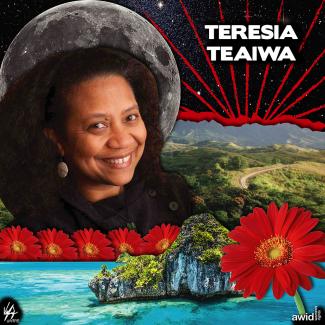
Described by the Guardian as one of Kiribati’s national icons, Teresia was a fearless advocate who worked closely with feminist groups in Fiji.
She used her research to address the issues of feminism and gender in the Pacific, as well as being co-editor of the International feminist Journal of Politics. Her influence spanned the academic frontier as well as social justice movements in the Oceania region.
Ali Chavez Leeds
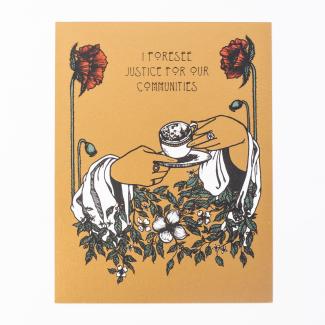
Impresión de pantalla en papel a 4 colores (8,5 x 11 pulgadas), 2016
“Tasseography” [«Taseografía»]
La taseografía es el estudio de los posos de café y/o de las hojas de té para la adivinación. Es una práctica que ha sido transmitida por las mujeres del lado armenio de mi familia, y me fue enseñada por mi madre, que a su vez la aprendió de su madre y así sucesivamente. Cuando miraba a mi Nana leer los posos del café armenio preparado para la familia y lxs amigxs, veía muchas veces como ella veía lo que quería decir. Estas impresiones dicen algunas de las cosas que quiero ver en el mundo: espero que sean las mismas cosas que ustedes quieren ver.
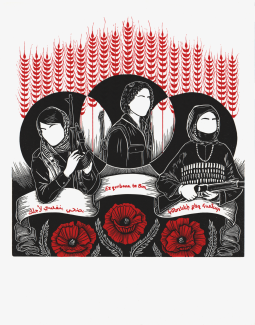
Impresiones en relieve en papel (11 x 14 pulgadas), 2021
“Our Promise” [«Nuestra promesa»]
Esta impresión celebra la resiliencia, el sacrificio y la fortaleza de lxs luchadorxs por la libertad de SWANA, a través de la historia y la solidaridad existente. La inspiración original provino de un artículo que leí sobre una exposición en Tatvan, un distrito de Bitlis, que mostraba la presencia armenia en la región. Mis antepasadxs eran de Bitlis, que ahora se encuentra dentro de las fronteras de la Turquía moderna.
Impresiones en relieve en papel (8,5 x 11 pulgadas), 2020
“Looking at the Cup” [«Mirando la taza»]
La taseografía (el estudio de la lectura de los posos de café) es una práctica cultural que las mujeres armenias han utilizado durante cientos de años para hablar entre sí. Es un lenguaje codificado para iniciar conversaciones, construir conexiones interrelacionadas y entretejidas.
Sobre Ali Chavez Leeds
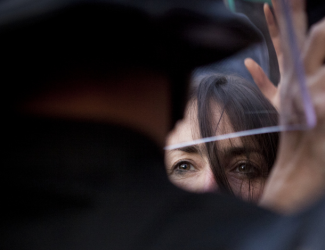
Ali Cat Leeds (ella/ellx) es una artista y estampadora que vive en las tierras no cedidas de los pueblos Cowlitz y Multnomah y de las tribus confederadas de la comunidad de Grand Ronde en la confluencia de dos ríos, conocida como Portland, Oregón. Produce su trabajo bajo el nombre de Entangled Roots Press. Sus estampas mezclan lo literal y lo metafórico,para iluminar y comentar el mundo que nos rodea. Las impresiones en relieve, de pantalla y tipográficas abarcan desde las masacres de las deforestaciones hasta la belleza de los movimientos populares. Las estampas de Ali se nutren de herstorias [historias de ellas] ancestrales y empujan hacia futuros liberadores, enredando en la hoja de papel impresa los aprendizajes de jardines, los símbolos en las tazas de café y los hilos entretejidos de Armenia y Euskal Herria.
Да. Ваши ответы будут удалены по окончании обработки и анализа данных и будут использованы исключительно в исследовательских целях. Данные НИКОГДА не будут переданы за пределы AWID и будут обрабатываться только сотрудниками AWID и консультантками(-тами), работающими с нами над проектом «Где деньги?». Для нас ваша конфиденциальность и безопасность– приоритет. С нашей политикой конфиденциальности можно подробно ознакомиться здесь.
En participant à une activité exclusive pour les membres, j'ai été particulièrement touchée de voir que chacun·e y avait sa place et qu’il n’y avait pas le moindre jugement. Toute la session a été dynamique et vivante.- Kirthi Jayakumar, Fondatrice, The Gender Security Project, Inde
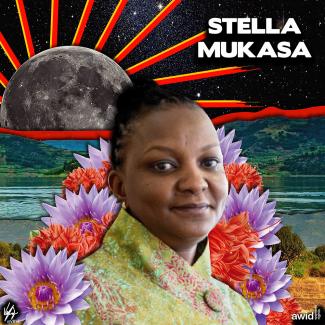
Stella comenzó su carrera en el Ministerio de Género y Desarrollo Comunitario en Uganda colaborando con lxs legisladores en reformas legales, incluida la Constitución de Uganda de 1995, que estableció algunas de las reformas más progresistas para las mujeres en la región.
Stella es respetada y admirada en toda la región por sus incansables esfuerzos para crear y hacer cumplir leyes y políticas que tomen en cuenta cuestiones de género. También desempeñó un papel clave en la redacción de la Ley de Violencia Doméstica de Uganda y en la movilización de apoyo para las constituciones sensibles al género tanto en Uganda como en Ruanda.
A través de su trabajo con el Centro Internacional para la Investigación sobre la Mujer (ICRW, por sus siglas en inglés), abordó la violencia contra lxs niñxs y trabajó para fortalecer las capacidades de las organizaciones de base que abordan la violencia de género. Stella fue profesora en cursos sobre derechos de género y la ley, en la Universidad Makerere, y formó parte de las juntas directivas de Akina Mama wa Afrika, ActionAid International Uganda y Open Society Initiative para África Oriental.
La tendresse est la plus féroce des résistances
Une série de films sur les Réalités féministes dans la région Asie/Pacifique
Préparée par Jess X. Snow
avec l’aide de Kamee Abrahamian et Zoraida Ingles
Révisée par Kamee Abrahamian
Dans toute l’Asie et le Pacifique, et dans sa diaspora tout entière, des femmes et des trans farouches se battent pour un avenir où iels pourraient être libres. Alors que l’élévation du niveau des mers menace les îles du Pacifique et les côtes de l’Asie continentale, la lutte pour protéger la Terre et les océans s’intensifie dans le monde entier. La mémoire géologique de notre planète enregistre toutes les expériences qu’elle a vécues : la montée des colonisations, de l’industrialisation et de la destruction de l’environnement est liée à la montée de l’État-nation patriarcal binaire. Le pouvoir au sein de la Terre de se réincarner et d’éclore face à la violence doit alors être mis en lien avec les femmes, la maternité, l’indigénéité et toutes les forces expansives, sacrées et queer. Les Réalités féministes unissent la lutte pour la protection des droits des femmes, des trans et des personnes LGBTQ+ avec celle pour la protection de la Terre, et ce n’est pas une coïncidence. Des mères et filles protégeant le Mauna Kea au Royaume de Hawai’i aux relations complexes entre mères et enfants chez les réfugié·e·s du Vietnam, en passant par les réveils sexuels de personnes queer dans l’Inde conservatrice, la réclamation de la construction de maisons en Mongolie intérieure et la lutte pour la libération des personnes LGBTQ aux Philippines, cet ensemble de films est une constellation des manières selon lesquelles les femmes, personnes queer et trans en Asie-Pacifique défendent de nos jours les multiples voies vers notre libération collective, au-delà des océans et des frontières.
Tous ces films témoignent du sens fort accordé aux lieux : des activistes autochtones protègent leurs terres sacrées, des jeunes déconstruisent les récits coloniaux sur leurs terres et découvrent des vérités cachées, les liens complexes de maternité et de soins sont examinés, et des personnages se tournent vers leur propre corps et leur sexualité comme autant de sanctuaires, lorsque la famille et la ville qui les entourent menacent leur sécurité.
AFTEREARTH
De Jess X. Snow
« Un film envoûtant avec des plans époustouflants qui invoquent la résistance écologique féministe et comment elle prend directement source dans l'histoire culturelle et la terre… »
- Jessica Horn, stratège féministe panafricain·e, écrivain·e et cocréateur·rice de The temple of her skin (Le temple de sa peau)
Dans le documentaire expérimental Afterearth, quatre femmes se battent pour protéger les volcans, les océans, la terre et l’air pour les générations futures. En s’appuyant sur de la musique, de la poésie et le témoignage poignant qui rend honneur aux lieux qu’atteint l’océan Pacifique – Hawai’i, les Philippines, la Chine et l’Amérique du Nord, Afterearth est une méditation poétique sur la relation intergénérationnelle et féministe de quatre femmes avec les terres et les plantes dont elles sont issues.
STANDING ABOVE THE CLOUDS
De Jalena Keane Lee
Dans Standing Above the Clouds, des mères et filles activistes indigènes de Hawai’i se tiennent côte à côte pour protéger leur montagne sacrée, Mauna Kea, contre sa transformation en un site de construction des plus grands télescopes au monde. En tant que protectrices de Mauna Kea, ce film souligne l’interconnexion entre Aloha ʻĀina (l’amour de la terre) et l’amour pour ses aîné·e·s et les générations à venir.
NƯỚC (EAU/TERRE NATALE)
De Quyên Nguyen-Le
Dans ce court-métrage narratif expérimental, Nước (Eau/Terre natale) un·e ado genderqueer vietnamo-américain·e questionne les récits dominants sur la guerre du Vietnam à Los Angeles, Californie. Par le jeu de séquences oniriques fortes et d’intrusions de la réalité, ce film suit le parcours qui lui permet de recomposer et de comprendre l’expérience de sa mère, réfugiée de la guerre du Vietnam.
KAMA’ĀINA
De Kimi Lee
Dans Kama’āina, une jeune queer de seize ans doit se débrouiller pour vivre dans les rues de Oahu, jusqu’à ce qu’elle finisse par pouvoir se réfugier, sur les conseils d’une tata, à Pu’uhonua o Wai’anae, le plus gros camp organisé de sans-abris de Hawai’i.
DEVI
By Karishma Dev Dube
Dans Devi (« déesse » en hindi), Tara, une jeune lesbienne « dans le placard », s’oppose à la fois à sa famille et à la tradition pour vivre son attirance pour la servante de la maison. Située à New Delhi, Devi est une histoire de révélation tout autant qu’un commentaire sur les lignes sociales et de classe qui divisent les femmes de l’Inde contemporaine.
HEADING SOUTH
De Yuan Yuan
Dans Heading South, Chasuna, une fillette de 8 ans élevée par sa mère sur le Plateau de la Mongolie intérieure, rend visite à son père abusif à la grande ville. Pendant qu’elle est chez son père, on lui présente une nouvelle venue dans la famille. Elle doit alors reconnaître et accepter que sa véritable maison est inséparable de sa mère et de la terre.
Outrun
De Johnny Symons & S. Leo Chiang
Dans le long métrage Outrun, nous suivons le parcours de la première femme transgenre au Congrès des Philippines. Face à l’oppression d’une nation majoritairement catholique, son parcours victorieux devient un cri de victoire pour les droits des personnes LGBTQ+ du monde entier.
Alliant le documentaire, le récit et des formes expérimentales, ces films illustrent que l’attention de la communauté, l’amour de soi et une écoute profondément transformatrice entre celleux que nous aimons sont une entrée dans les Réalités féministes auxquelles nous donnons vie aujourd’hui. De toute l’Asie Pacifique et sa diaspora, ces histoires nous montrent que, face à la violence, la tendresse est la plus féroce des résistances.
Jess X. Snow est réalisateur·rice de films, artiste, poète nominé·e au Pushcart, auteur·e de livres pour enfants et éducateur·rice artistique communautaire qui crée des histoires d'immigrant·e·s asiatiques queers qui transcendent les frontières, les binarités et le temps
Suivez-nous sur les réseaux sociaux pour recevoir des informations sur les prochains événements et projections :
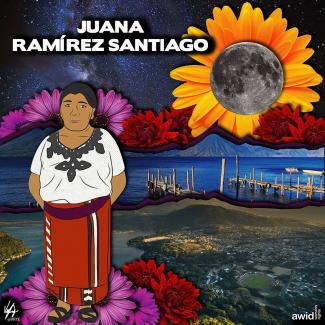
Ayant co-fondé le réseau Red de Mujeres Ixiles de Nebaj, une organisation de défense des droits des femmes autochtones, membre de l’Initiative mésoaméricaine des femmes défenseur-e-s des droits humains (IM-Defensoras en espagnol), Juana était actuellement membre de son conseil d’administration.
Elle était également sage-femme et mère de 7 enfants. Juana avait reçu des menaces de mort qui avaient été signalées au bureau du procureur. Juana est la troisième défenseure autochtone assassinée dans la région en 2018. L'Ombudsman pour le Guatemala a signalé qu'au total 20 défenseur-e-s ont été tué-e-s dans le pays cette année.
Juana Ramírez Santiago a été abattue par des assaillants non identifiés alors qu'elle traversait un pont à Nebak, Quiché, au Guatemala. Les enquêtes visant à identifier les auteurs sont en cours.
Anti-Rights Discourses
Chapter 3
Anti-rights discourses continue to evolve. As well as using arguments related to religion, culture, and tradition, anti-rights actors co-opt the language of social justice and human rights to conceal their true agendas and gain legitimacy.
Three decades ago, a US television evangelist and Republican candidate famously said that feminism is an “anti-family political movement that encourages women to leave their husbands, kill their children, practice witchcraft, destroy capitalism and become lesbians.” Today, this conspirative notion gains unprecedented grasp and legitimacy in the form of “gender ideology” discourse, a catch-all bogey-man created by anti-rights actors for them to oppose.
Across a range of discourses employed by anti-rights actors - including notions of “cultural imperialism” and “ideological colonization”, appeals to “conscientious objection” and the idea of a “pre-natal genocide” - a key theme is co-optation. Anti-rights actors take legitimate issues, or select parts of them, and twist them in service of their oppressive agenda.
Table of Contents
Gender Ideology
Cultural Imperialism and Ideological Colonization
Abortion: Conscientious Objection
Abortion: Prenatal Genocide
Exercise: Let’s Take Back the Narrative
Movement Resistance Story: The Nairobi Principles: Cross-Movement Commitments on Disability and SRHR

![]Ali Chavez Leeds portrait](/sites/default/files/styles/max_325x325/public/2021-10/portrait.jpeg?itok=0yU3PqLe)