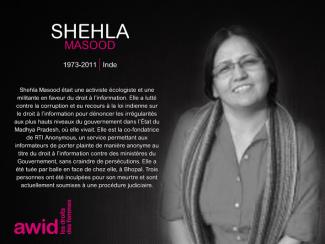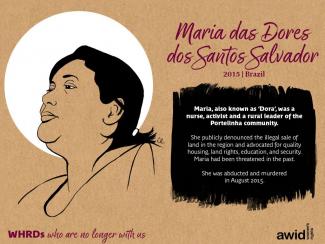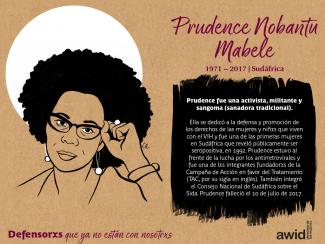
Women Human Rights Defenders
WHRDs are self-identified women and lesbian, bisexual, transgender, queer and intersex (LBTQI) people and others who defend rights and are subject to gender-specific risks and threats due to their human rights work and/or as a direct consequence of their gender identity or sexual orientation.
WHRDs are subject to systematic violence and discrimination due to their identities and unyielding struggles for rights, equality and justice.
The WHRD Program collaborates with international and regional partners as well as the AWID membership to raise awareness about these risks and threats, advocate for feminist and holistic measures of protection and safety, and actively promote a culture of self-care and collective well being in our movements.
Risks and threats targeting WHRDs
WHRDs are exposed to the same types of risks that all other defenders who defend human rights, communities, and the environment face. However, they are also exposed to gender-based violence and gender-specific risks because they challenge existing gender norms within their communities and societies.
By defending rights, WHRDs are at risk of:
- Physical assault and death
- Intimidation and harassment, including in online spaces
- Judicial harassment and criminalization
- Burnout
A collaborative, holistic approach to safety
We work collaboratively with international and regional networks and our membership
- to raise awareness about human rights abuses and violations against WHRDs and the systemic violence and discrimination they experience
- to strengthen protection mechanisms and ensure more effective and timely responses to WHRDs at risk
We work to promote a holistic approach to protection which includes:
- emphasizing the importance of self-care and collective well being, and recognizing that what care and wellbeing mean may differ across cultures
- documenting the violations targeting WHRDs using a feminist intersectional perspective;
- promoting the social recognition and celebration of the work and resilience of WHRDs ; and
- building civic spaces that are conducive to dismantling structural inequalities without restrictions or obstacles
Our Actions
We aim to contribute to a safer world for WHRDs, their families and communities. We believe that action for rights and justice should not put WHRDs at risk; it should be appreciated and celebrated.
-
Promoting collaboration and coordination among human rights and women’s rights organizations at the international level to strengthen responses concerning safety and wellbeing of WHRDs.
-
Supporting regional networks of WHRDs and their organizations, such as the Mesoamerican Initiative for WHRDs and the WHRD Middle East and North Africa Coalition, in promoting and strengthening collective action for protection - emphasizing the establishment of solidarity and protection networks, the promotion of self-care, and advocacy and mobilization for the safety of WHRDs;
-
Increasing the visibility and recognition of WHRDs and their struggles, as well as the risks that they encounter by documenting the attacks that they face, and researching, producing, and disseminating information on their struggles, strategies, and challenges:
-
Mobilizing urgent responses of international solidarity for WHRDs at risk through our international and regional networks, and our active membership.
Related Content
En quoi ce Forum sera-t-il différent ?
Avec jusqu'à 2 500 participant·e·s sur place et 3 000 participant·e·s virtuel·e·s/hybrides, il s'agira du plus grand Forum de l'AWID jamais organisé. Nous envisageons de mettre en place de multiples espaces qui vous permettront d'établir des liens significatifs, d'apprendre, d'échanger, d'avoir des échanges stratégiques, de guérir et de fêter. C'est la première fois que nous nous réunissons dans cet espace depuis la pandémie, et nous brûlons d’impatience.
Ayanda Denge
«Soy una maravilla... ¡Por lo tanto, he nacido de una madre! Cuando comienzo a balbucear, Mi vida ha sido como ninguna otra...» - Ayanda Denge (lee el poema completo más abajo)
Como comprometida y ferviente activista por la justicia social, luchó por los derechos de lxs trabajadorxs sexuales, de las personas trans y de quienes viven con VIH y SIDA. Era también conferencista motivacional para concientizar sobre el cáncer, y hacía campaña por viviendas sociales económicas, en especial, para la gente pobre y de clase trabajadora. Ayanda se erguía, alta como una montaña, contra los distintos y, a menudo, abusivos rostros de la discriminación.
«Ser transgénero no es una dosis doble, sino una dosis triple de estigmatización y discriminación. Te discriminan por tu identidad sexual, te discriminan por tu trabajo, y te discriminan por tu estatus de VIH.» - Ayanda Denge, 2016
Ayanda presidía la organización Sex Workers Education and Advocacy Taskforce (SWEAT) [ Grupo de Trabajo para la Educación y la Defensa de Trabajadorxs Sexuales], y trabajaba también como coordinadora de promoción comunitaria en Sisonke, un movimiento nacional de trabajadorxs sexuales de Sudáfrica.
«Desde nosotrxs, desde nuestra sede regional, hasta SWEAT, de la que integro la Junta Directiva, o hasta Sisonke, un movimiento de trabajadorxs sexuales de Ciudad del Cabo, todxs nos amalgamamos, tenemos un solo grito y es un grito que ha sido reconocido internacionalmente por lxs trabajadorxs sexuales internacionales. Queremos la descriminalización del trabajo sexual.» - Ayanda Denge, 2016
Vivía en la Ahmed Kathrada House, que estaba siendo ocupada por la campaña Reclaim the City [Recuperar la Ciudad] en favor de las viviendas sociales. En 2018, Ayanda fue elegida líder de la casa. El 24 de marzo de 2019 fue apuñalada en su habitación. El año anterior, otrx residente había sido asesinadx.
Reclaim the City señala una conexión entre la seguridad de lxs residentes de la casa, el corte del servicio de electricidad por parte del gobierno provincial, y el derecho humano al agua:
«No podemos separar la seguridad de las mujeres y de las personas LGBTQI que están viviendo en la casa ocupada de la negativa a reestablecer los servicios de electricidad y agua en la Ahmed Kathrada House por parte del gobierno de la Provincia del Cabo Occidental.
De noche, la casa está completamente oscura. Necesitamos luces para protegernos unxs a otrxs. Es como si la Provincia quisiera castigar a la gente pobre y de clase trabajadora, cuyo único crimen es necesitar un hogar. Si bien pueden estar en desacuerdo con nuestros motivos por ocuparla, deberían avergonzarse de priorizar la política en detrimento de la seguridad y la dignidad de lxs residentes de esta ciudad.
Descansa en paz, camarada Ayanda Denge. Te recordaremos mientras mantenemos viva la llama de la lucha por una vivienda decente y bien ubicada.»
Poema de Ayanda:
Soy una maravilla…
¡Por lo tanto, nací de una madre!
Cuando comienzo a balbucear,
Mi vida ha sido como ninguna otra.
Nacida en el dolor
Nutrida por la lluvia
Para mí ganar
Era vivir en un desagüe.
Mientras se me cae una lágrima
Me pongo de pie y empuño mi lanza.
Las voces hacen eco, no temas
Habrá desafíos dentro del año,
Desafíos de daño se ciernen sobre mí;
La comunidad aplaude porque asume que he ganado mi carrera;
Pero en realidad mi trabajo avanza a paso de tortuga;
De rodillas me inclino y pido gracia.
Porque el Señor
Es mi espada
Para recordar a la humanidad
Que Él brinda cordura.
¿Por qué Señor soy esta maravilla?
El Señor me responde con la lluvia y el trueno,
Por cuestionar a mi padre
Que tiene en el libro de los corderos
Un nombre llamado Ayanda.
Desde las calles mi vida nunca fue dulce
La gente que tenía que encontrar;
A veces yo nunca saludaba,
Aun a pesar de que tenía que comer;
Optaba por inclinarme
En lugar de sentarme
Escucha el poema en la voz de Ayanda
«Porque mi vida representa la de una flor de loto, ya que de las turbias y turbulentas aguas florecí para ser hermosa y fuerte...» - Ayanda Denge, mira y escucha
Tributos:
«Ayanda, quiero decirte que todavía eres una sobreviviente, en nuestros corazones y nuestras mentes. Te has ido, pero estás en todas partes, porque eres amor. Qué hermoso es ser amadx, y dar amor. Y Ayanda, ese es el regalo que nos has dado. Gracias por todo el amor, verdaderamente te necesitábamos. De ahora en adelante, te prometo que todxs nos comprometeremos a continuar la lucha a la que tanta energía y tiempo dedicaste. Y nos comprometeremos a buscar justicia por este horrible final de tu vida.» - transcripción de un mensaje en un tributo de despedida a Ayanda
«Ayanda era una activista por naturaleza. Sabía cuáles eran sus derechos y no le importaba pelear por los derechos de otrxs. Para mí, no fue una sorpresa que se involucrara en muchas organizaciones, y era sabido que era una persona de la gente. Ella representaba no solo los derechos de las personas LGBTI, representaba los derechos de todxs.» - hermana de Ayanda
ours chapter 3
Capítulo 3
Discursos anti-derechos
Los discursos anti-derechos continúan evolucionando. Además de utilizar argumentos relacionados con la religión, la cultura y la tradición, los actores antiderechos cooptan el lenguaje de la justicia social y los derechos humanos para ocultar sus verdaderas agendas y ganar legitimidad.
Snippet - Take the quiz FR
Répondez au quiz
Où est l’argent pour l’organisation des mouvements féministes ?
Que connaissez-vous du financement féministe ? Répondez au quiz de l’AWID Où est l’argent pour l’organisation des mouvements féministes ? pour tester vos connaissances
Who can fund my women’s rights organizing?
Our funder database is currently under revision. We know feminists still need and deserve more and better resources!
Please join our mailing list to stay informe about this update.
You can also become a member and find and create connections with feminists around the world.
Featured
Beyond Investing in Women and Girls
Does AWID provide scholarships to attend the Forum?
Our Access Fund will offer a limited number of scholarships to fund the participation of activists who cannot otherwise make it, and don’t have relationships with funders who could cover their participation. So if you have other possibilities, please explore them. We will do our best to offer as many scholarships as we can, and will share more information about this process and how to apply in early 2024.
Flor Alba Nunez Vargas
Résumé : Identifiez les principaux groupes et réfutez leurs arguments
Résumé :
Identifiez les principaux groupes et réfutez leurs arguments
Décideur·se politique à l’ONU, vous souhaitez apprendre à repérer les principaux groupes et discours antidroits au sein de l’institution ? Vous êtes un·e féministe, à la recherche de contre-arguments éclairs ? Ce résumé vous propose les informations essentielles en 8 pages seulement.
WITM - Refreshed DATA SNAPSHOTS - EN
Data Snapshots
Our collective power, wisdom, and commitment have no boundaries, but our bank accounts do.
Data snapshots are based on the responses of 1,174 feminist, women’s rights, LGBTQI+, and allied organizations (hereafter referred to as “feminist and women's rights organizations”) from 128 countries to the Where is the Money for Feminist Organizing? survey. These snapshots reflect experiences from 2021–2023, analyzed in the context of defunding trends unfolding in 2024–2025.
Here’s what you need to know about the current state of resourcing for feminist organizing.
Une stratégie, un marché et de nouvelles voix : les femmes autochtones et les forums de l'AWID

Le Forum a été un espace clé pour le Mouvement des femmes autochtones (Indigenous Women’s Movement, IWM) dans son rapport au féminisme. Aux Forums de l’AWID, elles ont appliqué la même stratégie que celle utilisée pour les Nations Unies. Au cours de ce processus, les deux mouvements ont été transformés : de nouvelles voix et questions ont émergé au sein de l’IWM, et les féministes ont commencé à changer leurs discours et leurs pratiques autour des droits fonciers et de la spiritualité, elles ont mieux compris les droits collectifs et ont inclus l’IWM dans leurs événements et leurs programmes. Mónica Alemán et María Manuela Sequeira, de l’IWM, nous ont raconté cette histoire.
Dans leur propre voix : regardez l'interview de María Manuela Sequeira & Mónica Alemán
¿Habrá encuentros regionales, temáticos o de otro tipo previos al Foro?
¡Creemos que sí! Todavía estamos en las etapas iniciales del proceso de planificación, así que mantente atentx mientras les vamos dando a estos planes.
Priyadarshini Thangarajah
Animation: Calling all Feminist Superheroes!
Animation:
Calling all Feminist Superheroes!
Follow our Superhero as she embarks on a quest to reclaim the narrative from anti-rights actors across the globe.
Snippet - COP30 - 6th International Rights of Nature Tribunal - EN
6th International Rights of Nature Tribunal: A New Pledge for Mother Nature
Where frontline organizers lead and corporations are held accountable.
📅 Tuesday, November 11, 2025
📍 Online and at the Universidade Federal do Pará, Belém
Gracias por visitar AWID.
Les agradecemos su interés por visitar el sitio web de AWID. Para obtener más información sobre nuestro trabajo, visiten https://www.awid.org/es
Je suis un bailleur de fonds ou un donateur individuel. Comment puis-je soutenir le Forum de l'AWID ?
Nous vous invitons à prendre contact avec nous pour trouver des moyens d’apporter un soutien significatif au Forum.
Angy Ferreira
Snippet Kohl - Panel: Pleasure Across Borders

with Lindiwe Rasekoala, Lizzie Kiama, Jovana Drodevic, and Malaka Grant.
Snippet - COP30 - Resistance Hubs Section Column 1 - ES
Mientras les líderes se reúnen en Brasil, es fundamental que los movimientos feministas, sobre todo los de la mayoría global, contemos con espacios autónomos para encontrarnos, elaborar estrategias y trastocar.
En estos nodos interpelamos el elitismo de las conversaciones sobre el clima, nos centramos en las vivencias y apuntamos a construir el poder colectivo más allá de las fronteras. Se ofrece un contrapeso crítico a las negociaciones internacionales jerárquicas y a menudo excluyentes. En los nodos buscamos promover las soluciones nacidas de la comunidad, amplificar las demandas feministas y garantizar que los principios feministas de los cuidados y la solidaridad sean los que den forma a la agenda por el clima. No se trata únicamente de tener presencia en la COP30, se trata también de reconfigurar las conversaciones sobre la justicia climática en términos feministas.