Contenu lié
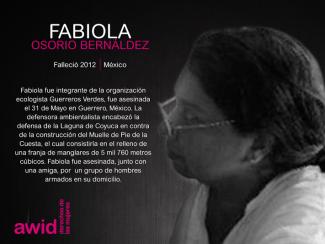
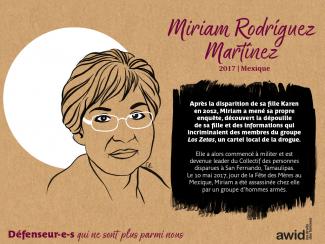
RFI: L'assassinat de la mère courage qui avait ému le Mexique
WHRDs are self-identified women and lesbian, bisexual, transgender, queer and intersex (LBTQI) people and others who defend rights and are subject to gender-specific risks and threats due to their human rights work and/or as a direct consequence of their gender identity or sexual orientation.
WHRDs are subject to systematic violence and discrimination due to their identities and unyielding struggles for rights, equality and justice.
The WHRD Program collaborates with international and regional partners as well as the AWID membership to raise awareness about these risks and threats, advocate for feminist and holistic measures of protection and safety, and actively promote a culture of self-care and collective well being in our movements.
WHRDs are exposed to the same types of risks that all other defenders who defend human rights, communities, and the environment face. However, they are also exposed to gender-based violence and gender-specific risks because they challenge existing gender norms within their communities and societies.
We work collaboratively with international and regional networks and our membership
We aim to contribute to a safer world for WHRDs, their families and communities. We believe that action for rights and justice should not put WHRDs at risk; it should be appreciated and celebrated.
Promoting collaboration and coordination among human rights and women’s rights organizations at the international level to strengthen responses concerning safety and wellbeing of WHRDs.
Supporting regional networks of WHRDs and their organizations, such as the Mesoamerican Initiative for WHRDs and the WHRD Middle East and North Africa Coalition, in promoting and strengthening collective action for protection - emphasizing the establishment of solidarity and protection networks, the promotion of self-care, and advocacy and mobilization for the safety of WHRDs;
Increasing the visibility and recognition of WHRDs and their struggles, as well as the risks that they encounter by documenting the attacks that they face, and researching, producing, and disseminating information on their struggles, strategies, and challenges:
Mobilizing urgent responses of international solidarity for WHRDs at risk through our international and regional networks, and our active membership.
L’information contenue dans cette communication est confidentielle et exclusivement destinée à la personne à qui elle s’adresse.
Cette communication peut contenir des informations dont l’Association pour les Droits des Femmes dans le Développement (AWID) est propriétaire, et qui ne peuvent être reproduites ou partagées, en totalité ou en partie, sans le consentement écrit de l’AWID.
L’AWID ne garantit pas que toutes les informations contenues ici soient complètes ou correctes. Cette communication n’est ni une offre pour conclure un accord ni une confirmation d’accord présenté ici, sauf si le contexte l’indique clairement.
L’AWID ne vous conseillera pas vis-à-vis d’un accord pouvant être proposé ici. Cette communication ne constitue en rien une recommandation, une orientation ou une proposition pour conclure un quelconque accord.
L’AWID ne garantit en aucun cas les résultats attendus d’un accord. Cette communication peut contenir des perspectives et des opinions qui ne reflètent pas nécessairement celles de l’AWID.
Vous ne pouvez pas vous fier aux informations contenues dans cette communication dans l’optique de conclure un accord proposé ou autre.
ليس هناك اختلاف، نفس الطريقة ونفس الموعد النهائي. يرجى استخدام نفس النموذج لإرسال مقترحك سواء كان ذلك شخصيًا أو عبر الإنترنت أو كليهما (هجين).
Contenu lié
RFI: L'assassinat de la mère courage qui avait ému le Mexique

Nos pensées vont actuellement aux nombreuses personnes à travers le monde qui sont les plus affectées par les conséquences de la pandémie mondiale de la COVID-19, et notamment aux communautés marginalisées, historiquement opprimées.
Nous invitons ici les artistes et les activistes qui font preuve de créativité à rejoindre un espace virtuel pour se connecter, créer une communauté et se soutenir les un·e·s les autres durant ces moments difficiles. Ainsi, nous avons créé une nouvelle communauté Slack qui nous permettra de partager en toute sécurité des réflexions, des apprentissages, des astuces de la vie de tous les jours, des ressources, des conseils, des craintes et des angoisses, des élans d’espoir et de bonheur, et de discuter plus généralement de nos activités.
Après avoir rempli le formulaire, nous vous enverrons votre invitation personnelle pour rejoindre la communauté.

Pour les personnes qui ne connaissent pas Slack, nous aurons des sessions et des tutoriels d’introduction une fois que vous êtes inscrit·e·s.
Nous travaillons en trois langues (français, anglais, espagnol), et nous vous encourageons donc à écrire dans la langue dans laquelle vous sentez le plus à l’aise et à utiliser des outils de traduction en ligne (Google Traduction ou autres) pour participer aux discussions.
Merci de lire les règles de la communauté
La cocréation de nos réalités féministes commence par nous-mêmes, et nos façons de nous traiter les un·e·s les autres. Nous nous efforçons de créer et de protéger des espaces qui sécurisent et soutiennent nos communautés, à la fois en ligne et en personne. Nous envisageons aussi les espaces sécurisés et accueillants, tout comme cocréés, et dont la possession est partagée. Nous attendons de nos membres d’agir de façon éthique, responsable et cohérente vis-à-vis des valeurs de l’AWID, et d’assumer une responsabilité collective pour garantir un environnement de respect mutuel et de solidarité.
Dans le cadre de nos échanges continus, nous partagerons un sujet hebdomadaire dans Slack dans le but de faciliter le dialogue et d’inspirer des processus de création artistique. Il pourra s’agir d’un processus introspectif, mais pour tirer le maximum de cette communauté, nous vous encourageons à interagir avec d’autres membres de la communauté, et de partager vos réflexions dans le cadre de discussions. L’objectif est d’inviter les gens à répondre librement et progressivement en écrivant ou en réalisant de l’art, de la manière qui leur convient le mieux.
Nous espérons tenir avec vous des échanges pertinents et vivants, et nous vous invitons donc à partager vos suggestions et vos commentaires. De manière générale, les thèmes se concentreront sur les expériences et les perspectives d’artistes, d’écrivain·e·s et de créateurs·rices -- lesquellesfourniront un espace aux gens pour concevoir à travers et au-delà du contexte mondial actuel via le prisme des réalités féministes.
نعم! نحن نستكشف حاليًا تقنيات مبتكرة للسماح بالاتصال والمشاركة الهادفين.

Contenido relacionado
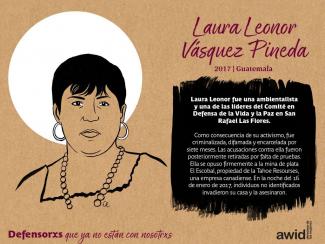
IM Defennsoras: Asesinan a Laura Leonor Vásquez Pineda, defensora del territorio
Observatorio para la Protección de los Defensores de Derechos Humanos: Guatemala: Asesinato de la defensora de la tierra y el medio ambiente Laura Leonor Vásquez Pineda
By joining AWID, you are becoming part of worldwide feminist organizing, a collective power that is rooted in working across movements and is based on solidarity.