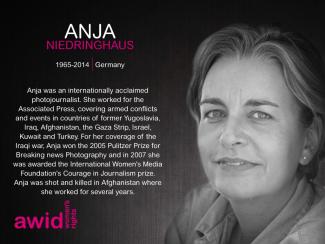
Anja Nedringhous
WHRDs are self-identified women and lesbian, bisexual, transgender, queer and intersex (LBTQI) people and others who defend rights and are subject to gender-specific risks and threats due to their human rights work and/or as a direct consequence of their gender identity or sexual orientation.
WHRDs are subject to systematic violence and discrimination due to their identities and unyielding struggles for rights, equality and justice.
The WHRD Program collaborates with international and regional partners as well as the AWID membership to raise awareness about these risks and threats, advocate for feminist and holistic measures of protection and safety, and actively promote a culture of self-care and collective well being in our movements.
WHRDs are exposed to the same types of risks that all other defenders who defend human rights, communities, and the environment face. However, they are also exposed to gender-based violence and gender-specific risks because they challenge existing gender norms within their communities and societies.
We work collaboratively with international and regional networks and our membership
We aim to contribute to a safer world for WHRDs, their families and communities. We believe that action for rights and justice should not put WHRDs at risk; it should be appreciated and celebrated.
Promoting collaboration and coordination among human rights and women’s rights organizations at the international level to strengthen responses concerning safety and wellbeing of WHRDs.
Supporting regional networks of WHRDs and their organizations, such as the Mesoamerican Initiative for WHRDs and the WHRD Middle East and North Africa Coalition, in promoting and strengthening collective action for protection - emphasizing the establishment of solidarity and protection networks, the promotion of self-care, and advocacy and mobilization for the safety of WHRDs;
Increasing the visibility and recognition of WHRDs and their struggles, as well as the risks that they encounter by documenting the attacks that they face, and researching, producing, and disseminating information on their struggles, strategies, and challenges:
Mobilizing urgent responses of international solidarity for WHRDs at risk through our international and regional networks, and our active membership.
سنقوم بتحليل الردود على الاستطلاع للوصول للاستنتاجات الأساسية والنتائج خلال المنتدى العالمي ل AWID في بانكوك، وعن طريق الانترنت في ديسمبر (كانون الأول) 2024. الرجاء التسجيل هنا لحضور المنتدى.

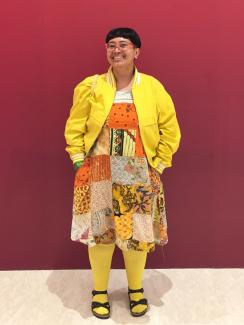
En Indonesia, la bunga [flor] está a menudo asociada a las mujeres. Esto significa que una flor también puede ser asociada a las mujeres transgénero, porque las mujeres transgénero son mujeres. Son igual de bellas, igual de fuertes, y tanto las flores como las mujeres trans no viven solo esperando ser «recogidas», sino que crecen y florecen y mueren como quieren. Esta obra es un tributo a mis amigas mujeres transgénero, en el Día Internacional de la Visibilidad Transgénero.
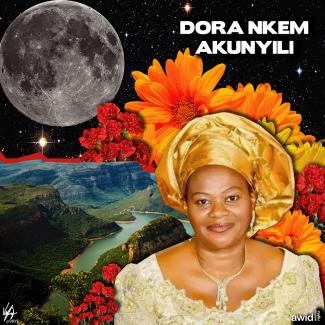
Dora was born in Benue State, Nigeria. She was a globally acclaimed pharmacist, technocrat, erudite scholar and community leader.
Dora’s revolutionary work created a paradigm shift in the Nigerian public service when she served as Director General of National Agency for Food and Drugs Administration and Control (NAFDAC) from 2001-2008. She spearheaded reforms in policy and regulatory enforcement that radically reduced the measure of fake drugs that plagued the Nigerian pharmaceutical sector during her tenure.
Having exemplified the reality of a courageous, competent woman who challenged the ills of a dominantly patriarchal society and drove change, she became an icon for women’s empowerment. She was appointed the Minister of Information and Communication between 2008 and 2010.
She died after a battle with cancer and is survived by her husband, six children and three grandchildren.
por Amal Amer
Rezo con mi familia por primera vez en seis años envueltx en un keffiyah que recogí de un contenedor de basura. (...)
arte: «Angels go out at night too» [Los ángeles también salen de noche], Chloé Luu >
Cette communauté est un endroit de connexions, où l’on comprend nos combats individuels comme faisant partie de luttes mondiales, et où l’on peut même parfois danser ! Il n’existe aucun endroit de la sorte en ligne, où être en contact avec des activistes de terrain, qui viennent du monde entier, et forger de la solidarité et de la sororité..- Paz Romero, Argentina
par Esra Özban
Dans un monde obsédé par le produit final, donner la priorité au processus est une méthode fondamentalement féministe. Les processus sont importants, et la sélection d’œuvres artistiques n’y fait pas exception. Alors que nous décidions quels films de la région d’Asie du Sud-Ouest et Afrique du Nord (SWANA) représenteraient et s’inscriraient le mieux dans le thème des Réalités féministes, la pandémie à laquelle nous sommes toujours confronté·e·s continue à transformer radicalement nos vies. Le simple fait de penser, d’écrire ou de m’exprimer est devenu un combat de tous les jours. Je n’arrivais à respecter aucune de mes échéances, j’envoyais les uns après les autres des courriels d’excuses à Kamee Abrahamian avec qui je travaillais en tant que commissaire indépendante pour le projet de Ciné-Club Féministe de l’AWID. Le soutien indéfectible de Kamee, sa compréhension et ses précieuses suggestions me rappelaient que, même dans deux parties différentes du monde, en tant que collègues qui ne se côtoient jamais en chair et en os, nous pouvons cocréer des microversions des Réalités féministes pour lesquelles nous vivons et auxquelles nous aspirons.
Pour moi, les Réalités féministes ont beaucoup à voir avec les sororités. Des sororités qui aident les femmes à déminer la région d’Artsakh/Haut-Karabakh. Des sororités nourries dans le Vegan Inclusive Trans Cake préparé par de jeunes féministes trans à Ankara, qui rappellent aux cis-ta qu’elles ne sont pas les bienvenues pour la génération Z. Des sororités qui poussent parmi les brins de menthe sur le toit de Dragica Alafandi dans le camp de réfugié·e·s de Dheisheh en Palestine occupée, dans Sowing Seeds of Resistance. Des sororités qui englobent et accueillent des proximités intimes, sexuelles et révolutionnaires dans le parc Gezi avec #resistayol. Des sororités qui mettent à jour une rencontre imaginée entre deux générations de femmes en exil, dans les rues de Haïfa, avec Your father was born 100 years old and so was the Nakba. Des sororités entre espèces qui construisent un (courageux) espace fictif, créé par Mounia Akl dans son Submarine, où la rebelle Hala, qui refuse de quitter une ville qui croule sous les déchets, est abandonnée à son sort avec un chien pour seul ami.
Cette sélection regroupe des petits morceaux de nombreuses Réalités féministes réalisées dans la région de SWANA ces dernières années. Nous continuerons à imaginer, apprendre et partager des incarnations féministes d’espoir et de pouvoir. En attendant, continuons à nous plonger dans les puissantes alternatives auxquelles ces cinéastes et personnages donnent vie dans ces films. Nous pouvons cocréer chacune des étapes, chacun des gestes et chacune des tentatives, en continuant de cohabiter dans ce monde avec d’autres qui vivent des Réalités féministes et continuent à donner vie à leurs rêves.
De Emily Mkrtichian et Jesse Soursourian
« Avec de beaux visuels associés à des scènes de vérité convaincantes, Motherland est une démonstration de camaraderie et de force entre femmes… Ce film est un témoignage de femmes du monde entier qui sont prêtes à travailler plus dur pour surmonter les obstacles qu'elles rencontrent. »
- Nosarieme Garrick, réalisatrice primée
« Motherland est une visualisation inspirante de solidarité, de courage et de cran… »
- Collectif Hers is Ours (La sienne est nôtre), organisateur du Festival Outsider Moving Art & Film
Motherland from jesse soursourian on Vimeo.
Emily Mkrtichian, à propos des Réalités féministes et d’Artsakh/HK
Nous avons filmé le court-métrage Motherland en République d’Artsakh, en 2018. Chacune de ces femmes me fascinait, par sa force, sa résilience et son humour – malgré le contexte dans lequel elles vivent. Ce contexte, en 2018, était celui du lendemain de la guerre brutale des années 1990, suite à laquelle leur pays est demeuré un territoire non reconnu (ou contesté, aux yeux de la communauté internationale), qui n’a pas reçu l’autonomie et l’indépendance dont bénéficient de très nombreux autres pays. L’Artsakh a également fortement souffert des conséquences visibles dans tous les lieux ayant subi de violents affrontements, et qui frappent bien souvent sur les femmes : troubles de stress post-traumatiques (TSPT), taux élevés d’alcoolisme, taux élevés de violence conjugale, une moindre égalité et moins de libertés pour les femmes, peu – voire pas – de représentation des femmes en politique et aux fonctions publiques. Face à tous ces défis, ce film tente de saisir et rendre compte du feu et du pouvoir des femmes d’Artsakh, qui pourraient ne pas correspondre au paradigme du féminisme occidental traditionnel mais qu’elles ont créé pour elles-mêmes grâce à des liens communautaires forts, l’attention pour leur famille, un dur labeur et la capacité à en rire ensemble. La République d’Artsakh est aujourd’hui à nouveau ravagée par une autre guerre qui lui a arraché 70 % des terres que ces femmes avaient fait grandir en les considérant leurs. Mais je peux vous promettre que ces femmes, et des milliers d’autres, continuent à tenir leurs familles, leurs communautés et leur culture debout avec les mêmes réseaux de soins, d’engagement à travailler dur et d’éclats de rire révoltés face à un avenir incertain.
De Baladi-Rooted Resistance
« Un film opportun à voir après avoir été témoin du dernier bombardement de Gaza par les forces de défense israéliennes. Un aperçu de la manière dont les femmes des communautés palestiniennes survivent à l'oppression structurelle, à travers l'histoire d'une bibliothèque de semences traditionnelles... et des femmes qui les maintiennent comme une forme de rébellion florissante. »
- Jessica Horn, stratège féministe panafricain·e, écrivain·e et cocréateur·rice de The temple of her skin (Le temple de sa peau)
« Regarder des femmes se rassembler et travailler collectivement pour l'autonomie alimentaire est, à mes yeux, à la fois thérapeutique et autonomisant. »
- Collectif Hers is Ours (La sienne est nôtre), organisateur du Festival Outsider Moving Art & Film
L’équipe de Baladi-Rooted Resistance, à propos des Réalités féministes
« Comment parler de Résistances féministes quand on vit à Deheisheh, un camp de réfugié·e·s palestinien·ne·s construit il y a 70 ans en Cisjordanie occupée pour abriter 3 000 réfugié·e·s, et qui en compte aujourd’hui 15 000?Ou quand la terre que l’on cultive est constamment menacée par des colons illégaux?
Quand on est une femme en Palestine occupée, on doit se battre non seulement contre le patriarcat mais également contre le colonialisme et une occupation militaire brutale. »
Dragiča et Vivien se battent contre ces multiples systèmes de domination, à leur manière.
Vivien se sert de semences indigènes pour aider les Palestinien·ne·s à préserver leur identité. Cultiver les aliments traditionnels, selon des méthodes traditionnelles, est porteur de sens : « Si on n’est plus productrice, on reste consommatrice, et quelle meilleure manière de réduire quelqu’une en esclavage qu’en en faisant sa consommatrice? Cela a lieu dans le monde entier, mais ici c’est doublé de l’occupation militaire. »
En Cisjordanie, 31,5 % des ménages souffrent d’insécurité alimentaire. Grâce à son jardin de comestibles sur son toit, Dragiča est parvenue à renforcer l’autonomie alimentaire de sa famille. Dans le camp bondé, où l’armée israélienne fait régulièrement des incursions la nuit pour arrêter et harceler les résident·e·s, le toit de Dragiča nourrit non seulement sa famille, mais nourrit surtout son âme. »
De Rüzgâr Buşki
Rüzgâr Buşki, à propos des Réalités féministes
« Je ne sais pas quoi dire à propos des Réalités féministes, mais en tant qu’artiste trans, en tant qu’activiste en Turquie, je sais que nos réalités sont rudes. Nous vivons dans la violence : physique, psychologique, économique et sexuelle! C’est la raison pour laquelle nous devons construire nos propres réseaux, et cocréer des microréalités les unes pour les autres est une Réalité féministe pour moi. #resistayol est mon premier film. Au début, je prévoyais de faire un film par/avec/pour des personnes trans qui ne tente pas de convaincre quiconque du fait que les personnes trans sont des personnes humaines, et qui ne soit pas centré sur la sensibilisation aux questions trans. Mais le soulèvement de Gezi, l’un des plus gros soulèvements de l’histoire de la Turquie, a eu lieu et le film s’est transformé en autre chose.
Je crois que le processus de production influence vraiment le devenir d’un film. Nous avons véritablement essayé de faire travailler des femmes, des personnes trans et non binaires à chacune des étapes du film. Le film est fait par des personnes qui se sont rassemblées dans un esprit de camaraderie, par amitié. Kanka Productions est fondé sur un esprit de camaraderie transféministe. Je veux que ce film donne espoir, qu’il soigne parce que nous portons toutes et tous de nombreux traumatismes dans nos corps; c’est ce qui nous constitue et ce qui nous relie. La guérison est un processus interminable et nous devons créer des espaces où respirer. #resistayol est une heure de respiration collective. »
Boysan Yakar dans #resistayol
« Alors, des lubunyas (queer) étaient assis·es dans le parc, et tout à coup, des bulldozers sont arrivés et tout le monde s’est senti frustré. Bref, c’est ce qui s’est passé. C’est le parc des Lubunyas et nous avions trente jours pour expliquer cela à cette immense ville. Tout le monde a reconnu que la nuit, des ibnes (pédés) baisent dans ce parc... Le Bloc LGBTI y a déplacé notre communauté. Nous ne faisions déjà absolument pas confiance à l’État, ni à la police, et ne disposions d’aucune sécurité. Nous avons défini nos propres manières de faire les choses, nos propres lois et coutumes pour survivre... Nous avons rapidement instauré la loi à Gezi... dans le souci de créer une langue et une compréhension communes entre tous ces groupes. La langue LGBTI du vivre-ensemble s’est propagée dans tout le parc. C’était la marche des Fiertés tous les jours, tout le monde lançait sans cesse des « ayol ». Nous avons égayé la langue nauséabonde et obsolète de la gauche. Je pense que nous avons eu une telle influence parce qu’on nous a renié·e·s pendant tant d’années. Des plus radicaux·ales aux plus conservateur·trice·s et nationalistes, tout le monde avait besoin de nous parce que tout le monde s’est habitué à se confronter à tout, tout le temps. Ils et elles n’avaient pas l’habitude de voir tant d’énergie, notre énergie. C’est pour ça que c’était un espace politique génial pour nous. Chaque jour,nous nous faisions un devoir de reprendre notre plus gros combat là-bas, le principal, qui est notre combat pour la visibilité et la reconnaissance. C’est pour cela que nous avons eu si mal de devoir quitter Gezi. »
De Pembe Hayat
« ... une déclaration variée, montrant la joie qui existe dans les amitiés au sein de la communauté queer en Turquie comme manifestation de rébellion et de résistance. »
- Nosarieme Garrick, réalisatrice primée
«... amusant, léger et aléatoire. Dans un monde constamment marqué et meurtri par la violence contre la communauté trans, rien, aucune action n'est (malheureusement) privée de sens. Il en va aussi de la joie, de l'amour et du hasard signifiant! »
- Collectif Hers is Ours (La sienne est nôtre), organisateur du Festival Outsider Moving Art & Film
Cayan Azadi dans Vegan Inclusive Trans Cake
« Salut les Barbie, les Ken, les poupées en porcelaine, les Craquinoux. Les copines de Chucky, les sœurs de Chucky, les beaux-frères de Chucky, et sans oublier les beaux-frères amants.
Alors, pourquoi avons-nous fait ce gâteau?
Nous avons entendu dire qu’une travailleuse du sexe trans avait tenté de se suicider, suite à des violences de gardiens et de policiers dans la rue. Elle est toujours au poste de police, et c’est la raison même pour laquelle nous avons fait ce gâteau. Ce gâteau travesti a été préparé pour montrer que nous existons à tous les moments de la vie, que nous persistons à exister, et ce gâteau illustre que cela ne sera pas effacé ou ignoré par la société.
Oui, il y a de la violence dans nos vies. Oui, il y a aussi beaucoup d’ombres, mais malgré cela, nous pouvons quand même nous amuser et profiter de la vie autant que possible. Bon appétit, sœurette! »
De Razan AlSalah
De Mounia Akl
« Il est réalisé comme un poème qu’on écrit… simple, un peu abstrait et émouvant. »
- Collectif Hers is Ours (La sienne est nôtre), organisateur du Festival Outsider Moving Art & Film
Esra Ozban:
Esra Ozban est programmateur·rice et réalisateur·rice de films originaire de Turquie. Son travail artistique, curatorial et universitaire se trouve à la croisée entre autres des pratiques archivistiques critiques, du travail du sexe, de la pornographie et des cultures cinématographiques féministes/queer.
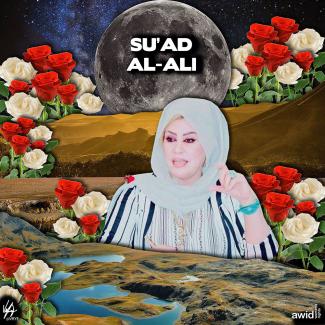
Su’ad fue una firme defensora de los derechos de las mujeres y lxs niñxs y estuvo al frente de Al-Weed Al-Alaiami, una organización de derechos humanos iraquí.
Participó en las manifestaciones que tuvieron lugar en julio de 2018 en Basra y en varias otras ciudades iraquíes, en protesta contra el desempleo y en demanda de trabajo y servicios públicos adecuados para la ciudadanía, y exigiendo también la eliminación de la corrupción generalizada.
Su’ad fue asesinada el 25 de septiembre de 2018, en el barrio de Al-Abbasiyah, en el centro de Basra. En un video del hecho, se veía a una persona que se le acercaba mientras ella se subía a su automóvil, le disparaba un tiro en la parte posterior de la cabeza y apuntaba el siguiente disparo a Hussain Hassan, su chofer, quien resultó herido en un hombro. Al-Ali tenía 46 años y era madre de cuatro hijxs.
par Fatima B. Derby
En 2017, la campagne #ManifestezVotreSolidarité a mis en évidence la manière dont les jeunes féministes pouvaient construire un avenir féministe en étant là les unes pour les autres, en participant à des conversations transrégionales, en marchant en solidarité avec d'autres activistes et en collaborant entre les mouvements. (...)
< illustration : « Laisse-les pousser », par Gucora Andu
#FreezeFascisms
A 30 años de la adopción de la Declaración y Plataforma de Acción de Beijing, existe una ola creciente de fascismos que ejercen gran poder e influencia en los espacios multilaterales, todo un retroceso para las conquistas de igualdad de género y la protección de los derechos humanos en el mundo entero.
En torno a la CSW69, estamos organizando, en conjunto y de forma horizontal, una serie de valientes espacios sobre el terreno y en línea a fin de compartir estrategias y forjar un poder feminista más allá de Beijing +30. Nuestra presencia colectiva trastorna las prácticas institucionales de exclusión en dichos espacios y, a la vez, apoya los procesos de organización de los movimientos en torno a las alternativas feministas a los sistemas de opresión.
Súmate a las conversaciones desde el 10 al 21 de marzo de 2025, mientras transformamos de forma colectiva la CSW69 en espacios para y sobre la resistencia y la solidaridad.
Alors que les fondamentalismes, les fascismes et autres systèmes d’oppression se métamorphosent et trouvent de nouvelles tactiques et stratégies pour consolider leur pouvoir et influence, les mouvements féministes persévèrent et célèbrent leurs victoires nationales, régionales et internationales.
La reconnaissance en 2019 par le Conseil des droits de l’Homme du droit à l’intégrité et à l’autonomie corporelles, par exemple, a marqué une étape cruciale. Des résolutions du Conseil sur la discrimination envers les femmes et les filles admettent cependant un recul lié à des groupes de pression rétrogrades, des conceptions idéologiques ou un détournement de la culture ou la religion pour s’opposer à l’égalité de leurs droits. Des avancées féministes sont aussi notées dans le travail des Procédures spéciales, qui soulignent notamment l’obligation des États de contrer les doctrines de l’idéologie du genre, rappellent à l’ordre les antidroits qui détournent des références à la « culture », et signalent que les convictions religieuses ne peuvent pas servir à justifier la violence ou la discrimination.
This story is about how an increasingly diverse group of feminists from the Pacific organized through the years to attend the AWID Forums and how that process changed them personally, as organizations, and as a movement through what they learned, discovered and experienced. It illustrates the importance of the Forums as a space through which a region that tends to be marginalized or ignored at the global level can build a strong presence in the feminist movement that is then replicated at other international women’s rights spaces.
"Después
Después del amor la primera vez,
nuestros cuerpos y mentes desnudas:
un salón de espejos.
Totalmente desarmadxs, íntegramente frágiles,
nos echamos en los brazos del otrx,
respiramos con cuidado,
por miedo de romper
estas figuras de cristal". - Fahmida Riaz
Su trabajo se enfrentó a duras críticas de los frentes conservadores, que la acusaron de utilizar expresiones eróticas y "pornográficas" en su lenguaje poético.
Eventualmente, Fahmida fue incluida en una lista negra y acusada de sedición en virtud del artículo 124A del Código Penal de Pakistán, durante la dictadura de Zia Ul Haq. Fahmida fue obligada a exiliarse en 1981 y pasó casi siete años en la India antes de regresar a Pakistán.
En el prefacio de "Badan Dareeda" ("El Cuerpo Desgarrado"), una colección de poesía publicada en 1974, escribió:
La brillantez de Fahmida fue la de desafiar cualquier lógica singular o categoría de género, nación, religión o cultura. Ella se negó a ser colocada en el rol de la "mujer poeta", rompió con las definiciones tradicionales de la poesía y los conceptos y temas femeninos (que van desde la conciencia política, el cuerpo, la cultura, el deseo, la religión, al hogar) y derribó las inhibiciones impuestas a su género.
"Tienes que entender que la cultura no puede tener esencia. Las culturas se mueven, fluyen unas en otras, formando nuevas culturas. La cultura nace de esa manera. No hay choque de culturas".
Fahmida es autora de más de 15 libros de poesía y ficción, incluido su poema "Taaziyati Qaraardaaden" ("Resoluciones de condolencia" - en inglés), que podría servir como un tributo apropiado a su vida y legado, y una colección de poemas (Apna Jurm To Saabit He "Mi crimen está probado") publicado en 1988, durante su tiempo en exilio.
Fahmida Riaz nació en Meerut (India) el 28 de julio de 1946 y falleció el 21 de noviembre de 2018 en Lahore (Pakistán).
by Haddy Jatou Gassama
The Mandinka tribe of The Gambia has a custom of measuring the first wrapa used to carry a newborn baby on its mother's back. (...)
artwork: “Sacred Puta” by Pia Love >